
Posts The importance of interpretability within machine learning: A case study with Acorn

The importance of interpretability within machine learning: A case study with Acorn

In this Article

In today’s data-driven world, understanding and leveraging data effectively can transform how we approach various challenges. One powerful technique in the realm of data science and machine learning is K-means clustering. This is the algorithm behind Acorn, CACI’s flagship data product which groups together postcodes with similar characteristics into segments. Whilst this process can all be done fairly easily with modern ML techniques, one crucial component is often overlooked: human interpretability.

What is K-means clustering in the context of Acorn?

K-means clustering is an unsupervised machine learning algorithm used to group data points into clusters based on their features. The goal is to minimize the variance within each cluster and maximize the variance between different clusters. To demonstrate how this is done in practice, the following steps are used in the build of Acorn, although the same process will broadly apply to any K-means algorithm:

The need for human interpretability

This process looks like it requires very little intervention from a human at any point – and that’s because it doesn’t – in theory. However, in practice as with all unsupervised ML techniques, for Acorn to be of any use as a segmentation tool, information must be scrutinised at every step along the way.

First, the number of clusters must be chosen either randomly or with prior domain knowledge. Acorn has been around for nearly 50 years and the last iteration featured 5 marketable segments, making it a good starting point. However, after stakeholder input from across the business, a conscious choice was made to increase the number of groups to 6 to reflect changes in society since the previous build.

Next, input variables need to be decided on before the clustering process begins. With a wealth of data from the 2021 Census as well as newly available information such as disposable income data, this list of variables needed to be carefully refined for Acorn to be both a mathematically and commercially sound product. As an example, the inclusion of planning extension data was tested as a promising new input to highlight areas undergoing gentrification. However, the results from this didn’t make intuitive sense and so this variable was excluded from the model. Such conscious decisions were also made to ensure that Acorn is fully compliant with the UK Equality Act and exemplify the need for human input before even running a model.

With the input variables decided on, K-means clustering can be applied, but the element of human input does not end here; the segment outputs must be dissected to ensure they are dissimilar from each other and contain an acceptable minimum number of data points. In the context of Acorn, this meant looking at the number of postcodes in a segment and measuring average values for the input driver variables. For example, averages for percentage of houses that are detached and household income were measured for each segment. These figures were found to be highest for groups containing individuals more likely to be in managerial roles, which acted as a useful sense check and allowed such groups to be labelled as more affluent. The number of postcodes within each group also needed to be sufficiently large to allow different marketing strategies to be applied for each segment.

Postcodes were also analysed visually on a 2D scale using a Python package to identify overlaps between segments. The difference between the old and new versions of Acorn can be seen below.

Figure 1: A representation of old (left) and new (right) Acorn postcodes drawn down from a multidimensional space to a 2D visual, with each colour representing an Acorn segment.

The reduced ‘bleed’ of segments into other segments as seen from this visual made it clear to analysts that this newer version of Acorn has much more well defined segments – a result of new data, advanced ML capabilities and of course, stakeholder input.

Finally, and arguably most importantly, the ultimate question must be answered: will the outputs of the model be valuable to the end user? If the answer is not a definite yes, then the process needs to be reviewed and, more often than not, this will involve decisions around the human element of the process rather than consulting the ever-growing list of ML techniques and tweaks. To increase the value of Acorn for clients across sectors including retail, finance, charities and utilities, questions from survey partners were mapped onto Acorn to provide insights such as digital attitudes and channel preference by segment. These questions are updated on an annual basis based on stakeholder feedback to ensure questions are current and relevant to clients.

Conclusion

Ultimately, results need to be useful for individuals or teams and there is currently no way of achieving this without human interpretation and intervention to some degree at every stage of the process. This rings even more true in consumer segmentations, where there is no ground truth or right or wrong to compare to. Lots of packages will allow you to build a model with very little input or intervention, especially with the rise in autoML capabilities, but to build a trustworthy, useful product, humans need to be on hand at every step along the way.

How will the grey belt initiative affect North West England & Scotland?

In this Article

In our previous blog in this series, we assessed the impact of the grey belt initiative on housing nationally. In this blog, we turn our attention to two regions: North West England and Scotland, assessing the potential impact of the grey belt initiative on both regions.

How will the grey belt initiative affect North West England?

The North West represents one of the biggest opportunities for the grey belt, where 69,820 new homes could be delivered across the 951 potential grey belt locations identified by VirginLand. While the North West is not, in fact, the region with the largest number of individual sites (Scotland has 5,960 sites and South East England has 3,207 identified locations), it is home to the largest sites, with each location able to accommodate 73 units on average across 2.4 hectares.

What makes the grey belt a good bet for the North West is not just the number and size of sites identified, but their location relative to potential movers. In fact, 58% of all home movers in the North West live within the grey belt catchment, comprising over 1 million movers.

Using CACI’s Paycheck and StreetValue datasets, the affordability levels within the catchment of the grey belt sites can be assessed to better understand the regional role that the grey belt can play. At five times the average household income, house-price-to-earning ratios within the catchment area of the grey belt are in line with the North West average (5.1 times income) and below the national average of 6.8 times income. At the same time, private rents sit at just 18.3% of the average earnings, against a regional backdrop of 21.1% and national averages of 27.6% of earnings. The requirements of the grey belt in the North West are not necessarily to deliver dramatically more affordable housing than is already available in the area, but to increase the overall supply of housing.

How will the grey belt initiative affect Scotland?

As with the North West, the grey belt is well located to serve the needs of many home movers in Scotland, with 54% of all movers living within easy reach of the 5,960 sites identified by VirginLand. Although numerous, the sites in Scotland are the smallest of any region, averaging at just 0.4 hectares that could accommodate 12 new dwellings.

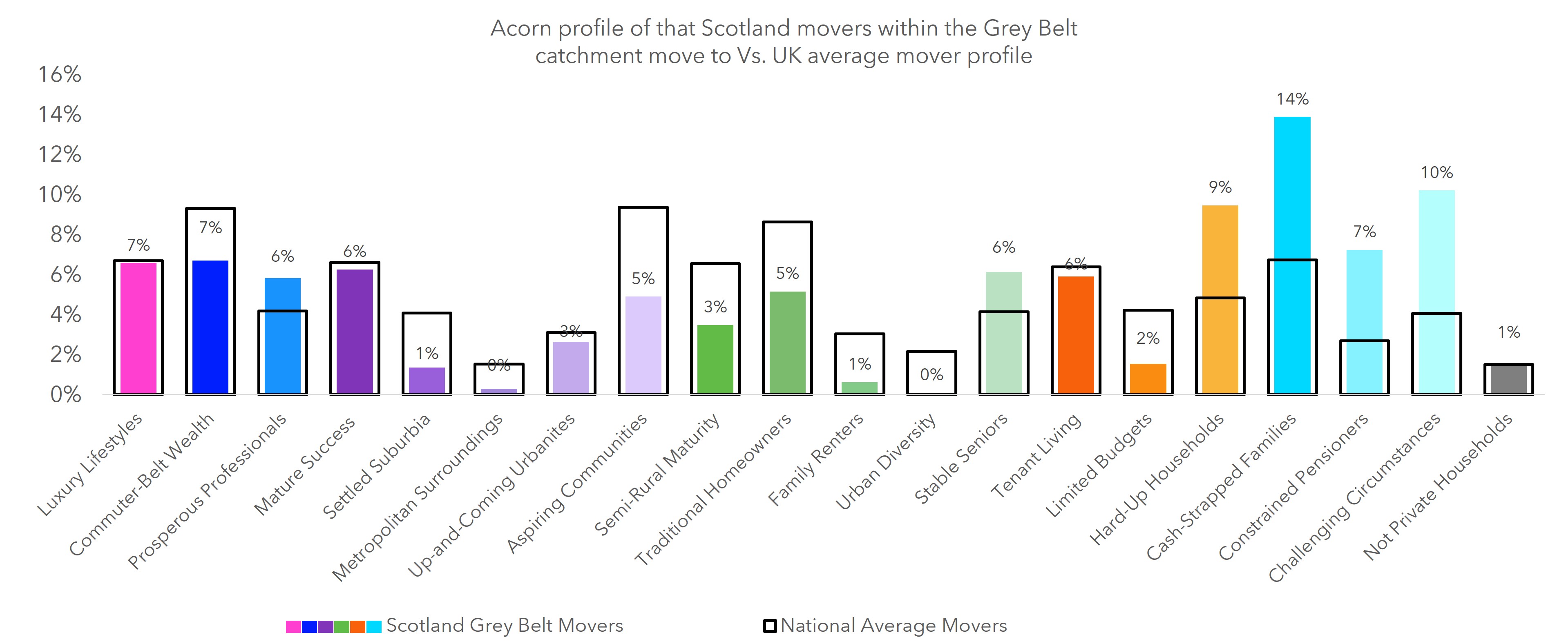
Unlike the North West, there is a clear set of characteristics among catchment movers that provide clear guidance on the type of housing that is needed of Scotland’s grey belt. Of the 665,000 potential catchment movers, 44% are expected to move to flats (against a national average of 18%) and 28% to move to social rented accommodation (against a national average of 19%). CACI’s geodemographic segmentation of the UK, Acorn, provides further clarity, with high concentrations of people moving to “Hard Up Household”, “Cash Strapped Family”, “Constrained Pensioner” and “Challenged Circumstances” neighbourhoods.

These demographic groups are some of the most economically strained within our society, and audiences that we have demonstrated in previous articles have had relatively little new housing delivery in recent years. On a practical sense, it has proved hard for private enterprise to make truly affordable new housing projects for these groups commercially viable because of the prices that they can afford to pay relative to project costs. However, this is a challenge that will need to be overcome to unlock the full potential of the grey belt in Scotland, either through closer collaboration or the delivery of blended neighbourhoods.

What conclusions can be drawn from these two regions and applies to the grey belt initiative on a national scale?

Contained within these two regions are the following important conclusions that can be applied to the national picture:

How CACI can help?

To learn more about how you can ensure that your developments are meeting the demands of local movers, contact CACI.

Missed the previous blogs? Find the links to the series so far below:

How grey belt sites will help tackle the UK housing crisis

Grey belt sites: what they are, locations & impact on housing

Assessing the impact of the grey belt initiative on a National scale

Assessing the impact of the grey belt initiative on a National scale

In this Article


In our previous blog in this series, we dove into what grey belt sites are, including their locations and projected impact on the future of housing. Today, we’ll examine the grey belt strategy on a national scale.

How can the grey belt initiative impact housing on a national scale?

As previously highlighted, the government aims to build 1.5 million homes in the next five years. If successfully implemented, the grey belt initiative could play a pivotal role in meeting this ambitious target. The former government set significant housebuilding goals—constructing 300,000 homes annually and achieving 1 million new homes over a parliamentary term. However, the figures for 2021-22 and 2022-23 fell short, with only around 235,000 homes built each year. With the new Labour government adopting even more aggressive targets, innovative strategies like repurposing grey belt land could be key to delivering homes on a larger scale.

VirginLand research has uncovered nearly 8,000 potential grey belt sites across England and a further 6,000 in Scotland. The 7,823 sites in England could collectively accommodate up to 450,000 new homes, while the 5,960 in Scotland could accommodate 74,000. With a total capacity of 524,000 new homes, the grey belt represents a substantial opportunity to address the housing shortage. In partnership, CACI has revealed that 36% of all home movers in these regions live within two miles of a potential grey belt site. To put this into perspective, nearly 5 million potential home movers are currently situated within the catchment areas of these sites. This emphasises the strategic importance of grey belt land, not only in providing housing, but in meeting demand where people are already seeking to relocate.

The fact that one in three movers live so close to these sites is a powerful indicator of the relevance of grey belt land in addressing the housing needs of a growing, mobile population. This proximity strengthens the case for rolling out the grey belt strategy on a national level, offering immediate and long-term benefits to communities in need of affordable housing solutions.

How undeserved & undersupplied groups will be supported by the grey belt initiative

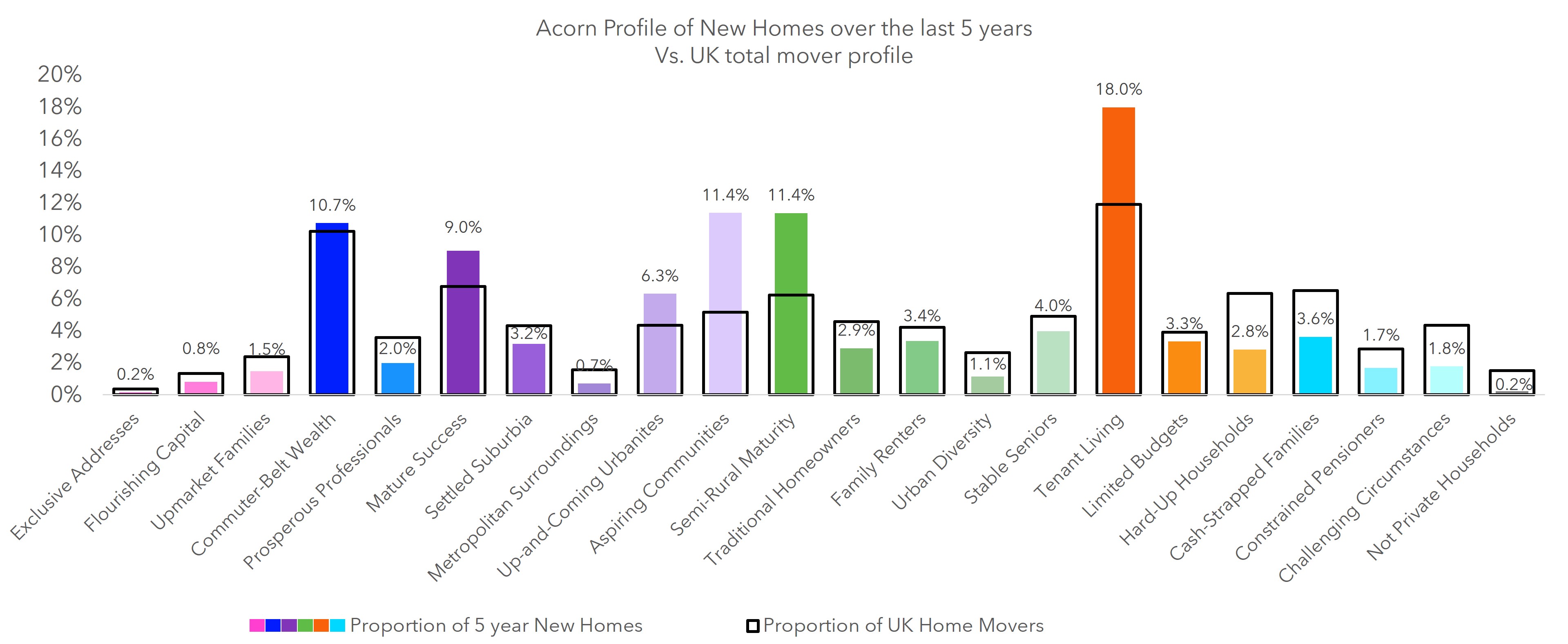
The accompanying data illustrates the national picture of the new grey belt strategy, highlighting the importance of addressing the housing needs of underserved groups. Housing development has traditionally focused on a few demographic clusters, with the “Tenant Living” group (18%) receiving a large share of new housing deliveries. This reflects a growing focus on affordable housing and rental markets, which are crucial for tackling the UK’s housing crisis. However, the grey belt strategy seeks to broaden this scope, opening up underutilised land for development to benefit a wider range of demographics, including “Limited Budgets” (3.3%) and “Hard-Up Households” (2.8%).

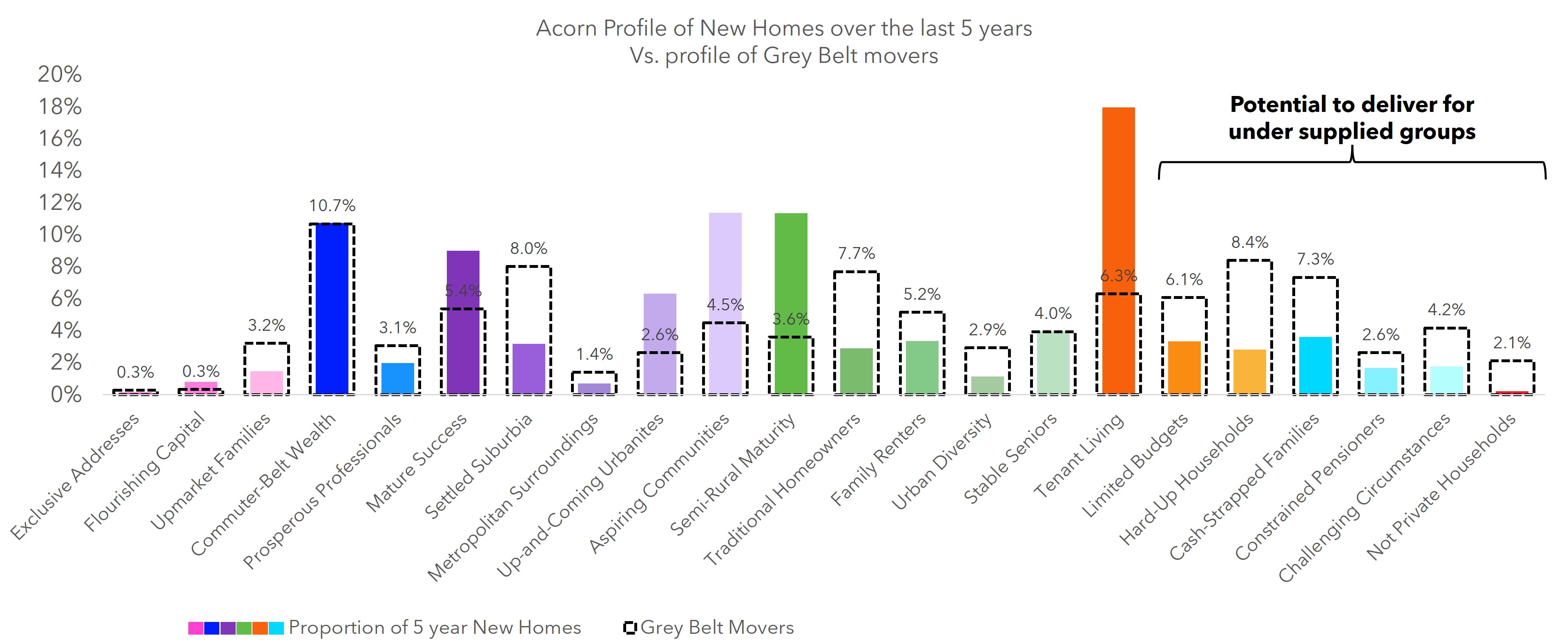
Further research conducted by CACI highlights the potential of grey belt sites to serve undersupplied groups. Data reveals that people living within two miles of potential grey belt sites skew towards lower affluence groups, which have historically been underserved in new housing developments. Groups such as “Limited Budgets” (6.1%), “Hard-Up Households” (8.4%) and “Cash-Strapped Families” (7.3%) represent a significant proportion of grey belt movers compared to the profile of new homes delivered over the past five years.

This shift indicates that the grey belt holds immense potential to cater to these underserved demographics, offering new housing opportunities that align more closely with the needs of lower-income populations. By unlocking development in the grey belt, the government has the opportunity to meet its housing targets while addressing the imbalances in housing availability for a broader spectrum of society. This strategy is not just about numbers; it’s about making housing accessible and affordable for the people who need it most.

How CACI can help?

Stay tuned for the next blog in this series, where we’ll explore the potential that this grey belt initiative has on the North West and Scotland. In the meantime, contact CACI to find out how you can ensure that your developments are meeting the demands of local movers.

How brands can start delivering on the promise of ‘real-time’ communications

In this Article

Real-time CRM communications are becoming a universal expectation from customers regardless of industry or platform. In fact, 72% of customers expect ‘immediate service’ from the brands they interact with. This can appear daunting for a business that has never considered how to begin serving real-time communications, both in how to enable it, then in how to use it effectively. Before we discuss this, however, we must first dissect the meaning of ‘real-time’.

What are real-time communications and how do they work?

‘Real-time’ refers to the capturing and processing of data. To be able to register a customer behaviour or ‘event’ immediately is a powerful thing – to then use that event to trigger a communication gives customers a sense of responsiveness and targets them when their interest and propensity is likely to be highest.

For this to work, a tracked event must take place, which is then linked to a central customer or user profile. This event will trigger an automated process within your CEP or CRM platform to then deploy a communication to that customer. A couple of examples of this are:

Real-time communications triggered by customer behaviour

There are various customer events that brands will be looking to target through triggered communications. One of the most common examples of these is an abandon basket campaign – if a customer began a purchase journey but fell out of that journey without completing it, brands can target them immediately with a prompt to finish their order while the purchase intent is still there.

Real-time dynamic messaging based on customer attributes

Depending on certain customer attributes, customers can also be served dynamic content based on what we know about them prior to starting a new web or app session. If we imagine a customer that may have purchased from a brand once, but then not returned within a certain number of months, it is possible to welcome them with a communication that recognises that and potentially incentivises them to purchase again upon starting their new session (for example – ‘Welcome back, here’s 5% off!’).

In both examples, a brand would need to tie the app or web session to a particular customer, have an event set up to register ‘basket additions that did not result in a sale’ or ‘return visits over ‘x’ months’, and to pass this information through to a chosen CRM platform to trigger an automated communication. Both are powerful use cases that demonstrate the potential value that can be unlocked through the real-time capturing and processing of data.

How CACI can help

CACI’s experts have extensive experience in helping brands start their journeys into real-time communications, from the initial identification of the right use-cases (as above) to identifying the right enablers across data and technology to make it happen.

In doing so, enabling real-time communication can be an incremental process, where use cases are tested and evaluated for their value and built upon steadily, eventually leading to a fully connected data ecosystem with more complex real-time strategies.

To see how CACI can help you begin planning your real-time strategy, contact us today.

Related content:

Process is the missing ‘P’ in Marketing Technology

In this Article

Data and marketing technology are key enablers used by marketers to enhance their ability to engage customers through personalisation – however, they must be utilised properly to succeed. To do this, there must be a focus on process; how new tools are used, how roles and responsibilities of the teams will adapt and where opportunities to work more efficiently to increase scale and capacity within each team exist.

As one of the core pillars in how a marketing team functions (alongside ‘People’, ‘Data’ and ‘Tech’), ‘Process’ underpins everything to establish cohesive ways of working across teams with differing priorities. This is particularly important when we see that only around 20%(1) of customer engagement teams are owned by marketing, with the majority sitting within teams like IT and product. Therefore, ensuring clear processes are set up and implemented will help remove any potential gaps when teams are siloed and have different objectives.

At CACI, we have identified three core principles that should govern how businesses approach process when thinking about enhancing their marketing capabilities:

1. Processes should continue to evolve as new technologies are implemented

One process does not necessarily fit all situations. With new marketing technology companies continuously entering the market, and the more established MarTech platforms adding new features to keep up, an often-forgotten consequence is that teams do not then consider the need to continuously evaluate how their processes should evolve. As a result, any new technology or data systems will either only fix issues in the short term, or not make any difference at all from the systems they’re replacing . Therefore, ensuring that processes are reviewed regularly and incrementally will enable you to get the most out of the technology you’ve invested in.

2. Process is not limited to a single team or function – it should define how different parts of the business interact with each other

Different teams will have different priorities, meaning that if processes, roles and responsibilities are defined and understood across the business, then work is unlikely to be missed or de-prioritised. This is particularly important during peak periods and when you have multiple teams working on the same campaign or across multiple regions, where teams may become siloed across a business.

Furthermore, when creating a process for a team to follow, the entire end-to-end process must be considered – from the inception of the idea to the briefing and building, deployment, campaign analysis and future optimisations. While we would typically think about the build as the most process-heavy area, we must ensure that from start to finish, roles and responsibilities have been defined to maintain consistency across all projects.

3. Efficient processes will save you money, time and potential mistakes

Outdated processes can be a hinderance. If new technology or teams are added, but there are improper or irrelevant processes, you are unlikely to recognise the benefits you invested in. As a result, it will take significantly longer to realise any value from the investments you have already made.

This requires people, technology and data to integrate seamlessly, and having a rock-solid process can help this. By ensuring that the right processes are in place, you will also find that productivity increases, operating costs should decrease, errors will reduce, and you will be able to remove any duplication of effort.

How CACI can help

CACI can support you with setting up processes for your teams by reviewing current practices and recommending a more streamlined approach , either to assess your readiness to implement new technology or data, or to make the necessary changes around existing capabilities to make them work harder. A recent example of how we’ve grouped each section for new processes is as follows:

  • Ideation, strategy and planning
  • Resource planning and briefing
  • Design, content, copy and localisation
  • QA, testing and approvals
  • Data selections, set-up and execution
  • Reporting and measurement
  • Optimisation and iteration

However, all process mapping projects are bespoke to how you would be best set up to succeed. To find out more about how our experts can help set you up on the path to success, please get in touch.

Related content:

Connecting paid media to first-party data: a path to enhanced customer engagement

In this Article

In today’s competitive market, the cost of acquiring new customers is continuously increasing. Coupled with changing privacy regulations and consumers’ growing demands for personalised experiences, traditional acquisition strategies that are heavily reliant on third-party data are becoming less effective. Herein lies the crucial role of first-party data in acquiring the right customers and effectively retaining them.

Getting started: why alignment and collaboration matters

Realising the potential value of first-party data requires effective collaboration between Paid Media and CRM teams. When these teams operate in silos, valuable customer insights and behavioural data are not shared effectively, and brands risk a disjointed experience alongside increased ad spend.

Aligning these teams around cohesive goals and strategies ensures that the rich, actionable insights derived from first-party data are used to inform and optimise paid media campaigns. This cross-team collaboration can significantly enhance targeting accuracy, message relevance, and ultimately, customer acquisition and retention.

Unlocking the value of first-party data across CRM and social

When it comes to delivering impactful CRM campaigns, particularly on highly competitive social channels, first-party data is invaluable to delivering a relevant and cohesive customer experience. By implementing the following, brands can ensure the effective and impactful utilisation of their data:

  1. Comprehensive customer profiles: By integrating data from various touchpoints—such as website interactions, purchase history, and email engagement—brands can build rich and comprehensive customer profiles. These profiles enable precise segmentation and targeting, allowing for highly personalised ad content that resonates with specific audience segments to come to fruition.
  2. Behavioural targeting: First-party data can be used to understand customer behaviours and preferences. For instance, if a customer frequently browses certain product categories but hasn’t made a purchase, targeted ads featuring those products, along with special offers or discounts, can be highly effective in driving conversions.
  3. Dynamic and personalised content: Social media platforms offer advanced tools for dynamic ad content. Brands can use first-party data to create ads that dynamically change based on the viewer’s profile and past interactions. Therefore, creating personalised and distinctive comms at key customer moments not only increases engagement, but also adds a competitive advantage through an enhanced overall customer experience.
  4. Cross-channel consistency: Ensure that the customer experience is consistent across all channels. If a customer has already purchased a product, avoid retargeting them with the same product ads. Instead, use the opportunity to introduce complementary products or services, thereby adding value and enhancing the customer journey.
  5. Real-time optimisation: Leverage real-time data to continuously optimise campaigns. Monitor customer interactions and campaign performance closely, and use these insights to make timely adjustments to your targeting and messaging strategies.

How CACI can help

In the context of rising customer acquisition costs, the alignment and collaboration between paid media teams and CRM teams have never been more critical. This strategic integration not only enhances the customer experience, but also drives better business outcomes—improving acquisition efficiency, increasing customer loyalty, and ultimately, boosting the bottom line.

As the digital marketing landscape continues to evolve, brands that prioritise the seamless integration of their marketing efforts and harness the power of first-party data will be best positioned to succeed. The future of marketing lies in breaking down silos and fostering collaboration, ensuring that every customer interaction is informed, intentional, and impactful.

CACI’s team of experts have extensive experience in helping clients enhance customer engagement through a multitude of strategies and solutions. If you or your business are ready to explore how first-party data can lead to effective customer acquisition and retention, please get in touch to discuss how we can help you.

Related content:

Adopting AI into organisations: carrying past lessons into the future

In this Article

Reflecting on projects and organisations I’ve worked with in the customer strategy and marketing technology space, there are new challenges daily, but how organisations harness data feels like Groundhog Day. From changes of funding models and head counts to the centralisation and decentralisation of teams, it feels like the value of the Data and & Analytics (D&A) functions is still in a phase of being scrutinised heavily, with some businesses unable to unlock the magic that was promised many years ago.

In 2024, AI is everywhere, creating both excitement and fear. The big question I often hear is: “How do we use AI to stay ahead of the curve?”. The lack of knowledge around the limitations has created a sense of infinite opportunity. The rate of change is rapid and big players are getting involved. It’s easy to see how organisations can feel like a deer in the headlights on what to do, afraid to be left behind.

The risk is empty promises, money wasted and no results. There are lessons to take from the D&A revolution to help guide us in the AI era, however. Some of the key themes from successful D&A transformations I’ve been part of at CACI that are relevant for AI adoption by analytics and data professionals in the customer space have been:

  • Establishing value
  • Data literacy
  • Data modernisation
  • Evolving the process

Establishing value

Establishing value is pivotal to getting the business along the journey by helping stakeholders understand how data and analytics helps their bottom line. Stakeholders don’t want a handful of numbers, they want the capability to make better decisions, execute more efficiently and deliver greater impact. Therefore, if a predictive model has been created to determine when is best to target a customer sale, the job is not done. The next steps are to substantiate what this can mean for the business in terms of opportunity, followed by activating it to drive and prove that the sale has happened.

This will be similar with AI. It is key to start by defining the use cases and business challenges to be addressed. Once this is understood, AI initiatives can have buy-in and be driven more easily. It doesn’t require a large roadmap, a series of proof points and steps to prove value is more than enough. Establishing what value is and demonstrating it unlocks the licence to move forwards with smaller, incremental steps.

Data literacy

Increasing data literacy is key to establishing a two-way conversation between stakeholders and D&A ambassadors. For stakeholders, it allows them to define their ambition and utilise D&A outputs to deliver to that ambition. For D&A ambassadors, it’s talking the language of the business, contextualising the day-to-day impact. Interestingly, working on this in the past has ended up with stakeholders mentioning “data” less.

For example, I worked with marketers who wanted to understand the opportunity in terms of how many customers they were going to reach. “What about the data?” was banded around, which can mean different things to different people. After helping educate them on the role of understanding counts and what that means for volumes, the language shifted to “volumes of unique eligible customers who will receive the campaign”. The less the conversation becomes about “data” and more what it means for customers while knowing the considerations with respect to data, the more effectively the business can reach its outcomes with less confusion and at a greater pace.

With AI, the role of ambassadors for data, analytics and AI is to always be translators, empowering users to understand and carry the conversation in all directions. That means fostering a culture where there is specific training for different stakeholders, tailoring how you talk to the stakeholder’s world and keeping at the forefront of developments to help people understand what AI means for both their day-to-day and future.

Data modernisation

I’ve often seen organisations leapfrogging with their technology capabilities or implementing data science models only to realise that the integrations were not set correctly and the data itself was not fit for purpose. There is the assumption of quality of data and that all tools are fit for purpose, however, data management and governance practices that have not evolved to meet requirements risk creating low quality data, which will affect outputs and create a lack of trust in the data and models. Furthermore, low data accessibility, exasperated by poor data management, can increase latency and make the speed to value slow and painful. These areas are typically not what stakeholders are thinking about and often results in large-scale data transformations becoming dead in the water.

Data modernisation requires reviewing infrastructure and governance so that processing and storage happens closer to where decision-making happens, improving speed, reducing cost and closing silos. Focusing on access, quality and efficiency will enable AI to be integrated in a way that is usable and scalable. Moreover, as AI application increases, AI-focused data management practices will significantly improve accuracy and performance of the models, which is crucial when productionising AI.

Although it may not be pretty or exciting for the end users, addressing data modernisation must be a key priority for D&A and AI ambassadors. There will be challenges in helping organisations understand the ramifications of substandard data management and governance practices. Tackling these issues head on will improve the time to value for AI and mitigate issues with quality, cost and output. Beyond this, modernisation of data governance must venture further– with a strict focus on ethics and compliance– by assuming the role of PII within the organisation and how that is used with AI, if using external technology.

Evolving the process

Once there is buy-in and a return on the D&A initiatives is recognised, interest and further investment will then be generated from the organisation. The next part, scaling, is sometimes the hardest step. In my experience, those who reach this point likely had smaller, autonomous teams tackling the D&A transformation. Moving forwards requires ongoing attention and adaptation, with the trend being to create specific roles and departments. While this can make sense, the risks include siloing teams and shifting focus from business outcomes to becoming more about delivering tasks.

The same will apply to AI, where it’s tempting to have an ‘AI department’. The balance that must be struck is the ability to deliver business outcomes versus the need to nurture specialisms to ensure that there is growth for the individuals, a combined view on the future and enforcement of best practice. This will emulate cyclical trends of centralisation and decentralisation of teams. This is not a bad thing– it’s okay to constantly evolve and adapt operating models around business needs. AI is unique in that it will become more pervasive in the day-to-day, so while AI technology may be centralised, its use will seep through the whole of an organisation.

How CACI can help?

Despite AI feeling like the next revolution, for some, it’s an evolution of data and analytics. We are in a period where D&A is being scrutinised in terms of its value, but the question is not being asked of AI just yet. It will be, and the themes above will gear you towards being able to drive ROI.

To learn more about how CACI can drive value with AI in driving value from your customers, contact us today.

Related posts:

Can AI make me run faster?

In this Article

AI is becoming omnipresent. As a data scientist, it is at the forefront of my mind most of the time. I’m also a seriously committed runner, so I inevitably ended up asking myself if my favourite sport and past time were impacted too. I was sceptical.

Surely, records were broken due to good old fashioned strenuous training; piling the miles week after week, following a schedule designed by experts based on years of experience. It’s how I started. I went through a Couch to 5k programme found in a magazine 15 years ago. After some online investigations, however, it strikes me. I’ve long ago stopped manually recording my sessions and delegated to… my watch.

It has been so embedded into my routine that I no longer notice I’m using my watch. Strapped on my wrist sits a marvel of technology, recording my biometrics every second of the day. Inside those gadgets are dozens of sensors fitted within an inch wide circle of plastic.

First, of course, it’s a timekeeper with very precise chronometer, recording activities to the hundredth, sometimes thousandth, of a second. With GPS capability, gyroscope and accelerometer, it tracks how far I’ve run, the meters climbed/descended and when I accelerated or slowed down. Optical sensors monitor my heart rate and blood oxygen saturation. Insights on the intensity and quality of the training sessions, alongside derived metrics like my level of fitness and energy level throughout the day, the level of stress I am experiencing, or the quality of my sleep. All of these data points are fed to a cloud-based service, providing an impressive level of information about my health and fitness.

The difference between setting goals & gaining actionable insights

Thanks to companion apps, you can generate a training plan tailored to your ambitions. Set the distance, desired time target and a full training schedule is automatically added to your calendar. Put you trainers on and follow the workout’s instructions that have been synchronised to your watch. During the session, you’re informed of your progress, how far you’ve gone, if you’re hitting the desired speed or keeping your heart rate in the optimal range. After the exercise, you can now enjoy your runner’s high and all the benefits of a good workout. You can also review your activity in all its details.

Your tracking tool offers a plethora of performance indicators. Soon, you’re diving into a series of charts, trying to find what you did well and where you can improve. Strides length. Cadence. Heart rate zone. Running economy. Physiological load. Training monotony and strain. VO2max. Velocity of lactate threshold. You have an awful lot of facts to learn, not only about running, but about yourself, from physiology to lifestyle and a deluge of terminology, metrics, exercise types, muscle groups and medical conditions you didn’t even suspect existed.

The analytics platform can compute evaluations, identify patterns and give you warnings if you miss too many sessions or struggle to hit the pace/targets. However, in my experience, rarely have I been provided with actionable insights.

How was your training, by the way? Did you find it hard or easy? Did you feel tired today? How is your mood? Your virtual coach likes to know. Inputs – that’s the key. AI is always asking for more data. It needs calibration. Add height. Add weight. Enter more data. Review the charts. Did you run with a stroller or a dog? Was it a park run or a race? Evaluate yourself. Validate the insights. If your goal was in the realm of what the algorithm has been designed to deal with, you should be able to reach your goal.

But what happens when you want to get over that? When you really want to push yourself and go faster than the tools allow?

Harnessing the power of data to achieve your goals

The problem is that most mainstream AI running solutions use historical data and proven methods, trying to match your requirements to a best-fit existing programme. If Roger Bannister had relied on AI in the 1950s, he would probably still be chasing the four-minute mile, and women would still not be allowed to run the marathon!

Only humans have the ability to dream big, challenge the deemed impossible, break the conventions and change the paradigm. If you want to achieve this with AI, you need to be able to challenge it. You must become an expert in the field of running and potentially have good notions of physiology too. You need to be able to identify which metrics matter to personalise the system and fit your reality. You’d also need some notions of machine learning to implement it. Or find someone that can.

That’s exactly what I do for my clients here at CACI, although not for running, yet. As a consultant, I embrace their goal, but first get to know who they are, where they are now on their journey, their values, strengths and challenges. I use my experience of the field and gather expertise of the industry to find the best fitting solution. As a data scientist, I can then select the appropriate technology, AI or techniques and do the data crunching, providing them with clear and actionable insights – what needs to be actioned and why – to set them on the path of success. I can keep in touch with them along the way to review and adjust their ambitions when needed as our market evolves around us.

AI can ultimately teach you how to run and improve your pace… to a point. But if you really want to get fast, you’ll also need a lot of personal experience and human expertise. Exactly as it is for data science.

How Estée Lauder harness the “beauty of data” to transform their customer experience

In this Article

At our annual Innovate & Accelerate conference, Daniel Lindsay, CRM, Data, Insights and Analytics Director at Estée Lauder, shared the business’ optimal pairing of data and magic behind beauty to enable their enterprise data transformation, taking the retailer from insight to instinct in order to personalise consumer experiences. This winning combination has contributed to the success of their brand value proposition, narrative and positioning through campaigns that struck a chord with consumers.

But how did Estée Lauder decide when the right time for data transformation was? What tools and strategies did they lean on to achieve this, and what were the results?

Why it was time for a big data transformation

Three years ago, Estée Lauder faced various evolutionary periods of marketing, from digital to connected media in terms of consumer interaction followed by the tailored messaging capabilities that came with leaning into data-led media and marketing , particularly first-party consumer data. The business was keen to ensure all their consumers were involved in their journey of change.

According to Daniel: “Our job as a leading beauty company in the UK is to evoke trust from the customer.” Consumers purchase from brands that they trust with their most personal spaces, so ensuring customers are at the root of the brand and understood as granularly as data personalisation allows for is vital. Estée Lauder quickly realised that connecting data to the personalised user experience would give them the competitive edge that they needed to remain an industry leader.

Happy woman doing routine skin care at home with beauty products. Woman sitting on bed at home and applying face cream.

Challenges experienced when working on data transformation & how they were mitigated

Three years down the line of their data transformation, Estée Lauder has faced its fair share of challenges:

  • Heavily investing in consumer data. The business quickly realised their initial consumer data investments were conducted on outdated infrastructure, which complicated their ability to locate their target customer and get a unified view of them.
  • Effectively delivering analytics or insights that would drive fast action and improve accessibility. They had also outgrown their campaign management system, sparking a new consideration of ensuring whatever was brought into the business would connect consumers across the channels.
  • Upskilling and bolstering their in-house capability. This would enable enhanced futureproofing and strategic planning while also upkeeping resources.

Implementing CDP & campaign management tools

Working with CACI enhanced the business’ understanding of how their consumers shop across their portfolio of brands. The resulting data was released into Braze, and has more recently been added into Google, Meta and TikTok to take their understanding of consumer data to a new level.

The business’ value realisation through Braze was being able to engage with consumers and make their CRM channels the fastest growing traffic channel across all their direct to consumer (D2C) channels so far. They were also able to increase their key loyalty metrics by 16% in repeat and retention rates across all brands. This was demonstrated through one brand, Aveda, that despite a complex route to market journey, proved that having the right infrastructure in place enabled the business to successfully understand and track consumer points through email or SMS, which has been transformational for the business.

Data transformation in real-time: MAC Cosmetics case studies

Creating Black Friday success for MAC Cosmetics

Elena Hughes, Customer Strategist at CACI, elaborated on CACI’s support with the design and implementation of Braze in Estée Lauder, and its impact on the business’ strategic communications plan ahead of their peak period, Black Friday. This was a commercially critical time in the business’ calendar with a predicted high revenue generation, meaning that the business’ strategy had to be airtight.

To execute this, Estée Lauder assessed the data with CACI to understand how customers behave during peak promotional periods. This resulted in the emergence of four key customer groups:

  • Gifters
  • Price-driven audience
  • Loyal
  • Lapsed (one-off)

The strategy needed to take a segmented approach to tailor the messaging to these specific audiences, which enabled newfound opportunities for creative enhancements as well. As a result, the business noticed a 23% increase in trading performance post-implementation of the strategy, proving the campaign’s effectiveness despite an obvious time crunch and key information presented for access in the most suitable way of actionable insight.

Activating a triggered lifecycle programme at MAC Cosmetics

Replenishment, automated trigger and cross-sale messaging were critical components of the business’ triggered lifecycle programme. Their Black Friday campaign success came from distilling a multitude of strategy-shaping data points.

Learning lessons towards achieving data transformation

Despite maintaining relatively stable sales around Black Friday, CACI’s Cost of Living and purchasing data proved to be crucial to Estée Lauder’s success. While the business noticed that some of the more luxury products like serums declined in sales, the resulting data showed that the “lipstick effect” prevailed and that customers still want to feel good about themselves no matter the economic circumstances, demonstrated in the purchasing of what consumers consider to be essential products.

The business is now equipped with the necessary data to enter peak shopping periods and continue developing efficiencies and creative assets that resonate with customers.

How CACI can help

If you or your business are looking to accelerate customer data or technology changes by connecting and activating your insight, please get in touch to discuss what strategies and solutions that our team of experts can help you deliver.

Unlocking seamless navigation with Braze’s central search function

In this Article


Braze’s recent navigation feature is a game-changer, offering users an enhanced and intuitive experience throughout the platform. In this article, I delve into the upgraded interface and focus on the central search function, a powerful tool designed to streamline user access and efficiency. So, how does it work, and what difference will it make for managing your campaigns and content?

What is Braze’s central search function feature and how does it work

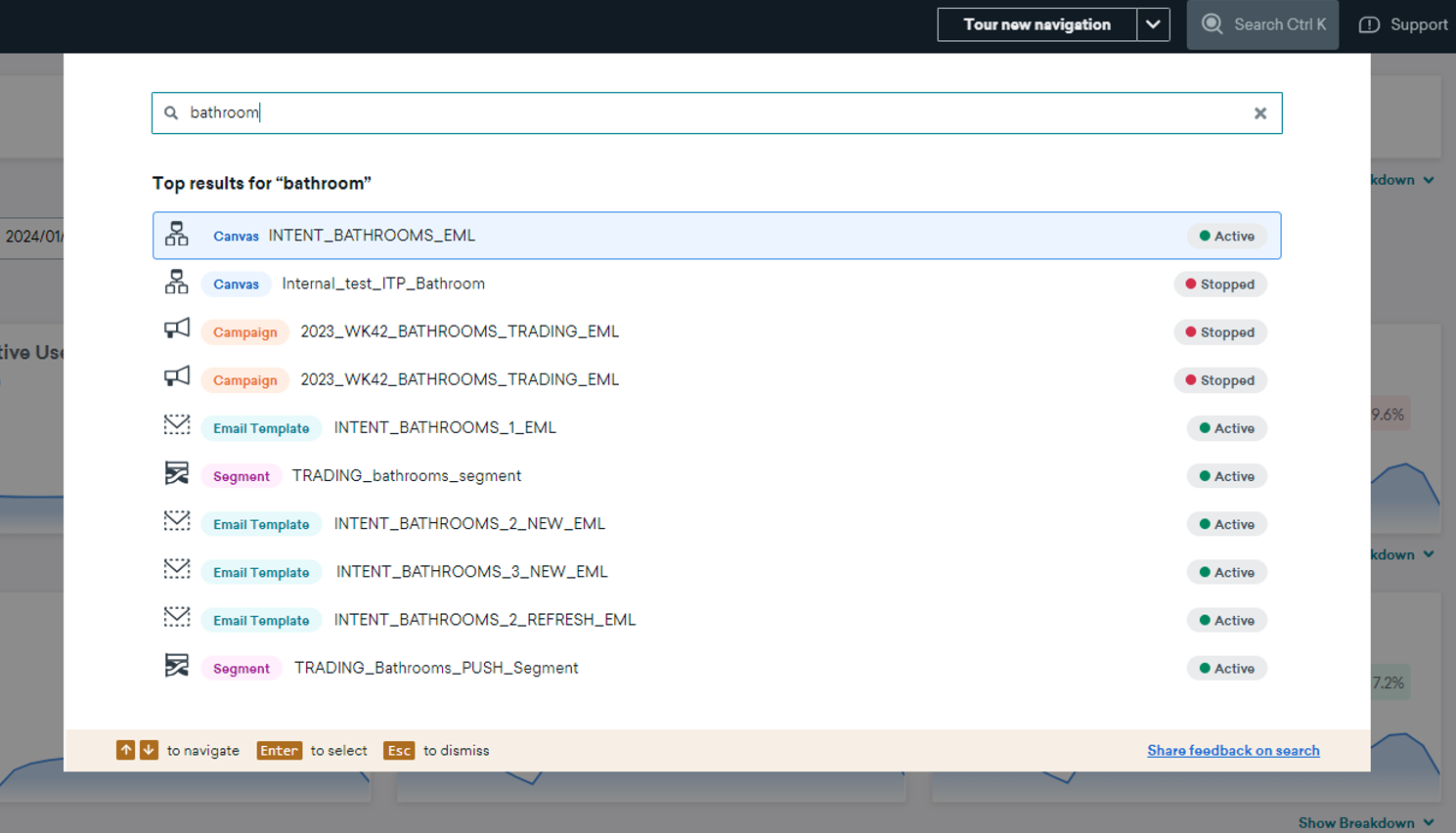
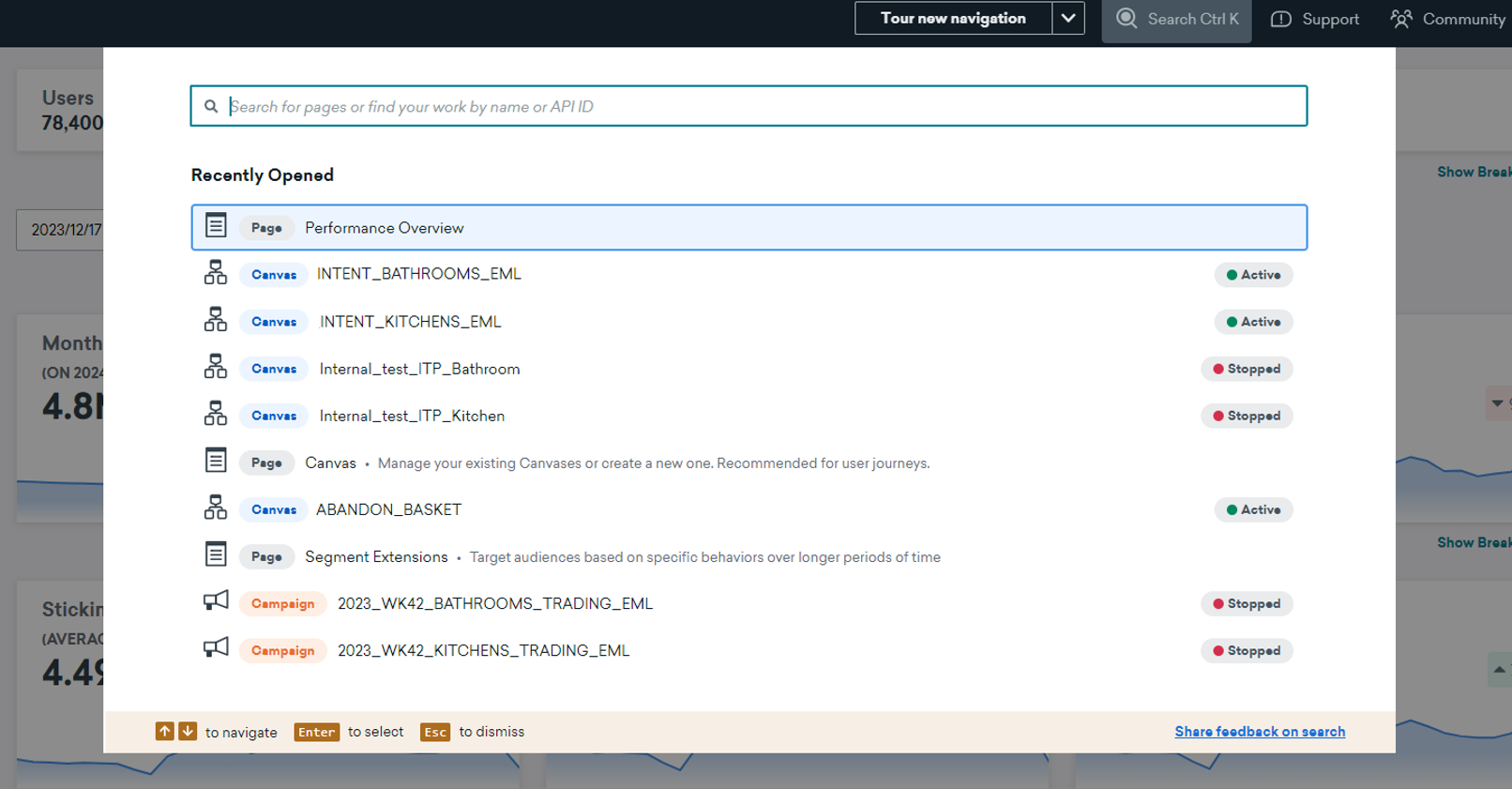
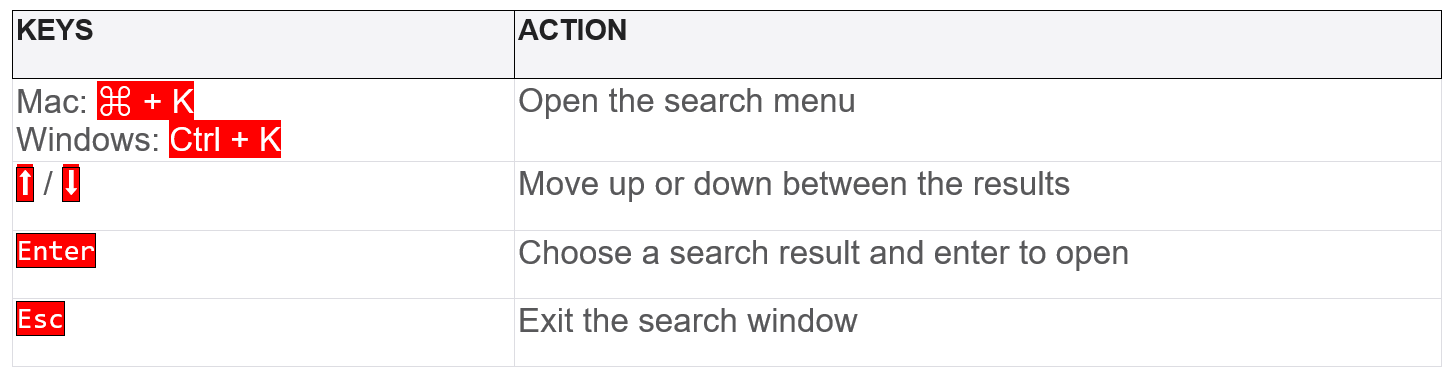
At the core of Braze’s latest update lies the central search function, revolutionising how users interact with the platform. This dynamic tool allows users to find and access specific campaigns, canvases, email templates, segments and pages effortlessly by using keywords. Accessible via the top-of-the-dashboard search bar or keyboard shortcuts (⌘ + K for Mac, Ctrl + K for Windows), users can initiate a search with results instantly displaying below. The search results display both recent and archived content, minimising clicks and ensuring a seamless user experience.

The results you can see – explained

When you search using keywords, you will find the following results:

  • Campaign names: Find any campaign names that are active, stopped, drafted or archived.
  • Canvas names: Find any Canvas names that are active, stopped, drafted or archived.
  • Email template names: Locate templates in your template gallery.
  • Pages: Navigate to any page within Braze– whether it’s “Canvas”, “Data Exports” or “Webhook Templates”, you can land right on it.
  • Segment names: Find any segments that are currently active or have been archived.
Screengrab showing Braze Central Search Functionality

Why is this feature so important?

The central search function is a gamechanger because it enables you to:

  • Rapidly locate and access active, stopped, draft, or archived campaigns and canvases
  • Effortlessly find email templates in your template gallery
  • Navigate directly to specific pages within Braze, such as “Canvas”, “Data Exports” or “Webhook Templates”
  • Locate both current and archived segments with ease.

Not only does this streamline navigation and accessibility across the platform by allowing users to quickly find and access what they need, its intuitive design, coupled with the ability to seamlessly access recently viewed content, transforms the user experience, catering to both new and experienced Braze users.

Screengrab, Braze search feature

Keyboard shortcuts to keep in mind

Below are some of the easy keyboard shortcuts that you can use to navigate through the central search window:

Key takeaways

  1. Efficient navigation overhaul: Braze’s latest update introduces a streamlined navigation interface, enhancing user accessibility and efficiency across the platform. The seamless design ensures users can effortlessly find and access key features, marking a significant improvement in the overall user experience.
  2. Central search function as a power tool: The central search function emerges as a pivotal feature, allowing users to quickly locate campaigns, canvases, email templates, segments and pages with ease, along with being able to see their status categorised as active, stopped or archived.
  3. Empowering marketing teams with precision: The central search function addresses common challenges faced by marketing teams by providing quick access to essential elements. This feature empowers marketers to navigate Braze effortlessly, fostering productivity and efficiency in campaign management and content creation.

If you’re interested in learning more about Braze or you’re a Braze user looking to maximise value, be sure to get in touch with us to speak to one of our experts.

Want to learn how to elevate your brand using Braze’s generative AI? Click here to read more.

New Year, New me? Reset, face out to the market, connect, and engage

In this Article

There has been a lot written in the past 18 months about how the pandemic realigned the way we were living. A moment in time that stretched into a phase that was different for literally everyone, affecting us all in different ways; young and old, key workers through to shop staff, blue collar workers and office employees. Just think for a moment about how different life is now, how you think it might have affected the above groups and how such a seismic shift defines who we are today, what we want from our lives, our relationships, our jobs and our future.

Key reflections in the new year

As we move into a New Year, even if we don’t make wholesale changes, I always find it to be a good time to reflect on where you are at, force a change – even a small one – and move into the New Year in a new gear.

In the last few years, those changes for me have been about reflecting on how we are conducting ourselves on a day-to-day basis and resetting into what is needed in the year ahead rather than drifting along with an adopted behaviour that you inherited post-Covid. I have been very keen to try to get colleagues to do the same.

Go out and see clients face to face, walk around the places we work on and have delivery meetings on client sites rather than on the dreaded Teams. While I’m fully aware of the benefits in time and travel that Teams has brought, I think it is incumbent on us all to ensure we use the channel in the right way, not just because it is the easiest thing to do. There will always be instances where face to face does make a lot more sense – think about it and make the effort!

Understanding the impact of consumers’ changing values and priorities

Working in consumer understanding at CACI, I’ve found myself reflecting a lot over the past 18 months, not just about the behavioural changes the pandemic has instilled in us, but how it has altered our values. In general, we have become much more particular about what we choose to do with our time away from home. Some groups, because of what home is to them (singles in smaller shared accommodation versus families in larger, out-of-town homes for instance), will have wildly different values based on that home set up, their life stage, affluence, etc. which maybe, or may not, be like their pre pandemic selves. However, how they value their time, effort and disposable income has definitely shifted.

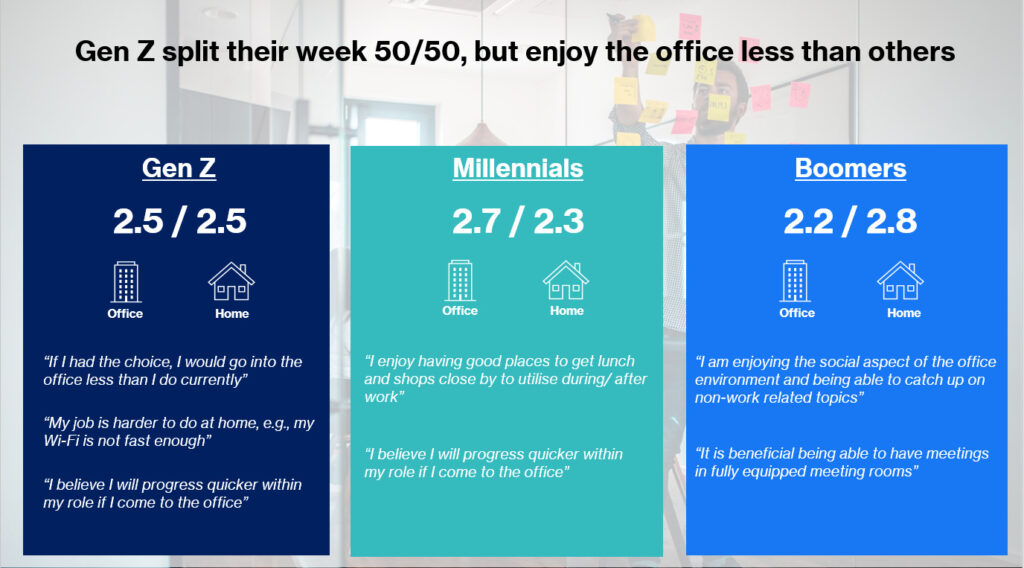
The impact of the Cost of Living crisis has further evolved everyone’s position, with disturbing situations becoming everyday concerns. Simple things such as keeping warm, having a hot shower, or saving on electricity bills are driving the younger cohorts back to the office now more than the Boomer generation. That, and the realisation that without real face time with their peers and seniors, their careers may be stunted.

CACI Cost of Living tracker 2023
Gen Z Millennial Boomer office stats

Applying these learnings in real time: Revo takeaways

Beyond this change in ourselves, we have seen huge changes in the businesses and organisations we work with.

In this last year, I became a board member of the industry body, Revo – an organisation that has gone through wholesale change, not because of Covid per se, but because of what the market needs out of such industry groups. In the past, it was famed for a large-scale conference, held over three days in a regional city, overlapping with many other similar events and organisations. Today, it is very much reset as a not-for-profit organisation, run by the members, for the members.

It is focused on providing a community platform to connect next generation Revo Hub members with those who have a few years under their belts. Instead of a huge annual conference, we now provide smaller events, including the very recent Revo Awards ceremony at Control Room A in Battersea Power Station. On this night, we celebrated the achievements of the best in the business across marketing, asset management, regeneration and leasing. As Revo evolves, those members who contribute will do the same, with a focus on getting out into the market to explore and learn from these winning best practice examples.

Predictions for the future of our working world

So, thinking about the future changes; in our work world, 2023 was centered around the birth of generative AI, albeit over thirty years after the business world started using all forms of AI (under a different name). I no longer struggle to answer the question ‘What do you do for a living?’. While our world at CACI isn’t as straightforward as saying you work in Finance or Retail, with Generative AI for the masses now, I can (relatively) easily explain that I work in consumer data to support businesses like banks, using natural language in AI to categorise large volumes of calls data to better direct enquiries. Or, using AI on satellite imagery to create spatial wealth distribution indices for far flung places. Or, put more simply, use behavioural data (like GAI can) to enable better actions and interactions with customers and prospects.

My biggest goal moving into 2024, and one I would encourage colleagues and friends alike to adopt, is to just get out there and see places again. Make sure you are putting a value on that travel and time, but also make a concerted effort to get away from your screen (office or home), force a new experience, and share that. In a world where AI will take away the mundane tasks, it is even more important to enjoy the new experiences that these new repurposed places bring.

Have you got the right people performing the right tasks?

At its most prosaic, competency management is simply a matter of ensuring that someone is adequately qualified to perform a role in your business. Basic things such as degree certificates and driving licences, where necessary, are straightforward to validate and highlight the competency of someone for a role. In industries where ongoing qualifications and re-training are required, however, competency management can be an altogether more challenging task.

Ongoing competency assessments are common in a lot of sectors. They can be things like regular eyesight checks for transport operators such as bus and train drivers, through to ongoing checks into the abilities of inspectors across various fields. How do you keep a track of when these tests are due and when they have been fulfilled?

A lot of records are maintained online. It is possible to verify the status of someone’s driving licence with the DVLA, for example, which makes basic checks very efficient and straightforward. For obvious reasons, firms which require that someone holds a valid driving licence in order to work for them would need to check this, then make a record of the fact that they have checked this. The risks in failing to fulfil such basic competency management checks are vast.

Similarly, criminal record checks are conducted easily online, which are something some companies will run on employees, especially where they are involved in care industries – it would be crazy not to check someone’s background before hiring them as a worker in a nursery or in the education system.

That is competency management that we are all familiar with. But what else can competency management unlock for firms? Where you have a multitude of employees, collating information on their backgrounds, qualifications and career paths can help you realise efficiencies in your processes by best placing them to conduct tasks which best fit with their competencies. This can be incredibly useful in assessing your existing workforce to cover for short- and medium-term shortages in personnel.

To use transport as an example, if a bus operator is experiencing staff shortages due to illness (a pertinent point during Coronavirus times), it makes sense to explore which of the remaining drivers has experience of the routes affected. Utilising a more experienced driver to cover gaps on a route makes more sense than using an inexperienced driver who would need to familiarise themselves with the route.

This has added implications for the drivers themselves, too. We have covered previously the alarming pre-eminence of fatigue amongst bus drivers; scheduling them to familiar routes and having a thorough understanding of who is appropriately positioned to drive which routes and when can play a fundamental role in running a safe and effective service.

Similarly, with inspection bodies it’s important that appropriately qualified inspectors are conducting relevant inspections in institutions such as schools and airports. The ongoing competency of such staff also needs to be regularly tracked. If inspections are undertaken by inadequately qualified staff, there can be a lengthy knock on affect. This can be time consuming where inspections are inappropriately marked by underqualified staff and must be re-run.

By having a clear understanding of each employee and their qualifications and experiences, it can make the task of scheduling and workforce management much easier, which in turn improves efficiency and results.

Competency management can play a vital role in ensuring that you have appropriately qualified practitioners in key roles. It can also check that your workforce is being efficiently deployed to deliver your services in safe and timely fashion. With the use of the right tools, it can go beyond the basic and help inform future work patterns, keeping the right people in the right places, undertaking the right tasks.

From Support to Sales: Unlocking the Potential of WhatsApp Business for Enterprises

In this Article

How WhatsApp and Braze are enabling conversational customer engagement, support, and overall business growth. 

Business Chat Customer Service via Text

If you haven’t considered adding WhatsApp messaging to your business strategy, you could be missing out on an effective channel to power customer engagement, support, and overall growth.

Messaging apps are becoming the channel of choice for customers wanting to connect with businesses. In fact, a survey in 2020 discovered that 75% of respondents prefer this method compared to other channels.

With just over 2 billion monthly active users and an 85% penetration rate in parts of Latin America, Asia, and Europe, WhatsApp is currently the most popular messenger app worldwide, offering businesses massive consumer reach. Hundreds of enterprise businesses are already using WhatsApp Business Messenger to their advantage.

The most effective strategy for integrating WhatsApp begins with having a fit for purpose customer engagement platform that will enable your team to scale, streamline and unify your WhatsApp messaging. Braze, one of the leading customer engagement and cross channel marketing platforms has recently launched full WhatsApp capabilities.

What makes Braze the ideal customer engagement platform to integrate your WhatsApp strategy? Braze unifies your channels and messaging, to streamline and scale two-way conversations and minimize additional technology or marketing costs. If you’re interested in learning more about how Braze can enable your team, be sure to read our blog post “Accelerating value realisation with CACI and Braze”.

At CACI, we are committed to helping businesses discover new and effective ways to connect with their customers. We are excited to see how Braze is enabling enterprise businesses to launch and optimise their WhatsApp programs both in terms of audience size and use cases. From resolving customer support issues to sending personalised marketing messages, let’s explore some WhatsApp business use cases below.

WhatsApp messaging is resolving customer queries while minimising additional support resources.

Imagine a customer in a different time zone with a question about their recent purchase delivery date. Instead of having to wait to speak with a live support agent, a WhatsApp chatbot can automatically retrieve the customer’s order number and provide them with their delivery details, saving the customer time and eliminating the expense of a live customer support agent.

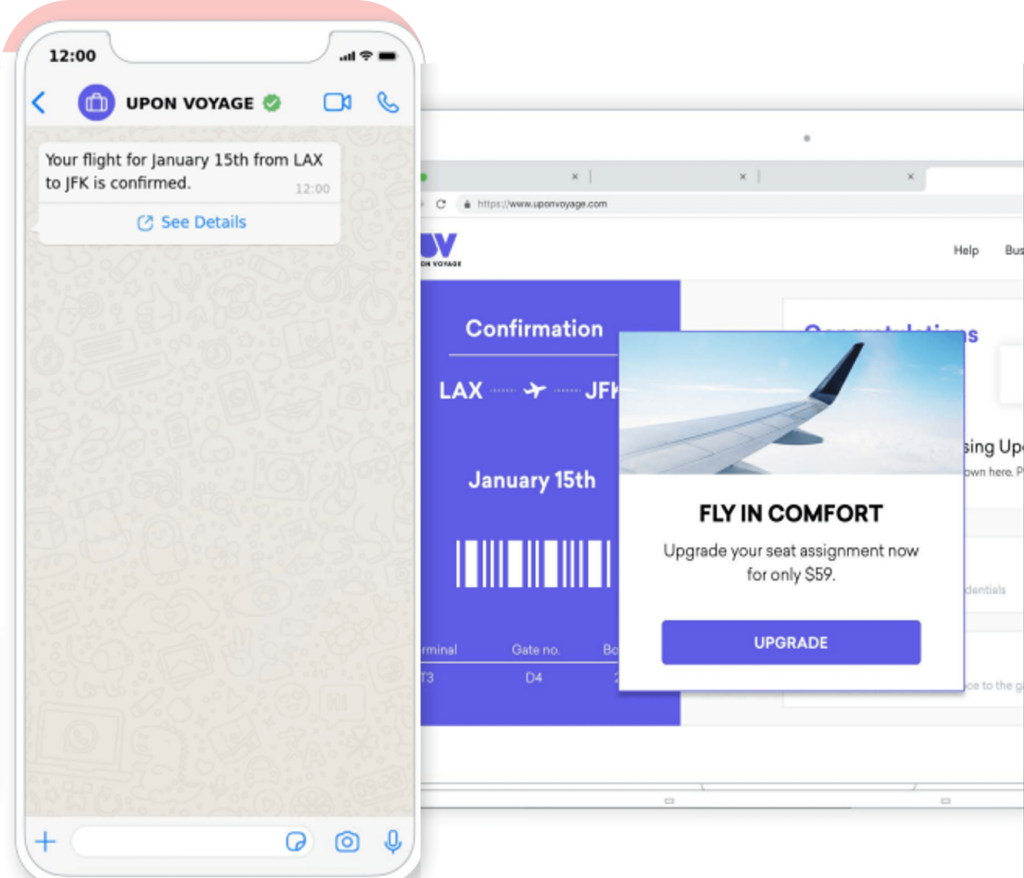
Another example is travellers opting in to receive anything from their boarding pass to flight information, such as changes in schedule or boarding gate, last call before the plane door closes, or even the baggage delivery belt on arrival, all via WhatsApp.

Figure 1: WhatsApp Messages to Resolve Travel Customer Support Queries.

WhatsApp is also effective for driving deeper customer engagement and conversions.

Businesses often struggle with cart abandonment or a loyal customer suddenly disengaging. Sending a personalized WhatsApp message along with a promotional code can be a quick-and-easy way to bring a customer back. In fact, one report found that click-through rates for cart abandonment messages via WhatsApp performed over eleven times better than SMS (36% vs. 3.2%).

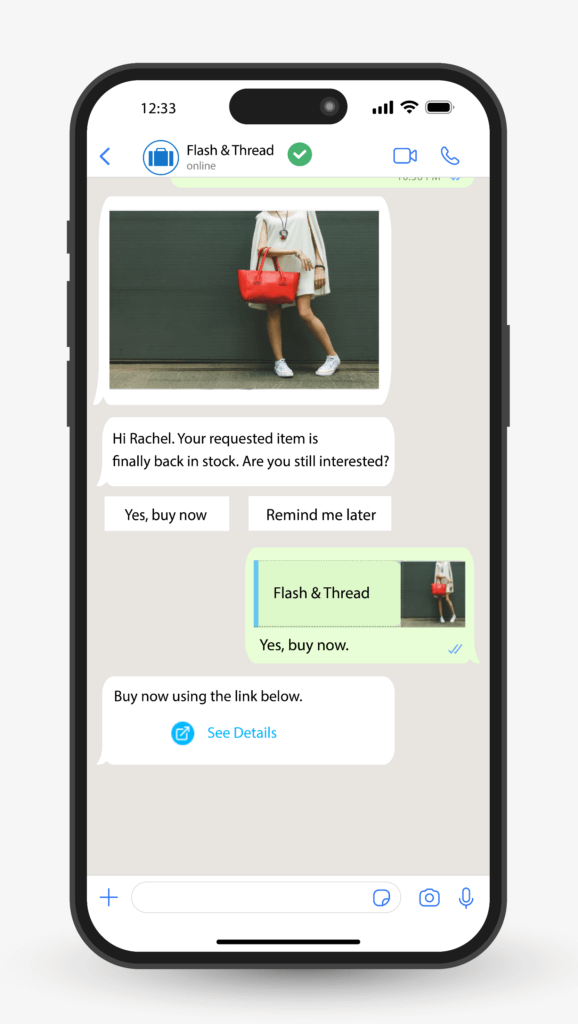
Additionally, WhatsApp’s ability to insert dynamic content and link directly to web pages allows businesses to send engaged customers informational messages about new products, restocked product availability, and other exclusive benefits. These actions can be significant revenue drivers for your business.

Figure 2: WhatsApp Messages to Drive Conversions.

Leveraging a new platform also comes with unique challenges.

While the examples above support a growing business case for WhatsApp messaging, leveraging a new platform also comes with a unique set of challenges. Whether it’s finding the right customer engagement platform, understanding the short- and long-term financial impact, or operational considerations like upskilling internal teams, these are all key factors to consider. Far too often, businesses rush into adopting a new platform or channel without fully considering the financial, organizational, or customer impact. Unplanned or poorly executed strategies can be detrimental, both in terms of cost and reputation management.

How CACI can help

At CACI, we encourage businesses considering a new platform or channel to begin by identifying the customer needs, followed by platform or channel relevance, and finally business impact. If your business is interested in learning more about WhatsApp messaging or a customer engagement platform like Braze, CACI’s technology, data, and CX capabilities can help. Contact us to learn more.

CACI awarded Adobe’s Digital Experience Emerging Partner of the Year 2023

In this Article

CACI is proud to announce that we have been awarded Adobe’s Digital Experience Emerging Partner of the Year 2023. Adobe’s Digital Experience partner awards acknowledge companies that have made significant contributions to Adobe’s business and have had a significant impact on customer success.

To secure this award, the team at CACI has demonstrated a strong level of investment and engagement in the Adobe partnership. This is measured through solution licensing, services, and the number of certifications and specializations held. We have also worked closely with Adobe to ensure that our relationship is of the highest quality and that we are working together to drive value for our clients.

We are thrilled to have received this recognition, and it highlights our commitment to providing exceptional services to our clients. The award was announced at Adobe Summit in Las Vegas, and we are excited to share this news with our clients and partners. CACI will be present at Adobe Summit UK this June and we look forward to seeing you there. Please feel free to get in touch with us if you’d like to meet at the event.

David Sealey, Director of Strategy and Growth at CACI, said,

“Adobe’s solutions to deliver enhanced customer experiences are an essential part of our market offering. I’m delighted that this award recognizes the hard work of CACI’s commercial and delivery team as they implement, optimize, and support brands with Adobe. It’s also important to acknowledge the importance of our clients who have the vision and determination to deliver better experiences to their customers.”

CACI’s expertise with Adobe extends across Adobe Campaign, Adobe Analytics, Adobe Target, and the Adobe Experience Platform. Our focus for 2023 and 2024 is to help organizations evolve their Adobe stack in pursuit of greater performance, reliability, and the ability to launch new use cases.

Should you wish to find out more about CACI’s services for Adobe products, please feel free to get in touch.

Braze’s Global Customer Engagement report will have brands rethinking customer experience

In this Article

In today’s competitive market, understanding how best to engage with your customers and reacting to their behaviours is critical to success.

Following the launch of Braze’s third instalment of the Global Customer Engagement report, I explored the three key customer engagement trends within the report. I also considered how brands impacted by these trends should respond to these familiar challenges.

CACI is an award-winning partner of Braze. We know consumers better than anyone else. Our breadth of demographic data combined with our expertise in marketing and data technology and campaign delivery makes us a key partner for brands looking to deliver innovative customer journeys.

Trend 1: Retention-focused strategies

The first trend identified in the report is how brands are increasingly focused on retention to combat the unsustainably high acquisition costs. The report highlights that brands increased their marketing budget on retention from 33% in 2020 to 45% in 2022. This enables marketers to invest in their customers and design solutions to keep them coming back to their brand.

The challenge is that a sub-optimal strategy can end up costing you time and money. A strong retention strategy delivering value to your customers is worth its weight in gold, as not only are acquisition costs high, retaining customers today is becoming increasingly harder with the breadth of touchpoints available for your competitors to interact with existing customers.

Identifying and combatting these behaviours while understanding how to add value throughout the customer lifecycle is vital. While Braze has a variety of channels and techniques that enable you to deliver your retention campaigns, the hard work happens outside of the platform.

To help brands develop the right strategy to maximise value, CACI’s CRM Strategy team are first focused on getting to the heart of what makes or breaks customers’ interest in your brand. We use our breadth of skills across customer data and campaign delivery to help develop and deliver award-winning retention strategies across a variety of sectors. We recognise that every strategy is different depending on your organisation’s needs, goals and customer behaviours. That is why we take the time to innately understand and ensure each strategy is bespoke to cover each of these areas.

Trend 2: Data management

The 2023 report highlighted two main data management challenges that we also see when working with brands:

Brands have too much data

The days of batch imports and overnight data loads for campaigning are slipping away, and real-time data is becoming increasingly prevalent. With more real-time touchpoints comes more data needing to be categorised, organised, refined and adapted.

This is where having a strong alignment between your tech stack components becomes crucial. The ability to process this data at speed and understand the quality of the data– not the quantity of the data– is paramount.

However, not all brands have an aligned tech stack suited to this influx of data. CACI’s Marketing Technology Solutions team help brands see the wood from the trees regarding their overall data architecture by delivering gap analyses that find and prioritise the gaps to plug.

We’ve recently completed an extensive Braze and architecture audit for a global retail brand which assessed four key areas: Architecture, Usage, Process and Data. The results of this have helped fuel this brand’s understanding of their existing data structure, what gaps are present and then supply a roadmap of priority actions across the next 6 months. This work will enhance the customer experience and deepen customer understanding.

There is a capability gap

The report is correct when it says: “Data management doesn’t end with technology—teams need to be set up to effectively use data.” Skills within CRM are ever-growing, and with more emphasis on data, there are desires to analyse this data immediately and understand how your brand can leverage this within the customer strategy.

Our Campaign Operations team enable and elevate brands daily to unlock key features of Braze such as Conversion Events and Funnel Reports to inform campaign performance. Beyond Braze, utilising the power of Currents has helped brands understand macro and micro campaign performances, resulting in changes to customer strategies and optimised test and learn processes.

Our team of Certified Braze Consultants are a blend of operationally and data-focused power users who bridge capability gaps by working with you to unlock the untapped potential of Braze. Additionally, the team supports our Data Scientists to identify micro customer behaviours that affect campaign performance.

Trend 3: Siloed teams

Like the capability gap, siloed teams can be incredibly detrimental and limiting to a brand’s CRM programme. According to the report, 16% to 28% of marketers in small to large scale companies reported that customer engagement was owned by either marketing in collaboration with other teams, or by cross-functional digital teams. Collaboration between Data, Tech and CRM has become increasingly vital to build out relevant testing strategies and evolve customer experiences.

The report explained that this is not just a regional or even an EMEA issue, but a global one. At CACI, we have the knowledge and tools to drive and manage successful transitions in a company to help increase adoption and enablement of new business processes and technology solutions. Our Operational Change consultants will work with a cross-functional team of experts in-house to create end-to-end solutions to real-life business problems.

How CACI can help

The Braze report provides an excellent overview of the challenges we are all facing in creating and executing effective customer engagement initiatives through the trends of retention-focused strategies, data management and siloed teams.

CACI can supply end-to-end support along the customer engagement journey and help turn observations into strategic and tactical solutions through our powerful combination of data and technology, ensuring customers remain at the heart of any engagement strategies.

To learn more about how CACI can support your business’ customer engagement strategies and initiatives, get in touch with our team of experts today.

Understanding the impact of ESG & sustainability on businesses

In this Article

What is ESG and why is it relevant?

ESG (environmental, social and governance) is a set of measures through which a business can assess its impact on the world. Alongside sustainability, these are factors that affect every consumer and therefore businesses alike, increasingly influencing how we think, behave, and live our lives. ESG and sustainability are quickly becoming the criteria on which businesses succeed or fail, especially as we look further into the future.

Why do businesses need to act on ESG & sustainability fast?

The Companies Act 2006 requires large and medium-sized companies to publish an annual strategic report which must include information on ESG-related items, such as the business’ environmental impact, employee disclosures, social, community, human rights issues, and the company’s policies on each. In addition, the UK passed the net zero emissions law¹ in 2019 targeting net zero greenhouse gas (GHG) emissions by 2050. To reach that target, the government has pushed reporting requirements. As a result, consumers and businesses are increasingly looking to reduce any unsustainable processes and practices, which is increasingly influencing how we behave and how we live our lives.

As companies are recording their environmental impacts, individuals are becoming more aware of their own carbon footprints. In fact, 62% of the UK population² now believe that climate change is the biggest threat to civilisation. Social consciousness continues to grow as consumers make decisions on how businesses conduct themselves, and 36% of the UK³ claim that they try to only buy from companies that are seen as socially and environmentally compliant. Businesses are starting to understand that not only is acting in an ethical and sustainable manner not having a negative impact on business, but that it is a requirement to act in the positive.

So, how can CACI help businesses navigate consumer attitudes towards ESG and sustainability?

Using CACI’s ESG Score to support ESG & sustainability-driven businesses

CACI can help businesses make informed decisions to quantify and ultimately improve their carbon and social impact. The ESG Score can help businesses identify customers that are most concerned about ESG issues and support businesses in engaging with them regarding the brand’s products, prices and propositions.

CACI’s ESG Score also uncovers individual attitudes towards environmental issues, social equality and governance, and can be applied to an existing customer base to identify a business’ exposure as well as help them re-position for the future.

The resulting data helps to inform decision-making and decipher the impacts that carbon footprints have in various societal capacities and circumstances.

Carbon footprint of household + travel

A household’s carbon footprint is assessed based on household consumption – food, housing, transportation, clothing, and other personal services. It is an important contributor to greenhouse gas emissions. Leveraging the depth of our unique consumer data, CACI can assess the type of property, mode of commute, consumption behaviour and more to estimate the carbon footprint of a household. Businesses can use his information to target the right households and areas with focused messaging to help reduce global carbon emissions.

Carbon Footprint of vehicles

CACI’s route optimisation software, Pin Routes, allows businesses to create routes for visits, deliveries or collections, ultimately reducing logistics costs and improving sustainability by reducing unnecessary driving. It now also allows businesses to understand the carbon emissions or carbon footprints associated with logistics operations. This in turn can be used to make informed decisions that can help with the move towards electric vehicles.

Carbon Footprint of marketing

There is a carbon cost for all marketing activity– even an email takes up space on servers and has a sunk carbon cost. CACI quantify the carbon impact of various channels, allowing our clients to undertake a full carbon impact assessment on all of their marketing activity and identify optimum channel mix to best balance campaign efficacy with carbon impact.

Social Impact Assessment

The provision of services across the UK is not equal, with some areas having much better access to civil services (e.g. healthcare, education or leisure centres) than others. CACI has quantified the accessibility to these services at postcode level and has identified areas that require additional support. The goal of impact assessment is to bring about a more ecologically, socio culturally and economically sustainable and equitable environment. By improving an area’s social provision, businesses can promote community development and empowerment, social cohesion, build capacity, and develop social capital (social networks and trust).

To learn more about how CACI can help your business improve its carbon and social impact, contact us today.

Sources:

  1. UK becomes first major economy to pass net zero emissions law
  2. Three-quarters of adults in Great Britain worry about climate change
  3. UK consumers embracing more sustainable behaviour

Elevating Customer Experience with High-Quality Data: The Power of DataHub

“Garbage In, Garbage Out” (GIGO) is a well-known adage that holds true across various industries, including sports nutrition, education, wine making, data science, and, most notably, customer experience.

Poor-quality data can undermine confidence in reports and impede the implementation of personalisation and other data-driven initiatives.

At CACI, we are dedicated to harnessing the power of data to deliver remarkable results.

High-quality customer data is critical to this mission. Data that is accurate, consistent, and free from duplicates will enable us to optimise customer loyalty, personalisation, AI/ML, conversion optimization, and regulatory compliance.

To ensure that our data is of the highest quality, we adhere to the following criteria:

  • Demographically rich: The data provides insights into the customer’s identity and lifestyle.
  • Standardized: The data is consistent across systems, allowing for quick and efficient processing.
  • Veracity: The data adheres to your standards for validity and consistency.
  • Free of duplicates: The data is resolved at the individual level to avoid double counting and over-communication.
  • Consistent identifier: The customer is identified consistently, regardless of the source.
  • Predictive: The data contains variables that enable modelling and prediction of customer interests and needs.
  • Compliant: The data adheres to relevant consent and permissions standards.
  • Understood within the organization: The data is accessible and understandable to stakeholders.

To address these challenges, CACI has developed DataHub, a solution that solves data quality issues faced by brands. DataHub was built on the experience of working with leading brands in retail, publishing, financial services, gaming, and utilities.

It processes and enriches data in real-time using a scale on demand cloud native architecture, engineered to work with your data, wherever it is stored. For CACI clients already using Acorn, Ocean, and Fresco, DataHub provides dynamic, real-time enrichment of data, enabling real-time personalization and optimization of the digital or call center experience.

To learn more about DataHub and its flexible integration options for all use cases and enterprise architecture needs, download our short brochure or reach out to us for more information.

Let’s work towards a future where data quality is no longer a concern.

Creating a transformational MarTech Stack

In this Article

I had the recent pleasure of joining Matt McRoberts (Braze) and Rob Murphy (mParticle) on a panel at Braze FI had the recent pleasure of joining Matt McRoberts (Braze) and Rob Murphy (mParticle) on a panel at Braze Forge in London. We lent into a topic that is high-up the priority list for those working in experience, product, and marketing roles – “how do we create a transformational MarTech stack?”

With MarTech (technology for marketing and advertising usage) becoming a core capability for delivering enhanced customer experiences, the MarTech we have (or lack) can be a major blocker to progress. An email provider that can’t handle real-time messaging, an advertising tool that doesn’t have sight of first-party data, and insight tools that can’t analyse the customer’s journey.

I wanted to share a few takeaways from the panel that will hopefully help you in your MarTech transformation:

1. Are you truly aiming for transformation?

Recent research that Braze and CACI conducted found that whilst 86% of financial services firms believed they were delivering a great experience, only 40% of customers agreed. This disparity is at the heart of the question of whether brands know what it takes to deliver a transformed experience.

Areas to focus on:

  • Audit your current communications to understand where you are now
  • Segment your market and gather customer feedback to understand what your customers would consider transformational
  • Design future customer journeys that express what a transformed experience looks like

2. Transformational MarTech stacks become digital nervous systems

With a promised 12x improvement in conversion rates for action-based comms vs batch comms, the ability to listen, predict and react is a critical core capability. Yet too many marketing teams are hamstrung not just by slow data integrations, but also by outdated campaigning processes requiring them to write briefs down and submit them to be processed.

The digital nervous system is constantly listening and capable of reacting immediately to inbound triggers or predictions.

Areas to focus on:

  • Review your existing MarTech architecture to understand blockers, siloes and bottlenecks
  • Map out your operating model, to understand what would need to change in order to deliver more real-time automated comms

3. Politics and rigidity are the enemies of transformation

Looking around the audience at Braze Forge, there were experienced marketers who wanted to be delivering better comms experiences. There was no challenge to the ideals of real-time personalised experience being superior drivers of improved short-term and long-term results.

Despite the shared ambition, I see many brands being held back by politics and rigidity. Politics meaning the control, authority, and power to make good decisions. And rigidity being the inability to act at pace.

Therefore, the ideal MarTech leader needs to demonstrate the ability to develop consensus and buy-in for transformational plans. To not only have a vision, but to communicate it and drive it through a business.

Areas to focus on:

  • Build a clearly phased roadmap for change and continually communicate it
  • Create a solid business plan to justify the roadmap that you need to deliver
  • Get close to those that can stop your roadmap, often the power lies with those who can prevent rather than fund (think enterprise architects, procurement, and security)

4. Agile working and incremental performance increases are your change enablers

There’s an old quote that the only way to eat an elephant is one bite at a time. What the quote doesn’t say is that the first bite will be the first of many, and that you can expect to be chewing and biting for a long time. Agile delivery of change gives the chance to handle large scale transformation one bite at a time.

This approach is worth the effort having seen it work at Legal & General and Domino’s where impressive results have followed incremental changes. In the case of Domino’s this was to drive ruthless relevancy in comms. For Legal & General it is an ongoing process of releasing high value use cases to prove a business case before moving to the next.

Areas to focus on:

  •  As part of the transformation roadmap have clear success measures and unlock funding and buy-in round by round
  • Seek to prove value through optimisation before wholesale change
  • Work with a trusted agency partner to launch minimal viable products (MVPs) which prove that use cases work

CACI’s Framework for Value Focussed Transformation

When it comes to delivering change in organisations, we’ve reviewed successful programmes of work to develop our framework. This defines the planning process we go through when evaluating how to have an impact on any size of organisation.

We’re always welcoming brands with transformational aspirations to talk with us. Get in touch if you’re leaning into a programme of change.

Adopting a Customer-Centric approach: How truly valuable is it for both your business and your customers?

In this Article

Brands are increasingly finding more ways of communicating to their customers by using extended methods of personalisation to grow customer retention and overall profit. The end-to-end process from learning and understanding your customers through to developing personalised communications is often complex, however adopting the right principles from the outset can ensure that the right steps are taken to achieving the wider goals of the business.

Understanding Your Customers

Understanding your customers commonly begins with an exercise in segmentation, allowing you to build a view of your customers’ interactions with your brand through the lenses of different audiences. A customer journey map then allows you to visualise each of these interactions in a linear journey to evaluate this view across several life stages and touchpoints.

  • What is the value added to your business?

By putting the customer at the heart of all decisions and communications and adopting a customer-centric approach, it will allow you to fully understand their behaviours, needs and expectations. The key value of a customer journey map is that it allows you to do this by considering all available data in context, rather than risking looking at information from fragmented sources in isolation. Being aware of these elements will enable you to create an end to end strategy based on a holistic data view.

Additionally, a customer journey map allows you to improve internal collaboration and alignment within your business amongst different departments (marketing, sales and operations). Together you will understand which activities to prioritise that make an impact on your business and your customers and will eventually cut counterproductive costs.

  • What is the value added for your customers?

The fundamental value it brings to your customers is that it leads to the creation of personalised experiences and in turn, customers will build more trust and gain a closer relationship to your business and your brand.

  • What happens if I ignore this step?

Failing in doing so will cause your brand to risk in sending communications to customers that are not reflective of the truth or their needs. It only takes one bad interaction with a customer to turn them towards competitors…

Talking to your Customers

A contact strategy is a visual representation of a planned communication strategy which creates a clear step by step plan of communication content, channels and time frequencies. It gives you the ability to deliver the right message, at the right time, to the right audience across a range of different channels. Essentially, it translates aspirational customer journeys into actionable campaigns.

  • What is the value added to your business?

To achieve better outreach, repeated visits and overall customer advocacy, it is important to plan the content, frequency and channels that are most effective for a given audience. While it allows the planning of cross sell and upsell, it also allows the nurturing of new and current customers through automated and/or triggered campaigns tailored to each customer profile.

  • What is the value added to your customers?

Planning and organising the communication flow avoids overwhelming the customers with unnecessary communication as each message is triggered according to the client’s prior behaviours and preferences, at the right time and through the preferred channel.

  • What happens if I ignore this step?

Communicating without a contact strategy relies more on frequency than anything else. Bombarding customers with fragmented communications can in turn damage the ROI achieved from each campaign as well as generating low traffic to your platforms.

There is clear value in going through the necessary steps to understand and communicate with customers in the right way. At CACI, we specialise in taking clients through this journey and our team of consultants can help you build your own. If you’d like to schedule time with our marketing consultants to discuss how you can create a customer-centric marketing strategy, please get in touch.

Related Content

Discover more about how you can develop a customer-centric, personalised marketing experience in our recent whitepapers.

The new FCA Consumer Duty – CACI is ready to help

In this Article

FCA Consumer Duty

The new Consumer Duty is an important directive from the FCA to protect consumers. It recognises the need to focus on consumer outcomes and to put these outcomes at the heart and centre of the organisation.

For financial services organisations to achieve the requirements of the Consumer Duty, there is a need for change. Change will require overcoming common obstacles around data, communication plans, marketing goals and working practices.

To be in line with the Consumer Duty, firms need to know their customer, adapt their products, and use data to drive messaging.

CACI is here to help

The result is that Financial Services organisations will need to improve consumer understanding, have a complete view of the consumer lifecycle and journey, revisit the selection and messaging used in communications, and establish new means to measure.

Operational siloes, fragmented data, incomplete consumer profiles, product-oriented campaigning, and slow/linear working practices all create barriers to achieving the FCA’s directives. Our experience has been that firms may be dealing with several of these blockers at one time, requiring more holistic solutions than a traditional agency or consultancy can provide.

CACI’s unique positioning in the market as part agency, part consultancy, part data provider and part system integrator ensures that we can really drive value for your business. Our services and data products have always been there to connect firms with their customers. Some of the ways we can help:

  • Enriching consumer dataNationwide rely on CACI’s demographics and lifestyle data variables to provide deeper insights on who their customers are and the size of the market opportunity
  • Segmenting and insights on consumer audiences – the Money and Pension Service have used CACI’s services to build a profile of the nation’s wealth and indebtedness
  • Fixing data quality and fragmentation – working alongside their own data teams, CACI are improving the quality, latency, and reliability of the data that Bupa holds and uses in marketing
  • Improved marketing and communications tools – Virgin Money have invested in market leading communication tools, CACI has designed bespoke customer journeys to leverage this new technology
  • New reporting and measurement – from attribution through to complex propensity models, CACI can visualise and report on the KPIs that really matter
  • Efficient operating models – through improvements in the people and process side of marketing operations, CACI can strip out 80% of the time required to launch a campaign from idea through to results. This will enable you to send more targeted campaigns to the right consumers
  • Product insights – our Retail Finance Benchmarking services provide vital insights into the market for personal loans, current accounts, savings, and mortgages which supports and enables product design, proposition development, and provides an objective measurement of market performance.

The Consumer Duty is an important directive with vital intention to build trust between financial institutions and consumers. For help with your journey to compliance, please contact either Paul Sene or Cara Bramwell to find out more.

Further reading:


Bring a young person’s story to life

In this Article

In many cases, the story behind young people in the youth justice sector gets lost in myriad systems and professional bodies. Information gets siloed, making it incredibly challenging for Youth Offending Teams (YOTs) to paint a clear and complete picture of each young person that comes to their attention. Without all the requisite information being readily available, and with several cases to work on simultaneously, how can YOTs be reasonably expected to discover and consider all the underlying issues?

Bringing all of the available information on each young person into one central source of truth is helping YOTs to navigate each young person’s story, using valuable insight gained across their cases to make informed decisions and interventions for each young person.

Using technology to improve outcomes in youth justice

Advancements in technology are really supporting YOTs in improving outcomes for young people in the youth justice sector. Aspects such as data mapping are enabling a new understanding of youth offending patterns, making it easier for YOTs to spot intervention points and improve their outcomes.

ChildView, CACI’s specialist youth justice management information and reporting system, is designed with this goal in mind. By providing a rich and accurate view of what is going on in the system, ChildView supports YOTs with all the latest multi-agency information and activity in one place.

By bringing together previously disparate teams and professionals, ChildView makes is easier to read and understand each young person’s journey.

Telling the youth justice story

Using a central database enables each young person’s story to be told and understood. “For me, what I like about ChildView is that it tells a story about the young person when they come to us,” says Sue Pattison, service and case support worker at South Tees Youth Offending Service. “For example, it informs us if they were released under investigation and what was attached to that offence. It enables us to record their story and its outcomes as a process and it just flows, making it easier to read and understand, meaning that we can make better informed decisions.”

Bringing together different agencies is a crucial step in telling each story. “We have moved two members of staff into each area team to support our prevention work, and they are to be supported by wider YOS resources,” explains Paul Harrison, partnerships manager at South Tees Youth Offending Service. “We have used ChildView for this as we want to keep every bit of information about the young person in one place. This means that we can review why that young person has required early help and what the outcomes of it were.”

Report and develop

Once a young person’s story has been understood and acted upon, it is vital to gather information on the outcomes in order to help identify similar issues in other young people’s stories and to understand how well each action and intervention has worked. Again, by recording all reports in a central system, YOTs can easily identify and review cases, using them to inform future decision-making processes.

“The reporting module in ChildView has enabled us to swiftly report on all aspects of our service, particularly the area of re-offending, which has allowed us to identify and characterise different groups of young people that we work with,” says Troy Hutchinson, performance systems and information manager at Luton Youth Offending Service. “As a performance manager I am able to develop localised reports that empower members of staff, whether they are case managers or practice managers, to complete their own specific reporting tasks and use the tools to support practice development.”

ChildView is supporting YOTs across the UK to gain a complete picture of each young person that comes into their services, enabling them to understand each story and focus on the outcomes.

Migrating your customer data infrastructure to Snowflake

Snowflake offers unprecedented power for customer marketing and analytics use cases. Its separation of processing and data storage gives scale and accessibility unlike any other solution. The key benefit for customer marketing and customer use cases is that all data users can work from one up to date source of truth.

Migration to cloud data infrastructure is already on the agenda for many CDOs, CIOs and CMOs. With a potentially large cost for migration, and the risk inherent in moving platform, there are planning decisions to make.

Firstly, there are many different types of cloud migration, and you need to pick which one suits the needs of your business.

Broadly these migration options fall into:

  • Lift and shift cloud migration – exact replica of previous customer platform in a new data cloud for increased resilience and lower cost of ownership
  • Optimise and migrate route – largely replicating a legacy customer database to the cloud but taking the time optimise key components of your data infrastructure to take advantage of Snowflake’s features
  • Migrating through a full rebuild – creating an entirely new data infrastructure within Snowflake to give optimum performance

At CACI we have experience of the pros and cons of each approach and can advise brands on how to get the most from a Snowflake and cloud migration. For instance a full rebuild approach is going to be more timely to complete but will offer greater benefits. In other cases the choice to migrate and optimise will offer huge performance enhancement to critical data needs whilst avoiding the larger budgets.

Regardless of route selected there are key stages in successfully completing a migration of customer data infrastructure to the Snowflake Data Cloud. At CACI we’re helping clients along this journey to minimise risk, accelerate benefits and ensure that the needs of marketing are met:

  1. Legacy audit – all organisations will have a pre-existing set of data sources and integration tools that need to be audited in preparation for migration
  2. Identity and quality assessment – reviewing customer data quality to ensure individuals are clearly identified and that data quality is a priority
  3. Impact preparation – preparing for the impact of migration to Snowflake and communicating this within the organisation
  4. Use case execution – moving to Snowflake will enable greater applications of data and more users having access to data. We help you plan for that to ensure that you reap the benefits
  5. End-to-end planning – when making a change of this scale you need to ensure that all functional and technical processes are covered including reporting using the new data.
  6. Operating model and enablement – ensuring teams across IT, product and marketing are able to fully use the capabilities of the new platform
  7. Benefit assessment – post migration, retrospectively ensuring that the migration has achieved its objectives

To hear more about how CACI migrated the RAC from legacy data infrastructure to the Snowflake Data Cloud, you can watch Ian Ruffle, CRM Capability Manager at RAC, and Jenny Cann of CACI speaking at our recent event.

For more on CACI and Snowflake you can read these blog posts

Adobe Campaign v8 – CACI achieves another first with Adobe

In this Article

CACI continues to stay at the cutting edge of marketing technology as they achieve an EMEA first for Telegraph Media Group.

Communicating with their subscribers and readers is an important objective for the Telegraph, with a need to stay relevant through fresh content and offers. To continue serving timely and personalised messaging, the Telegraph made the decision to upgrade to Adobe Campaign v8 and to implement Adobe’s Experience Platform.

Adobe Campaign v8 brings high speed performance for complex data selections and ensures that Telegraph are able to reflect the diverse interests of their readers in communications.

As a long-time partner of both Adobe and Telegraph Media Group, CACI were appointed to run the upgrade. Notably this was the first upgrade in EMEA to Campaign v8 and the second globally.

Speaking of the project, Dylan Jacques of Telegraph said “it is great to work with partners who understand our business so well and take a practical approach to delivery. Working with the teams at CACI and Adobe has been a pleasure and enabled us to deliver a complex upgrade.”

With an increasing array of options for marketing technology, CACI remain committed to our mission of assessing the best options for our clients and making value led decisions on what route to take. David Delbridge who leads CACI’s marketing technology practice said “every client situation is different which requires us to look at the use cases a client has and make decisions that deliver the greatest value for minimal effort & cost. Telegraph needed a powerful platform that could handle their complex data and Adobe Campaign V8 was the obvious choice. As longstanding partners of Adobe, we are proud to have implemented the first Adobe Campaign v8 outside of the US!”

Should you want to find out more about CACI’s work with Adobe and the support we can provide in selecting and optimising customer marketing technology, please get in contact.

Discover how we can help you with Adobe

Find out more about how we’re helping leading brands with Adobe in our case studies with Virgin Media, Bupa, and Legal and General.

‘I feel seen!’: The omnichannel experience – making a customer feel valued and building better relationships

In this Article

As channels multiply and customers seek out constantly evolving ways to communicate, the linear customer journey is long gone. Instead of a neat, predictable series of interactions, customers now bounce happily from one channel to another, merging online and offline, making the leap to purchase once they have built trust and confidence in a brand.

Win-win opportunity

An omnichannel approach isn’t just proving necessary for brands that want to stay ahead, it offers benefits for both business and customer. From a business perspective it can contribute to more efficient automation, it enables continuous refinement of systems, and aligns process and customer strategy to meet customer expectations. For the customer, real-time interactions and intelligent personalisation can enhance their experience in a meaningful way.

A valuable experience

‘Experience’ is often talked about as the ultimate objective for omnichannel marketing, but what does that look like in reality? When done well, omnichannel marketing can move the customer beyond one-dimensional, one-way interactions, to an experience that adds value and fosters brand affiliation that can be long lasting. For a truly positive experience across channels, marketers must put the focus onto the customer, and ensure their experience is consistent, coherent, and forges a connection.

Consistency

As humans, we thrive on certainty. A brand that meets your expectation instils trust. Whether visiting a website, scrolling past an Instagram post or receiving an email, consistency is key to customer confidence. One way to do this is to create matching luggage. This approach optimises content to ensure it fits the channel and brand flawlessly, whatever journey a customer takes.

Uniformity should apply to both branding and tone of voice, providing customers with a sense of security in knowing who the brand is. A unified approach should also eliminate conflicting information across channels, helping to boost the brands credibility. For a completely consistent experience images and videos need to be formatted for each platform, ensuring assets are appropriately represented cross-channel. Treating each channel as the unique opportunity it is allows content to reach its full potential. Brands who repurpose content across channels without making adjustments, or paying attention to the messaging and character count, will stand out for all the wrong reasons.

Coherence

We all want to feel like we matter, and these days we expect brands to recognise us as individuals. It’s not just that inputting your details every time is frustrating and a drain on your precious time, but when a brand shows recognition of our personal tastes and preferences or our previous interactions, it humanises the experience and signals that the brand care.

By harnessing the capability of customer data platforms to continuously enrich a customer profile it’s possible to create a seamless experience across channels, allowing customers to pick up where they left off, wherever they touch in. A Single Customer View shifts the focus onto the customer not the channel, facilitating a holistic picture of the customer and enabling effective personalisation that will resonate. Using data insight to develop a deeper understanding of the customer serves to strengthen the customer relationship. The more customers feel seen, the more inclined they are to interact, and the more they interact, the better you know them.

Connection

What do we mean when we say ‘experience’? Often what we are pursuing in an experience is a connection on an emotional level, a deeper level of understanding of you as a customer and your needs. Omnichannel marketing provides more opportunity than ever to connect with the customer, because it meets them wherever they are. But to genuinely engage with a customer requires showing an understanding of their pain points, desires and motivations, all wrapped up in a visually stimulating, user-friendly design.

Good design can make a brand stand out, but satisfying design can solidify a customer’s brand commitment. Paying attention to accessibility, with appropriate text size and optimisation for dark mode, can stop a scroll in its tracks whilst meeting the needs of a sizeable portion of the population. Image selection must consider the channel to achieve maximum resonance, ensuring it fits the tone, look and feel to reinforce the message and chime with the audience.

Alongside visual elements, messaging can give insight into the brand culture and value that a customer can connect with. Key to this is an understanding of the customer demographic and which channels they use and using appropriate messaging that fits, so it feels authentic to the channel whilst staying true to the brand.

If done right, omnichannel marketing has the potential to be a powerful force in engaging customers, but only when they remain at the centre of the experience can that potential be realised.

One size fits none: why the future of effective digital marketing must speak to the individual

In this Article

In a world of multiple channels and differing formats, is it really possible to deliver brand-consistent flawless campaigns whilst communicating on an individual level?

Everyone loves pizza, right? Meet the Taylor family. Three generations of pizza-enthusiasts. Louisa is 15, obsessed with manga, baking, and social media. Her mum, Ellen, 44, loves running, and uses apps to manage her busy life, and her running times. Louisa’s granddad Mick, 71, is never happier than when fishing, and likes to catch up with his pals via email or text. As self-confessed pizza fanatics, loyal to their number one brand, they all want to know when the latest pizza has landed, or about a great deal on their go-to favourite. But should their beloved brand communicate this information in the same way, on the same channel? In short, no. Because which channel could possibly reach them all? And even if there was a single, magic channel, what single message would get them all interested?

Making sure matching luggage doesn’t become lost luggage

The beauty of the digital customer marketing evolution is that products or services with mass appeal can now speak to the masses, individually. Meeting them where they are, and talking their language, so to speak. It’s now eminently possible to make the biggest splash with each interaction by delivering the right message, on the right channel, at the right time.

Whilst it’s crucial to have brand consistency and content to be optimised across channels, we mustn’t forget the nuance that ensures your communication isn’t just a shot in the dark. Receiving generic content that doesn’t fit with your own lived experience or lifestyle is going to be a miss every time. If we start to shift the focus to making an emotional connection, we begin to reframe the expectation that communications can be as unique as the individual receiving them.

To hit the mark requires a level of understanding. You’ve got to know who you’re talking to, you’ve got to appreciate their motivations, and understand the channels you’re working with, to make the message work. Fed by data-led customer insight, a comprehension of your audience enables dynamic content to work at its hardest and humanise the communication. Personalisation can permeate far beyond their name, it can be their latest purchase, their location, even the weather at their location. Analysis of consumer behaviour not only leads to the most appropriate channel, but also aids an understanding of the most effective incentives, that inform the tone and language that will trigger the desired emotion and ultimately create a connection.

Making the connection, one slice at a time

The explosion of digital data makes a connection with customers, in theory, more possible than ever, but is dependent on having the right approach and using tools that are up to the job. Using a data platform such as Tealium to blend data sources, can layer an understanding of each customer. As a result, the creative can be tailored using platforms such as Moveable Ink, to leverage messaging for maximum impact. Harnessing the power of a cross-channel solution such as Braze, will ensure each individual receives a compelling, real-time, personalised experience on each channel.

So, what does an individualised approach look like in practice? Let’s take the example of Louisa’s family and a brand-new meal deal. Reaching Louisa on Snapchat, using localised references to create resonance, and quirky, interactive content that compels her to share, helping get the word out that it’s that time of the week. For Ellen, a rich push notification encouraging her to ditch cooking in favour of a takeaway is positioned as the solution she needs after a busy day. And for Mick, a text to remind him of the tasty pizza he had last week and nudging him to share another with a friend, could be enough to down his fishing rod and place an order.


Of course, the family are most likely to engage with the brand over several channels, necessitating a seamless omnichannel experience. The building of intelligent data profiles through CACI’s consumer segmentation tool, Acorn, can make it easy to recognise your customers, so they can feel seen, making it more about the customer than about the channel.

What can we ‘takeaway’ from the example of the Taylors? As we become ever more saturated in media and our methods of communication diversify, the need for consumers to feel they are the only person in the room becomes ever more pronounced. Moreover, with the right tools and understanding, it is infinitely possible.