
Case study
How Allwyn uses CACI’s territory & route optimisation tools to successfully expand their field sales team & stores

Summary
Allwyn officially took over as operator of the UK National Lottery at the beginning of 2024. As part of this major acquisition, Allwyn has grown its sales team to deliver key initiatives as part of the new licence. To successfully do so required a two-fold objective:
1. Ensure a smooth running of visits for existing Retail Sales Executives covering over 40,000 stores on a quarterly basis.
2. Grow the size of the team to 155 Retail Sales Executives to increase the quantity and quality of visits.
CACI had established a long-standing relationship with the previous operator of the National Lottery and had a proven track record of delivering projects for them. Allwyn therefore knew it could turn to CACI as a trusted partner who would understand the work required to help meet their objectives.
Company size
6,000+
Industry
Leisure, Arts & Entertainment
Products used
Challenge

New territories and routes needed to be designed to quickly set the wheels in motion.

As an expanded field team, Allwyn had to ensure that these routes and territories were optimal to meet deadlines and mitigate any disruption from the previous operator’s handover.
Solution
Allwyn commissioned CACI to undertake a headcount analysis and territory optimisation project using CACI’s territory optimisation tool, InSite FieldForce. CACI went on to create optimal routing solutions for Allwyn, using their cloud-based route optimisation software, CallSmart Web, to ensure the following:
- A correctly sized team would be in place for their expanded network of over 40,000 stores
- Ideal locations to recruit new Retail Sales Executives would be known
- Territories are optimised to balance work evenly, maximising each Retail Sales Executive’s potential
- The number of scheduled visits would be maximised and driving time minimised.
With their team of experienced field marketing optimisation experts, CACI was able to bolster the above objectives for Allwyn. Allwyn has also licenced CallSmart Web, which enables them to self-serve and optimise routes once personnel are in place. Ongoing training and support for Allwyn is provided by CACI’s experts during this transitory period as they move towards more software usage.
Results
Following CACI’s headcount analysis and territory optimisation work, Allwyn’s Retail Sales Executives have been working with balanced workloads, ensuring they are neither overworked nor underutilised, with an average utilisation (including commute) of 86%. This helps the business understand whether there is sufficient time remaining for additional tasks such as prospecting, admin and more.
The territory optimisation work has enabled Retail Sales Executives to spend 79% of their time with customers, and less time driving. This is in addition to achieving their target number of visits per day.
The fair distribution of workload has also meant that CallSmart Web is able to produce the best possible schedules for all of Allwyn’s 155 Retail Sales Executives, leading to 100% of scheduled visits across a 10-week call cycle.

The combination of using CACI’s expertise via consultancy and software solutions has allowed Allwyn to successfully go live with its expanded field sales team of 155 Retail Sales Executives while continuing to ensure a smooth running of all visits across their store universe of over 40,000 outlets. This highlights the importance of a tailored approach, as well as the countless benefits of optimised and efficient territories as well as visit schedules. CACI continues to be on hand to provide technical expertise and support to ensure a continued success for this partnership.




Case study
Salford Royal NHS

Summary
Salford Royal NHS is an integrated provider of hospital, community and social care services, with some 750 beds and over 6,900 staff providing a range of services to the 240,000 population of Salford, as well as specialist services to Greater Manchester, the North West and nationally.
Company size
9,000+
Industry
Healthcare
Products used
Challenge

Data insights
Management reporting around patient admin data had become cumbersome and slow, leading to poor and often inaccurate reporting. Resource was often spent fixing current problems, rather than finding new solutions and previous attempts at building an in-house data warehouse had failed. Royal Salford NHS needed a single source of reliable and accurate data that they could gain real insight from.
Solution
CACI’s InView data warehouse provides a single source of information from across PAS, radiology, pathology and EPR modules, data extraction and loading is fully automated, and reports produced daily using SAP BusinessObjects. Qlik dashboards are also used in A&E, offering a live view and analysis of patient data with predictive capabilities.
Results
The role of data has completely changed. Time is now spent analysing results and developing innovative approaches to data handling to drive real-time insights. A&E can predict patient attendance, likely arrival modes and emergency admissions numbers, per weekday and hour. The self-serve model has helped greater engagement and understanding from all departments.





Case study
How The Midcounties Co-operative use data-led decision-making for their location planning strategy

Summary
The Midcounties Co-operative is a large consumer co-operative fully owned by its members, which operates the Your Co-op family of businesses. Founded in the mid-19th century to share goods and services at a responsible price in the community, the Midcounties Co-op presently operates from more than 230 food retail stores in the UK, largely across the West Midlands, Oxfordshire, Gloucestershire and Wiltshire. The organisation also trades nationally through the Co-op Pharmacy, Co-op Travel, Co-op Childcare, Co-op Energy and Phone Co-op businesses, as well as operating a funeral care business and Post Offices. Every Co-op business is built on robust ethical values designed to foster a strong business and community.
Company size
5,000+
Industry
Retail
Products used
Challenge

When Ross Lacey joined Midcounties in 2017, he stepped into the newly created role of Location Planning Manager. His task was to help the business grow through a greater focus on location analytics and data-led decision-making.

The team built some strong working relationships with developers and agents, but in order to continue to grow the new site pipeline in line with the ambitions of the business, they needed to adopt a more targeted approach.

This meant developing accurate and reliable spatial and geo-demographic modelling to understand catchments in the context of business objectives and performance.
Solution
CACI’s InSite tools and data provided the comprehensive information Ross needed to analyse the core trading area. He analysed mapping data and catchments in every village and town in the Co-op’s trading area, looking at existing stores, competition and demographics.
The model has been continuously updated since it was created, feeding in new data from CACI that reflects changes in catchments, communities and demographics. Ross and his team have also adopted new HTML mapping tools which make it easier to share links with colleagues around the business who request site and catchment information.
Working closely with CACI, the team has recently developed a suite of dashboards that present key information about store performance within a catchment in a visual format. These are automatically updated, so the most useful and comparative data is continuously available without the need to design individual reports. Ross is also impressed with the aesthetics of the dashboard output: “It’s important to me that data we share with colleagues is easy to understand and well-presented visually: the reports have been really well received and had an impact around the business because of this.”
Results
The InSite tools, dashboard and data have given Midcounties reliable evidence for new site investment prioritisation. According to Ross:
“The rigorous approach has built strong confidence in our pipeline of planned sites. As well, greater confidence in our sales forecasting has enabled us to be more aggressive in our rental offers as we compete with other multiples for the best sites. Since introducing the model into our new site appraisal process, we’ve seen strong and consistent performance from new sites.”
With the automated and visual reporting from the dashboard and well-defined catchment analysis processes, Ross and his team can work more efficiently and free up time to champion data-led decision-making in other areas of the Midcounties.





Case study
How Westminster Council uses mobile footfall data for evidence-led decision making

Summary
Westminster Council approached CACI for support in harnessing the council-wide power of mobile footfall data. Research and Intelligence Analyst, Dr Curtis Horne states: “We have been getting our heads round how to use this massive resource for the first time. Having access to millions of rows of data is a huge amount in comparison to datasets we’ve previously worked with.”
Company size
5,000+
Industry
Non-Profit
Products used
Mobile App Data
Challenge
In 2020, Westminster Council became the first local authority to acquire mobile footfall data as a means for evidence-led decision making. The council is using it to monitor footfall in the city across time and space, analysing associated geodemographic information to differentiate between the activity of residents, workers and visitors.

The data has an exciting range of potential uses. But using such a large dataset posed a technological challenge.
Working with CACI, Westminster City Council’s team, led by Research and Intelligence Analyst Dr Curtis Horne, began to generate insights for different departments across the council.
Solution
Curtis Horne describes a recent project: “We’ve been monitoring changes in footfall relative to pre-COVID levels at different locations throughout Westminster, both in the interest of public safety and economic recovery. We can see, at a top level, how different demographic groups are returning and how their behaviour is changing, including tourists.”
The data reveals new opportunities and relevant audiences.
“Working with our campaigns and communications team, we’ve been encouraging households to come back to the West End for Covid-secure leisure and dining outdoors. We identified consumers with the means to do this but whose footfall has been below average recently. The #SightseeCrowdFree social media ad campaign in August used Acorn to target the Home Counties to resume their spending in the Westminster area, to help our hospitality businesses recover.”
Curtis and his team measured a 50% uplift in visitor footfall from the target areas, compared to uplift from other London boroughs of just 10%. “We could show we had spent wisely on the campaign, using a targeted approach to reach the right audience and achieve a good return. Going forward, we believe campaign recipients will be more satisfied with our communication, because they’re receiving tailored and relevant information.”
During the pandemic restrictions, Westminster City Council has also used footfall data to review the flow of pedestrians and traffic around the borough. Responding to patterns of travel and behaviour, the council has been able to apply effective social distancing barriers and direction systems on the streets, to keep visitors, workers and residents safe.
Results
What does the data deliver?
Curtis Horne says: “The dashboard we’ve created gives people across the Council an easy and relevant way to understand sophisticated data. It provides evidence for decision-making that helps us deliver better services and get the most value from our budgets, because we can act with confidence and target precisely.”





Case study
United Lincolnshire increases income through costing analysis

Summary
United Lincolnshire Hospitals NHS Trust is one of the largest trusts in the country. It provides a comprehensive range of hospital-based medical, surgical, paediatric, obstetric and gynaecological services to the people of Lincolnshire and beyond, through three main hospitals and 90 other locations.
With a turnover of more than £400m each year, United Lincolnshire Hospitals NHS Trust invests millions in improving clinical services by replacing and upgrading medical equipment, modernising facilities and improving IT infrastructure.
To ensure maximum benefits from these investments, costing is a business-critical issue. We spoke to Assistant Finance Manager, Robin Solly at United Lincolnshire on how the use of CACI’s flagship solution, Synergy 4, is helping them reach their goals.
Company size
9,500
Industry
Healthcare
Products used
Challenge

Costing
For United Lincolnshire Hospital Trust, costing had always been an exercise undertaken purely for the purpose of the national cost collection. For the teams involved, the manual process of extracting the data and getting the required outputs was extremely difficult, meaning the data was rarely used for operational or strategic purposes.

Managing change
A new push for change came as the mandated costing requirements for acute trusts changed and CACI was appointed to deliver a solution that would enable all of these improvements.
Solution
Once CACI had identified Synergy 4 as the best solution, a nine-month implementation phase began.
Robin Solly from United Lincolnshire’s finance team commented on the approach that was taken to ensure the solution was built with the trust in mind:
“Our implementation phase had superb on-site support from a CACI consultant, who spent considerable time in understanding our organisation so that the construct of our costing model reflected the way in which the Trust’s activity is delivered.”
Ease of use for the costing practitioner was an important aspect to ensure the Trust could get maximum benefit in an efficient way. Synergy was implemented for the trust to be able to automate processes that had previously been manual, time consuming exercises, which in turn removed a significant amount of time from the costing process.
Results
Since the implementation of Synergy 4, the Trust has been able to produce quarterly PLICS reporting. A summarised model of income against expenditure, by specialty and point-of-delivery has been made available to clinical service managers and patient level outputs available to local finance teams.
Robin explained that the ability to drill down into the detail helped support the key insights revealed at the summary level:

“PLICS data is now a key analysis tool used in our acute service review process with a number of specialties specifically requesting detailed patient level financial analysis to understand which clinical activities are generating a positive / negative contribution margin and why.”
Robin went on to recount a recent example of a department seeing direct benefits from this solution:
“There was the specialty who, as a result of our patient level analysis, realised that a whole strata of their activity was not being charged to our commissioners due to an administration error that precluded its inclusion in our SLAM reports. Without PLICS, this would not have happened and has resulted in substantial additional income for the Trust.”
Empowered with detailed insights, the United Lincolnshire Hospital trust continue to work with CACI on how they can take further steps to generate more insight from their data and improve outcomes across the trust.




Case study
A standardised data warehouse designed for current and future NHS Trust needs

Summary
Torbay and South Devon NHS Foundation Trust provides acute health care services from Torbay Hospital, along with community health services and adult social care. It was the first Trust in England to integrate hospital and community care with social care.
The Trust has around 6,500 staff and 800 volunteers. It runs Torbay Hospital as well as five community hospitals and other local clinics. It provides health and social care to the local population, with around 500,000 face-to-face contacts in patients’ homes and communities each year, serving a resident population of approximately 286,000 people, plus about 100,000 holiday visitors at any one time in the summer season.
Company Size
6,000+
Industry
Healthcare
Products Used
Challenge
South Devon and Torbay has used InView for many years, with the original solution implemented in 2006. More recently, the Trust has experienced challenging times in its IT division, with tight budgets limiting staff and resources. This led to key systems becoming outdated, through lack of investment in upgrades and system replacements.
The resourceful IT team used workarounds and in-house development to bridge gaps and connect systems, to draw essential clinical and financial insight from the Trust’s data, stored in disparate sources.
Head of Data Engineering, Stephen Judd says: “On top of this, since Covid, there have been big organisational changes in the Trust, including new wards, which affected the data we work with. And a lot of our lookup tables were based on old national standards. Although we had a made series of updates to the standards and data dictionary, our Patient Administration System (PAS) and InView hadn’t caught up.”
In 2020, Torbay and South Devon received funding to upgrade their SQL server and jumped at the chance. Stephen Judd says: “We knew we needed to upgrade the InView system as well and seized the opportunity to present a business case for this. It was accepted – but we needed to implement by the end of the financial year – less than four months away. Normally, we would have planned twice as long for this type of data warehouse project.”

Tight budgets

Limited staff and resource

Out of date systems
Solution
CACI agreed to work with Stephen and his team to deliver a new InView data warehouse against the tight deadline. Stephen explains: “CACI provided overall consultancy to plan the data warehouse migration. With many vacancies in our data team, we also used CACI consultants to backfill. Due to time and resource constraints, we didn’t have as much engagement with the information team and data team as we wanted. Moreover, some of our old source systems and extracts didn’t have an Information Asset Owner or anyone who understood the data architecture fully. We had to do a lot of interrogation analysis to bridge this knowledge gap. We wouldn’t have been able to deliver the project without CACI’s support with this.”
CACI’s consultants worked with Stephen’s team to implement the latest version of the InView data warehouse for healthcare organisations. It brings together feeds from in-patient, outpatient, critical care, the old maternity system, neo-natal and paediatric and some community and extended data (from InfoFlex) that adds richness and detail to patient records – for example, information from GP discharge letters.
Torbay and South Devon’s core project embraced the core data feeds they knew best. Stephen’s team set a stretch goal to bring some of the Trust’s community data in. This was particularly challenging, as it was poorly defined and spread over eight systems.
Stephen says: “Some of the services had started setting up their own booking systems outside our main PAS and using InfoFlex. Drawing on CACI’s expertise and resources, we were able to merge these in, which has made our data more complete and accurate again.”
To improve outputs and reporting, the team replaced a daily, fixed format export routine originally written in the 1980s. They built new feeds for demographic, inpatient and outpatient data from the SWIFT bed management system.
Results
Torbay and South Devon NHS Trust could have chosen to build its own custom solution. But InView has a powerful advantage. Stephen explains: “If we create anything bespoke, we have to support it. And we don’t have capacity.”
There has been a big shift because of Covid – the NHS is moving towards a more standardised national view of income. “InView means we can accommodate national SUS calculations and keep pace as our obligations increase each year, because it uses a recognised best practice approach. With InView, we have a proven, standard platform and can make local adjustments for a perfect fit to our organisation,” says Stephen.
For ongoing support, CACI’s team is responsible for upgrades and loading new tariffs. Stephen can focus his own engineers on getting the data right. This is key, because some of NHS England’s payment to the Trust relies on it. Stephen gives an example: “We discovered that a percentage of our outpatient activity had the wrong consultant speciality, which potentially reduces our national NHS income. With CACI maintaining InView, I have the resources to investigate and rectify that type of issue.

“The beauty of working with CACI is that they take ownership of everything they promise in the scope of the agreement, and fix it. They provided excellent project management. I didn’t have to chase up work or check every detail – you can only do that with real trust in the team’s capability and judgement to escalate when needed.
“The InView data warehouse is a product that will last us ten or more years – it’s our one source of data for all key reporting so it’s a critical solution for the Trust. Amongst the many programmes I’m responsible for, it was a relief not to have to worry about this one, because CACI has earned our trust and confidence throughout a long working relationship. CACI’s engineers are extremely experienced and were able to jump in, ask intelligent questions, and deal with unfamiliar and unusual data feeds and systems! The project manager provided excellent communication throughout, so I didn’t need to intervene and always knew the latest status and progress.”
Peter Sheard, IT Programme Manager, Torbay and South Devon NHS Foundation Trust


Case study
How River Island uses ResolvID to effectively perform identity resolution on customer data

Summary
Founded in the 1940s, River Island is now one of the UK and Ireland’s largest fashion retailers. A British high street icon specialising in trend-led, affordable fashion, it was one of the first high street retailers to launch online in the 1990s. The company operates through more than 300 stores globally, as well as e-commerce platforms, with 40% of revenue made from online sales. As an innovative retailer always at the front of the market, the business knew providing seamless, personalised, omnichannel customer experience was vital, but needed to improve its customer data to deliver on a Single Customer View (SCV).
Company size
5,000 – 10,000
Industry
Retail
Services used
Challenge
When River Island began building a marketing and analytics data technology environment with an SCV in-house – a single record that merges all customer data in one place – it recognised that its current customer data set was not deduplicated. It needed real-time identity resolution that could return a single unique customer identifier to River Island.

Data management
Bringing the entire SCV in-house posed a significant operational challenge to River Island. There were many different data feeds that needed to be terminated and also incoming and outbound data that lacked clarity and needed re-evaluation.

Problems of the past
This challenge was compounded by the fact that the original data feeds were also set up by employees who had since left the business, resulting in a trial by fire with their SCV.
Solution
CACI configured ResolvID, a cloud native solution hosted on Amazon Web Services (AWS) Cloud infrastructure, to supply River Island with data cleansing, standardisation, identity resolution and deduplication. Developed with a microservices architecture, the bespoke platform offers significant advantages through its scaling, resilience and flexibility when rapid changes and improvements are required.
ResolvID comprises horizontally and vertically scalable microservices that perform different functions with a seamless interface to enhance River Island’s accessibility. The solution leverages advanced deterministic name and address matching techniques in conjunction with digital and non-digital identifiers specific to River Island customers and their data. As part of this initiative, CACI took a three-step approach to effectively perform identity resolution on River Island’s customer data.
Results
Leveraging ResolvID has resulted in many tangible benefits for River Island, including the creation of various customer dashboards to monitor more targeted figures and generate better, more timely data that bolsters targeted customer campaigns. There have also been noticeable improvements in workload efficiencies, such as cutting down the time required to action workloads to increase the team’s focus on refining their future strategy of doing more with their data to retain oversight on customer performance.
This real-time capability now enables the confident and immediate actioning of data and customer signups to produce effective campaigns based on genuine buying behaviours and generate accurate results.




Case study
How Orkney Islands Council is tackling housing affordability, education accessibility and fuel poverty
Summary
Orkney Islands Council is the smallest council in the United Kingdom, situated on Scotland’s north-east coast. With a population of approximately 22,000 people, it spans 70 square miles and encompasses 22 inhabited islands. Orkney Islands Council supplies all local authority services for the archipelago, including education, roads, housing, waste collection and more.
Of the many areas of support that the Council provides, three of the focus areas have been to update the Housing Need and Demand Assessment (HNDA), to receive approval to support families and children in need through education and tackling fuel poverty. To address these priorities, the Council needed accurate, up-to-date, and consistent information that would help benchmark Orkney against other parts of the country.
Company size
5,000
Industry
Non-Profit
Products used
Challenge

Lack of robust, credible information due to small yet widespread population
One of the greatest challenges for the Council has been Orkney’s small yet widespread population. This has complicated the acquisition of statistical information – particularly information that is robust and credible. Slight changes in population size can considerably sway numeric results, which has hindered the Council’s benchmarking capability and innate understanding of the financial realities of Orkney’s inhabitants.

Lack of cohesive data specific to Orkney
The Council has previously attempted to extrapolate their own data and information from various sources, such as housing statistics available from the Scottish Housing Survey. Interpreting the results must be done quite carefully, however, as Orkney-specific information must be compared with the rest of the Scottish population, this presents a unique challenge given the demographic make-up of the Islands.

Extreme living conditions: high fuel poverty and intense climate
Orkney has some of the highest fuel poverty in the UK, which has significantly inflated the price paid per unit of electricity. Its rural location coupled with extreme weather (particularly during winter), longer hours of darkness and lower temperatures have been strenuous on inhabitants and expensive to keep up with. The ability to earn is also limited on the islands.
Solution
CACI’s income dataset, Paycheck, has been licensed by the Council to help them better understand the needs and demands of their communities. It supplies detailed insight into current housing affordability amidst the ongoing cost of living crisis, identifies areas of deprivation in which families and children require additional resources or access to education and opportunities, and addresses fuel poverty resulting from the high amount of energy and electricity being pushed out onto the islands.
Paycheck gives the Council a unique, granular point of view and information that has enabled their benchmarking against other local authorities and how Orkney compares to other parts of the country. Through Paycheck data, the Council has also been able to update their HNDA, a document that analyses the projection of Orkney’s population over the next five to twenty years which helps the Council establish the necessary housing and school programmes. The information within this document looks at the affordability of housing, which correlates with residents’ income, coupled with demand.
The Council assesses residents’ incomes against the likelihood of owner occupiers and current housing availability for those seeking private rentals, mid-market rentals and social rentals. This supplies insights that evidence decision-making linked to residential building programmes and determine how fast growth can be delivered.
This has been complicated by the fact that the population across the group of islands is increasing at the same rate as the whole of Scotland at 6%, with vast differences between life on the islands and on mainland Scotland. Orkney residents must adapt to much greater extenuating circumstances that come with higher costs, and the Council has had to find a way to prove these differences through data to the Scottish government. Paycheck has bridged this gap by providing an accurate representation of the current circumstances in Orkney, enabling the Council to strategise and plan for the most suitable house build programmes that have been acknowledged and approved by the government.
Results
The integration of CACI’s Paycheck into Orkney Islands Council’s operations has yielded transformative outcomes, with its robust and credible data supplied proving to be key in decision-making processes. Notably, Paycheck has streamlined the approval of the HNDA, securing the necessary signoff from the Scottish government. Without this approval, the Council would have had to revisit and overhaul the entire HNDA, which would have resulted in a substantial loss of time and resources. Paycheck’s precise income models and predictive capabilities have played a crucial role in ensuring that the HNDA remains accurate and credible.
Paycheck has also been instrumental in redefining residents’ financial realities in light of fuel poverty. It equips the Council with accurate data on residents’ earnings, enabling a greater understanding of communities that are at the most risk with rising fuel costs and may need Council support. The reallocation of resources in education has also been supported by Paycheck.

By analysing school catchment areas and identifying pockets of deprivation, the Council can allocate resources to ensure access to education, fostering a more inclusive and supportive learning environment.
Ultimately, Paycheck has become an indispensable tool for the Council to address the triad of housing affordability, fuel poverty and education accessibility in a comprehensive, data-driven capacity.


Case study
Agile Field Force planning for Lawrence Merchandising Services

Summary
Lawrence Merchandising Services (LMS) is a full-service retail merchandising organisation with experienced field staff across all 50 US states and Canada. The firm is committed to increasing sales and profits for clients in many respected retail brands by delivering in-store solutions for their merchandising needs.
Company size
5,000
Industry
Manufacturing
Products used
Challenge
LMS noticed strong growth in its retail merchandising activities, and from a base of long-standing traditional retail accounts, the firm decided to expand and seize new opportunities. However, with increasingly more retailer accounts across the US and Canada to consider as part of this expansion, the firm needed a solution that would help them better understand their clients’ businesses to deploy field teams efficiently and continue delivering great service.

Michael Terpkosh, Director of Data Analytics at Lawrence Merchandising Services, explains: “Before this, LMS had limited technology resources for field force planning. Say if we were bringing on a new client with 5,000 stores, we would have used Google maps to put pins against their locations, then compared it to a map showing where LMS already had reps working. It was not efficient and didn’t give us multiple scenario modelling or optimisation capabilities.”

Previously, LMS matched the incremental growth of its long-standing customers over time, adding more reps as needed. Michael adds: “With one of our new accounts, we service over 16,000 stores a month. At that level, we needed structured guidance and support with the complex task of refining overlaps with other reps and retail stores. We had to expand our network of field reps quickly but it was vital to do it accurately, investing in the right places to service existing customers and new business.”
Solution
“We chose InSite FieldForce because we could not find any other solution that could handle our volume of business across every US state,” says Michael. “We felt this was the only application that could accommodate our scale and continuing growth.”
InSite FieldForce supports LMS’ move from a traditional merchandising company to a fast-growing, digitally-led business with headroom for further expansion. The solution has enabled LMS to change its approach, moving towards more territory-based reps rather than recruiting for particular accounts. This helps LMS operate more efficiently, with reps working in the area where they live and servicing multiple clients.
The solution is now embedded in LMS’ business processes, from onboarding new clients to continuously reviewing and optimising the deployment of existing reps across the US. CACI’s InSite FieldForce integrates with other software from another provider, giving LMS strong analytics capability across its entire field operation. LMS uses CACI’s InSite FieldForce along with Movista’s Natural Insight software to run LMS Client Services and Operations, enhancing field team performance.
The benefits extend beyond internally and operationally. “We expected to keep InSite FieldForce behind the scenes and use it to optimise our planning. But we’re also using it to demonstrate our capability in RFPs, showing clients the capabilities that we have to work in the field with a widespread account,” Michael explains.
Results
“[InSite FieldForce] helps us with client retention – they know we can adapt and refine our team to match the evolution of their business,” Michael continues. “[During] the pandemic, we had to be more nimble and flexible. When clients have needed us to help them retune their store calling programmes, we’ve been able to do what-if analysis to show the impact of changes to coverage or visit frequency. Clients know we have the tools and expertise to work with them to optimise their approach.”
Using InSite FieldForce at proposal stage means LMS can ensure that new engagements will be profitable. “We typically get a list of stores to be serviced and their addresses – we can plot out the stores and model their estimated service requirements against our existing reps’ locations. That shows us how we’ll need to change our field force – who to add and how to optimise our existing people,” Michael says. “We can predict the costs of recruitment and on-boarding for a new account.”

LMS’ field-based employees have also reaped the benefits. “In the current employment market, some reps are nervous about working on just one or two accounts – they’d rather work with multiple accounts and work more hours. InSite FieldForce means we can optimise our workforce to give people those opportunities,” Michael continues. “We want to hire great reps who will be motivated in their work: it’s a virtuous circle as clients then get high quality representation from committed, expert people.”




Case study
Supercharging Hotter Shoes’ customer experience strategy with Fresco segmentation

Summary
Hotter Shoes is the UK’s biggest footwear manufacturer. It’s a digitally led, omnichannel specialist footwear brand with a clearly defined, large and growing target audience.
Company size
5,000
Industry
Retail
Products used
Challenge
Hotter already had a strong heritage in direct-to-consumer marketing when Stephen Shawcross, Senior Global CRM Manager, joined the company four years ago.
Stephen explains: “Like many retailers, we had an abundance of data but it was fragmented. Our first challenge was to bring all the data we had together. We created a true omnichannel single customer view (SCV) that included online, store and contact centre order data, footprint 3D scanning and augmented reality fitting data, web browsing data and email engagement data.
Bringing all data into one location
Creating a single customer view
Solution
CACI’s Fresco data stood out from the competition to offer the level of dynamic detail that Hotter needed. The CRM team was able to match 98% of consumers that order from Hotter to a CACI segment, at an individual customer level.
CACI’s consultant provided “amazing” support for Stephen and the team, with initial training and advice about data mapping and regular check-ins to make sure they have everything they need.
Stephen says, “The big appeal of Fresco was being able to map to an individual customer. A lot of profiling customer systems offer flat pen portraits but aren’t necessarily actionable. CACI matches a customer to a segment and means you can do something with it in real time. We immediately stepped up the level of personalisation beyond buying and browsing behaviour to supercharge our Customer Experience Strategy.”
Results
The combination of buying behaviour, digital engagement, foot-scan data and CACI demographics means Hotter Shoes’ marketing is hyper-relevant and offers true personalisation at scale.
Stephen explains:
“At the highest level, we personalise based on CACI segment, recency, frequency, monetary value (RFM) commercial segmentation and channel preference across all customer touchpoints.”
Hotter is able to create relevant, personalised website homepage images, messages and email content as well as Google pay per click ads, social media posts and direct mail. The profiling is specific and sophisticated – there are currently 27 different direct mail variants. We can prospect with social media marketing, finding and targeting lookalike audiences.

Hotter is also exploiting the Fresco data to support acquisition among new customer groups. Beyond their traditional market of customers aged 55+, the firm is looking to attract the next generation. Fresco segmentation is helping the team identify the most likely personas and to design messages, campaigns and products that will appeal to them.


Case study
How CACI supports British Red Cross identify those in need of support

Summary
The British Red Cross was founded in 1870. The charity’s most important value is kindness. It helps anyone, anywhere in the UK and around the world, to get the support they need if crisis strikes.
The British Red Cross saw very high demand for its services in the UK during the COVID-19 outbreak. When the pandemic started, the Red Cross needed to undertake a huge response to help the most vulnerable individuals and communities in the UK, reaching over 1.5 million people with food, medicine, cash, emotional support and other help and advice. Thousands of extra volunteers joined the charity, helping it to support those who are suffering all kinds of hardship and distress because of the situation.
Company size
5,000
Industry
Non-profit
Products used
Challenge

Identify local areas where there was a need for charity help and support

Ensure services are being allocated to those with the greatest needs
Solution
CACI offered The British Red Cross a three-month trial of its Vulnerability Indicators. After validating the potential of the data during the trial period, the charity took out a subscription. The British Red Cross used CACI’s Vulnerability Indicators to index UK households in every neighbourhood (or MSOA – Middle Layer Super Output Area). Their modelling revealed locations where people were most likely to be in need of support, based on either their clinical, financial, socioeconomic and digital vulnerability as well as wider health and wellbeing factors.
Information that showed the prevalence of single-person households in an area combined with the Vulnerability Indicators was used to augment food vulnerability mapping. The British Red Cross identified households with limited access to third party and community support, creating a priority need for volunteer engagement.
Results
Vulnerability modelling enabled the British Red Cross to deploy volunteers in the right places, meet emerging needs and advocate for targeted financial and practical support for the most vulnerable people at this time.
By defining areas where financial vulnerability is greatest, The British Red Cross applied local knowledge about available support or facilities. Volunteers helping individuals and families access these. If they’re insufficient, vulnerability model insight helps community organisations and charities make a strong case for grant or lottery funding to help improve, using granular data evidence that relates to a specific area.
Where digital vulnerability is a key issue, such as for people living alone without technology skills or facilities, the British Red Cross can reach out to householders using leaflet drops or doorstep visits to offer assistance and information. The British Red Cross also made its vulnerability and resilience modelling and analysis freely available via public web portals.




Case study
A powerful architecture tool available via an enterprise-wide MOD support contract

Summary
Defence Digital is the digital lynchpin in the Ministry of Defence’s (MOD) operations, supplying global personnel across the MOD with core IT services vital to their role. Many teams from all commands across the MOD, as well as industry partners, must create architectural models of operations and processes or create interactive solutions to encourage coordinated, efficient and safe working. These needs can be short- or long-term, planned well in advance or be unplanned urgent requirements, and could be for one person or over a thousand users.
As such, Defence Digital needed a software product and dedicated support that would be flexible enough to meet these multiple requirements, was scalable and instantly available without commercial delays or constraints.
Company Size
5,000 – 10,000
Industry
Defence, National security
Products Used
Challenge
A solution was required that could be easily learned, deployed swiftly, that enabled rapid building of models and operational solutions, but would be technically sophisticated enough to tackle a wide range of tasks.

The MOD required a service that would deliver:
- Flexible functionality in a single platform.
- Speed in deployment and training of users.
- A responsive support function.
- The opportunity to influence the future development of the software in partnership with the supplier.
- Build and maintenance of the IT infrastructure to support the software platform.

The software platform needed to:
- Be a no-code/low-code software platform.
- Give the ability to build architectures from which stakeholders could gain business insights.
- Be architecture framework-agnostic.
- Deliver the ability to create digitised operating frameworks.
- Enable analysis and presentation.
Solution
CACI and Defence Digital agreed upon an enterprise licensing approach, enabling anyone in the MOD to request a Mood license and access a new Mood repository the same day. This, paired with training provided on request, is all that is needed to start working productively with the large-scale data visualisation platform.
Our support service guides users to maximise Mood benefits, and CACI runs regular user forums to enhance the MOD Mood user community’s knowledge sharing. Many users have now become expert Mood material creators, and due to the excellence of the presentation layer, several solutions built with it have hundreds of regular users who view and work with outcomes rather than building in Mood.
Mood Business Architect (MBA) software also provides a no-code/low-code Enterprise Architecture tool for developing and maintaining models. The product is extremely flexible and allows users to define data structures and relationships as required to model their problem space. The software utilises an SQL Server database, and network hosting ensures multiple architects can access and contribute to the model. A powerful permissions model with the MBA tool also enables administrators to protect and restrict access as applicable.
Once developed, models can be shared with a wider stakeholder base via Mood Active Enterprise (MAE). Models are presented in a web browser and tools are available to make the user experience fully interactive.
Results
There are between 60-100 individual repositories built in Mood at any one time, all supported through the Managed Service. A few of these are:
GEAR, the Guide to Engineering Activities and Reviews:
A mandated source of guidance for the defence engineering community. Built originally by contractors and now maintained by the MOD personnel using Mood software, it replaces an unwieldy set of previous materials with fully digitised guidance, with unlimited user access at around 22,000 logins per year.
DLF, the Defence Logistics Framework: A one-stop shop for defence logistics policy, digitising for the first time a comprehensive set of documents, and supporting re-authoring. DLF has over 52,000 logins a year.

Maritime, Air and Land Defence Frameworks: As Mood-based, high-level capability models of the domains, these provide a vital overview and breakdown of defence capabilities in their respective domains. The reference frameworks save staff officers new in post considerable time and maintain consistency within the FLCs.
Support Chain Information Service Architectural Repository (Formerly LNECA: Logistics Net Enabled Capability Architecture): In operation since 2008, it holds information on all logistics systems, is continuously updated and is the intelligence source for briefings to senior managers. If deleted, it would have to be re-built as it is vital to strategic and operational thinking.




Case study
How South West Water uses Ocean data to achieve its ambition of eradicating water poverty

Summary
For over 30 years, South West Water (SWW) has been supplying reliable and high-quality drinking and wastewater services to customers throughout South West England.
When the business was tasked with developing an affordability model for its customers, SWW set a target of getting customers out of water poverty and onto the right support tariffs where necessary. While its own data and customer insights could act as a starting point, SWW recognised the impact that pairing this with CACI’s Ocean data would have on achieving the desired outcome.
Company size
5,000
Industry
Utilities
Products used
Summary
For over 30 years, South West Water (SWW) has been supplying reliable and high-quality drinking and wastewater services to customers throughout South West England.
When the business was tasked with developing an affordability model for its customers, SWW set a target of getting customers out of water poverty and onto the right support tariffs where necessary. While its own data and customer insights could act as a starting point, SWW recognised the impact that pairing this with CACI’s Ocean data would have on achieving the desired outcome.
Challenge
Water poverty in the UK is a household’s inability to afford its water and sewerage bills, with research finding as many as 34% of bill payers report difficulties to pay fairly frequently due to the cost-of-living crisis. Many households also face a compounded financial burden with other utility bills.

Supporting customers
Coupled with a lack of connectivity, water poor customers are, therefore, often struggling and silent, meaning SWW needed to proactively identify customers who require and eligible for support.

Customer targeting
To best reach and customers with its water affordability toolkit, and even auto-enrol them onto support tariffs and other actions to lift households out poverty, SWW needed to develop and utilise a robust, bespoke affordability model. Built using CACI’s rich income data, SWW confidently understands equivalised income in comparison to household water bills.
Solution
Understanding SWW’s brief, challenge and previous models used by the industry, a bespoke and granular dataset was created to supply a unique and current perspective into equivalised income at a 6/7digitpostcode level, in conjunction with the wider validating characteristics of these customers, the complete SWW household customer and the property base.
SWW built a model which combines this data with its own billing data at a customer level, enabling SWW to calculate the percentage of equivalised income from their customers’ current spend on their water bill at a property level. SWW can further combine this with OBR forecasts of income, housing costs and bill profiles to 2030 to model water poverty and wider outcomes into the future.
Results
From July 2022 to September 2023, over 15,000 customers were auto-enrolled onto support tariffs and brought out of water poverty. The affordability model enabled SWW to directly engage with these customers, build their trust and encourage further contact and conversation, particularly where customers may be entitled to or require additional support or services.



Case study
How data & analysis support Lancaster University’s Future Places Centre

Summary
The Future Places Centre (FPC) builds on Lancaster University’s pioneering projects on pervasive computing, the Internet of Things (the IoT) and the natural environment, on ‘futures thinking’ and data science. Funded by the EPSRC (Engineering and Physical Sciences Research Council), the FPC works to create a portfolio of applied research endeavours that help the University and the communities it serves better understand the places in which they exist.
Company size
5,000
Industry
Education
Products used
Challenge

Professor Richard Harper, Co-Director of the Institute for Social Futures at Lancaster University, explains: “We need research data to help energise the change agenda in the North West for space and place. We want data both for measurement and to help us reimagine the environment and community and see things differently. It’s a broad remit.”

Senior Research Associate and Data scientist, Jan Hollinshead, used CACI data in previous commercial roles. She approached CACI to talk about how the data might be applied in the context of academic research. “We’re looking at how to segment the human population, so profiling data for the community seemed really relevant. We decided to take the CACI data for a year, to see whether it delivered value for our projects.”
Solution
According to Richard: “We’ve used the data as a resource that brings together sociodemographic information to categorise the communities around Morecambe Bay. Because our project is about making changes over a five-year period, it provides an essential baseline measure.”
The team also used it to challenge assumptions about the characteristics and economy of towns and sociodemographic groups around the Bay. This can help them focus more effectively and objectively on the most pressing issues and opportunities to investigate.
Acorn helps the FPC team understand the demographics of residents and communities in focus project areas, so they can attract a diverse range of people to those areas.
Results
“This data is colouring in what we know about the local population. It means we can define things better and more sharply,” says Jan. “It’s easy to talk about data in spreadsheets, but that doesn’t mean anything until people see it related to places they know on a map. That’s a big plus for us, with our remit to share the data widely with a range of audiences.”
Richard agrees. “CACI’s data is workable and tractable – we can visualise it powerfully and link it with digital maps. For instance, we’ve showed in pie charts that for people in Morecambe, ill health is often linked to being older, whereas in Barrow, more young people are unhealthy, which indicates different causes and circumstances.”
“Another advantage is that we can show that the data is objective, because it’s from a professional third party. A lot of our partners may have been using their own data, which doesn’t always give them the full context or range.”

The FPC extended its agreement for Acorn data for the entire five-year duration of the Future Places project. There’s potential to work with more partners in the charity and public sectors, sharing valuable insight about the communities they serve.
“CACI data gives us direct insight, but it also usefully highlights what isn’t there and where we need to build up more data and research. It’s an important anchor,” Richard concludes.



Case study
How Isle of Wight Council supported local housing needs

Summary
The Isle of Wight Council is a unitary authority located on the Isle of Wight near the south coast of England. It is made up of 40 councillors from 39 wards. The Council is responsible for all local government activities on the Island.
The Isle of Wight is a beautiful, interesting and relaxing place to be. While the pace of life may be slower on the Island, the Isle of Wight Council is an innovative, forward thinking and dynamic organisation. The Council has an ambitious corporate plan with a vision for the Isle of Wight to be an inspiring place in which to grow up, work, live and visit.
Company size
5,000
Industry
Non-Profit
Products used
Challenge
Danika Barber, Public Health and Strategic Analytics Lead explains: “We looked at what other councils had done to quantify affordability and knew that we needed to understand incomes across the Island in order to put house prices and rent costs in context of the local, permanent population.”

Danika and her team recognised that they needed to account for the typically more expensive second homes and holiday rentals on the Island, as well as a ‘hidden homeless’ population such as extended and overcrowded households, those in unstable tenancies and those key workers in less well-paid roles who are vital to the Island economy.
Solution
The work was commissioned by the Island Housing Conversation, a Regeneration Department project designed to inform and work with local councillors, housing providers and developers. The goal is to support stakeholders in building new homes of the right types and sizes in the right places to meet the local population’s needs.
Danika and her team used land registry square footage data to show how affordable the different sized properties are. It’s true that on the Island, unlike some other areas of the UK, more residents can afford to buy or rent a flat. However, most can’t afford to buy a three-bedroom home to accommodate a family.
Looking at the overall UK picture, while house prices appear cheaper on the island, salaries and incomes are much lower. Connecting house prices with real earnings at a granular level showed true affordability in each ward.
Results
- The interactive tool is really powerful, making the information and data meaningful and impactful.
- People understood the implications immediately. When shown the interactive map for lower quartile income affordability, it raised a gasp from the audience. Residents in this group cannot afford to buy or rent anywhere. It’s vital that this is addressed for the wellbeing of the population and the health of the local economy.
- The data insight was very well received at the meeting and afterwards. It was successful because of the combination of relevant, granular data and the visual presentation in PowerBI.
- Other departments asked Danika what PowerBI could do for them – they wanted to be able to visualise data in a similar way and understand local differences and needs in the Island population.
- Danika’s team has also been using PowerBI to present Covid-19 data and work is underway to develop a range of other similar dashboards for other business areas.




Case study
How CACI helped DX to grow business and drive efficiencies

Summary
DX is a well-established provider of a wide range of delivery services to both business and residential addresses across the UK and Ireland. First established in 1975, DX now provides one of the widest ranges of overnight delivery services in the region, as well as logistics services. To cement its market position, DX wanted to optimise operations and enhance business development capabilities around the contract bidding process.
Company size
5000
Industry
Transportation & Logistics
Services used
Challenge
DX instigated a tender with both business development and operational objectives:

Business Development
To introduce a tool to improve the contract bidding process. The solution needed to provide:
– Flexibility to model different datasets from a diverse range of existing and potential clients;
– Data-driven information to determine the most appropriate solution;
– Reliability to provide accurate overheads and costings for the business to plan;
– Speed to produce quality results within short timeframes to aid winning more business;

Operational Use
To implement the most appropriate route planning and optimisation software to bring daily efficiencies and cost savings across multiple contracts. The operational requirements were:
– Significant cost savings
– Accurate ETAs
– Flexibility to use on many different types of contract
– Usability for numerous teams of planners
Solution
CACI won the tender and implemented its market leading route optimisation solution.
Initially it was rolled out across multiple contracts, being used by different teams of planners, as well as in solution design to support and improve the business development and pricing function. DX have now been relying on CACI for over 10 years to grow their business and keep their staff and customers happy.
Results
DX uses CACI’s solution in business development to model client data for each tender, improving the process and increasing the company’s win rate.
The route optimisation solution allowed DX to establish a better-structured and more efficient route network. It also allowed them to offer timed deliveries that better suit the needs of the recipients, providing both the recipient and their primary customer with more timely and accurate delivery information.
These process improvements have introduced efficiency to operations, as well as bringing huge savings by reducing costs.




Case study
A data-driven approach to successful franchise and equity growth for a quick service restaurant business

Summary
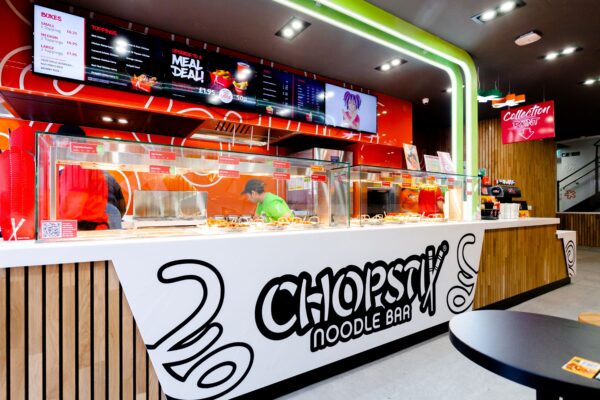
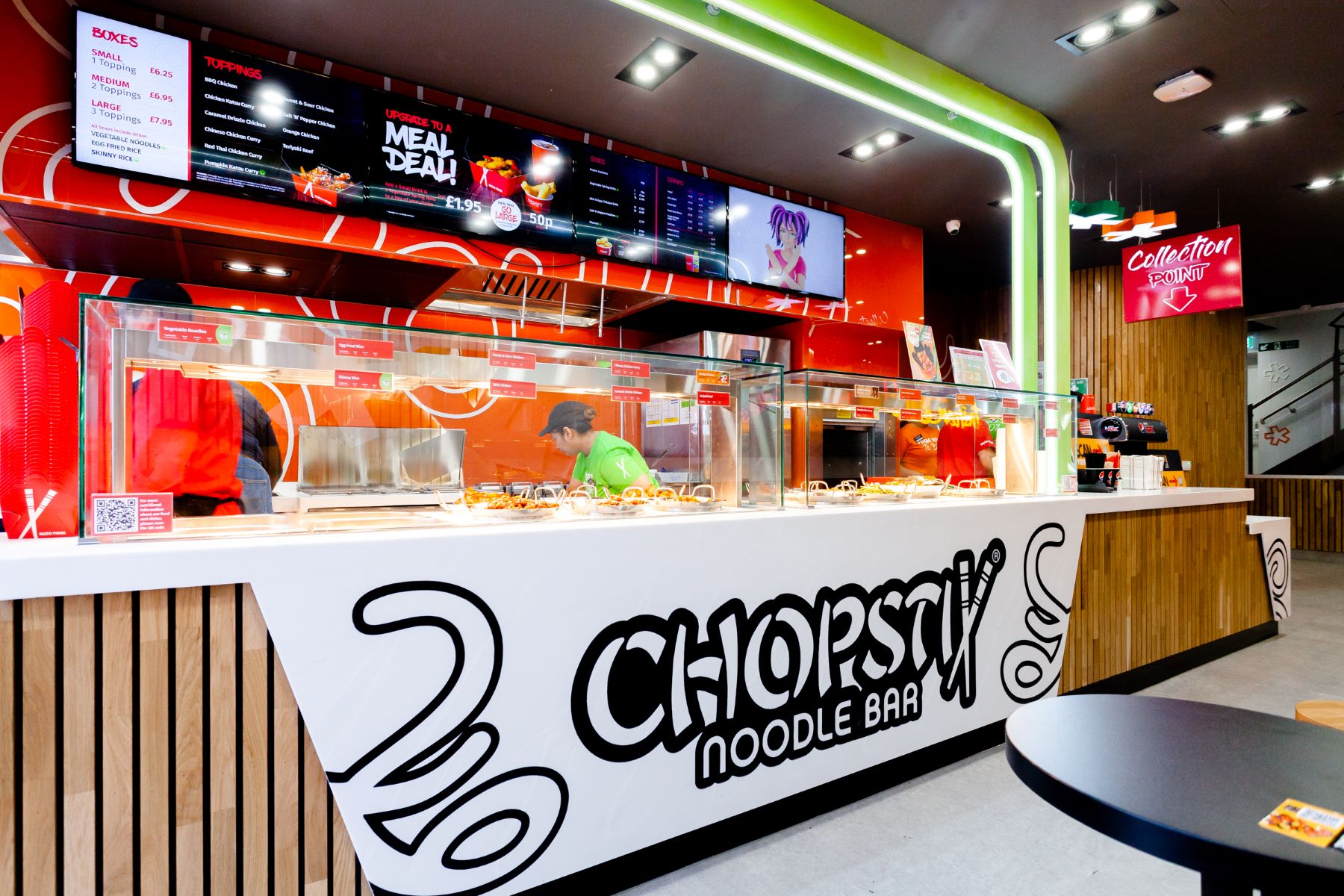
Founded with a single stall in Camden Market in 2001, Chopstix has been boxing noodles on high streets, in shopping centres and in motorway service stations for over 20 years. The brand’s mission is to excite customers with great service, great stores and most importantly, great food. With nearly 100 outlets, Chopstix aims to be the UK’s No. 1 Asian-inspired quick service noodle bar and had big plans for growth it wanted to fulfil, driven by ambitious franchisees.
Company Size
5000+
Industry
Leisure
Products Used
Challenge
Chopstix has an ambitious plan to grow through equity store development and franchising.

These plans meant they needed to understand where the best opportunities lay in the UK to successfully attract and engage potential franchisees.
A critical aspect of this needed to be the ability to objectively and dependably define and prioritise national, regional and local location opportunities for new outlets. Not just to understand where growth potential existed, but so they could provide franchisees with real clarity they would have distinct territories to operate in.
Solution
To understand Chopstix’ growth opportunities, CACI built a bespoke dashboard model using a wide range of variables to explain outlets’ relative performance and sales potential — and help them easily explain these with potential franchisees.
The model incorporates variables from CACI geodemographic data, including Acorn, Leisure Footprint, Local Footprint, and competitor location datasets, plus Chopstix’s internal financial data. The collaborative process also engaged with prospective franchisees to focus modelling on the evidence they’d want for revenue targets they’d be committing to.
The resulting PowerBI dashboard shows opportunities at national, regional, and trade zone levels on maps. All are ranked by expected turnover and growth, helping franchisees prioritise launches and achieve desired ROI. The dashboard provides detailed insights into any location, including competitors, other Chopstix outlets, visitor type mix and timings, traffic generators, and other food service brands.
In addition, the demographic information can reveal and rank delivery opportunities, identifying groups that index well for food delivery and profiles of communities where the Chopstix brand is appealing and aspirational.
Results
Sustainable growth through investment and franchising
Aaron Moore-Saxton, Franchise Director explains: “Our growth model dashboard is a differentiator in our franchising market. It gives us a common understanding with franchisees of the available opportunity. Trust and transparency are key. We don’t have to spend time arguing about targets — instead, we work together using reliable catchment and market information to make plans with lower risk and higher rewards for everyone. Franchisees can push forward with growth, with confidence, and we increase our UK market share more quickly.”
Find out more about Acorn and Location dynamics.