
Posts How Estée Lauder harness the “beauty of data” to transform their customer experience

How Estée Lauder harness the “beauty of data” to transform their customer experience

In this Article

At our annual Innovate & Accelerate conference, Daniel Lindsay, CRM, Data, Insights and Analytics Director at Estée Lauder, shared the business’ optimal pairing of data and magic behind beauty to enable their enterprise data transformation, taking the retailer from insight to instinct in order to personalise consumer experiences. This winning combination has contributed to the success of their brand value proposition, narrative and positioning through campaigns that struck a chord with consumers.

But how did Estée Lauder decide when the right time for data transformation was? What tools and strategies did they lean on to achieve this, and what were the results?

Why it was time for a big data transformation

Three years ago, Estée Lauder faced various evolutionary periods of marketing, from digital to connected media in terms of consumer interaction followed by the tailored messaging capabilities that came with leaning into data-led media and marketing , particularly first-party consumer data. The business was keen to ensure all their consumers were involved in their journey of change.

According to Daniel: “Our job as a leading beauty company in the UK is to evoke trust from the customer.” Consumers purchase from brands that they trust with their most personal spaces, so ensuring customers are at the root of the brand and understood as granularly as data personalisation allows for is vital. Estée Lauder quickly realised that connecting data to the personalised user experience would give them the competitive edge that they needed to remain an industry leader.

Happy woman doing routine skin care at home with beauty products. Woman sitting on bed at home and applying face cream.

Challenges experienced when working on data transformation & how they were mitigated

Three years down the line of their data transformation, Estée Lauder has faced its fair share of challenges:

  • Heavily investing in consumer data. The business quickly realised their initial consumer data investments were conducted on outdated infrastructure, which complicated their ability to locate their target customer and get a unified view of them.
  • Effectively delivering analytics or insights that would drive fast action and improve accessibility. They had also outgrown their campaign management system, sparking a new consideration of ensuring whatever was brought into the business would connect consumers across the channels.
  • Upskilling and bolstering their in-house capability. This would enable enhanced futureproofing and strategic planning while also upkeeping resources.

Implementing CDP & campaign management tools

Working with CACI enhanced the business’ understanding of how their consumers shop across their portfolio of brands. The resulting data was released into Braze, and has more recently been added into Google, Meta and TikTok to take their understanding of consumer data to a new level.

The business’ value realisation through Braze was being able to engage with consumers and make their CRM channels the fastest growing traffic channel across all their direct to consumer (D2C) channels so far. They were also able to increase their key loyalty metrics by 16% in repeat and retention rates across all brands. This was demonstrated through one brand, Aveda, that despite a complex route to market journey, proved that having the right infrastructure in place enabled the business to successfully understand and track consumer points through email or SMS, which has been transformational for the business.

Data transformation in real-time: MAC Cosmetics case studies

Creating Black Friday success for MAC Cosmetics

Elena Hughes, Customer Strategist at CACI, elaborated on CACI’s support with the design and implementation of Braze in Estée Lauder, and its impact on the business’ strategic communications plan ahead of their peak period, Black Friday. This was a commercially critical time in the business’ calendar with a predicted high revenue generation, meaning that the business’ strategy had to be airtight.

To execute this, Estée Lauder assessed the data with CACI to understand how customers behave during peak promotional periods. This resulted in the emergence of four key customer groups:

  • Gifters
  • Price-driven audience
  • Loyal
  • Lapsed (one-off)

The strategy needed to take a segmented approach to tailor the messaging to these specific audiences, which enabled newfound opportunities for creative enhancements as well. As a result, the business noticed a 23% increase in trading performance post-implementation of the strategy, proving the campaign’s effectiveness despite an obvious time crunch and key information presented for access in the most suitable way of actionable insight.

Activating a triggered lifecycle programme at MAC Cosmetics

Replenishment, automated trigger and cross-sale messaging were critical components of the business’ triggered lifecycle programme. Their Black Friday campaign success came from distilling a multitude of strategy-shaping data points.

Learning lessons towards achieving data transformation

Despite maintaining relatively stable sales around Black Friday, CACI’s Cost of Living and purchasing data proved to be crucial to Estée Lauder’s success. While the business noticed that some of the more luxury products like serums declined in sales, the resulting data showed that the “lipstick effect” prevailed and that customers still want to feel good about themselves no matter the economic circumstances, demonstrated in the purchasing of what consumers consider to be essential products.

The business is now equipped with the necessary data to enter peak shopping periods and continue developing efficiencies and creative assets that resonate with customers.

How CACI can help

If you or your business are looking to accelerate customer data or technology changes by connecting and activating your insight, please get in touch to discuss what strategies and solutions that our team of experts can help you deliver.

UKAS Recommends CACI’s Digital Forensics Lab for ISO 17043 Accreditation

CACI’s new Digital Forensics Laboratory has successfully passed its initial assessment and been recommended for ISO 17043 by UKAS for its Digital Forensic Proficiency Test schemes. This recent recommendation from UKAS follows closely after CACI’s ISO 17025 recommendation, achieved in September, and coincides with the Forensic Science Regulator’s Statutory Code of Practice, effective since Monday 2nd October.

CACI has been recommended by UKAS for accreditation to the following scope:

  • ISO/IEC 17043:2023

CACI’s current schemes are as follows;

  • Mobile-Based Device – Acquisition, Processing and Analysis
  • Computer-Based devices – Acquisition
  • Computer- Based Devices – Processing and Analysis

All schemes are tailored to meet the criteria for accredited digital forensics (DF) laboratories operating in law enforcement. Participation rates during proficiency testing cycles have been consistently increasing.

This further evidences CACI’s commitment to supporting UK Law Enforcement with digital forensics and FSR Code compliance. The laboratory, based in Northallerton, was launched on 9th June and has been created to mirror the capabilities of law enforcement digital forensic laboratories, adhering to industry standards and employing the same tools and processes.

It took an 18-month process for the laboratory to be created, but it is now housed with industry-leading individuals with years of expertise across the digital forensics space.

The formation of the team was heavily influenced by the already-established counterpart in the United States, which has been providing exceptional service for the past decade, shown through various accomplishments and significant recognition.

CACI’s DF Laboratory’s Operations Director, Richard Cockerill, had this to say:

“We are thrilled to announce that CACI has received a recommendation from UKAS for ISO 17043 accreditation for our Digital Forensic Proficiency Test schemes. This achievement highlights the dedication and expertise of our digital forensics team. This accreditation significantly strengthens our ability to support Law Enforcement, particularly with the Forensic Science Regulator’s Statutory Code now in effect. With our robust capabilities and specialised expertise, CACI is well-positioned to deliver high-quality digital forensic investigation services to the UK criminal justice system. This recommendation from UKAS marks a significant milestone in our ongoing commitment to excellence within the UK.”

CACI are looking forward to embrace the array of opportunities expected for our digital forensics team following the confirmation of this recommendation. Furthermore, we look forward to the continued progression we’ve seen since the formation of the laboratory.

CACI acquires UK digital transformation agency Cyber-Duck to enhance its Digital Solutions Business

In this Article

CACI Limited, a leading data and technology solutions company, has acquired Cyber-Duck Limited, a pioneering UK-based digital transformation agency.

Cyber-Duck has significant expertise in combining human-centred Service Design, user experience (UX) and UI design with open-source technology including Laravel, Drupal and Acquia to create transformational, next-generation experiences, services, products and systems. Its strategic design and delivery expertise has helped clients in central and local UK government as well as large enterprises digitise their operations.

Jeet Khaira, Managing Director of CACI’s Information and Management Systems Division, comments:

“We’re delighted to welcome Danny and his superbly talented team to CACI. Their significant skills and track-record of service delivery for clients makes them an excellent fit with our own Digital Solutions capability. We have common core values and a shared culture – a collaborative workstyle and a focus on solving real-world problems for clients. They are an important strategic addition to our business and bring real value-add skillsets to enhance our offerings for our clients.”

Danny Bluestone, founder and CEO of Cyber-Duck, adds:

“Joining forces with CACI gives us scale, growth, more power, resources, support and a broader portfolio of offerings, including data analytics. We’re very excited about the next stage of our journey with significant potential for growth, innovation and to deepen our reputation, under the CACI banner, of delivering innovative solutions for clients. We’re looking forward to benefitting from a new dedicated building with CACI in Kensington Village, London and growing our team together.”

About CACI Limited

Established in 1975, CACI employs more than 1300 staff providing data and technology solutions and systems to clients in the UK, Europe and elsewhere in the world. CACI Ltd is a wholly owned subsidiary of CACI International Inc., an IT-services company publicly traded on the NYSE and employing over 23,000 staff globally.

At CACI, we help clients digitally transform their organisations so they’re ready for today’s and tomorrow’s challenges. We provide specialist data, software, technology, consultancy and software engineering services to deliver innovative digital transformation projects for commercial and government organisations.

About Cyber-Duck Limited

Cyber-Duck is a leading digital transformation agency that works strategically with governments and global brands in the UK and Europe. Since 2005, its mission has been to make the web more accessible through its expertise in service design and open-source technology so organisations and their users benefit from robust, secure and easy-to-use systems, websites and applications.

Cyber-Duck is committed to doing digital better. This means hiring and fostering diverse talent: There are more than 100 people, speaking 30+ languages and based around seven countries. It also means a focus on continuous improvement of all kinds, including sustainability. Building on our long-standing ISO accreditations in UX, Web and Mobile Development with ISO 14001:2015 environmental accreditation we can ensure our clients’ digital products reduce their carbon footprint and meet their organisation’s ESG goals.

CACI Digital Forensics Laboratory recommended for ISO 17025 accreditation by UKAS

CACI’s new Digital Forensics Laboratory has successfully passed its initial assessment and been recommended for ISO 17025 by UKAS. This coincides with the Forensic Science Regulator’s Statutory Code of Practice which took effect on Monday 2 October.

CACI has been recommended by UKAS for accreditation to the following scope:

  • ISO/IEC 17025:2017 with compliance to ILAC G19:06/2022 and Forensic Science Regulator Code of Practice Version 1
  • Scope:
    •  Capture and preservation of data from computers and digital storage devices – HDDs, SSDs, M.2 memory devices, memory cards and USB flash devices – Using FTK Imager, EnCase Imager and Tableau T356789iu 
    • Capture, preservation, processing and analysis of data from Mobile Devices, SIM cards and Memory Cards – Using Cellebrite 4PC, Cellebrite Physical Analyser, MSAB XRY, MSAB XAMN and Magnet Axiom

The laboratory, based in Northallerton, was launched on 9th June and has been created to mirror the capabilities of law enforcement digital forensic laboratories, adhering to industry standards and employing the same tools and processes.

It took an 18-month process for the laboratory to be created, but it is now housed with industry-leading individuals with years of expertise across the Digital Forensics space.

The formation of the team was heavily influenced by the already-established counterpart in the United States, which has been providing exceptional service for the past decade, shown through various accomplishments and significant recognition.

The DF Laboratory’s Operations Director, Richard Cockerill, had this to say:

“This is a fantastic achievement for CACI and is testament to the hard work and experience of our Digital Forensics team over this past year. Accreditation enables CACI to increase its support Law Enforcement which is particularly important now that the Forensic Science Regulator’s Statutory Code is in effect. CACI have the capacity and expertise to provide high quality digital forensic investigation services to the UK criminal justice system, and this recommendation from UKAS is a significant milestone in our journey.”

CACI are now looking forward to the many opportunities that will open up for the Digital Forensics team following this recommendation being confirmed, as well as the continued progression we’ve seen since the formation of the laboratory.

What is green information technology (Green IT) & why should businesses follow it?

In this Article

Climate change is an ever-growing problem, and the technology sector is unfortunately playing a substantial role in this. By 2040, this sector is set to account for 14% of the world’s carbon footprint, a massive uptake from the 1.5% it occupied in 2007. Understanding how businesses operating within the technology sector can analyse and reduce their carbon footprint and leverage green information technology (also known as green IT) practices is critical. So, what exactly is green IT and how will this shape the future of this sector’s carbon footprint?

This is the first part of a 4-blog series on Green IT. In future posts, we will discuss how businesses can use green IT to reduce their carbon footprint, choose the right cloud provider, and optimise algorithms for energy efficiency.

What is green information technology (Green IT)?

Green information technology (green IT) is the practice of using environmentally sustainable computing. It aims to minimise the effects of the technology space on global emissions to combat climate change. The concept originated from the U.S. Environmental Protection Agency in 1992 through a project called “Energy Star”, which identified products that were superior in energy efficiency and helped organisations choose products that would cut costs and reduce their carbon footprint.

Why is green IT so important?

Green IT will have significant impacts in areas beyond climate change, including:

Compliance to achieve net zero carbon emissions

Recent updates made to the Green Finance Strategy from the Financial Conduct Authority (FCA) will ensure businesses continue to meet their green finance ambitions and standards. Climate change has remained a prominent consideration within this. The FCA recognises the importance of business’ resilience in collective action to achieve net zero carbon emissions, therefore, businesses are being held increasingly accountable for any climate-related actions.

Competitive advantage through ESG scores

Businesses worldwide have increasingly focused on achieving environmental, social and governance (ESG) criteria to prove they have adopted good sustainability practices. ESG criteria assess a company’s environmental risks and potential harm to the environment. ESG scores are calculated for individual businesses based on relative performance within the company’s sector (for environmental and social) and country of incorporation (for governance). Businesses that receive a positive ESG score are ultimately more attractive to customers and investors.

What can your business do to follow Green IT best practices?

While the UK is considered the second most environmentally friendly country in the world according to the 2022 Environmental Performance Index (EPI), ongoing environmental challenges call all organisations to continue to innovate and act.

Businesses may be daunted by the fact that an eco-conscious development strategy is not easy, cheap, and will not happen overnight. Technology solutions can also be highly complex, with many parts to manage and design, which can also complicate the ability to determine the impact the solution may have on climate change. Setting policies and best practices for a business to follow is a good first step, and everyone in the business must bear some level of responsibility to help drive green IT, from the CTO to the engineers and architects.

There are several key takeaways that the wider business should consider to effectively implement and follow green IT best practices, most notably:

Demand for the information and technology sector is only going to increase, making it a massive contributing factor to climate change.

Embed green methodologies and practices into the software development lifecycle to set clear goals to help mitigate carbon footprints.

Make informed decisions on what tooling and infrastructure is going to be utilised.

More research and innovation need to happen, especially in cloud computing and analytical developmental tools.

This blog is part 1 of a 2-part blog series exploring the topic of Green IT. You can read the other 2 parts by following the below links:

To learn more about green IT and how your business can adopt these best practices, contact us today.

CACI officially launches its new digital forensics laboratory in the North of England

CACI Ltd, a leading UK data and technology company, was proud to hold the official launch of its new Northallerton based digital forensic laboratory on the 9th of June. The event was well attended throughout the day, with representation from almost all police forces covering the local North East region, as well as the local Mayor. The facility builds on the success of its parent company CACI Inc.’s* accredited facility in Virginia, United States, the laboratory will cater to UK law enforcement organisations by providing specialist digital forensics services.

Over the last 18 months, CACI’s highly skilled team of digital forensic professionals has worked diligently to establish the UK laboratory, drawing from the experience and accomplishments of its counterpart in the United States, which has been providing exceptional service for the past decade.

Richard Cockerill, Operations Director of CACI Ltd’s digital forensics laboratory, highlighted the exponential rise in the use of digital devices worldwide over the past decade. “Over 90% of crimes involve a digital component, which has resulted in unprecedented demand placed on police digital forensics units (DFUs) supporting criminal investigations,” he explained

CACI’s digital forensic laboratory has been meticulously designed to mirror the capabilities of law enforcement digital forensic laboratories, adhering to industry standards and employing the same tools and processes. This facility offers police DFUs additional resources and capacity to meet their growing operational demands.

The digital forensic team at CACI has also developed a suite of support services to assist police DFUs with ISO 17025 accreditation while ensuring compliance with the codes of practise set by the Forensic Science Regulator (FSR Codes). Since the beginning of this year, they have been providing a digital forensics proficiency testing service, with numerous accredited digital forensic laboratories having already participated and more booked in for future cycles. This service will undergo assessment by UKAS later this year, with the aim of receiving ISO/IEC 17043:2023 accreditation.

CACI’s digital forensic laboratory is fully operational and works in compliance with a quality management system designed to meet the requirements of ISO/IEC 17025:2017, FSR Codes and ILAC G19, as required for evidence used in UK criminal proceedings, with UKAS assessment scheduled in the next few months.

*CACI Inc. is a $6.2-billion American-based technology company.

Six ways Telcos can leverage the Metaverse

In this Article

The aspirational and now widely accepted term ‘Metaverse’, refers to a set of interconnected virtual worlds; a new universe which has the potential to bring huge behavioural change and completely transform industry verticals in less than a generation.

Whilst the concept is still in its infancy, it provides a distinct opportunity for telco companies to expand beyond the traditional and trailblaze towards innovation, which bifurcates into two key areas of focus: a new ecosystem to participate in and a new ecosystem to enable. Companies around the globe are already recognising this potential such as Deutsche Telekom (DT) and South Korean telecom (SKT), who have teamed up and collaborated on a new metaverse platform of their own. Ifland is a 5G-based platform that launched in 2021 across 49 countries and now has a user base of almost 13 million. Utilising the popularity of K-Pop, they plan to create joint content with various international partners as well as building out novel communication functions.

Similarly, Meta is now in partnership with Verizon and Telefonica to build testbeds to develop the networking and cloud technology that will glue the metaverse together. Verizon’s focus with Meta is in mobile edge computing (MEC) infrastructure design, “to measure the impact of edge computing on key application performance metrics and evaluate where our network capabilities can enable more powerful metaverse-optimized applications”, quoted Rima Qureshi, Verizon VP. Telefonica are working on an “innovation hub” with meta; a 5G laboratory equipped with “a metaverse end-to-end testbed on Meta and Telefonica’s network infrastructure and equipment”, they have also invited tech start-ups in the metaverse space to participate.

The metaverse needs ubiquitous high-bandwidth, low-latency communication and new equipment to work at scale and will require a flexible and performant foundation to do so. With much of this technology still in research and development stages, the game is wide open for organisations to jockey for an early market position to lead this new world.

Telco operators are uniquely positioned to sit alongside technology giants in the metaverse value chain by harnessing emerging technologies they are already familiar with, such as 5G, cybersecurity, edge cloud and artificial intelligence.

In reviewing the following six areas, organisations will be able to play a truly assertive role in the build of this new virtual world and leverage the power of the metaverse.

1- Become The Leading Connectivity Provider 2- Review Edge Computing Capabilities 3- Prioritise Cybersecurity 4- Harness AI Analytics 5- Create Metaverse Platforms 6- Leverage Ecosystem Partnerships

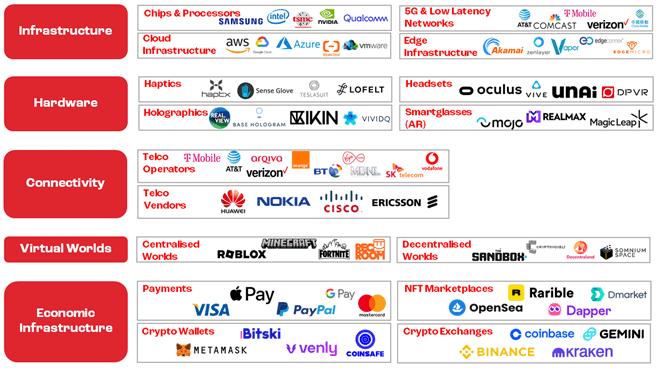
Layers of the Metaverse

Provide connectivity

Depending on quality, the average virtual reality (VR) Metaverse user requires 5 to 40 times more data than it takes to stream an HD video and Raja Koduri, Senior Vice President and General Manager of the accelerated computing systems and graphics group at Intel states that, truly persistent and immersive computing, at scale and accessible by billions of humans in real time, will require… a 1,000-times increase in computational efficiency from today’s state of the art”, confirming that delivering ‘metaverse grade’ ubiquitous connectivity will be critical in making the metaverse a thriving ecosystem.

Telco’s energy can be well channelled into becoming the leading connectivity provider and lowering the barriers to entry for consumers, of which, one of the most helpful tools will be 5G. 5G is expected to deliver higher multi-gigabits-per-second (multi-Gbps) peak data speeds, greater reliability, ultralow latency and a more uniformed experience. As 5G networks are commercially deployed, this will help consumers and businesses enter the metaverse.

We are also expecting to witness another upgrade in wireless technology with the arrival of 6G, supported by Nokia CEO, Pekka Lundmark, who said that he fully expects 6G networks to be in operation by 2030, which is predicted to bring full network coverage across land, sea and air. The off-loading of wireless traffic through Wi-Fi 6, the latest generation of Wi-Fi, will also help address network capacity and efficiency related challenges, as well as fibre connectivity increasing high-bandwidth speeds.

Offer edge computing

The computing power necessary to deliver a virtual world will be significant; requiring real-time rendering and AI capabilities to track various objects, characters and environmental effects whilst also adapting the display as these move through virtual space.

Delivering this experience reliably in a single-hosted environment with low latency is challenging and the cloud will not be able to centralise and store all of the necessary resources, but edge computing may well be the solution, becoming another essential cog in the metaverse machine. Edge computing is an IT deployment that puts data and applications as close as possible to the users, delivering a seamless experience by providing the necessary local computing power and minimising network-based latency and congestion risk.

In order to succeed, operators should evaluate and strengthen their partnerships with specialist cloud providers as well as consolidating their own edge cloud and legacy cloud strategies. This will then place them in prime position to provide efficient data transfers, enhance perimeter security, relieve network congestion and diversify their revenue streams.

Prioritise cybersecurity

Metaverse platforms can be susceptible to a host of privacy concerns, data leaks and security threats lurking beyond its virtual doors. Microsoft’s EVP of security, compliance, identity and management, Charlie Bell, urges organisations to prioritise the cybersecurity of the metaverse: “There must be clear and standard communication around terms of service, security features like where and how encryption is used, vulnerability reporting and updates,” Bell explains. “Transparency helps accelerate adoption — it speeds the learning process for security… We do not need to predict the ultimate impact of the metaverse to recognise and embrace the security and trust principles that make the journey a safer one for all”.

Data security will become increasingly valuable as both business and consumers grow ever more concerned with their digital footprint and integrity of their personal information. Operators hold a unique advantage here, as according to a study by Openet, “Consumers find mobile operators to be trustworthy with their data”.

Assuring all resources can discern and guard against the most fundamental dangers will help reduce long-term hurdles as the need for improved cybersecurity safeguards remains a top priority as technology continues to grow rapidly.

Poised as trusted custodians, operators can leverage their existing customer relationships and establish themselves as identity management experts whilst the metaverse continues to take shape.

Harness AI analytics

As the functional area of analytics and AI converges with the metaverse, telcos will need to pay attention to identity, billing and transaction management. In addition to a concern for customer data management and ownership, telcos will also likely play an assertive role and push far beyond infrastructure enablement. They will have the opportunity to create an analytics and AI layer to support both data management and payment capabilities which will pave the way for new revenue streams and monetisation.

Chatbots are also a great application that telcos may interpret to streamline business processes. These could be used in multiple functions such as providing instructions and information about various products and services, answering questions, completing transactions etc. Moreover, AI can be utilised to create inclusive interfaces that will make the users’ journey more accessible for everyone. With the aid of technologies such as Natural Language Processing, speech recognition, computer vision, translation and augmented reality, users will be able to interact with the metaverse in their native language and through images and videos to enhance their metaverse experience.

Create metaverse platforms

The term ‘metaverse’, currently refers to a collection of virtual worlds in which we can work, play, explore and collaborate in. The belief is that eventually, these platforms will start to combine and ultimately create one, all-encompassing decentralised virtual world; rich in offering, interoperable and governed by the community. In order to take advantage of this gradual evolution, operators could be well placed to create their own platforms, which would aid them in building a deeper understanding of both the demand and necessary technical competencies which would shape the long-term strategy.

Many organisations have already launched their own platforms such as Korean operator SK telco, who unveiled ‘Ifland’ in 2021. The key for other organisations looking to build successful platforms will be to create interesting experiences and events which compel users to spend time on the platform, as well as also ensuring there is capability to offer customised services for business and consumers.

Leverage ecosystem partnerships

Making the metaverse a reality will require significant advancements in multiple areas and no single company or industry can do this alone. Creating the metaverse will require a global effort and by telcos partnering with other expert participants within the metaverse ecosystem, they will be in prime position to drive the new age of the internet forwards and reap the rewards. A key area to consider will be hardware, such as virtual reality (VR) headsets, gloves and glasses. These devices will become increasingly important in acting as a gateway for humans to interact with the metaverse, therefore, operators can look to seize this opportunity by collaborating with device manufacturers and other technology platform providers to drive adoption.

By refining new partnership frameworks, telcos can explore new growth streams such as selling VR devices and connectivity services together, as well as having the capability of offering additional bundles of data packages. There could also be opportunities in strengthening relationships across different industry verticals, exploring different routes together and identifying collaborations. Telco’s should place focus towards long-term partnership strategies across the board to elevate their standings and unlock growth.

Conclusion

The metaverse is a rapidly evolving environment and whilst some prospects may currently be hyped, the rapid acceleration is tangible. In a study conducted by PWC of 1000 businesses, 66% confirmed that they were already “actively engaged”, coupled with a Cap Gemini report that stated 90% of consumers are curious about the metaverse, this new virtual landscape presents a situation and opportunity telco providers cannot afford to ignore.

Communication, computing, storage and analytics infrastructure are core elements of the configuration of the third web, meaning that without the efforts and involvement of telco operators, the creation of the metaverse remains as a sci-fi concept only.

Operators are excellently positioned to harness this exciting opportunity and by investing, innovating, partnering and strategising – they will succeed in fully leveraging the power of the metaverse.

Contact us here to get in touch about any of our services.


Notes: [1] Consumers find mobile operators to be trustworthy their data report (fiercetelco.com) [2] What does the metaverse mean for your digital identity (forbes.com) [3] The metaverse: What’s in it for telcos? | Arthur D. Little (adlittle.com) [4] THE METAVERSE: WHAT’S IN IT FOR TELCOS? (adlittle.com) [5] Metaverse survey: Capitalizing on metaverse business opportunities: PwC [6] Nine in ten consumers are curious about the metaverse – Capgemini UK

CACI awarded Adobe’s Digital Experience Emerging Partner of the Year 2023

In this Article

CACI is proud to announce that we have been awarded Adobe’s Digital Experience Emerging Partner of the Year 2023. Adobe’s Digital Experience partner awards acknowledge companies that have made significant contributions to Adobe’s business and have had a significant impact on customer success.

To secure this award, the team at CACI has demonstrated a strong level of investment and engagement in the Adobe partnership. This is measured through solution licensing, services, and the number of certifications and specializations held. We have also worked closely with Adobe to ensure that our relationship is of the highest quality and that we are working together to drive value for our clients.

We are thrilled to have received this recognition, and it highlights our commitment to providing exceptional services to our clients. The award was announced at Adobe Summit in Las Vegas, and we are excited to share this news with our clients and partners. CACI will be present at Adobe Summit UK this June and we look forward to seeing you there. Please feel free to get in touch with us if you’d like to meet at the event.

David Sealey, Director of Strategy and Growth at CACI, said,

“Adobe’s solutions to deliver enhanced customer experiences are an essential part of our market offering. I’m delighted that this award recognizes the hard work of CACI’s commercial and delivery team as they implement, optimize, and support brands with Adobe. It’s also important to acknowledge the importance of our clients who have the vision and determination to deliver better experiences to their customers.”

CACI’s expertise with Adobe extends across Adobe Campaign, Adobe Analytics, Adobe Target, and the Adobe Experience Platform. Our focus for 2023 and 2024 is to help organizations evolve their Adobe stack in pursuit of greater performance, reliability, and the ability to launch new use cases.

Should you wish to find out more about CACI’s services for Adobe products, please feel free to get in touch.

How to find the right IT outsourcing partner

In this Article

Looking to work with an IT outsourcing provider? Finding the right partner to deliver your requirements can be a tricky and time-consuming process. But, done right, a successful outsourcing relationship can bring long-term strategic benefits to your business. We asked our experts to share their top tips on how to find the right IT outsourcing partner.

Evaluate capabilities

Having the right expertise is the obvious and most essential criterion, so defining your requirements and expectations is the best way to start your search.

When it comes to narrowing down your vendor choices, it’s important to consider the maturity of an organisation as well as technical capabilities. “The risk of working with a small, specialised provider is that they may struggle to keep a handle on your project,” warns Brian Robertson, Resource Manager at CACI. Inversely, a larger organisation may have the expertise, but not the personal approach you’re looking for in a partner. “Always look for a provider that demonstrates a desire to get to the root of your business’s challenges and can outline potential solutions,” Brian advises.

Find evidence of experience

Typically, working with an outsourcing provider that has accumulated experience over many years is a safe bet; however, Daniel Oosthuizen, Senior Vice President of CACI Network Services, recommends ensuring that your prospective outsourcing provider has experience that is relevant to your business, “When you bring in an outsourcing partner, you want them to hit the ground running, not spending weeks and months onboarding them into your world.” Daniel adds, “This becomes more apparent if you work in a regulated industry, such as banking or financial services, where it’s essential that your provider can guarantee compliance with regulatory obligations as well as your internal policies.”

So, how can you trust a provider has the experience you’re looking for? Of course the provider’s website, case studies, and testimonials are a good place to start, but Daniel recommends interrogating a vendor’s credentials directly, “A successful outsourcing relationship hinges on trust, so it’s important to get a sense of a vendor’s credibility early on. For example, can they demonstrate an in-depth knowledge of your sector? Can they share any details about whom they currently partner with? And can they confidently talk you through projects they’ve completed that are similar to yours?”

Consider cultural compatibility

“When it comes to building a strong, strategic and successful outsourcing partnership, there’s no greater foundation than mutual respect and understanding,” says Brian. Evaluating a potential provider’s approach and attitudes against your business’s culture and core values is another critical step in your vetting process. As Daniel says, “If you share the same values, it will be much easier to implement a seamless relationship between your business and your outsourcing partner, making day-to-day management, communication and even conflict resolution more effective and efficient”.

While checking a company’s website can give you some insight into your prospective provider’s values, it’s also worth finding out how long they’ve held partnerships with other clients, as that can indicate whether they can maintain partnerships for the long-term.

However, Daniel says, “The best way to test if a provider has partnership potential is to go and meet them. Get a feel for the team atmosphere, how they approach conversations about your challenges, and how their values translate in their outsourcing relationships.” Brian adds, “Your vision and values are what drive your business forward, so it’s essential that these components are aligned with your outsourcing provider to gain maximum value from the relationship.”

Assess process and tools

Once you’ve determined a potential outsourcing provider’s level of experience and expertise, it’s important to gain an understanding of how they will design and deliver a solution to meet your business’s needs. “It’s always worth investigating what tech and tools an outsourcing provider has at their disposal and whether they are limited by manufacturer agreements. For example, at CACI, our vendor-agnostic approach means we’re not tied to a particular manufacturer, giving us the flexibility to find the right solution to meet our clients’ needs,” Daniel explains

Speaking of flexibility, determining the agility of your potential outsourcing provider’s approach should play a role in your selection process. “There’s always potential for things to change, particularly when delivering a transformation project over several years,” says Brian, adding “that’s why it’s so important to find a partner that can easily scale their solutions up or down, ensuring that you’ve always got the support you need to succeed.”

Determine quality standards

Determining the quality of a new outsourcing partner’s work before you’ve worked with them can be difficult, but there are some clues that can indicate whether a vendor’s quality standards are in line with your expectations, says Daniel, “A good outsourcing partner will be committed to adding value at every step of your project, so get details on their method and frequency of capturing feedback, whether the goals they set are realistic and achievable, and how they manage resource allocation on projects.”

Brian also recommends quizzing outsourcing providers about their recruitment and hiring process to ensure that you’ll be gaining access to reliable and skilled experts, “It’s easy for an outsourcing provider to say they have the best people, so it’s important to probe a little deeper. How experienced are their experts? How are they ensuring their talent is keeping up to date? What is their process for vetting new candidates? All these questions will help to gain an insight into an outsourcing provider’s quality bar – and whether it’s up to your standard.”

Assess value for money

For most IT leaders, cost is one of the most decisive factors when engaging any service; however, when looking for an IT outsourcing partner, it’s critical to consider more than just a provider’s pricing model. “Contractual comprehensiveness and flexibility should always be taken into account,” says, Brian. “A contract that is vague can result in ‘scope creep’ and unexpected costs, while a rigid contract can tie businesses into a partnership that’s not adding value.” He adds, “Ultimately, it comes down to attitude, a good outsourcing provider can quickly become a great business partner when they go the extra mile.”

Daniel agrees and advises that IT leaders take a holistic view when weighing up potential outsourcing partners, “Look beyond your initial project, or resource requirements and consider where your business is heading and whether your shortlisted providers can bring in the skills and services you need. After all, a truly successful outsourcing partnership is one that can be relied on for the long haul.”

Looking for an outsourcing partner to help with your network operations? Contact our expert team today.

How much design is enough?

In this Article

Imagine two people are decorating houses, side by side. One wants every detail mapped out in advance, researching all the possibilities and putting in a massive order before seeing anything in person. The other prefers a more spontaneous approach. They might have a vague outline of the sort of house they’d like, but they’d prefer to make it up as they go along.

As things come together, the first person realises that nothing they’ve committed to quite looks or goes together in the way they imagined and there’s no real turning back. The second has a rather more chaotic process, but everything that goes into their house is absolutely fabulous. It’s only at the very end that they realise they have painted the same room seven different colours throughout the process.

These ways of thinking shape more than just our interior décor – they crucially apply to how we understand tech and software development. Committing to a large amount of architecture before kicking off is no longer considered best practice, but including it is still vitally important. Architects, developers and potential clients are left to decide – how much design is enough?

Getting it wrong

Without architecture, the bigger picture quickly gets lost. For instance, a developer might be working on new functionality that will be shared to various departments. Developing it for one customer in one department is fairly straightforward. However – have they considered all of the flows and interactions with other parts of the business? Is there a potential to consolidate some functions into a shared one stop shop service?

Good architecture provides an awareness of dependencies, interactions and other contextual drivers, like legacy systems and stakeholder mapping. If you want something that’s more than the sum of its parts, it’s essential.

Too much upfront design though, creates a very long feedback loop where you’ve built half a system before you have any clue if any of it works. In the worst cases, “solutioneering” takes over and the design itself – sometimes pre-issued by the client, with tech already decided – becomes more important than understanding and meeting the requirements. By that point, whether or not it actually benefits the end user has probably been completely forgotten.

Most often, things go wrong when architects and developers don’t talk to each other. Each withdraws into an ivory tower and fails to communicate or remember the benefits of collaboration. As a formalised process, architecture can become too distant from the reality of building it and too rigid to flex to new information that arises from agile iterations.

How do we get it right?

​​​​​​​Agile has taken over – and architecture must flex to fit in. This means greater levels of collaboration, working hand in hand with development teams.

Breaking up the architecture approach so that it’s completed in segments that align with actual development can keep the process one step ahead of the actual build while ensuring it’s still adaptable. This can also allow both sides of the work to both validate and verify: build the right thing via architecture that focusses on big picture goals, the right way through feedback focussed iterations. Features will not just be effective in their immediate goal but in the broader context of the software.

Architectural principles and patterns can also be vitally helpful by collaboratively establishing the broad guidelines for architectural decisions that will be made later on. To go back to our house designing metaphor, you might not decide exactly what furniture is going into each room, but you might decide on distinct colour schemes that harmonise with each other.

Together, principles and patterns keep services and features aligned and consistent. Not every detail is planned out, but there will be a clear understanding of how things like naming conventions and interactions will be done and how users will be authenticated. That can be easily replicated in the future while still leaving flexibility around it.

At its best, architecture works in harmony with other delivery roles, working toward the same goal and focussing on software that solves problems for the client and the end user. Balancing development and architecture means finding effective methods to maximise both capabilities and harmonising with each other. In this, as in most other things, teamwork and collaboration is key.

To find out more about our capabilities in this area, check out our IT Solution Architecture & Design page.

The Metaverse – Innovate or Die?

In this Article
Metaverse

What is the Metaverse?

The metaverse is a term which describes a collection of virtual worlds that we can work, play, explore and collaborate in. Whilst the term has become a popular buzz word of late, the name ‘metaverse’, itself, comes from Neal Stephenson’s 1992 science fiction novel Snow Crash, a book which envisioned a virtual world in which people would use avatars to interact with each other. Similar, is Stephen Spielberg’s more recent 2018 movie Ready Player One, which saw individuals find salvation from the chaos of reality in the virtual world: OASIS. Currently, there are multiple metaverse platforms in use, all with incredibly different interfaces, user bases and access credentials. The aspirational term ‘metaverse’, refers to an all-encompassing decentralised virtual world, rich in offering, interoperable and governed by the community.

The powerful combination of the emergence of 5G, offering us the infrastructure and connectivity needed for access, the advance of computing and processing power needed for availability and affordability, powerful blockchain technologies, in addition to the seismic emergence of cryptocurrencies, NFT’s, wallets and exchanges, means that a new Goldilocks zone has emerged, whereby the conditions for an entirely new economy to thrive within the metaverse are just right. Enter, Web 3.0.

How can companies leverage the Metaverse now?

As with previous technology paradigm shifts, such as the birth of the internet, the metaverse is poised to transform almost every aspect of society. So, as we sit at the edge of the Web3 precipice, it is important for companies to understand, accept and embrace the new technology epoch and how they can fully leverage its presence.

Five key areas to currently observe: Talent Acquisition, Branding, Digital Products, Training and Work Structure.

1. Talent Acquisition

With driving demand and heavy investment being placed into the technological infrastructure of companies, there has been an uplift in the talent demand for many of these skilled roles. Jeremy Dalton, global director of metaverse technologies for PwC, said: “For recruitment, we are already using a metaverse platform, Virtual Park, to interview job candidates and offer them the ability to meet our people and find out more about our culture, values and opportunities”, since launching two years ago, they have reached roughly 20,000 users, a much wider talent pool than could have typically been accessed previously.

2. Branding

The social side of the metaverse is just as vital as the commercial side. Consumers will soon be able to make purchases of goods and services (including land) in both the physical world and the metaverse. Brand loyalty will become increasingly dependent on how well a company adapts and translates their current offerings onto the metaverse.

As with all major technological shifts, the metaverse will gain traction slowly over time, 3D imaging for example, made its debut in the late 1800s, as well as games like Second Life, an alternate-reality video game which took 4 years to get its base to a million users (Fortnite then built upon this and after initial release in 2017 is now used by roughly 125m users worldwide). The metaverse will force companies to consider how their brand appeals to early adopters and stays relevant to their traditional customer base. This could have major implications on how a company defines and markets themselves to potential customers.

3. Digital Products

One of the ways multiple businesses are enriching the consumer experience of their brand via the metaverse, is by creating digital products and therefore generating new revenue streams. Luxury fashion brand Gucci opened a virtual space ‘Gucci Garden’, based on the philosophy of their creative director, Alessandro Michele and went on to sell a digital version of their ‘Queen Bee Dionysus’ bag on the Roblox marketplace for $4,115, more than the price of the bag’s real-world equivalent of roughly $3400.

Nike, a leading brand in the metaverse, acquired a non-fungible token studio, RTFKT, that produces digital collectibles (including digital sneakers) to merge culture and gaming. Previously RTFKT collaborated with teenage artist FEWOCiOUS to sell real sneakers paired with virtual ones, selling 600 pairs and NFT’s in six minutes and netting over $3.1 million. In addition to NFT’s, events are also able to be held in the space and are quickly gathering momentum; fashion shows, book launches and film premieres are all possibilities. In 2020, hip-hop star Travis Scott, earned millions of dollars by his avatar appearing on Fortnite, performing in concert and then sold virtual goods around it such as Travis Scott gaming skins.

4. Training/development

The rise of virtual and augmented reality has made huge waves within the gaming world, one popular example being Pokemon Go, and Anthony Wong, marketing director of Attensi (gamified solution training), believes that the same principles used for gaming, can be applied to learning and development in workplace training. Adding this new dimension to information sharing could transform business processes from onboarding sessions to simulation training/testing for complex practical roles.

L&D practitioners will now need to be mindful of up to four generations, all equipped with multiple learning styles and consider how best to encourage fun, fast and ultimately more fruitful learning, essential in maximising growth potential.

5. Work Structure

Post covid, the majority of companies have moved to a hybrid structure of working, with many meetings and collaborations taking place across multiple technology platforms. The emergence of the metaverse could see companies pivot again, interacting using hands-free devices, avatars and new tools rather than only laptops and phones.

Frank Diana, managing partner and futurist at Tata Consultancy Services (TCS), likens the workplace shift to the metaverse to the transition from typing pools to having an entire workforce typing into personal computers. “What if there are boundary-less 3D collaboration tools in the metaverse and the team could transport themselves to the Louvre Museum for inspiration?” Diana asked. “If working remotely in the metaverse provides both increased productivity and better collaboration, today’s office model gets totally upended.”

Matterport, a tech company whose 3D modelling software digitally replicates physical spaces, has been developing digital twin workflows that lets employees collaborate, learn and engage remotely. For example, architects can virtually collaborate with clients by remodelling ideas to make faster decisions, retailers can virtually collaborate on store layouts to discover problems or opportunities sooner. Current 2D models of working are posed to advance with haste to 3D virtual environments, allowing workers to interact in immersive ways, consumer relationships to develop and companies to foster their company culture.

Whilst it’s easy to assume the metaverse is a faraway galaxy when compared to our immediate reality, many companies are already harnessing its power and proving the benefits of virtual worlds. Zwift for example, an MMO cycling game meets training tool established in 2014, has a 4 million subscriber base and through use of minimal kit; a bike, smart trainer and viewing device such as your phone or TV, riders can move through virtual imaginings of real-world routes across cities like London and New York and can also ride through the imagined worlds built by Zwift, such as Watopia.

Riders can input their height and weight data and this in addition to ANT+ and Bluetooth connectivity, then allows Zwift to calculate performance and show standings in comparison to other users. Since 2016, the company has also held world championships which have produced athletes who have gone on to secure real pro team contracts. Loes Adegeest, the 2022 winner, currently rides for UCI World Tour Team, ICBT and gained 5th place in general classification of the Lotto Belgium Tour. Zwift are proof that companies can both excel and profit by embracing virtual reality and their data sets around improvement to users health and social dynamics has cemented its status as a leading pioneer in the space.

Challenges and Risks firms face from the metaverse

Consider first, whether it makes sense to be engaging across these platforms. As the metaverse isn’t yet a single entity, but instead a collection of technologies, many would argue investing whilst still in its infancy could pose many financial and reputational risks to businesses. Privacy and safety concerns around hacking, impersonation and importantly, data use, rank highly among consumer fears, whilst the commercial, legal, and regulatory implications of the metaverse for businesses are enormous. If we were to take intellectual property, for example: What are the limits of IP, piracy, ownership, and patents in the virtual world? Are there digital land rights? How do brands deal with counterfeit digital products? Do you need a license to practice law in the metaverse?

This presents a new arena for hackers and new opportunities for criminal behaviour. How will misconduct be monitored, reported and remedied? What recourse do victims of avatar identity theft have? Are financial transactions protected? There is currently little regulation in place. Lastly, technical challenges such as computing power, interoperability and connectivity (bandwidth), present difficulties most companies simply aren’t ready nor equipped for. A true ecosystem of virtual worlds, where a person’s digital assets can be carried from one world to another, will require significant preparation and collaboration from large tech players, which could potentially conflict with their own nature.

That being said, the other end of the spectrum would be that companies face an even greater risk by failing to innovate. Similar to the Zuoara’s documentation of the mass extinction of companies who failed to embrace the “subscription economy”, innovation and the rapid progression of these technologies should not be ignored. A recent study by McKinsey found that the average lifespan of companies listed in Standard & Poor’s 500 was 61 years in 1958. Today, it is less than 18 years. McKinsey believes that, in 2027, 75% of the companies currently quoted on the S&P 500 will have disappeared.

In these evolving times, businesses are advised to exercise caution when investing in the metaverse and to facilitate early conversations between IT, compliance, legal, finance, and security.

How CACI can assist companies within the metaverse space

According to a recent Bloomberg report, the metaverse is on track to have a market size worth $678 Billion by 2030. For business, the implications of an immersive, persistent and decentralised digital world could be enormous. Since 1962, CACI has been aiding companies identify emerging technologies, utilise their strengths and build protective solutions from potential threats.

Whilst the metaverse is still very much an evolution rather than a revolution, its foundational elements lay within connectivity, processing power, data storage and security. Drawing on the advanced capabilities of 25,000 skilled professionals worldwide, we offer a spectrum of services across the entire metaverse continuum to aid mission led enterprising companies in their pursuit of innovation:

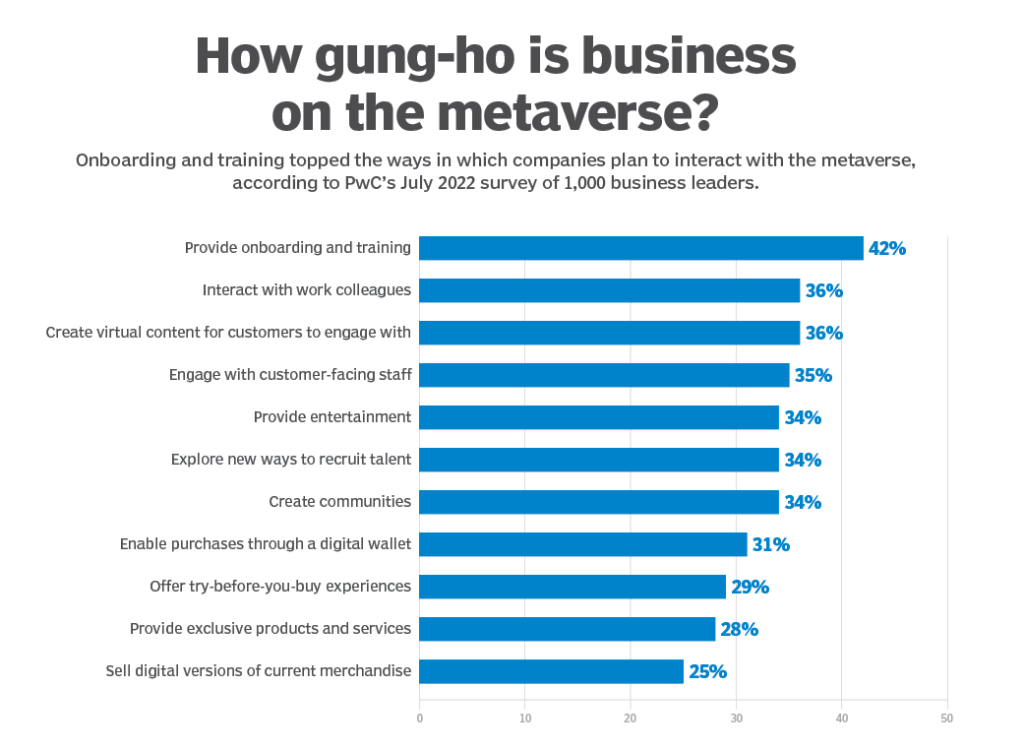
metaverse business approach

Source: PwC 2022 Business and consumer metaverse survey, July 2022

“…what attracts human attention is change. …if the temperature around you changes, if the phone rings — that gets your attention. The way in which a story begins is a starting event that creates a moment of change.” – Robert McKee

Contact us here to get in touch about any of our services.

Notes: [1] Opportunities in the metaverse (jpmorgan.com) [2] Metaverse Market Size Worth $678.8 Billion by 2030: Grand View Research, Inc. – Bloomberg

Responsible and sustainable practices

In this Article

Could digitalisation save the planet?

Only if businesses can achieve sustainable cybersecurity and digital inclusion too

Digitalised businesses are onto a win-win – it’s good for corporate reputation, the planet and the environment to stop using paper and resource-consuming processes that create waste, take up storage space and hinder productivity. There are important caveats for doing all that good though: robust security for digital data and accessibility for all.

A well-understood approach to organisational corporate responsibility and sustainability is going paper-free and taking as many interactions and records as possible online. It avoids unnecessary worker travel and cuts the use of paper, postage, deliveries, physical storage and workspace, thereby reducing energy and fuel consumption.

Everyone knows the benefits of paperless offices

is “one of the most tangible examples of digitalization that has a positive impact on the environment while also providing major business performance benefits”. It estimates that even now, US businesses waste USD 8 billion on managing paper every year. It’s far more efficient and faster to transact, interact and work digitally.

Covid has accelerated adoption of these practices, as people have adapted rapidly to home-based and distanced working — which is one positive at least from the pandemic. But that means putting a lot more data online.

But hackers have an eye on the main chance. Since the pandemic, criminals have been quick to exploit security vulnerabilities created by a hasty shift to home-working and reactively moving transactional systems online. Recent headlines and share price drops show the impact of losing consumer and shareholder confidence for companies that experience data breaches and vulnerabilities.

Security by design is the gold standard for digitalisation

With so many financial transactions now executed digitally, security and trust are more important than ever to protect people’s money. Many consumers are far more aware and concerned about who is using their data and digital privacy. Building robust transactional apps, systems and data will continue to be crucial for success and reputation. Marketing compliance will need to be effective and transparent.

Security by design is the gold standard for planning, optimising and establishing cloud and digital infrastructure and systems. That means choosing and developing digital platforms and services in the specific context of cybersecurity – from thwarting hackers to back-up and recovery.

It also means that adopting new and more environmentally friendly technologies —from industrial plant equipment to electric cars, remote heating controls and contactless payments — must make digital security a top priority consideration. Hackers are not just delving into poorly password protected bank accounts for financial gain these days. They’re finding ways to hold organisations to ransom by infiltrating property, systems and infrastructure that are remotely and digitally controlled and operated.

On the surface, climate transformation has nothing to do with security. But dig a little deeper and you discover that it has profound implications indeed. The new technologies required for climate transformation will change both how businesses work and how they use technology. Security by design must be applied in order to prevent climate transformation becoming an excuse for greater vulnerability.

Smart organisations plan ahead and ask the right questions

Advanced digital mass security may not come cheap for larger organisations. It’s not just a one-off cost either: security protocols need to be maintained and measured against ISO 27001 and continually updated to mitigate the latest threats. But then there’s the potential risk and cost of neglecting security in any digitalisation solution. Smart businesses plan their budgets realistically and know that market-leading digital operations need to be underpinned by market-leading digital security.

Another important issue for ESG-aware organisations is the footprint of their digitalisation. The more data that’s online in the cloud, the more cloud storage is needed. Data warehouses have a big impact on the environment, not least because they consume so much electricity. Responsible businesses will ask questions of their cloud technology providers about their carbon offsetting and use of renewable energy sources, to maintain their integrity and reputation.

It’s not a good look to leave anyone behind

There’s another issue around digitalisation – and that’s digital inclusion. Consumers who are financially stretched typically don’t have such free access to the latest technology, devices and web access, which can lock them out of the digital environment, either partially or totally. Smartphones are increasingly the default device for managing banking and finances, but not everyone has one.

Income isn’t the only determinant of digital poverty. Location has an impact too: some rural areas struggle to access fast broadband, which can affect wealthier households. Some older citizens are digitally naïve. As well as struggling to access and use digital-only services, they may be more vulnerable to cyber-crime and scams. However good digitalisation may be for the wider environment, excluding less privileged demographics from online services and pricing generates damaging headlines and dissolves consumer loyalty and trust.

Consumer insight provides vital context for digital transformation

Savvy organisations seek insight to help them understand and avoid digital exclusion, using data like CACI’s Vulnerability Indicators. This includes detailed and granular digital vulnerability data that allows organisations to identify people who lack digital knowledge or may have little or no access to technology and the web.

Assessing and planning to enable digital inclusion must be a priority aspect of digitalisation programmes and initiatives. Responsible brands and public organisations need to understand the impact on their entire audience before assuming that the best choice is to move everything online, without exception.

Digitalisation is the right thing to do for the planet – as long as we do it right

There are huge gains to be made for our planet by embracing digitalization, cutting our consumption of the planet’s physical resources and improving efficiency and energy use in everyday life. But organisations must do this in well-considered way, taking into account the new risks and challenges that a fully digital world presents.

To maintain their integrity and reputation, businesses also need to consult and consider their customers and audiences and help them with digital adoption, as well as scrutinising and challenging the environmental practices of their own digital service providers.

If you’d like to know more about optimising processes and energy efficiency through data science or developing waste-reducing digital services and tools that meet current consumer needs, talk to the experts at CACI.

Want to read more from our ESG blog series?

How to create a successful M&A IT integration strategy

In this Article

From entering new markets to growing market share, mergers and acquisitions (M&As) can bring big business benefits. However, making the decision to acquire or merge is the easy part of the process. What comes next is likely to bring disruption and difficulty. In research reported by the Harvard Business Review, the failure rate of acquisitions is astonishingly high – between 70 and 90 per cent – with integration issues often highlighted as the most likely cause.

While the impact of M&A affects every element of an organisation, the blending of technical assets and resulting patchwork of IT systems can present significant technical challenges for IT leaders. Here, we explore the most common problems and how to navigate them to achieve a smooth and successful IT transition.

Get the full picture

Mapping the route of your IT transition is crucial to keeping your team focused throughout the process. But you need to be clear about your starting point. That’s why conducting a census of the entire IT infrastructure – from hardware and software to network systems, as well as enterprise and corporate platforms – should be the first step in your IT transition.

Gather requirements & identify gaps

Knowing what you’ve got is the first step, knowing what you haven’t is the next. Technology underpins every element of your business, so you should examine each corporate function and business unit through an IT lens. What services impact each function? How will an integration impact them? What opportunities are there to optimise? Finding the answers to these questions will help you to identify and address your most glaring gaps.

Seize opportunities to modernise

M&A provide the opportunity for IT leaders to re-evaluate and update their environments, so it’s important to look at where you can modernise rather than merge. This will ensure you gain maximum value from the process. For example, shifting to cloud infrastructure can enable your in-house team to focus on performance optimisation whilst also achieving cost savings and enhanced security. Similarly, automating routine or manual tasks using AI or machine learning can ease the burden on overwhelmed IT teams.

Implement strong governance

If you’re fusing two IT departments, you need to embed good governance early on. Start by assessing your current GRC (Governance, Risk and Compliance) maturity. A holistic view will enable you to target gaps effectively and ensure greater transparency of your processes. In addition to bringing certainty and consistency across your team, taking this crucial step will also help you to tackle any compliance and security shortfalls that may result from merging with the acquired business.

Clean up your data

Managing data migration can be a complex process during a merger and acquisition. It’s likely that data will be scattered across various systems, services, and applications. Duplicate data may also be an issue. This makes it difficult to gain an updated single customer view, limiting your ability to track sales and marketing effectiveness. The lack of visibility can also have a negative impact on customer experience. For example, having two disparate CRM systems may result in two sales representatives contacting a single customer, causing frustration and portraying your organisation as disorganised. There’s also a significant financial and reputational risk if data from the merged business isn’t managed securely. With all this in mind, it’s clear that developing an effective strategy and management process should be a key step in planning your IT transition.

Lead with communication

Change can be scary, and uncertainty is the enemy of productivity. That’s why communication is key to a successful merger and acquisition. Ensuring a frequent flow of information can help to combat this. However, IT leaders should also be mindful of creating opportunities for employees to share ideas and concerns.

If you are merging two IT departments, it is important to understand the cultural differences of the two businesses and where issues may arise. This will help you to develop an effective strategy for bringing the two teams together. While championing collaboration and knowledge sharing will go a long way to helping you achieve the goal of the M&A process – a better, stronger, more cohesive business.

How we can help

From assessing your existing IT infrastructure to cloud migration, data management and driving efficiencies through automation, we can support you at every step of your IT transition.

Transitioning your IT following M&A? Contact our expert team today.

Learnings from CACI’s Activating Data event

In this Article

Back at the end of November 2021, during a small window of lockdown restrictions easing, CACI held an event in London for clients and prospects. After 20 months of not being able to meet in person, it felt great to be reunited to share insights and experience. 

Given the time that has passed, we wanted to make this event memorable for all the right reasons. To do this we organised client speakers from the RAC, Laithwaites Wines and Domino’s Pizza Group. Recognising that many of you want to hear from your peers rather than us. 

“Activating data to deliver seamless customer experiences” was the title of the event we decided on. Granted it’s a mouthful to say, but we felt that the topic of activating data into the customer experience is overlooked. Often falling between the IT, data, and marketing functions. When it comes to delivering a customer experience strategy that connects across all channels and is consistent it requires all these business areas to work together. 

In this blog post I want to pick out some of the important client messages from that event. You can watch all the videos here.

Takeaway 1: Need for multi-disciplinary change teams 

Ian Ruffle and Jenny Cann spoke about the RAC’s implementation of Adobe Campaign and Snowflake. The project has been a big success for the RAC, delivering new use cases and positive benefits (including a reduction in inbound calls). 

To successfully deliver this type of change, Jenny showed how RAC and CACI formed a core decision making team across technical and marketing disciplines. This group provided clear direction for the project and united teams around a single vision for delivery. 

Watch the RAC case study

Takeaway 2: Don’t forget the creative 

Domino’s Pizza Group shared the ingredients of their journey to deliver personalised messages to every customer. Hayley Pryde of Domino’s introduced how this transformation has been delivered through good technology, having the right people, developing test & learn processes, and then selecting solid agency partners.

An added ingredient was the need for new creative assets that can be personalised in every channel. This required new imagery, a variety of copy options, and strong integration between creativity and technology. Assets needed to work in multiple channels and be relevant to the recipient. For example, if a customer always orders vegetarian options, it’s less effective to use “mighty meaty” imagery in the campaign. 

As Domino’s Pizza Group have discovered, having the best technology and processes will only get you so far if the creative assets are all the same. For this reason, they are working with CACI’s creative studio to produce a wide range of personalisable assets for performance and direct channels. 

Watch Domino’s Pizza Group talk about creative asset personalisation.

Takeaway 3: Get closer to the customer 

Through lockdown Laithwaites Wines saw a change in their customer profile. Whilst their loyal base of wine buyers continued to purchase, new customer groups came to the brand looking for great wine that could be delivered to their home.  

With a growing base of customers, Laithwaites Wines worked with CACI to understand the UK market for wine buyers. Using Laithwaites’ data, CACI’s demographics and lifestyle data, and market research we created a market segmentation that could be applied to Laithwaites’ business strategy. 

Personas and market plans were built from the segmentation, enabling the business to understand the differences in customer buying habits and needs. For each segment, core value propositions were drawn out and applied to communications. Importantly for Laithwaites Wines, the segments provided a way to calculate addressable headroom for each segment to set very specific targets for growth. 

To listen to James and Sophie talk-through Laithwaites Wines’ approach to segmentation, click here.

Eight crucial steps for Telcos to get TSR ready

In this Article

Following the introduction of the Telecommunications (Security) Act into UK law in late 2021, all telecommunications providers will soon need to comply with ‘one of the toughest telecoms security regimes in the world’ or risk financial penalties up to £10m.

With the clock counting down for Telcos to enter a new era of security, we consider the critical steps for providers to prepare for the regulatory road ahead.

1. Identify your gaps

Understanding your current state is the first step in achieving a successful transformation. A full audit of your security strategies, plans, policies, and effectiveness will expose your weaknesses and gaps, enabling you to take the right actions to protect your business and ensure compliance.

2. Prioritise your most pressing threats

While gathering data can provide better visibility of your network, taking reactive action to lower your risk isn’t the most efficient approach. Establishing levels of prioritisation will ensure your resources are being used to reduce risk in the right areas.

3. Get the right people in place

From gap analysis to operating model design, programme delivery, and reshoring, it’s likely you’ll need more people in place and new competencies developed. Getting the right partnerships and people now is key to getting ahead.

4. Incorporate legacy issues into your planning

Today’s telecommunications industry is built on multi-generational networks, and legacy systems continue to underpin critical infrastructure. While extracting these systems is not going to happen overnight, dealing with your legacy infrastructure should be an integral part of planning your implementation of the new Telecoms Security Framework.

5. Implement transparent designs

Failing to disclose evidence of a breach could result in a £10m fine, so built in transparency and traceability are key to your programme. Consider the likely information requests that are to come to ensure your design changes enable clear tracking and reporting.

6. Embed a security-first focus

Mitigating the risks facing the UK’s critical national infrastructure is the driving force behind the TSRs, and telecommunications providers will need to ensure that this mindset is embedded in the everyday. Buy-in from the business is core to any cultural shift, so align your leadership with a shared, cross-functional vision and get some early delivery going to build gradual momentum.

7. Prepare for more legislation

In November 2021, the Government announced The Product Security and Telecommunications Infrastructure Bill (the PSTI) to ensure consumers’ connected and connectable devices comply with tougher cybersecurity standards. As cybersecurity evolves, so will the threats to organisations, and telecommunications providers must be prepared for more regulatory oversight.

8. Embrace the benefits of built-in security

Ultimately, security that is built in rather than bolted on will enable providers to offer better protection and performance for customers, as well as foster trust with greater transparency. While the industry may not have been seeking the Telecoms Security Act, its passing prompt action to remove the constraints of old and reimagine and reshape to seize the opportunities of a new era.

For more information about TSR, download The impact and opportunities of the Telecoms Security Requirements report.

7 key things you need to know about the Telecoms (Security) Act

In this Article

The introduction of The Telecommunications (Security) Act into UK law late last year marked the arrival of a new era of security for the telecommunications sector, where everyone – from executive to employee – is responsible for protecting the UK’s critical network infrastructure against cyber attacks.

However, embedding a security conscious culture from top to bottom requires significant resource and expertise to steer towards success. With the clock already counting down, telecommunications providers are under pressure to begin their TSR compliance journey whilst ensuring that existing change programmes stay on track.

Here, we consider the key considerations for communications leaders to ensure successful navigation and utilisation of the obstacles and opportunities that lie ahead.

Clear visibility is critical

Protecting your network, applications and data has never been more critical. However, blind spots, missing data, and the risk of dropped packets make management and protection of these challenging, not to mention the scale and complexity of many providers’ hybrid network infrastructure.

Nonetheless, providers must ensure they are able to monitor security across the entirety of their network and can act quickly when issues arise.

Security and service quality will need to be carefully balanced

Whilst enhancing security is the ultimate goal of the Act, this cannot be at the cost of network performance. Outages themselves can put providers in breach of the regulations.

Security scanners are a key line of defence for network security, helping to identify known vulnerabilities which can be exploited if the correct mitigation steps aren’t followed, so ensuring you have a robust vulnerability management process is critical.

Incorporating the right vulnerability scanning tools and following the required change management processes to correctly implement tools will help to secure your network whilst minimising any potential performance impact to your existing infrastructure or service outages.

Auditing abilities are a new superpower

Demonstrating compliance with the new legislation may pose a significant challenge to providers, particularly as they attempt to flow down security standards and audit requirements into the supply chain.

However, implementation of robust auditing processes to identify and eliminate weaknesses and vulnerabilities are a must for keeping providers on the right side of the regulations.

Knowledge is power

With any significant legislature change comes a period of uncertainty as businesses adapt to change, so getting to grips with the new regulation changes ahead of the game is key.

Many providers have already begun the search for talent with the technical skills and experience to deliver their TSR programmes; however, with the jobs market at boiling point, some providers may find utilising external partnerships provides a more practical route to successful delivery as well as a means to upskill and educate internal teams.

You’ll be tested

In 2019, OFCOM took over TBEST – the intelligence-led penetration testing scheme – from DCMS and has been working with select providers on implementation of the scheme.

Whether through TBEST or not, providers will be expected to carry out tests that are as close to ‘real life’ attacks as possible. The difficulty will be in satisfying the requirement that “the manner in which the tests are to be carried out is not made known to the persons involved in identifying and responding to security compromises.”[1] Providers may need to work with an independent vendor to ensure compliant testing.

Costs are still unclear

While the costs for complying with the new regulations are still undermined, an earlier impact assessment of the proposed legislation carried out by the government indicated that initial costs are likely to be hefty: “Feedback from bilateral discussions with Tier 1 operators have indicated that the costs of implementing the NCSC TSR would be significant. The scale of these costs is likely to differ by size of operator and could be of the scale of over £10 million in one off costs.”[2].

Culture may challenge change

Technology will, of course, be at the forefront of communications leaders’ minds, yet the cultural changes required to successfully embed a security-first mindset are of equal importance and must be considered in equal measure. Change is never easy, particularly when there is a fixed deadline in place; however, delivery that is well-designed and meticulously planned is key.

Ultimately, the onus will be on leaders to craft a clear vision – achieving network security that is intrinsic by design – as well as mapping out the road to get there.

Looking for more information about TSR? Download The impact and opportunities of the Telecoms Security Requirements report.

[1] The Electronic Communications (Security Measures) Regulations 2021 [draft] 

[2] The Telecommunications Security Bill 2020: The Telecoms Security legislation 

How to spot a failing outsourced relationship

In this Article

A relationship breakdown is never easy, not least when it’s with your IT outsourcing partner. But what makes a seemingly good relationship go bad, and can you spot the signs of impending IT outsourcing failure before it’s too late? To get some insight from both sides of the relationship, we asked Backbone Connect Co-founder and Director, David McLeod, as well as our own CACI Network Services Sales Director, Liam Delaney, to share their outsourcing experiences, reveal the red flags to watch, and the secret to maintaining a successful relationship with an IT outsourcing partner. Here’s what they told us…

1. Communication has broken down

One of the earliest warning signs that your relationship with your IT outsourcing partner is flagging is that the frequency of your communication has dropped. “There’s always a honeymoon period with any new outsourcing relationship – the energy levels are high, and contact is constant,” explains David. “The issues arise when that contact becomes less routine and conversations turn forced and fractious,” he continues.

“Confusion about how a team should communicate with their outsourcing partner can also lead to protracted conversations and frustrations from both sides of the relationship if they’re not clearly defined at the outset,” says Liam. Further, changes over time can significantly contribute to communication barriers. “Through the duration of any long-term outsourcing relationship, team members leave, and a legacy starts to develop, which limits the potential of your outsourcing partnership,” says David. Liam agrees, “Whenever there’s a major personnel change on either side of the partnership, it’s time to review the service and make sure that it’s still meeting your needs.”

2. The vision has become (or already was) blurry

While both David and Liam agree that a successful IT outsourcing relationship is one that evolves over time, Liam highlights the necessity of starting the relationship with clear expectations. “You can’t outsource a problem that you can’t define,” he warns. “Outsourcing partnerships can bring a wealth of expertise and experience into your team as well as achieve cost savings, but you need to be clear on what success you’re looking to achieve.” If the goals aren’t clear, it can be difficult for an outsourcing provider to take effective action.

David also advocates working with outsourcing partners whose cultural values align with your business to ensure longevity in the relationship. “Your business’s culture is the one constant, unchangeable thing, so it should be one of the key measures you use when considering any potential outsourcing provider.” He adds, “Put simply, if you’re wearing t-shirts, and they arrive in business suits, you’re likely to have a problem.”

3. Fingers are being pointed

“When something goes wrong and blame is being thrown around, you stop being on the same team and your pathway forward becomes blocked,” says David. Liam agrees, “A good outsourcing provider is one that acts as an extension of your team, always looking to add value and deliver positive outcomes, especially when tackling an unexpected challenge.”

While it’s important to understand why a problem has occurred, both David and Liam agree that maintaining open, honest and constant communication can ensure both sides of an outsourcing relationship resolve conflicts and challenges together, although David notes that “when you seem to have a stream of issues, a stigma can become attached to the outside party, making it difficult for that partnership to continue effectively if it’s not addressed.”

Liam says that establishing a communications flow which facilitates continuous feedback is one way to avoid minor problems becoming bigger issues, although he also acknowledges the value in a proactive vendor – “At CACI, we’re always trying to anticipate our clients’ potential roadblocks and challenges, so we’re providing solutions before something becomes a problem.”

4. Your contract has become a constraint

A contract provides both parties in an outsourcing relationship the benefit of structure and protection, but it can become a barrier to progress when projects pivot in a new direction. Working with a vendor that can be flexible and offer an element of elasticity in their approach can help to avoid partners becoming stuck in a bind.

However, the size of an outsourcing provider can also impact on how agile a partner can afford to be, warns David. “Smaller organisations are typically more agile than bigger providers, but they can be highly volatile as they grow and evolve, which can lead to issues later. On the flip side, a very large outsourcing provider may not be able to offer the personal, value-add partnership that you’re looking for.”

Liam also advises that businesses pay attention to the finer details when firming up their outsourcing requirement. “It’s important to consider the unexpected and unusual use case scenarios. You can’t capture everything, but having awareness and alerting your vendor of the potential changes and challenges ahead means they can be prepared to act and adapt, preventing your project from coming to a standstill.”

5. You’re not growing together

“A clear sign that your outsourced relationship isn’t working is when you start to feel anchored,” says David. An outsourced relationship that continues to evolve and enhance your business as it grows is one that is truly valuable according to our experts. One way to form a relationship that adds long-term value is to select an outsourcing partner that has a wider capability offering. “I’m always thinking about the longevity of a relationship, looking beyond the initial requirement, and thinking about what else we can do to add value to our clients,” says Liam.

Nonetheless, capability isn’t the only thing to look out for. As Liam explains, having a future-focused mindset is also critical to a long-standing relationship. “I believe that the most successful partnerships are the ones where the provider brings both vision and value. They’re not just focused on what the client currently does, but they’re looking at what else they can be doing to improve.”

However, both our experts noted that, like any relationship, an outsourcing relationship requires investment and trust to realise its full potential. “It’s all about building and nurturing a partnership,” says Liam. David agrees and adds, “Trust is critical, and it’s not established overnight. Take the time to get the basics right – once you’ve got that with the right partner, you can achieve much bigger things.”

Looking for an outsourcing partner to help with your network operations? Contact our expert team today

7 signs that your company needs to outsource IT

In this Article

From reducing costs to meeting tight project deadlines and accessing specialist expertise, there are many advantages that come with outsourcing IT, but when does outsourcing offer the most benefit to businesses? We asked Brian Robertson, Resource Manager at CACI, to reveal the common signs that indicate a business would be better with an outsourced IT solution.

1. Your IT costs are high

Are budget worries keeping you up at night? Cost control is the most obvious reasons for businesses outsourcing IT. Indeed, a 2020 study by Whitelane Research found that 71% of UK businesses said that cost reduction was the main driver for outsourcing IT. But, is outsourcing really cost-effective?

“Just having a couple of IT specialists on your payroll can really rack up costs,” says Brian. It’s not just high salaries and the cost of employee benefits that are a concern. Companies that opt to run in-house IT departments also face the costs of purchasing, maintaining, and upgrading hardware as well as purchasing the software they need. “With outsourcing, these fixed costs become flexible, allowing you greater control of your budget,” says Brian.

2. You have skills gaps

The severe shortage in tech skills has long been a challenge for businesses, but as Brian explains, “The pandemic put organisations across every industry on a fast-speed trajectory to digitalisation.” He adds, “now, the focus is to keep that momentum going, but we’re seeing that many of our clients are looking for very specific expertise in a fiercely competitive and increasingly expensive marketplace.”

With recent research by ManpowerGroup finding that 69%, of employers globally are struggling to find workers with the right blend of technical and interpersonal skills, it’s clear that many businesses are fighting a losing battle. “This is where working with a trusted IT outsourcing partner can prove to be a strategic move,” says Brian. “A good outsourcer will always assess their client’s requirements holistically – matching skills and experience as well as cultural fit with end goals.”

3. Your IT infrastructure is outdated

“IT infrastructure is a vital component in every business, but it can become a huge drain on productivity, not to mention a growing security risk if not invested in,” warns Brian. He adds, “However, upgrading an outdated infrastructure is a resource investment that many lean I.T departments can ill-afford, creating a stalemate situation that prevents a business from maintaining competitive advantage.”

Therefore, if a business is struggling to maintain and manage its day-to-day IT operations,  outsourcing may provide a practical solution. In addition to unlocking access to the latest and greatest tech, working with a reliable IT outsourcing partner will ensure your IT operations are optimised for enhanced performance, releasing your in-house staff to focus their efforts on achieving your business objectives.

4. Your business is vulnerable to security threats

Cyber security breaches are increasing. According to a survey released by GOV.UK last year, 46% of UK businesses and charities reported a cyber attack during the year, with 33% of those claiming they experienced a cyber breach at least once a week in 2020 – up from 22% in 2017.

The growing sophistication of cybercrime puts immense pressure on in-house teams as they struggle to stay on top of critical security practices such as 24/7 networking whilst also maintaining the myriad security systems they have in place. As Brian warns, “When it comes to cyber security, it’s not just a case of having the right technology in place, you need round-the-clock specialists that have the experience and expertise to utilise those tools and prevent potential threats before they become a problem.”

The global shortage in professionals with the right security skill sets are an additional challenge for businesses as they struggle to recruit and retain the specialists they need. Partnering with a trusted IT outsourcer can provide a cost-effective and reliable solution, as outsourcing removes vulnerabilities by ensuring a business’s security defences are ‘always on’.

5. Compliance is a concern

While cyber security is one concern, ensuring regulatory compliance is another, particularly in heavily regulated industries such as financial services. Failure to comply can lead to reputational damage and hefty fines, but to ensure compliance, organisations must have the capability to implement, maintain, monitor, and accurately report on IT infrastructure and security processes. As Brian explains, a partnership with a reliable IT outsourcer can offer significant value to a business that is under pressure to maintain compliance, “As well as providing the necessary resources and expertise to ensure compliance, an outsourcing partner will keep abreast of regulation changes, so your business is always one step ahead.”

6. You need flexibility

When you’re embarking on a new project, getting the right people with the right skill sets in place can be a difficult task. While upskilling your existing team members can be beneficial, inexperience coupled with a limited bandwidth can pose major risks to your project delivery as well as have a negative impact on your day-to-day operations. These problems are more acute if your delivery deadline is tight.

“Hiring new talent in-house is an option, but often it’s not the best one if a project is short-term or requires a range of specialist skill sets,” explains Brian. In these instances, partnering with an IT outsourcer can provide the most strategic, timely and cost-effective route forward because solutions are tailored to your specific needs. “Clients also gain from the insights and expertise of an experienced team – with the added benefit of elasticity to adapt if requirements change,” says Brian.

7. You need niche expertise

More budget-friendly than hiring a team of in-house specialists, and more reliable than challenging your existing team, outsourcing IT is often the most effective option when it comes to delivering projects that require niche expertise such as cyber security. Brian also highlights the benefit of introducing an outside perspective, “One of the most overlooked benefits of outsourcing is that businesses don’t just get access to specific skills and knowledge, they get to tap into a whole wealth of experience.”

“That’s why it’s so important to look for an IT outsourcing partner that has a proven record of proficiency and delivering results. Knowing what’s worked before, how to handle specific challenges, and what pitfalls to avoid –is truly invaluable to finding the solution that’s really going to work for your business.”

Looking for a reliable IT outsourcing partner? Share your requirements with our expert team today

Lessons Learned: Three ways to deal with your digital innovation challenges

In this Article

While all our clients are different, they often use similar tactics to help them overcome challenges and innovate. Here’s what we’ve learned.

If the past year has taught us anything, it’s that digital transformation isn’t just nice to have. It’s essential to create innovative experiences that help you react to, and proactively anticipate, changing customer demands.

But whatever industry you’re in, digital transformation projects can be complex. And without the right ongoing, expert support, they can be difficult to execute.

Over decades helping our clients achieve their digital ambitions, we’ve discovered some key tactics that have been successful in helping them overcome their biggest challenges.

Here are the three most important – and you can start using them straightaway.

1 – Respond quickly when customer demands change

Failure to adapt to changing market conditions can potentially mean you lose out to more agile competitors, which in turn means you miss out on key revenue opportunities.

Customer demands are at the heart of most changing industry trends. Particularly in the wake of the COVID-19 pandemic, there’s never been a better time to put your customers at the centre of your digital strategy.

One way to achieve this is by introducing new and innovative digital services that help improve the customer experience.

We helped Govia Thameslink to do just that. We worked closely to design and deploy a live passenger counting system that delivers train capacity information to customers in real time – improving passenger experience and reducing station dwell times.

As well as listening to your customers, it’s important you have the ability to scale on demand to adapt to new challenges. Our major retail clients like Argos and Waitrose & Partners know this better than most.

The ability to scale digital systems quickly helped both companies navigate the seismic shift from physical stores to online during the UK’s nationwide lockdown in 2020 – coupled with unpredictable disruption following Brexit – and keep their customers satisfied across any channel.

2 – Be proactive, not reactive

Change isn’t always easy, particularly when your current strategy can appear to be working. But in reality, you could be fostering unnecessary complexity in your organisation.

Take manual processes for example.

One of our public transport clients realised that its managers, who had responsibility for its public areas, were spending so much time recording passenger footfall using pen and paper, they had little time left to carry out their basic duties.

It’s why we worked with our client to create an app that helped eliminate these manual processes. It not only made reporting far more efficient, but it also provides deep insights which now influence space and building designs – something that would have been impossible before.

By identifying a problem and taking proactive action, our client was able to unlock new efficiency gains and insights that help it better anticipate customer trends.

3 – Test and learn constantly

Due to their ability to foster innovation, test-and-learn programmes have been at the heart of many of our clients’ digital development initiatives for years. And the best part is that test-and-learn doesn’t necessarily need a huge investment in time and resources.

The truth is, an effective test-and-learn programme can begin with something as simple as an email A/B test. As long as you’re gathering data and using it to make continuous iterations, you’ll soon see the benefits.

While our work with University College London Hospitals NHS Foundations Trust (UCLH) to develop and launch its Tuberculosis symptom checker app was a significant project, the foundations for our ongoing work are simple: regular idea dialogues and feedback workshops that use direct user feedback to continually improve the platform.

Once you’re confident with test-and-learn, it’s also a good opportunity to experiment with emerging technologies such as Artificial Intelligence and Machine Learning – something our client Waitrose & Partners is using to reduce food waste and save money.

Discover opportunity in your biggest challenges

Now more than ever, it’s essential to engage with customers in more innovative, digital ways. But digital transformation projects require specialist skills – from design and build to integration, operation and improvement.

It’s why choosing the right partner to help you achieve your digital ambitions – and who understands the value of 24/7/365 support from embedded teams – is critical.

CACI is that kind of partner.

Backed by decades of experience helping major organisations such as Argos, UCLH, Waitrose & Partners and Mitchells & Butlers to deliver new digital solutions (and even legacy support services), we help you get complex, large-scale technology projects delivered on time.

We offer four core services to support successful project delivery:

  1. Specialist consulting services to scope, design and deliver digital projects
  2. Development of data-intensive software applications
  3. Secure and compliant cloud hosting solutions
  4. Ongoing management and monitoring of complex software systems

Find out more about our digital solutions and discover how we can help you manage your digital challenges.

Question everything in the age of information

In this Article

Whether you describe it as currency or an asset, there’s no escaping the value of data to the financial services sector. Its an industry driven more by data than perhaps any other, making the impact of big data on these institutions hard to overestimate.

Banks hold vast amounts of customer data, from purchases and cash withdrawals, to KYC data and the sources are ever increasing when we include things like mobile payments, app data and the IoT (Internet of Things).

With all of these streams of data continuously flowing into the business, an opportunity presents itself to gain insights and act on them. Whether that action is to create an edge over the competition, improve products and services, or improve customer loyalty, each is using data to fuel business growth.

Where we’ve come from and where we’re going

Traditionally banks have held this information in siloed systems, separated by product or purpose, meaning the data could be unstructured and difficult to harvest valuable insight from.

Over the past few years we have seen improvements and investment in data collection and processing, in particular within data warehousing and business intelligence. Institutions have realised that by bringing all of this information into one place they can use it in a more effective way.

With this change, as well as changes to customer behaviours, industry standards and regulatory requirements, a new challenge presents itself: Data Governance.

“Digital Transformation” – once simply the buzzword of the week, has proven to be anything but that. It’s now a priority on the agenda for almost all financial services institutions so they are able to meet customer expectations and compete alongside the small but successful fintech companies.

In order to be successful in Digital Transformation and start to exploit data assets, good data governance is non-negotiable. Businesses want to take advantage of new technologies such as machine learning and AI, which each depend on clean, quality data.

Getting data-governance right has an impact across the whole organisation, from being able to leverage market opportunities at a management level, to finance reports being consistent and accurate, to understand the customer and market to them more effectively, and of course meeting the regulation requirements for compliance and legal teams.

Plain and simple – good data governance makes everything better.

What does successful data governance look like?

In building a data governance strategy, there are four pillars to consider that will go a long way towards a successful program, allowing for better use and management of technologies such as cloud, machine learning and AI.

The four pillars are:

  • Collaboration
  • Speed
  • Data Privacy and Protection
  • Scale

Now we know what they are, let’s look at these pillars in slightly more detail.

Collaboration

When it comes to data governance, communication is key, without which no one knows what best practice looks like, what workflows, infrastructure and architecture are in place and no one would understand the goals of the project.

Keeping everything in one place, that single shared resource (if there’s a benefit to your data in one place, take the same approach to your documentation), helps facilitate collaboration across all stakeholders involved in a data governance project.

This will support aspects of your project such as audit trails, processes, guidance and project ownership.

Speed

Any IT professional or project manager will tell you, one critical aspect on any project is momentum. As soon as things start to slow down, you can hear the sighs coming from the projects team as they try to keep everyone moving.

In order to implement a successful data governance program, organisations need to be agile and adaptable, otherwise the project risks losing the efficiency benefit that data governance is there to facilitate.

Making use of AI and automating processes can take a lot of the manual tasks away from your teams’ workload and allow them to focus on more high-value, insight driven efforts.

Data protection and privacy

Cybersecurity is level 1 priority, security breaches are at an all time high and customer demand for control of their data (as well as trust in the organisation that hold it) are all pressing concerns for financial institutions.

Part of successful data governance is being able to protect data wherever it is and easily identify what protection sensitive data should have, so that your safeguards and processes meet the expectations of both customers and regulators.

Scale

We mentioned agile in relation to keeping momentum on projects, and it is applicable here too.

Often organisations will start a small data governance project and scale up as required in order to meet digital transformation goals and roll out the program across the whole enterprise.

Being able to take advantage of modular systems means that when you’re trying to get investment buy from management for data governance projects, you can also start small with the technology you use and grow with demand.

What next?

As data continues to pour into every financial services institution daily, being able to deliver on successful data governance is moving from a desirable “we’ll do it next financial year” to a key priority for businesses.

Customers are increasingly looking for the “best of breed” across all purchases, and banking and finance are no exception. Companies must implement a data governance program that can support them in this changing landscape, or risk getting left in the dust of competitors.

CACI work with institutions across financial services to help build and implement data governance and other data technology solutions. Click here to find out how we could help your business.

Lessons Learned: Test, learn, repeat. Discover the backbone of digital services

In this Article

As I’ve covered in my previous two ‘lessons learned’ blogs – How Three Major Organisations Used Challenges to Drive Digital Change and Three Ways Our Clients Pre-Empt Their Challenges to be More Proactive  – challenge-driven innovation is at the heart of all great digital transformation projects.

But at the heart of it all lies one thing: test-and-learn. Test and learn programmes are how we work with our clients to ensure new solutions work. They’re also how we help clients innovate and push their boundaries.

There are lots of ways this can work in practice: here are four examples of how our clients used test and learn to achieve very different outcomes.

1 – Test and Learn for a Footfall App Evolution

Footfall can provide critical information for organisations. Not only does it show how peoples’ movements are changing over time, but it can also identify footfall growth which can have significant safety implications.

For one of our clients in the transport sector, an increase in footfall can indicate the need to alter floor layouts or even influence the design of future buildings.

While shift managers already recorded footfall information each day, they were using paper-based processes which were time consuming and highly inefficient – often preventing the managers from carrying out some of their other daily routines.

Working with our client’s dedicated digital innovation division, we helped to build an app that makes it quick and easy to upload footfall data and supporting documents. Through testing each version as we went and using what was learnt for the next iteration, we refined the app so that it became part of the shift managers workflows – even developing it to allow high-resolution photo evidence to be captured, giving far clearer context to the data that was being recorded.

Through this app, the data is now more easily accessible for senior executives. This means the information can be used to make more accurate decisions around public area design, while helping ensure compliance with health and safety legislation.

2 – Ongoing Consultation, the Perfect Pairing with Test and Learn

At CACI, we understand the importance ongoing consultation plays in our client relationships. Rather than working on a job-by-job basis, we prefer to partner with teams over the long term and foster deep relationships that help create greater value for our clients.

When we helped University College London Hospitals NHS Foundations Trust (UCLH) launch and develop its tuberculosis symptom screening app, that was just the first step in our relationship.

Using regular dialogues and feedback workshops to test and learn what improvements needed to be made, we now work closely to make constant iterations of the app based on direct user feedback. This makes the app more responsive to the health trust’s needs.

As a result, the NHS is gaining access to large amounts of data-driven insight – critical information to justify funding in a budget-focused organisation.

3 – Test and Learn for Ongoing Improvement

Fully managed services can help some organisations to outsource their biggest development challenges, while also gaining new skillsets in the process. They’re often the most effective way to work with an outsourced vendor.

Following a successful redesign of its website environment, dedicated CACI teams continually enhance and build new features for Mitchells & Butlers’ guest facing platform using a test and learn methodology.

For example, the team has developed new functionalities which are helping each of the company’s brands to streamline the customer experience – especially during busy periods where service can be more challenging.

These include:

  • Pre-order – enabling direct POS integration to help customers pre-order food and drink at busy times, for a more efficient service
  • Alternative venue – offering customers a suitable nearby alternative if there’s no availability at their first-choice location
  • Order at table – giving customers the ability to order and pay on their mobiles for food and drink at any location

This evolving website approach has proved a huge success for Mitchells & Butlers. As well as satisfying customers directly, the company’s agility is also helping it continuously improve its operational performance.

4 – Optimisation using Machine Learning

For supermarkets, perishable wastage can be a significant and avoidable drain on revenues – not to mention the negative environmental and social impact it has. One of the best ways to help avoid this is by improving stock control accuracy in a way that combines customers’ shopping pattern data with Machine Learning.

When Waitrose & Partners wanted to reduce waste, we applied Machine Learning to accurately map out when customers would most likely buy a variety of perishable products – helping to make sure the right amount of produce was delivered and on display to keep likely wastage to a minimum.

By working out the most effective times of day to reduce the price of stock approaching its “display until” date, Waitrose & Partners has not only been able to reduce its wastage, it’s also helped to eliminate any unnecessarily large discounts before they’re needed.

And because Waitrose & Partners is using Machine Learning, the process is only likely to get more accurate as its systems learn more about customers’ shopping patterns.

Test and Learn has Limitless Potential – It’s Time to Take Full Advantage

While these clients used test and learn programmes to help them optimise established projects, test and learn can be used at any scale, whatever the project. If you can test different variables based on previous results, you’ll likely see positive outcomes.

But test and learn is only part of the story. If you want the complete picture beyond test and learn programmes, stand by for my last blog in the series where I’ll talk about fully managed digital services that are proven to get results.

7 Big Digital Transformation Questions: Answered

In this Article

Embarking on a major digital transformation project is an exciting time for any business. Whatever new technologies you want to embrace – be it cloud, automation, virtualisation or AI & machine learning – your next steps are going to have a profound impact on your processes and operations for years to come.

With that in mind, it’s important to ask the right questions now and make sure your first steps are the right ones. To help you get started, we’ve pulled together seven of the most common questions business leaders ask when planning digital transformation projects and provided tips to help you along the way.

QUESTION 1: AM I TRANSFORMING FOR THE RIGHT REASONS?

This is a fundamental question that only you will be able to answer for yourself. We’ve all been in the situation where we’ve seen an exciting new technology and leapt to embrace it before really considering whether it’s the right move.

If you want to check that you’re making the right choices for your business and changing for the right reasons, engage stakeholders from across the business, plan properly, and talk to everyone to ensure your plans are a response to genuine needs.

QUESTION 2: SHOULD I WORRY ABOUT WALKING AWAY FROM MY SUNK COSTS?

You’ve invested a lot of money into the hardware and software you rely on today. But that doesn’t mean you should continue to invest in it if it’s not delivering what you need it to.

Be ruthless if the benefits of walking away from your existing solution outweigh the status quo. Then walk away as soon as possible to avoid sinking further costs into your current technology.

QUESTION 3: WHICH VENDOR IS RIGHT FOR ME?

The reality with most solutions is that there is always some kind of either vendor or technology lock-in which may increase costs later down the line – but that’s not always a terrible thing.

Take steps to conduct an unbiased review of potential vendors and ensure you understand how you will be locked in, as well as the possible future costs you could incur for time, effort and ongoing support.

QUESTION 4: SHOULD I GO OFF THE SHELF OR OPEN SOURCE?

It’s one of the most important questions you’ll have to answer along your digital transformation journey; should you buy a proven off-the-shelf solution, or build your own to get exactly what you need?

“Most off the shelf solutions will 90 90% of what you want. You need to decide whether that extra 10% is business critical from a capability perspective”

With off the shelf, you get greater ease of deployment without the need for heavyweight development skills. With open source, you gain the flexibility to build whatever you need and respond to your exact business demands.

Most off the shelf solutions will do 90% of what you want. You need to decide whether that extra 10% is business critical from a capability perspective. Then, you must be really sure that you can get your own skills and resources together to develop and support that 10%.

QUESTION 5: HOW MUCH IS DIGITAL TRANSFORMATION REALLY GOING TO COST?

he answer to this question will vary greatly depending on the solutions you choose to embrace. But you can take a lot of the guesswork out of cost estimation by looking out for potential hidden costs as you select and deploy your chosen solutions.

Often, you’ll buy a product then you’ll have to pay extra for licenses and ongoing support. As you evaluate your technology choices, establish what these costs are likely to be upfront and ensure you have the budget to fully cover the real cost of your chosen transformative tech.

QUESTION 6: CAN I REPLICATE THE SUCCESS OF DIGITAL GIANTS BY FOLLOWING WHAT THEY’VE DONE?

When embarking on a major digital transformation project, it’s easy for businesses to start trying to replicate the successes of global digital giants like Facebook, Google or Amazon. At this stage, it’s important to keep your feet on the ground and recognise that you are not any of these businesses. What worked for them likely isn’t right for your business.

Look to see if there are best practices you can take away from large organisations that you look up to. But be realistic in regard to your organisation, its size, and your business needs. There is no ‘one size fits all’ approach to digital transformation. Just because one company has achieved success in one way doesn’t necessarily mean it will work for you.

QUESTION 7: HOW MUCH TRAINING WILL MY PEOPLE NEED TO GET UP TO SPEED?

Once a deployment has been made, a lot of project managers think ‘job done’. In reality, the deployment is just the beginning of your digital transformation.

Your people need to be trained in how to get the most from new deployments quickly. Ideally, training should be conducted in full while the solution is fresh, interest in it is at its peak, and the consultants deploying the solution are still on-site.

The longer you wait, the greater the risk that people will either use your chosen solution in a way that isn’t aligned to the original KPIs of your transformation project, or maybe not even embrace it at all!

NEED HELP? TALK TO THE DIGITAL TRANSFORMATION EXPERTS

Ultimately, your digital transformation won’t look exactly like anybody else’s. You need to make the right choices and find the right answers for your business. That can be a challenging process, but with the help of expert consultants and deployment teams, the whole process can be simplified – freeing you to focus on establishing exactly what your people, your customers and your business needs.

To find out how CACI can help you take the complexity out of digital transformation today.

Overcoming the challenges of big data projects

In this Article

Communication Service Providers (CSPs) are well known for having the advantage when it comes to the volume of network and customer data they hold. They aren’t new to handling huge volumes of data and are generally considered to be better at exploiting it than some other industries.

However, when it comes to Big Data projects, CSPs face challenges too.

Here we explore some of the hurdles CSPs may encounter on a Big Data project.

Buy in from the business

Before looking at the technical and project issues, we must start at the beginning, the planning stages which include getting the project signed off and ticking all of the right boxes.

Challenge:

The outcomes and benefits to the business are key when taking on any project, determining the need and key deliverables. Before starting a Big Data project it can be difficult to showcase the potential value without having a few insights and pieces of evidence to support that the insights from the data will add value.

Solution:

Working on a small but strategic basis to start can help to address this challenge and may help when it comes to formulating a stronger business case to showcase to the top management of a CSP in order to help with buy in.

Challenge:

Considering the amount of customer data a CSP holds, there is often a drive to monetise this as much as possible. This creates an issue when it comes to regulation and customer privacy

Solution:

A solid foundation of Data Governance should be implemented. This helps protect customer data wherever it is, as well as mitigating the risk of it being used inappropriately, and ensures the goals of the Big Data project can still be met.

Getting technical

There are 2 fundamental technical challenges CSPs will need to address when undertaking a Big Data project, we address them both below.

Challenge:

As technology advances including use of connected devices, the Internet of Things (IoT) and 5G, the sources from location services, apps, social media and streaming all create previously unthinkable volumes of data from more sources than ever before. The question is how to manage it all.

Solution:

It is crucial for CSPs to be able to consolidate all of these data sources and volumes into a single version of the truth in a format that can facilitate analytics and actionable insights.

Challenge:

Within the CSP data will be stored in different systems, across different departments, processed and stored in different ways, sometimes over such a long period of time it is almost impossible to have a complete view of what data is actually held across the CSP. These data silos create the challenge of being able to share and consolidate all of the data in order to make a success of your Big Data project.

Solution:

The first step towards consolidating your data management systems is to run and audit across the business to identify what processes and systems are contributing to the silos and what data is held where. This information will support effective decision making on how to move forwards.

People, resources and development

One of the common hurdles businesses run into, CSP or not, is the struggle of time and resources. Whether you don’t have the skills to complete a project in house, or the time available vs the complexity of the project itself.

Challenge:

The resource and skills required on a Big Data project are often underestimated. The ability to understand, evaluate and implement the technology is key, alongside the expertise to undertake advanced analytics and the business acumen to turn insight into action. Often CSPs may have one or a few of these skills in house, but could be missing a critical piece of the puzzle.

Solution:

Access to outsourced consultants through your supplier or a partner can often mean fulfilling the missing aspect temporarily or permanently, or working with a supplier to obtain support days for short term projects or training that will upskill your in-house team.

Challenge:

More often than not, achieving all of your Big Data goals requires a number of connected technologies to create a holistic solution. This can lead to an increase in development work, as well as the requirement for skills across multiple systems.

Solution:

Vendor partners of systems you may be using, or consultancies that work across multiple platforms can often connect the dots between the various technologies and tools required. They can pull together a solution specifically designed against the outcomes and deliverables of the Big Data project.

As technology advances and data volumes and sources grow, so does the demand to do great things with Big Data. With this increase in demand comes a need to overcome these challenges, generate data insights and turn them into actions.

Data insight and intelligence will help CSPs keep ahead of their competition and keep their customers happy, as long as they act quickly.

Why it’s time for telecoms to prioritise master data management

In this Article

The year of 2020 has brought with it many challenges, not least of which is the need to stay connected. The recent reliance on digital services to keep families, friends and businesses in touch is an added pressure and opportunity for the Telco industry who are already taking on the challenges presented by the Internet of Things (IoT) and the roll out of 5G.

Along with these new challenges and opportunities comes a time for these companies to ensure one thing moves up in the list of priorities: Master Data Management (MDM).

A MDM solution not only brings systems and information together, but creates a single version of the truth. An accurate and trusted, complete view across customers, operations, supply chain, governance and more.

Here we look at some of the key uses and benefits telecoms can get from MDM.

The customer is king

It may seem obvious that we would list the importance of the customer and their data to any telco company, but what is often less obvious is just how complex customer data can get; and that without a full view of the customer, new opportunities can be easily missed and the chances of them jumping ship are substantially increased.

When we start to delve into the sources and various data held by just one customer, it can span across subscriptions, family members, tariffs, bolt-ons, bundles and more. If this information isn’t properly stored and managed, Communications Service Providers (CSPs) can quite easily make big missteps that make the customer immediately think “you don’t know me” – which in the world of tailored online marketing, creates negative brand associates overnight.

While customers might not say it out loud, the expectation is that their CSP has a complete 360-degree view of them, across from their accounts, their relationships, their history with the CSP, interactions (whether that’s by phone, email, in-store or social media) and more. Plus, to really stay on top of future opportunities the CSP also needs to be looking at the customer’s network usage and behaviours. By taking this 360-degree approach the CSP is far more likely to create the right offer at the right time, reduce customer churn and even increase products bought within their existing customer base.

Considering these facts and that it is widely accepted that customer retention and relationship building provides more potential revenue than the acquisition of a new customer, CSPs must prioritise implementation of solutions such as MDM that allow them to better understand and react to their customers and access this potential revenue.

Protecting and producing products

Managing the chain of suppliers and products is not as straightforward as it may sound, especially where CSPs are concerned. Between the contract products of various tariffs, the digital subscriptions such as video and channel content and the hardware of different suppliers, “product” suddenly sounds much bigger.

Across these products, information is stored, managed and presented in different (and sometimes multiple) ways, creating a complicated task, especially if it’s being done manually. This will often be done by various people across the business, working in different departments.

What MDM solves for products is a way to centralise all of this information, turning large volumes of data into a manageable data set that helps a CSP to better manage all of their processes.

Opening up new revenue streams

As some more traditional revenue streams dry out, the pressure is on CSPs to look to other areas of their ecosystem for opportunities and new revenue streams.

One of these opportunities may come from the growth of connected devices and the IoT. As more and more consumers connect their home appliances, CSPs can gain increased data insights from larger volumes of data than ever before.

In addition to this, as we meet the new reality of 5G rollouts, previously unthinkable volumes of data will soon become the norm. This could not only help telecoms improve efficiency, but also open up a new stream of revenue by taking a network slicing approach to enhance network monetisation.

Once telecom’s begin to go down this route the importance of MDM becomes apparent very quickly as the data volumes need to be effectively managed.

The future of MDM for CSPS

To keep the competitive edge and meet customer demands, implementation of a MDM solution is becoming increasingly crucial.

CSPs have historically invested in key systems to support these goals such as CRM, ERP and Network management systems. With those in place a solid MDM solution provides the boost the CSP environment needs to drive improvements, efficiencies and ultimately business growth.

Lessons learned: how three major organisations used challenges to drive digital change

In this Article

According to research by BCG, 70% of digital transformation programmes fall short of their objectives. One reason for this is that organisations often see technology as a ‘silver bullet’ – and end up creating more problems than they set out to solve.

That’s why it’s essential to know exactly what factors should help you drive change. And who better to learn from than some of the UK’s top brands?

We took the opportunity to look at some of our clients’ most successful digital transformation challenges. And we found three key strategies that have helped shape their success over the past year.

1 – Listen to your Customers, they Usually have the Answers

Customer demands are one of the biggest driving forces behind changing industry trends.

Responding to those demands effectively is critical. Failing to meet them can reduce customer satisfaction, and you risk losing customers to competitors who are offering what they want.

At the very least, you might miss out on new revenue opportunities that, if executed correctly, could accelerate your organisation’s growth and brand reputation.

Our relationship with UK hospitality giant Mitchells & Butlers has always centred around meeting changing customer demands. We helped them to introduce innovative new applications to serve their customers better.

For example, we worked closely with the client’s own team to develop an order-at-table app that delivered both real-time item availability and flexibility for their customers at each stage of ordering. It is a simple, straightforward solution putting customers in control.

2 – Take a Proactive Approach but be Prepared to React

Understanding your customers – and market trends – goes a long way to helping you take a more proactive approach.

For a long time, we have been helping Waitrose & Partners to adapt to more of its business moving online, and to deliver the exceptional experiences its loyal customers expect across a wider range of channels.

But when the COVID-19 pandemic hit, few could have predicted the knock-on effects of a nationwide lockdown on customer habits. When retailers were hit with sudden panic buying, they had to react fast.

For Waitrose & Partners, this meant putting controls in place to ensure its customers could still buy the wide range of products they expect, while also limiting the nationwide impact on supermarket essentials.

Together, we applied product capping techniques to limit bulk buying. By using volume testing to introduce sensible limits on key products, and stopping promotions in line with trading standards law (while starting new ones on uncapped products), the retailer ensured its customers could get what they needed, still safe in the knowledge there were offers to be had.

Once we were confident panic buying was under control, we made changes to stock control systems to help spread the supply of in-demand products across all sites.

Meanwhile, we were also working with the retailer on its Brexit planning contingencies – helping to ensure perishable product disruption is kept to a minimum by adapting sources to within the UK or unaffected countries.

You can find out more about our proactive client work in the second blog in this series.

3 – Be Prepared to Scale at a Moment’s Notice

The number of online orders retailers receive is increasing year on year. So, being able to scale as and when you need to is critical. While some peak trading periods – such as Easter, Black Friday, and Christmas – can be plotted on a calendar and are relatively easy to plan for, what happens when the retail landscape changes overnight?

This was the problem faced by Argos when the COVID-19 pandemic hit. While nationwide lockdown restrictions forced its physical stores to close, its online and click-and-collect orders surged to around 90% of its total sales – putting huge pressure on its digital infrastructure.

We’ve been working with Argos for decades, so both teams knew what was required to help the company adapt. Our programme of works took shape in two phases. The first was at store level, where we shifted the focus to optimising stock and picking systems for home delivery and enabling items to be ready for click and collect. This allowed Argos to keep stock disruption to a minimum.

We then worked with the company’s development team to streamline its nationwide distribution network and accelerate system testing – helping Argos to sustainably manage stock around its sites in the long term.

Take a Challenge-Led Approach to Digital Change

These examples show how with the right approach – and the right partner – you can unlock new levels of digital change to improve your customer experience and foster further innovation in turn.

By taking a consultative approach that strikes the right balance between making proactive changes and reacting to customer demands, you can make better decisions that will help you maintain a competitive edge.

If you’d like to explore the topic of proactivity a little further, you’re in luck. Read the next blog in the series to discover three ways our clients turned their biggest challenges into their biggest proactive opportunities.