
Posts The data-driven revolution behind successful brand activation

The data-driven revolution behind successful brand activation

In this Article

In an increasingly competitive marketplace, brand reputation is more critical than ever for FMCG cIn an increasingly competitive marketplace, brand reputation is more critical than ever for FMCG companies. With consumers more discerning and connected than ever before, the way your brand engages with your target audiences can make or break your standing in the market. In this environment, brand activation has emerged as a vital strategy for manufacturers seeking to create memorable experiences and drive consumer engagement. Yet, to truly excel in this area, leveraging data is no longer optional—it’s essential.

At its core, brand activation is about bringing your brand to life through engaging, experiential interactions. It goes beyond traditional advertising by encouraging consumers to interact with your brand in tangible ways, creating experiences that resonate on a personal level. For FMCG brands, this could mean everything from product sample handouts, sampling events to interactive digital campaigns, all designed to forge a strong, lasting connection with consumers. For example, companies like Red Bull have consistently set the benchmark in innovative brand activations, while other industry leaders such as Coca-Cola and Pepsi have also excelled in creating immersive and engaging consumer experiences. The ultimate goal is to boost brand awareness, foster loyalty, and drive sales, all while ensuring that every touchpoint contributes to the overall brand reputation.

The urgency of connecting with consumers.

In today’s fast-paced and ever-evolving market, FMCG brands face a host of challenges that make effective brand activation more critical than ever:

  • Heightened competition: With an abundance of products on the shelves, FMCG brands must distinguish themselves not just through quality but also by creating unique, engaging consumer experiences.
  • Consumer expectations: Modern consumers expect personalised and relevant interactions. A generic or misaligned brand activation can quickly erode trust and damage brand reputation.
  • Economic pressures: With tighter budgets and a growing demand for accountability, every pound spent on marketing must deliver measurable returns. Executing brand activation with a high return on investment (ROI) is a key priority.

Overcoming modern brand engagement challenges

While the potential rewards of a well-executed brand activation strategy are significant, the path to success is often fraught with challenges:

  • Inadequate targeting: Consider the scenario of distributing 100 free cans of a new beverage. The question isn’t just about handing them out—it’s about knowing where to distribute them and identifying the most receptive audience. Without precise targeting, even the most well-planned activation can miss its mark.
  • Limited data insights: Traditional methods of planning activations may rely heavily on assumptions or broad demographic data, which can lead to suboptimal decisions. The lack of granular, location-based and behavioural data means that opportunities to engage the right consumers at the right time may be overlooked.
  • Measuring impact: Beyond execution, one of the most complex challenges is measuring the success of brand activation initiatives. Determining which elements of the activation drive consumer behaviour and ultimately contribute to sales is essential for optimising future campaigns.

Data driven opportunities

The solution lies in harnessing the power of data to inform every stage of the brand activation process. For FMCG brands, the integration of mobility data, to understand footfall, and demographic insights, to target the right audience, offers a transformative way to enhance targeting and execution:

  • Precision targeting: Mobility data provides a real-time snapshot of where consumers are congregating. By combining this with detailed demographic information, brands can identify hotspots for activations, ensuring that efforts like free sampling are targeted in areas with the highest potential engagement.
  • Enhanced planning: Data-driven insights allow brands to move beyond traditional assumptions. With access to granular information, marketers can design activations that are tailored to the behaviours and preferences of their target audiences, leading to more efficient resource allocation and a higher ROI.

Pioneering the next frontier in brand activation

The fusion of data and creative brand activation represents a new era for FMCG growth. By embracing data-driven strategies, brands can overcome traditional challenges and elevate their activations to new heights. This approach not only helps in targeting the right audiences but also in precisely measuring success, ensuring that every activation drives meaningful engagement and solid ROI.

At a time when brand reputation can significantly influence consumer decisions, leveraging data isn’t just an option—it’s a necessity for FMCG brands that want to thrive in a competitive landscape.

Connect with our FMCG experts

If you’re ready to enhance your brand activations through data-driven insights, why not connect with our team of FMCG experts? Let’s explore how leveraging mobility data & demographic insights can take your brand activation strategy to the next level.

Contact us today to start the conversation.

How Allwyn uses CACI’s territory & route optimisation tools to successfully expand their field sales team & stores

In this Article

Background

Allwyn officially took over as operator of the UK National Lottery at the beginning of 2024. As part of this major acquisition, Allwyn has grown its sales team to deliver key initiatives as part of the new licence. To successfully do so required a two-fold objective:

CACI had established a long-standing relationship with the previous operator of the National Lottery and had a proven track record of delivering projects for them. Allwyn therefore knew it could turn to CACI as a trusted partner who would understand the work required to help meet their objectives.

Challenge

  • As an expanded field team, Allwyn had to ensure that these routes and territories were optimal to meet deadlines and mitigate any disruption from the previous operator’s handover

Solution

Allwyn commissioned CACI to undertake a headcount analysis and territory optimisation project using CACI’s territory optimisation tool, InSite FieldForce. CACI went on to create optimal routing solutions for Allwyn, using their cloud-based route optimisation software, CallSmart Web, to ensure the following:

  • Ideal locations to recruit new Retail Sales Executives would be known
  • Territories are optimised to balance work evenly, maximising each Retail Sales Executive’s potential
  • The number of scheduled visits would be maximised and driving time minimised.

With their team of experienced field marketing optimisation experts, CACI was able to bolster the above objectives for Allwyn. Allwyn has also licenced CallSmart Web, which enables them to self-serve and optimise routes once personnel are in place. Ongoing training and support for Allwyn is provided by CACI’s experts during this transitory period as they move towards more software usage

Benefits

Following CACI’s headcount analysis and territory optimisation work, Allwyn’s Retail Sales Executives have been working with balanced workloads, ensuring they are neither overworked nor underutilised, with an average utilisation (including commute) of 86%. This helps the business understand whether there is sufficient time remaining for additional tasks such as prospecting, admin and more.

The territory optimisation work has enabled Retail Sales Executives to spend 79% of their time with customers, and less time driving. This is in addition to achieving their target number of visits per day.

The fair distribution of workload has also meant that CallSmart Web is able to produce the best possible schedules for all of Allwyn’s 155 Retail Sales Executives, leading to 100% of scheduled visits across a 10-week call cycle.

The combination of using CACI’s expertise via consultancy and software solutions has allowed Allwyn to successfully go live with its expanded field sales team of 155 Retail Sales Executives while continuing to ensure a smooth running of all visits across their store universe of over 40,000 outlets. This highlights the importance of a tailored approach, as well as the countless benefits of optimised and efficient territories as well as visit schedules. CACI continues to be on hand to provide technical expertise and support to ensure a continued success for this partnership.

Find out more

If you want to learn more or have any questions please get in touch with us.

Maximising customer engagement marketing with AI

In this Article

How Adobe, Braze, Bloomreach, Optimove and CACI lead the way together

In today’s fast-paced digital world, customer engagement has evolved into a sophisticated science that requires real-time analysis and personalised interactions across multiple channels. Businesses are increasingly leveraging Artificial Intelligence (AI) to optimise these processes, ensuring that customers receive relevant, timely, and personalised communication at scale.

Leading the charge in AI-driven customer engagement are platforms such as Adobe, Braze, Bloomreach, and Optimove. Each provides distinct features to make customer engagement more efficient and impactful. At CACI, we work alongside these providers, helping organisations across all sectors to integrate and fully leverage the capabilities of these technologies.

Navigating the latest AI features, ensuring seamless data integration, and delivering hyper-personalisation can quickly become overwhelming—especially when marketing teams are already stretched. Knowing where to begin, or how best to align new capabilities with business objectives, often proves challenging without expert guidance.

That’s why below I share an overview of how these leading platforms are incorporating AI to shape the future of customer marketing—and how our team of MarTech experts can support you in effectively putting these powerful features into action.

Adobe: The power of Predictive Analytics with Sensei

Adobe’s suite of marketing solutions, particularly within the Adobe Experience Cloud, utilises AI to enhance customer journeys. At the heart of this is Adobe Sensei, Adobe’s AI and machine learning framework. Sensei powers several predictive analytics and personalisation features across Adobe’s platforms.

CACI can help you integrate Adobe Sensei with your existing marketing activities, enabling you to forecast customer behaviour, tailor content, and automate workflows. The result is a more personalised experience at scale for your customers, backed by the Adobe ecosystem’s powerful insights.

Braze: Real-Time optimisation with Intelligence Suite

Braze’s Intelligence Suite is a collection of AI-driven tools designed to make marketing more adaptive and responsive. Its Intelligent Channel feature automatically selects the best communication method based on customer behaviour, while Intelligent Timing determines the optimal time for engagement.

We can support you in adopting Braze by helping you configure Braze’s AI tools to match specific business objectives, ensuring that you maximise the return on investment in Braze. We will work closely with you to configure Braze’s AI tools, ensuring your multi-channel campaigns connect with customers in the right place, at the right time.

Bloomreach: Hyper-Personalisation with Bloomreach

Bloomreach combines commerce and marketing in one platform, with Bloomreach Engagement a leading player in AI-driven personalisation. Bloomreach Engagement in tandem with the commerce capabilities of Discovery continuously analyses customer intent and behaviour to adjust content and recommendations in real time.

We can assist you in seamlessly deploying Bloomreach Engagement, ensuring that the AI engine is fine-tuned to your unique needs. Through key data integrations we can enable you to create highly personalised digital experiences that improve conversion rates and customer engagement, leveraging Bloomreach’s AI to achieve fast, tangible results.

Optimove: Customer Data Platform meets AI with Optibot

Optimove’s Optibot is an AI-powered recommendation engine that helps marketers optimise their engagement strategies by providing actionable insights from customer data. It allows companies to predict customer behaviour, like churn or purchase intent, and adjust marketing tactics accordingly.

We can help you integrate Optimove and ensure you’re utilising Optibot’s AI-driven capabilities to their fullest potential. Through data analytics support and customer journey optimisation, we enable your organisation to fine-tune your outreach, engage customers more effectively, and enhance customer lifetime value through intelligent, data-driven marketing.

How CACI can help you to effectively apply AI tools

While each of these platforms offers powerful AI tools, integrating them into your organisation’s marketing efforts requires deep technical know-how and strategic insight.

We provide end-to-end support if you are looking to implement AI-driven marketing technologies. With a focus on data integration, customer journey mapping, and multi-channel engagement strategies, our team of experts will ensure that these AI tools align with your specific objectives and business model.

Whether it’s implementing AI-powered personalisation, automating decision-making processes, or scaling customer communications, we’re here to help you get the most out of your investment in AI.

By partnering with us, you gain access to a wealth of knowledge in deploying these technologies effectively, along with ongoing support to continuously optimise AI-driven marketing initiatives. We empower your organisation to move beyond manual processes, enabling you to focus on strategic growth while delivering personalised, relevant customer experiences at scale.

How can you get ahead?

The future of customer engagement marketing lies in AI, and companies like Adobe, Braze, Bloomreach and Optimove are leading the charge with innovative tools that make marketing more efficient and impactful.

CACI’s role is to help you harness these platforms effectively, tailoring them to your specific objectives and ensuring you capitalise on AI’s potential for personalisation, automation, and meaningful customer connections.

Whether you’re already using AI features in your existing MarTech stack or considering new solutions, we can guide you towards maximum return on your technology spend. If you’d like to explore your options or unlock more value from your current set-up, please get in touch—our team is here to help you navigate the next steps.

Are dashboards dead? Assessing their challenges & advantages to determine their future in businesses

In this Article

Dashboards have been quite a topic of contention in certain circles with the recent recirculation of Taylor Brownlow’s essay ”Are Dashboards Dead?”.

While I’m of the opinion that no, dashboards are not dead, they have been undeniably overused and often misunderstood, with a disconnect between a dashboard’s actual function versus our perceived function of them. 

Why is there dashboard fatigue?

Many of us have experienced dashboard fatigue, and rightfully so. As businesses, how many dashboards have we commissioned that were never fully utilised, if used at all? The answer is too many.

The reason for low engagement isn’t the fault of the humble dashboard, but rather that a dashboard was never the appropriate solution for the end user, or its design wasn’t tailored enough to the business use case.  

When faced with a business problem requiring data insights, we often jump straight to dashboard creation. However, there are many other solutions that can be tailored to deliver data insights, such as concise reports and static presentations. With an increased understanding of where dashboards fail, the conversation has shifted to questioning their relevance altogether.  
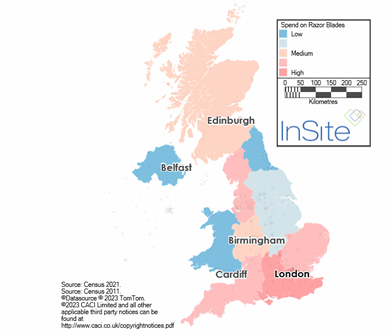
So, what place do dashboards still have in businesses, and how can we better understand where they excel to drive improved outcomes? 

What potential challenges may arise with dashboards?

There are many instances where dashboards may be less effective or complicate matters for businesses, and other methods provide a better solution. Instances may include: 
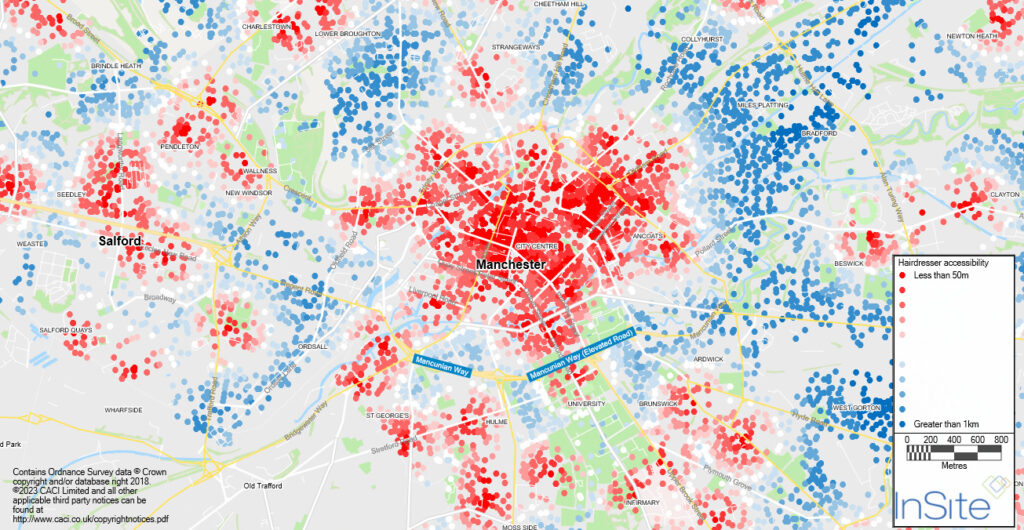
  • When the user needs a concise answer to a question:
    Dashboards require interaction and exploration, which can be time-consuming. If a stakeholder needs a straightforward answer, a tailored report is more efficient.  
  • For business specific, niche questions:
    Not every level of enquiry warrants the resource-intensive creation of a dashboard. For narrow, targeted questions, simpler reporting methods suffice. 
  • One-time insights:
    Dashboards are overkill for static data projects, such as measuring the success of a single transformation. In these cases, producing a well-crafted report or presentation is more resource-efficient. 

  • If the data is exported for analysis:
    If users regularly export dashboard data to manipulate it elsewhere, it’s a sign that the dashboard doesn’t meet their needs or wasn’t necessary to begin with. 

When might dashboards be the right solution?

Company-wide reporting platforms

Dashboards provide a unified view of performance across teams, offering consistent delivery of insights to aiding faster decision making, customisable filters for views specific to each business unit, efficiency in distributing insights without the need for manual reporting and increased data accessibility through data visualisation. 

Regular cadence reporting

For tracking ongoing metrics such as daily sales, customer trends or campaign performance, and measuring progress against targets, dashboards provide updated insights without the wait. 

Exploratory analysis

Whenusers want to discover patterns, relationships or unknown trends within the data, dashboards allow for interactive interrogation. These tools are especially valuable for data-savvy end users, enabling self-service exploration without requiring an analyst’s intervention. 
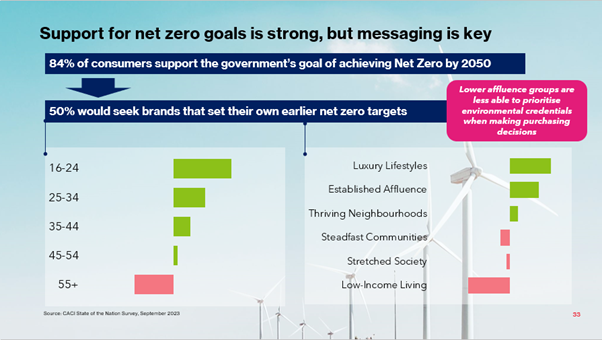
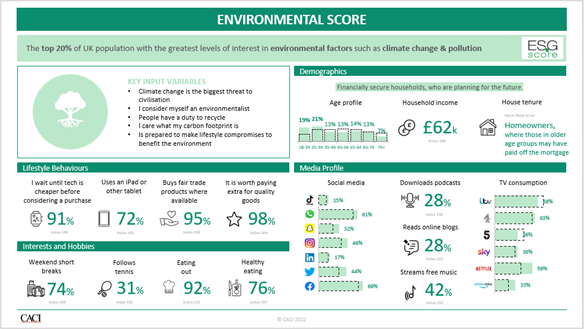
Monitoring ongoing initiatives

Dashboards are excellent for tracking live projects or recurring business processes, offering real-time visibility into performance. 

The future approach for dashboards

With the above in mind, we’re moving to a more informed approach where dashboards are no longer a tiresome, default solution, but a carefully considered tool.

The future isn’t about abandoning dashboards, but about being intentional and strategic in their creation and deployment. The key is facilitating dashboard creation in a way that adds tangible value and is thoughtfully configured to provide meaningful, actionable insights that empower decision making. 

How CACI can help

At CACI, we work with you to deliver the best solutions for your analysis needs. Our extensive experience in successfully implementing dashboards across diverse industries highlights several key scenarios where dashboards have proven to be highly effective.  

Whether it’s creating a bespoke, one-off report or developing a suite of comprehensive, customisable dashboards, contact us to find out more about how our user centric approach and industry expertise can help you gain meaningful analytics that will drive strategic business outcomes. 

Which Klepierre retail centres in France would benefit the most from Gymshark?

In this Article

In our previous blog in this two-part series, we uncovered why France would be a good option for a Gymshark European market expansion and key considerations the brand could take for a successful expansion. Today, we’ll assess which Klepierre retail centres in these high-potential French cities would benefit most from housing a Gymshark in their centre as part of a hypothetical Gymshark French market expansion.

How Retail Footprint Europe could help Klepierre understand which retail centres would benefit from a Gymshark store

While there are many centres in France that would be suitable to bring Gymshark into based on the best shopper profile correlation in a hypothetical Gymshark market expansion, Retail Footprint Europe, CACI’s machine learning catchment model defining catchments for thousands of destinations, has helped determine three particular Klepierre centres that would ultimately become a good fit. With key Gymshark shoppers comprising Affluent Singles & Couples, Affluent Young Families, Middle Income Singles and Student Life profiles from Acorn, CACI’s geodemographic segmentation, these insights were cross-referenced against Retail Footprint Europe insights to equip the business with granular insights and tangible actions to help landlords deduce which centres would work and why.

Finally, to gain insight into actual footfall and compare actual versus expected footfall against these Gymshark profiles and conclude which centres presented opportunities to attract more of Gymshark’s core shoppers, Mobility Data was leveraged.

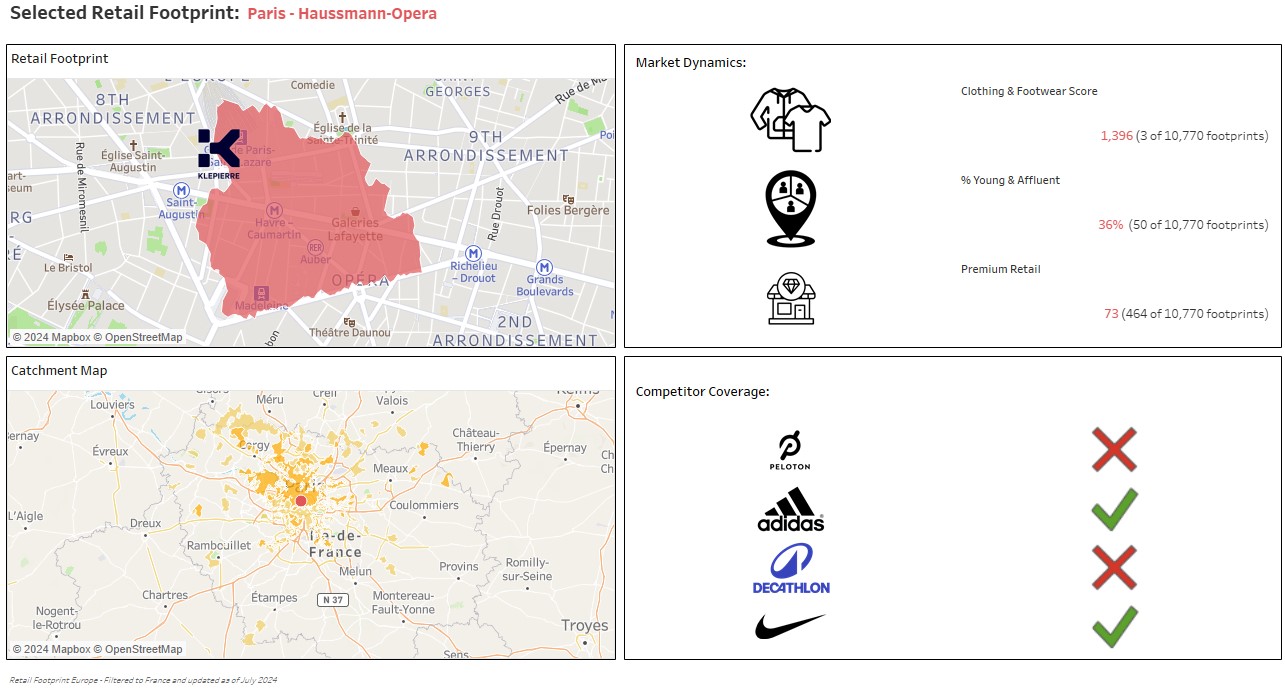
Saint-Lazare Klepierre in Paris

According to our findings, one of the Klepierre centres that would benefit most from the presence of a Gymshark would be the Saint-Lazare in the Haussmann-Opera retail area. This centre is expected to attract the highest potential of Gymshark’s core shoppers at 43%. Saint-Lazare also has the most affluent profile at an expected 34%. However, the area is home to lower levels of Student Life profiles, with just 1% expected to visit the centre.

Paris houses a strong proportion of premium retailers that align with Gymshark’s offering, with this particular Klepierre centre featuring a blend of competitors and complementary retailers, already housing the likes of Adidas and Nike, which both have similar offerings to Gymshark. Its shopper demographic also lends itself to those who are likely to either be existing Gymshark customers or will become ones once the brand enters the physical market.

Retail Footprint Europe insights for Saint-Lazare Klepierre

The Haussman-Opera retail area holds the third largest clothing and footwear store presence across France, with many premium and broader retailers and a higher percentage of affluent and younger consumers. Our findings also show that people travel well outside of Paris into this area to shop, making it a fantastic location to quickly grow brand reach and exposure.

Acorn insights for Saint-Lazare Klepierre

Saint-Lazare appears to perform the most in line with Gymshark’s core shoppers, with 44% originating from its expected profile according to our Mobility Data findings. This data provides insight on actual footfall and illustrates the comparison between actual and expected versus the Gymshark profile to understand if a centre had an opportunity to attract more of Gymshark’s core shoppers.

As a more premium brand, Gymshark achieves particularly high indexes for affluent consumers, but also performs well with aspiring, younger and urban consumers within the Gymshark core shopper profiles outlined by Acorn. Compared to fellow sportswear brand, Adidas, the brand has a much broader appeal and can perform in-line with their average consumers, while Gymshark performs significantly weaker in these segments.

Centre Commercial Centre Bourse Klepierre in Marseille

Retail Footprint Europe insights for Centre Commercial Centre Bourse Klepierre

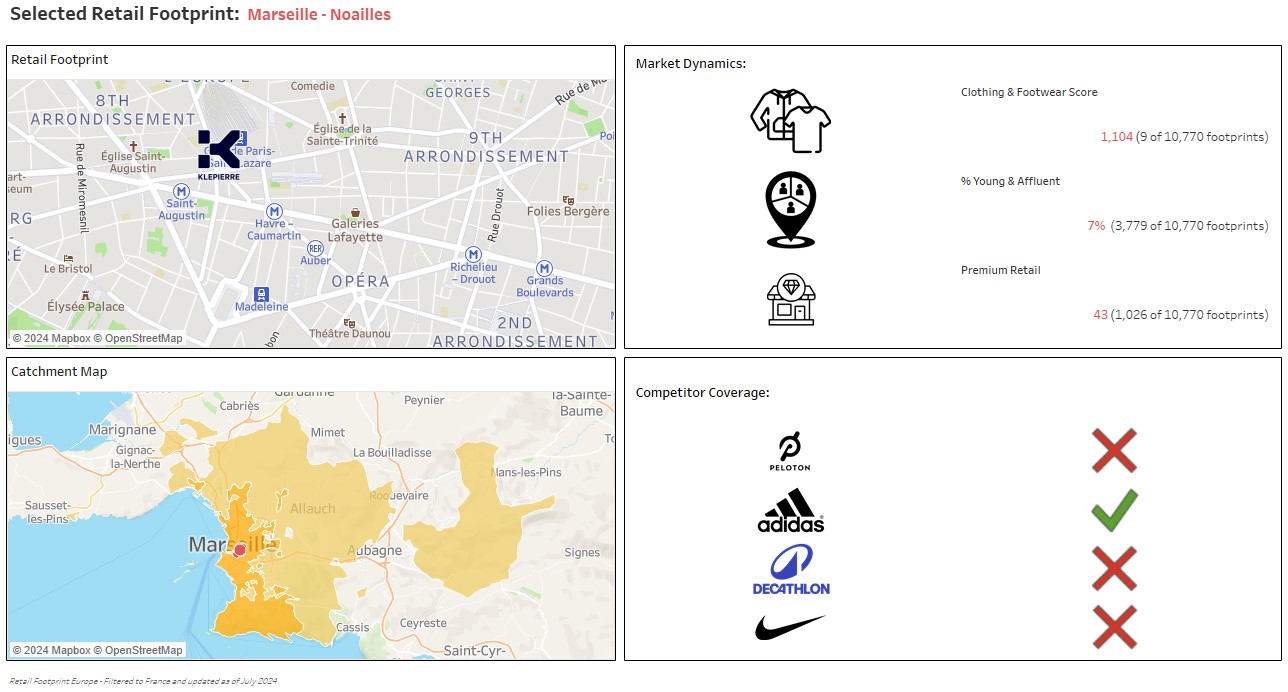
Centre Commercial Centre Bourse would be a strong runner up to Paris thanks to its high-performing site in terms of its Clothing and Footwear Score and its high proportion of premium retailers that align with Gymshark’s offering, according to our Retail Footprint Europe findings. However, this centre has a rather low proportion of a young and affluent shopper demographic compared to Saint-Lazare in Paris, which could see the brand running the risk of not attracting the right shoppers upon opening.

Acorn insights for Centre Commercial Centre Bourse Klepierre

Another defining factor behind Centre Commercial Centre Bourse being a suitable location for a French market expansion is due to the city’s likelihood of having the highest proportion of Affluent Young Families (15%) compared to the other locations. According to Acorn, Centre Commercial Centre Bourse in particular attracts 36% of Gymshark’s core shoppers.

Mobility Data insights for Centre Commercial Centre Bourse Klepierre

Marseille sees a 14pp higher proportion of footfall from Gymshark’s shoppers than expected, driven by the centre attracting significantly more Affluent Singles and Couples than expected, according to Mobility Data findings. Centre Commercial Centre Bourse highly reflects Gymshark’s core shoppers (both in expected and actual footfall) and has strong proportions across the different core shopper groups, while Paris is much more concentrated on a singular Affluent group.

This centre ranks 9th out of over 10,000 retail centres for its Clothing & Footwear Score and has a strong premium retail score, even higher than that of Paris. Marseille also only has one competitor in its centre, meaning the addition of another sportswear brand wouldn’t saturate the market, but shows there is demand for this category in the area.

Les Passages Pasteur Klepierre in Besancon

Retail Footprint Europe insights for Les Passages Pasteur Klepierre

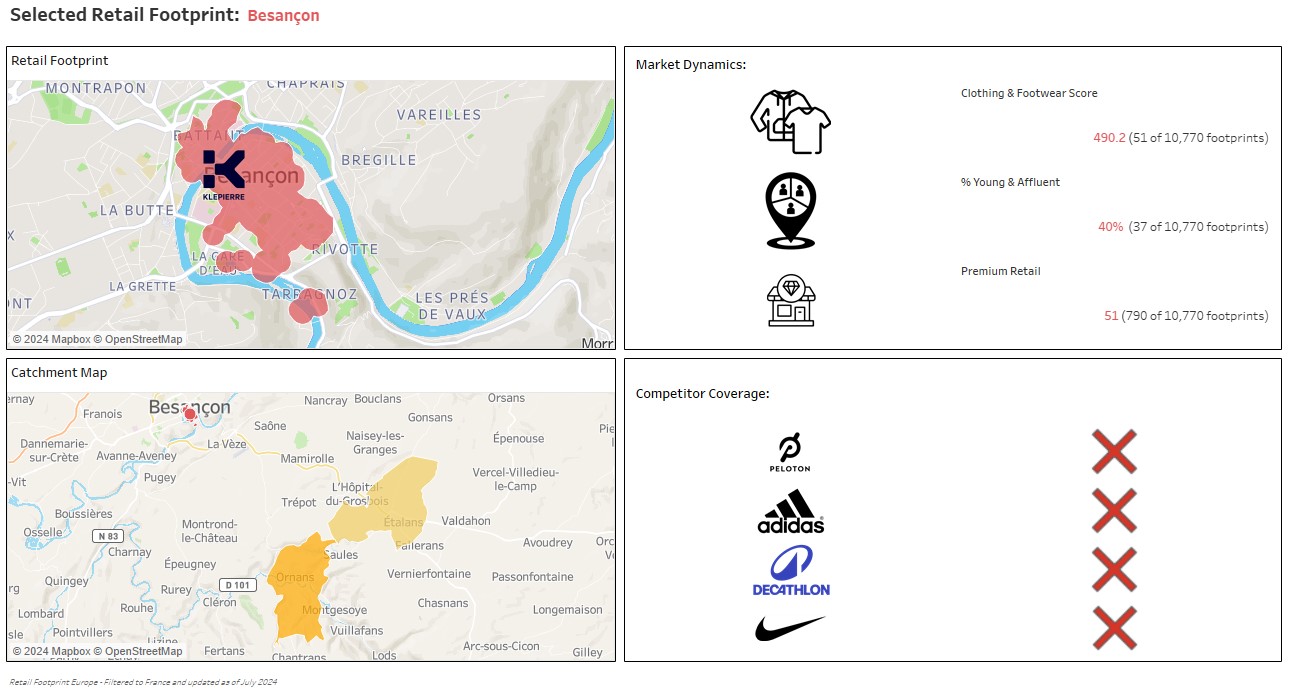
Surprisingly, despite this smaller size of this city and inevitably lesser likelihood of Gymshark opening here, it is actually home to a high level of one of Gymshark’s core shopper demographics, Student Life, as seen in our Retail Footprint Europe data. As with Centre Commercial Centre Bourse in Marseilles, Les Passages Pasteur has a strong Clothing and Footwear offering, a substantial percentage of which are classed as premium retail. While Besancon doesn’t have any direct competitor or complimentary brands, this could be navigated with the help of clever marketing strategies.

Acorn insights for Les Passages Pasteur Klepierre

Les Passages Pasteur has a much younger profile that comprises 31% of Gymshark’s core shoppers, with 12% of its catchment expected to be Student Life, based on findings from Acorn. Unlike Centre Commercial Centre Bourse, Les Passages Pasteur has a high percentage of young and affluent shoppers (even higher than Paris), which would ensure that Gymshark was opening to a shopper demographic most likely to shop with the brand. However, the city has the least affluent profile out of the three.

Mobility Data insights for Les Passages Pasteur Klepierre

Les Passages Pasteur appears to attract the most significant amount of Gymshark’s shoppers in real footfall, with 53% of its actual footfall being from Gymshark core shoppers, as seen in our Mobility Data findings. This is because the centre is significantly over-achieving in attracting Student Life (+21pp versus expectation), showing the centre resonates very well with younger shoppers.

Using the data, which Klepierre centre would best perform in France?

With the aforementioned data to consider, the strongest contender for a successful French market expansion for Gymshark would likely come from Centre Commercial Centre Bourse Klepierre. This is due to its strong representation of Gymshark’s core shoppers, both in expected and actual footfall, as well as the proportions across the different core shopper groups compared to the other two cities and centres being more concentrated on a singular group (e.g. Affluent groups in Paris and Student Life in Besancon). With only one competitor in the Centre Commercial Centre Bourse Klepierre, the addition of another sportswear brand won’t oversaturate the market. Instead, it’d reiterate the demand for this category in the area.

Ready to Find Your Next Market?

With insights from Retail Footprint Europe, pinpoint the best locations for your brand’s growth across Europe.

Why France would best suit a Gymshark European market expansion

In this Article

A new sportswear retailer emerges on the international stage.

Gymshark, a fast-growing activewear brand, has been rapidly expanding its global reach and brand presence as it ventures into the world of brick and mortar. Having recently opened new stores in the UK (Stratford City), the Middle East (Dubai) and a pop-up concept in New York City, this brand with a prominent social media and predominately online presence is now rapidly infiltrating physical retail.

Despite not yet launching across wider Europe, it’s only a matter of time before these markets will be ventured into via physical pop-ups and stores. Selecting the right locations out of countless options may be a daunting task that comes with the territory, however. So, once the time comes for Gymshark to decide which locations to expand into that will maximise their increasing growing brand recognition and ROI, how should they effectively go about it?

In this two-part blog series, we’ll walk you through a hypothetical European market expansion for Gymshark in France, sharing how the brand can use data to accelerate and enhance their international store network strategies.

Three French cities that demonstrate viable market expansion potential based on insights taken from CACI datasets and segmentation tools will be focused on, as well as key takeaways that Gymshark (or brands in a similar position) could consider when it comes to international market expansion.

How France was identified as an optimal location for a Gymshark European expansion

CACI possesses a complete universe of defined retail areas to consider, a detailed understanding of different types of consumers and where they shop. This enables us to guide a brand like Gymshark to maximise success and value from go-to-market strategy and launch through to expanding into broader brand recognition and market share capture.

With this in mind, and with Gymshark expanding into physical and new regions, we investigated European markets that might fit their need should they decide to expand into Europe.

With Gymshark already a brand on CACI’s Brand Dimensions, a dataset tracking hundreds of the UK’s most popular and emerging brands to reveal spend, sales and average transaction value insights, key groups in French Acorn could also be identified.

Key Acorn groups were identified by using Brand Dimensions data followed by selecting key Acorn groups within French Acorn data, which correlated accordingly. In France alone there are over 10,000 retail areas, each with differing levels of existing premium clothing shops and competitors, types of customers, footfall, population and spend.

By comparing this to the expected view from Retail Footprint Europe, we could identify locations that were currently failing to engage Gymshark’s key shoppers but had the opportunity to.

From these collective findings, we were able to conclude the following three French locations that could benefit from the opening of Gymshark: Paris, Marseille and Besancon.

Why Paris would perform well in a Gymshark France expansion

According to our findings, Paris presents the highest performance potential and should be a primary focus for Gymshark. Aside from being the biggest city in France -an obvious bonus for any brand – Paris presents the best shopper demographic, a strong array of existing premium retailers and the ability to attract the relevant demographic groups that would align to Gymshark’s brand identity of being a premium retailer with similar retailers already in the centre.

Retail Footprint Europe enables the use of transactional data across brands to develop an understanding of the typical Gymshark shopper, brand positioning and establishing criteria for the most suitable locations for Gymshark to consider regarding new store openings.

Considering these criteria, Paris ranked incredibly high on Clothing and Footwear, with the Haussmann-Opera retail area Klepierre centre ranking among the top three across France.

Why Marseille would perform well in a Gymshark France expansion

Marseille presents itself as another viable option as our findings show it to be the middle ground between high affluence profiles and younger, ‘student life’ populations found in other larger, prominent French cities. The city’s strong clothing and footwear and high proportion of premium retailers also contributes to its performance potential. However, its lower ‘young and affluent’ target demographic runs a potential risk.

Why Besancon would perform well in a Gymshark France expansion

Despite Besancon presenting itself as more of a curveball, the granularity of our Retail Footprint findings demonstrate that in spite of its smaller size and lesser known location, the city is home to a strong clothing and retail offering including premium retailers, a high percentage of young and affluent shoppers and is overall more likely to attract the right shoppers.

Key takeaways that Gymshark can consider for a French market expansion

These aforementioned insights would enable Gymshark to better understand their long-term audience capture of sites through physical retail and experiment with different formats and experiential offerings.

Combining Retail Footprint data across Europe with demographic, transactional, brand alignment and footfall data can ultimately be used to shape an evolving store network strategy, and the national view further solidifies an understanding of the entire retail landscape of France.

Through these insights, Gymshark would be able to accelerate store openings with greater confidence and success if or when they decide to expand into Europe.

Ready to Find Your Next Market?

With insights from Retail Footprint Europe, pinpoint the best locations for your brand’s growth across Europe.

Stay tuned for next blog in this two-part series, where we’ll assess which Klepierre centres in these high-performing potential French cities could perform well in a Gymshark French market expansion.

Key trends shaping data strategy: Insights from Big Data LDN and Snowflake DCWT 2024

In this Article

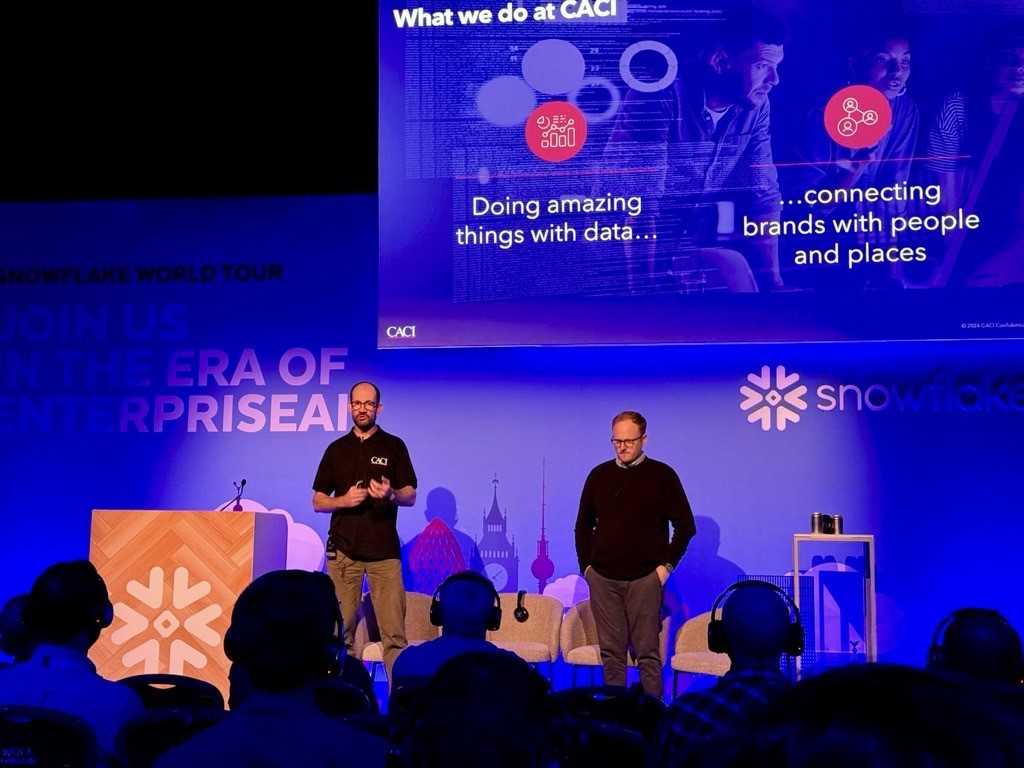
In recent months, I have had the opportunity to represent CACI at two major data conferences—Big Data London and Snowflake’s Data Cloud World Tour in London. CACI took a prominent role at both events, including serving as a Black Diamond Partner at the Snowflake tour. I spoke at both events, sharing insights from our latest projects and discussing the strategic shifts shaping the data landscape.

Both conferences were electric with activity, demonstrating the strength and vibrancy of our data community. The CACI booth saw a steady stream of professionals eager to discuss our perspectives on the future of data and technology, as well as how we’re tackling current trends and challenges across industries. These interactions highlighted three key themes resonating within the industry today.

Snowflake functionality including sharing and Container Apps

One of the questions I was asked a lot at the events was how organisations can use native data sharing functionality with Snowflake more widely. Snowflake has progressively made this easier to do, by enabling direct warehouse-to-warehouse sharing of data. Moreover, the launch of Container Apps has meant that organisations can also consolidate more processing within Snowflake, rather than handing off to processes outside of where they store this data. Increasingly, Snowflake adopters are seeking to consolidate more of their data technology and data within one common platform. This obviously increases efficiency with data processing and makes your data processing estate easier to manage.

I was inundated with questions about how we can support organisations in making more from their Snowflake estate, from supporting on enabling direct sharing and private cleanrooms, to migrating workloads to native Snowflake apps. It’s clear that this will be a core strategic push for many organisations already on Snowflake, but also a driving force behind many decisions to migrate to Snowflake.

The rise of data Self-Serve

It was quite staggering to see how many exhibitors at Big Data London were software vendors selling self service data insight platforms, many of them powered by GenAI. The desire to give non-coders access to query data held within a warehouse/lake etc is nothing new, there has forever been this requirement. Hitherto, that access has been slightly hamstrung by the capabilities of the tools aiming to give that capability, often giving a reductive or clunky user experience. However, this sector has grown momentum recently, driven by increased data volume and by the increased desire for more data by “non-technical” people.

It’s clear that GenAI, in part, has given renewed energy to this sector, and we’ll see these type of natural language tools start to really challenge the incumbent BI tools.

One of the omnipresent challenges of the data industry has been how to seamlessly give access to data, held within data platforms, and easily give access to people not proficient in writing code. It is one of the areas that has held back true democratisation of data, and limited initiatives to create thoroughbred “data-driven” organisations. If GenAI can help by removing these barriers to data accessibility, then we’ll enter a new age of data use, and organisations will really be able to start fully leveraging all the data that they have at their disposal.

Importance of Observability

In 2024, observability—essentially, next-level monitoring—is becoming indispensable. We find ourselves in a place where our data estates are becoming ever more expansive and expensive. The volume and cardinality of data that is being collected and processed is ever increasing, contributing to a degradation of transparency about what is happening on our data platforms. Moreover, the now ubiquitous consumption pricing model has meant that there is now increasingly need for better observability, to enable widespread transparency on what processes are running, their efficiency, how much compute they are using, and how much they cost.

We’ll see an increasing push to streamline data processing operations and to create better clarity on what processes are running and how much they are costing the business. Additionally, as data operations but ever more business critical, there will be additional scrutiny their performance and health.
In summary, these three trends—expanded Snowflake capabilities, the advancement of self-service data tools, and enhanced observability—reflect a broader industry shift towards greater accessibility, efficiency, and cost transparency in data management. As we continue to innovate and adapt, CACI is positioned to support organisations in navigating these changes and unlocking the full potential of their data assets. Together, these insights underscore a vibrant future where data is not only accessible but fully optimised to drive meaningful business outcomes.

Curious to explore how these trends could shape your organisation’s data strategy? Let’s start a conversation about unlocking the full potential of your data estate with CACI. Reach out today to discover more.

Why should businesses utilise the latest LLMs and latest NLP techniques?

In this Article

In our rapidly evolving world, leveraging cutting-edge technologies is no longer a luxury, but a necessity, and Natural Language Processing (NLP) stands out as one of the most transformative tools available. NLP focuses on the interaction between computers and human language, this is commonly seen in systems such as Large Language Models (LLMs), Interactive Voice Response systems (IVRs), and voice assistants. These technologies have the power to revolutionise a company’s service by making interactions more efficient and effective, whilst reducing costs, so why haven’t more companies harnessed them? 

Let’s consider customer service – an area where the technology has already made significant strides. Many businesses still have systems that heavily rely on human operators, requiring them to tackle customer calls with highly specific and complex issues. Implementing new NLP systems can lessen the reliance on these human operators, leading to decreased wait-times, improved efficiency, and 24/7 availability. However, these systems often come with significant costs and require substantial infrastructure changes. If not executed properly, they can lead to unintended consequences and ruin the customer experience. Therefore, before adding new systems, you must understand and quantify why customers are contacting you and identify where systems can enhance the customer journey and reduce cost.  

What AI tools are there for text analysis

Various AI approaches are available to address a wide range of problems. We can categorise them as follows: 

  • Generative LLMs: Examples include GPT-4 (ChatGPT), Gemini, and Claude. These are the models that excel at generating content e.g. summarising a customer call.
  • Non-generative LLMs such as BERT, RoBERTa and their various forms: These models are used extensively in applications that require deep understanding of context or meaning e.g. accurately classifying known topics for a customer call.
  • Traditional NLP techniques: This category encompasses rule-based systems, Word2Vec, and more. They work well with simpler tasks. E.g. detecting if a particular service is mentioned in a customer webchat.

What’s the difference between generative and non-generative LLMs?

Fundamentally, LLMs like GPT-4 and BERT are built from the same building blocks called transformers, so what makes them differ?

Typically, a transformer is comprised of both Encoder and Decoder parts, but it’s been found that models can be specialised through stacking either encoder or decoder blocks. GPT-4, a generative LLM, is often referred to as a decoder-only architecture. This allows the model to receive an input, then generate text that is contextually relevant to the input. Not only does it mimic human-like text, but these responses can also be seemingly creative.

BERT, on the other hand, is built using encoder-only architecture, so think of it as a specialist in both reading and interpreting human language, rather than generating it. Non-generative LLMs, when utilised effectively, offer considerable power without a lot of the overheads associated with the generative LLMs. While some infrastructure is necessary for their implementation, the costs are not prohibitively high, especially when employing distilled models. For instance, users can avoid making expensive high frequency API calls to generative LLMs or using extensive computational resources. Additionally, users have greater control over model customisation, allowing them to achieve optimal performance for domain-specific tasks. These advantages make non-generative LLMs an excellent choice for handling highly sensitive data within a secure, isolated system e.g. a client’s secure inhouse database and system.

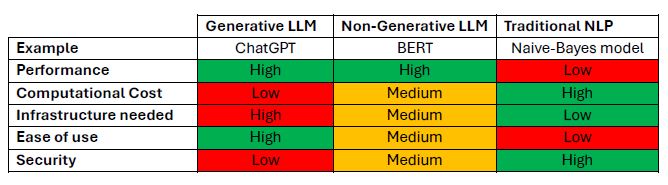
The following table offers a high-level comparison of the different NLP tools:

Are traditional NLP techniques still relevant? 

Although LLMs are highly adaptable and have great performance across a wide-range of tasks, traditional NLP techniques remain relevant due to their task-specific tunability. These methods have been in use for decades and continue to play a crucial role in various niche applications. Traditional approaches often benefit from cost-effective compute resources and specificity, but they require more manual tuning to achieve optimal results, and typically only work well on low-complexity tasks. In general, these techniques are better-suited for curated, lower-performance internal systems, where they can carry-out dedicated automated tasks inside a pipeline.

Intent classification in action 

Back to our customer service example – using a combination of NLP techniques, generative, and non-generative LLMs, we can identify the intent of customers when speaking to customer service operators. 

In the first instance, we can apply quick traditional NLP methods to identify if this alone is suitable for our task. However, due to the complexity of customer interactions, it is unlikely that this will produce robust results. The next step would be to employ a generative LLM on a subset of calls to identify intent topics. While this may provide sufficient insights to enhance the customer journey, for truly informed business decisions, it is essential to gain a holistic understanding. Therefore, quantifying the number of calls related to each topic might be of interest.  

To quantify the number of calls it is best to use a non-generative LLM like BERT, as they will outperform their generative counter parts, are much cheaper and far easier to implement at scale. Previously we have had great results using these types of techniques and methodologies in a range of different projects.

How CACI can help

If you’re looking to enhance your business with cutting-edge NLP solutions, our in-house data science teams are here to help. Contact us today to start transforming your use of data and stay ahead in the ever-evolving landscape of AI and data science.

Related posts:

How to estimate affluence with satellite imagery

In this Article

When looking to understand the geodemographics of a country, a segmentation can be an invaluable tool for describing the differences between neighbourhoods to drive decision making, guiding you towards the areas where your customers or lookalikes are. Indeed, CACI’s Acorn helps thousands of organisations better understand and target their audiences within the UK market. One of the key ways Acorn differentiates between top-level Categories is by affluence, which is a crucial factor for a segmentation in a business context. 

In the UK, there is a wealth of data we can draw upon to build geodemographic segmentations like Acorn, including a robust and detailed census, land registry, and most importantly, a well-defined, small-scale Postcode system. But in foreign markets, such detailed data often doesn’t exist, and where it does, it can be of poor quality, hard to verify and at a regional level. So, how can we build a reliable segmentation in these markets? 

Satellite imagery as a novel approach

In the image on the left, there are large buildings, geometrically defined roads, pools and greenery, which is expensive to maintain in a desert country. This area is likely to be of a generally higher affluence. In the image on the right, there are buildings of uneven height, densely packed together along uneven and jagged roads. This area is likely to be of a generally lower affluence compared to the image on the left. 

We can see by eye the differences between these areas, but we can’t feasibly label all the areas of a country manually. So, how to do we do this programmatically? 

Enter Convolutional Neural Networks (CNNs), a well-established deep learning technique that’s the bedrock of image analysis. Inspired by the visual cortex of an animal, they are trained to identify the patterns and shapes in an image and use this to predict the likely classification of objects or the image as a whole.  

For successful usage of a CNN, however, quality training data is vital. In classic examples of image recognition, such as the MNIST dataset of handwritten digits, most people would have no issue labelling the training images correctly to feed to the model. This is trickier for labelling the affluence of a small area, though, as you need deep local knowledge and the time to manually label thousands of images to achieve a model with usable accuracy. CACI has invested heavily in building a robust pipeline for this process, allowing us to achieve the scale required for accurate modelling. 

The unifying geography

We now have a methodology for generating some information about affluence, but we still have another problem to tackle – what geography should a segmentation be built at? 

The natural response might be to consider administrative boundaries. This is the level at which most governmental social and economic data is released, so it makes sense to consider this as an option. However, the irregularity of the shape and size of administrative regions in many countries means that it can be hard to compare areas like-for-like, hampering effective decision making. 

H3 – a geospatial indexing system developed at Uber – splits the globe into a grid of tessellated hexagons at varying scales, from the largest scale at 110 hexagons to the smallest at ~570 trillion hexagons. It’s gained popularity thanks to its ease of use, speed and availability of algorithms and optimisations for working in its geography. 

H3 is a great alternative to Postcodes in areas where they can’t feasibly be used. It can be applied consistently across a country and at a low level of granularity, meaning that any segmentation applied at this level can clearly show the differences between areas in an accurate way. It’s also easy to aggregate up to other geographies, allowing you to integrate the data into other systems where data is not so granular. 

How CACI can help

Combining the power of H3 hexagon geography with the information gained from analysing satellite images, we can gain great insight into the relative wealth of areas in countries where existing data is simply not available. 

The ability to apply image analysis, however, means nothing without deep expertise in segmentation and location strategy. By combining your knowledge of your customers with our expertise in data science, insight and location, CACI can support you in your journey. 

Whether you’re an established international organisation or looking to move into a new market, contact us today to find out how we can help you take the next step in achieving your goals.

Related posts:

How a digital twin enhances logistics operations

In this Article

In our previous blog,, we uncovered ways in which logistics operators can introduce customer-centric strategies, iIn our previous blog, we uncovered ways in which logistics operators can introduce customer-centric strategies, including enhancing personalisation within the check-out process. Today, we’ll explore the role of the digital twin in augmenting logistics operations. 

What is a digital twin?

A digital twin is a digital model of real-world, physical asset that serves as a counterpart for the simulation, integration, testing, monitoring or maintenance of the physical asset. In the logistics industry, it can model a distribution network to test potential changes and assess the impact on a physical asset or place, ensuring any data-driven changes can be applied to the physical asset or place.  

What does a digital twin do?

A digital twin model can help a business assess any changes to their distribution network, run ‘what if?’ scenarios, assess whether a network is fit-for-purpose if product demand or consumer behaviours change, simulate real-world operations to display outcomes depending on where you open distribution centres and much more.  

Any changes made to physical assets are reflected in the digital twin model. Despite taking on many forms and possessing various attributes, each model links a physical asset to a digital model to offer a schematic view versus a genuine view of ground assets. This feature can help logistics operators to assess whether they positively supplement the existing distribution network to allow costs and benefits to be analysed digitally before allocating any costs towards bringing them into the physical world. 

What difference can a digital twin make on logistics operations?

Digital twins instil logistics operators and retailers with confidence by enabling them to refine supply chain modelling. Through this, they can bolster the visualisation and analysis of their operations, simulate real-world interactions, enhance their decision-making and build a robust and agile distribution network. 
 
Whether it’s monitoring a fleet of vehicles or orchestrating complex supply chain networks, digital twins ensure logistics operators and retailers can test scenarios, mitigate any challenges and hypothesise strategies to drive efficiency and resilience within their organisation. Amazon is typically leading the way and is one example of a company redefining the possibilities of building customer-centric distribution networks, described by SphereWMS as comprising of “…strategically located fulfilment centres, enabling fast and efficient shipping to customers worldwide.” 

What makes a good digital twin?

In short, a good digital twin is a tool that is: 

  • Easy to use from setup to navigation, with a user-friendly interface. In the case of a distribution network, a good digital twin includes a map of the whole network 
  • Flexible to be able to model whatever is necessary and underpinned by structures that allow for this (likely to be scripting, not set variables)  
  • Able to produce outputs quickly and easily in the right format for users.

What happens next & how CACI can support

The impact of digital twins can be felt across the entire value chain. Once you’ve built a digital twin, evaluating and optimising from real-world data and feeding it back into the models you’ve got and to determine whether they were a success or not are all aspects of which CACI can support on. We have the data and technology to model that out and de-risks for companies by modelling in a system versus going by gut feelings. 

CACI possesses the industry experience and data and consumer insights to help you deliver personalised customer experiences cross-channel at all stages of the customer journey. To find out more about how we can help you reach these goals, contact us today

Most substantial challenges for healthcare organisations to address in 2024

In this Article

Tackling health inequalities is a tremendous challenge.  It requires healthcare organisations to understand the demographics, lifestyles, behaviours, needs, and external pressures that individuals across the country face daily with greater accuracy. Access to accurate and detailed data significantly impacts an organisation’s ability to develop a robust response to inequalities and determine which services will meet local needs.  

In our recent webinar for NHS England on “Tackling Health Inequalities with Effective Data & Insight”, we explored the impact of our datasets and insights on NHS England’s ability to tackle current health inequalities and devise strategies to improve future outcomes.  

So, what have the findings from our various datasets and our Voice of the Nation (VOTN) Q1 2024 survey shown regarding the behaviours and health concerns of different demographic and affluence groups across the UK? How can healthcare organisations apply these findings to improve outcomes for their local communities? 

Half of the survey respondents are concerned about their personal wellbeing and mental health

Personal wellbeing and mental health are incredibly important considerations for the NHS. According to our survey results, these have been hugely concerning for people of various ages across the UK, with 50% of our VOTN Q1 2024 survey respondents claiming to be concerned about both. This is the highest number of respondents for these sentiments that CACI has ever seen in the four years of this survey being conducted, demonstrating the need for healthcare organisations to review their current offering of personal wellbeing and mental health services avoiding a ‘one size fits all’ approach that targets all ages.  

Millennials are the most concerned of all age groups about their health

While the traditional assumption may be that younger generations are more carefree and less preoccupied with the concerns of the world, our survey results have shown the opposite. Millennials were the most concerned of all age groups (from Boomers to Gen Z) for their personal wellbeing and mental health, with more than two-thirds feeling this way. This further reiterates the necessity of ensuring that all age groups—particularly Millennials—are offered relevant personal wellbeing and mental health services. 

Affluence does not shield from health concerns

Our survey results indicated that personal wellbeing and mental health concerns have been affecting individuals across all affluence levels. While one might assume that higher-affluence individuals experience fewer wellbeing and mental health concerns, our findings revealed that as many as half of the respondents from the higher-affluence Acorn categories of Luxury Lifestyles and Established Affluence expressed concern about these aspects of their lives. Respondents from the Low Income Living Acorn category expressed the highest level of concern for both areas.  

These insights provide concrete evidence for healthcare organisations to tailor their services based on the specific needs of different affluence groups, rather than relying on open data or assumptions. These results demonstrate the right healthcare services must be accessible across all affluence levels.  

How can CACI help?

CACI can help healthcare organisations tackle health inequalities, supporting a range of clinical areas of health inequalities from severe mental illness (SMI) to maternity and chronic respiratory disease (CPD) to early cancer diagnosis, hypertension case-finding and more. Our partnership with NHS England provides all 42 integrated care boards (ICBs) with free access to a variety of datasets that are being used to tackle health inequalities.

Contact us today to learn more about our partnership with NHS England or to find out how our datasets can improve outcomes for your healthcare organisation. 


Harnessing the power of personalisation to bolster customer-centric fulfilment

In this Article

At this year’s Leaders in Logistics Summit, we explored the growing impacts of personalisation and digital twins to help logistics operators understand how they can make foundational, operational improvements to deliver fulfilling customer experiences. What we found was that ultimately, to create highly targeted and effective customer-centric fulfilment strategies, logistics operators and retailers may want to consider the following to achieve customer-centric fulfilment: 

  • Personalisation: Understand your customers to build a personalised post-purchase fulfilment process  
  • Network: Build a customer-centric distribution network.   

Nowadays, long-term customer retention and satisfaction requires much more than simply successfully delivering products or services to their doorstep. Customer-centric fulfilment now requires logistics operators and retailers to carefully consider the role of personalisation and fuse their understanding of logistics and customers to meet the unique needs of each customer, turning fulfilment into a function that will benefit the organisation. Customer-centric fulfilment is therefore no longer regarded as a background aspect, it is now of prominent importance due to the tremendous difference it can bring to an organisation. 

So, how exactly can personalisation enhance customer-centric fulfilment? Why should logistics operators and retailers consider the impact of personalisation on their long-term performance and outcomes? What data and technology should logistics operators consider to achieve this? 

Investing in personalisation to improve customer fulfilment

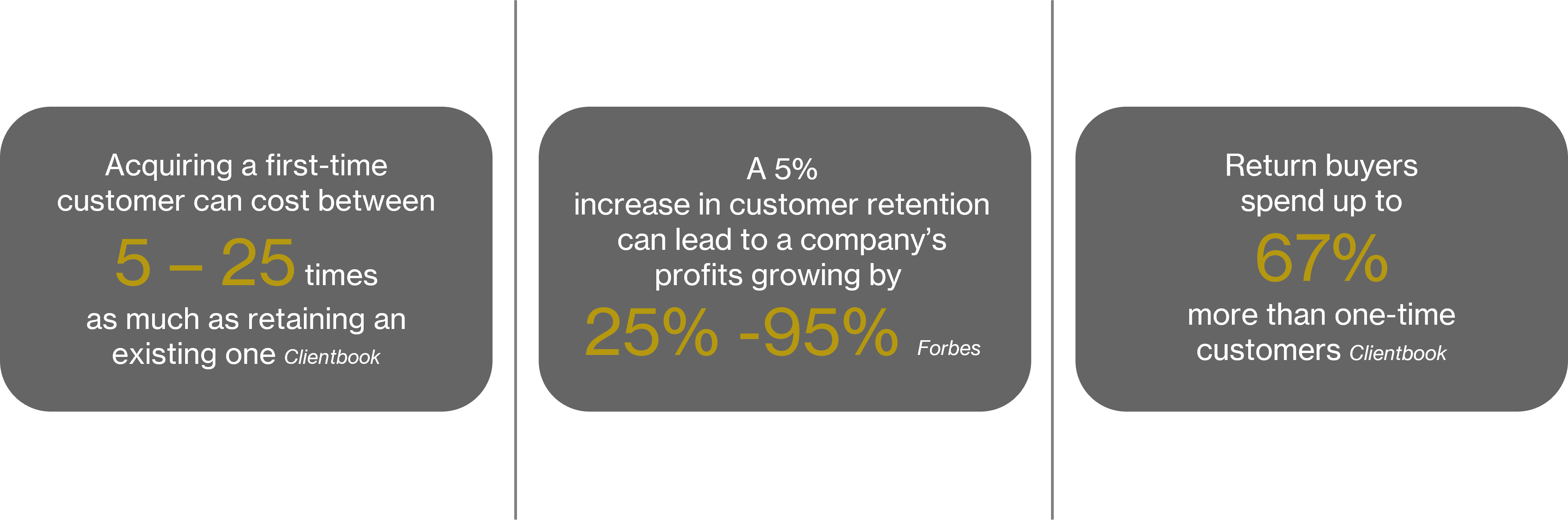
Acquiring new customers requires a substantially higher investment than retaining customers. Building customer loyalty and retaining customers through personalised, customer-centric fulfilment is ultimately easier and more beneficial for a business’ long-term growth and profitability than purely investing in trying to get new audiences. In fact, research shows that:

Harnessing data & technology to enhance customer fulfilment in delivery

Data and technology enable customer-centric fulfilment by equipping logistics operators and retailers with an integral competitive advantage. In the customer journey, a well-executed fulfilment experience after their purchase, will result in them being more receptive to re-marketing, repeat sales, becoming an advocate and ultimately becoming highly profitable. Otherwise, if the fulfilment is poorly executed, customers will have a negative experience that then gets in the way of re-engagement in the future.   

Customer-centric fulfilment creates an opportunity for the logistics function to positively impact the business’ performance beyond keeping costs down – by enabling better profitability. This can be pivotal for both merchants and carriers. Merchants will find that this presents a direct opportunity to improve customer retention. For carriers, it’s an opportunity to differentiate services, retaining and winning more contracts. 

How can CACI help?

CACI can support you with the personalisation necessary to achieve customer-centric fulfilment. This begins with using the right data, AI and machine learning to understand each customer, predicting their preferences to ensure the right fulfilment journey can be put in place for them to achieve a positive experience.

This can start in the basket, when delivery options are first displayed to the customer. Personalised delivery options can be offered to fit the nuances of the customer, which may include understanding how tech-savvy the customer is to subtly change the language that is used, offering assistance to elderly customers, anticipating that young adult customers may be less likely to be at home during the day, suggesting other options (evening delivery or PUDO collection) and so on. This can be followed through all customer communications up to and including post-delivery. If a customer has this positive experience (and costs are kept down), the logistics function has fulfilled its role. 

CACI possesses the industry experience and data and consumer insights to help you deliver personalised customer-centric fulfilment and experiences cross-channel at all stages of the customer journey. To find out more about how we can help you reach these goals, contact us today.

Stay tuned for the upcoming and final blog of this two-part series, where we’ll explore the role of the digital twin in augmenting logistics operations.  

Get ahead with CACI: Unlock the power of AI and ML in your CRM

In this Article

Setting the stage for AI and CRMs

The field of Machine learning and AI has evolved rapidly in the last few years, especially in fields where large quantities of data and quick response times to queries are crucial.

But given lots of these techniques and methods have been around for a much longer period, why has it taken so long for other industries outside of small start-ups and ambitious tech giants to leverage these methods in similar ways? 

CRM is an essential component of any company’s strategy. The ability to communicate with and understand customers is more important than ever due to the low barriers to entry in highly competitive global markets. Companies have only brief moments to convince customers that they are the right choice for shopping, spending time, or engaging. Optimising these initial and subsequent contacts is paramount to success. 

Beyond just expanding your customer base and attracting new clients, CRM is vital for any company’s retention strategy. The most advanced cutting-edge models in the world are utterly useless if we don’t know how to activate and capitalize on the value they represent. 

ML foundation for CRMs

In the CRM space our main goals are increasing consumer retention or spend, and we do this via figuring out the most effective ways to communicate with people. This can be broken down into when to speak to them, how to speak to them and why to speak to them.  

Recommendation engines lie at the core of many of these architectures, models that are designed to figure out what you want before you even know you want it. Broadly they work by looking at the kind of customer you are, then at customers like you, then finding things that they’ve bought recently that you haven’t.  

You can even simplify this down into just looking for customers who have an identical purchase history to you. Maybe a laptop you can buy on Amazon doesn’t come with a charger, so commonly when people buy this laptop their next purchase is a charger (You can often see this simple logic in the “People also bought” section of Amazon). But even these simple implementations are incredibly powerful in some ways, an educated guess is always going to be better than a random one. 

So how do these methods relate to CRM? Well, the general structure can be pulled away and applied to any subject.

When we think about how to engage with a customer, we’re going to look for ways we engaged with similar customers and how these performed. The customer who likes Sabrina Carpenter will probably need to be spoken to in a different way to the Motorhead fan. 

This is simple stuff, right? Well exactly, but it’s a method to show that the underlying AI processes in these platforms aren’t really all that complicated – there’s a lot of room for improvement especially when implementing bespoke solutions with larger data sets.  

The next (generative) step  

So, we already have ML methods that can tell us when and why to talk to people, great! But what’s the next step? 

All that’s left of our final stage is how to talk to them and what to say, stages which can and are currently being revolutionised by the advent of enterprise grade Generative AI. 

A current pipeline for devising CRM processes may involve creating template communications that are then populated with more specific information, for example customers in a certain segment defined by age and tenure are assigned one template and differing segments are shown another. 

This approach can be time consuming if it needs to be completed for each campaign, and may miss a level of personalisation that people will respond to, feeling as though each message is tailored to them rather than being an email blast they just happen to be caught up in. 

Skilled AI engineers armed with LLM’s can create a unique voice for each consumer, ensuring that quite literally all communication they will ever receive are exactly personalised to them and their engagement habits with your brand. 

Imagine attempting this even a few years ago, assigning a team of people to trawl through millions if not billions of rows of data to ensure that each customer got the perfect messaging for them would have been completely impossible. 

In practice this level of granularity in communications is probably unnecessary but it speaks to the potential these models have in this space – the sky truly is the limit. 

Even starting off small with these steps, giving a small part of a communication a generative component, allowing for large scale A/B testing and continuous model training, the effectiveness of these comms will improve over time. 

Freeing this time up from your CRM team will give them more time to tackle more involved problems that can’t be automated. 

If you need help on this journey for a better CRM, contact us here.

Selecting the right customer engagement tool from Adobe

In this Article

At CACI, we have been working with the Adobe Experience Cloud for over 12 years, helping clients maximise the value they get from their investment in the platform, delivering award winning outcomes and producing significant revenue streams as a result. 

We’re proud to be an Adobe Gold Partner and are widely recognised as a thought leader and specialist, especially around Adobe’s campaign and journey orchestration offerings.

In this series we dive into the Adobe upgrade pathway and discover the pros and cons of each version, key upgrade considerations, and enable you to decide which one suits your needs best. 

Group of diverse coworkers collaborating and brainstorming together over a boardroom table in the office. A text below reads "what does this mean for you"

How will businesses be affected by Adobe’s latest upgrade pathway?

Following Adobe’s recent announcement that Adobe Campaign v8 (ACv8) and Adobe Journey Optimiser (AJO) represent the future of their marketing automation and journey orchestration offering, businesses currently relying on older versions of Adobe Campaign Classic and Standard are strongly encouraged to transition to either AJO or ACv8.  

For B2B clients, Marketo Engage remains Adobe’s core marketing automation solution, alongside a newly released B2B editions of the ‘Real-Time Customer Data Platform’ and ‘Adobe Journey Optimizer’ 

While both AJO and ACv8 boast robust features, the process of selecting which one is most appropriate for your needs requires careful consideration to ensure you are setup to enable long-term customer success and CRM scalability. 

With change comes opportunities for businesses to evolve their CRM programmes with the new capabilities of the Adobe Tech stack, such as utilising new channels.  

So, how can businesses decide which of these tools will be right for them? 

Face-off: Adobe Campaign v7 vs v8 

The console version of Adobe Campaign v8 is very similar to v7. Until now, the primary reason to migrate would be to take advantage of faster data processing and integrations with other Adobe products.  

The new web UI however will be attractive to lots of AC customers, offering a much more marketer-friendly interface for less technical users, and will appeal to clients currently using the web-based Adobe Campaign Standard. 

One consideration with a move to v8 is that it includes the additional layer of support provided through Adobe’s new Managed Cloud Service.

Diverse group of office workers collaborating and brainstorming together. Below is a text that reads 'How does this fit your organisation?'

Is Adobe Campaign v8 right for my business?

In our opinion, v8 is an incredibly versatile tool and is perfect for delivering complex campaigns at scale for businesses. Those who are on ACS are in for a significant upgrade given the additional capability and scope for customisation offered by the tool.  

Comparative to ACS, Adobe Campaign is a much more customisable and extensible tool and can be leveraged to meet very bespoke requirements as a result. As per ACS, at its heart is a fully relational and extendable data model. However, unlike ACS, you are not limited to a single set of rules governing sending requirements and this can be bespoke to different targeting requirements. For example, having different rules for Newsletters, automated campaigns, and other different types of marketing communications.  

Some examples of custom implementations of Adobe Campaign v8 completed by CACI include:  

Introducing Real-time journey orchestration with AJO

Adobe Campaign is built on a traditional relational database. While this fully extendable data model makes it well-suited for advanced batch segmentation and personalisation campaigns, it is not as well suited to real-time, journey-based orchestration use cases that some newer customer engagement platforms support.  

Adobe’s answer for these use cases is its Adobe Journey Optimizer (AJO) platform, built on Adobe Experience Platform. AJO offers the ability to build 1:1 journey-based, triggered experiences at scale. E.g. For anyone wanting to build seamless omni-channel personalised experiences at scale then AJO is the platform to consider 

Additionally, with support for web and mobile in-app messaging alongside DM, SMS, push and email, the platform makes for a compelling choice for clients looking to leverage these channels and respond to real-time, streaming data. AJO can also leverage the existing data in AEP to enrich the incoming event and further personalise the customer journey.

Is AJO right for my business?

We believe Adobe Journey Optimiser (AJO) stands out as an excellent real-time journey orchestration platform. It being underpinned by AEP means that it can leverage much more complex data structures than alternative customer engagement platforms, so it will no doubt appeal to clients facing more complex data needs, especially those who have not yet invested in a CDP and will therefore benefit from other products within the AEP stable.  

Many clients may still need some of the more traditional features that come from an enterprise grade campaign management platform, however, especially if they need to orchestrate complex batch campaigns (e.g. insurance renewals).

A combination of Adobe Campaign and AJO will therefore appeal to clients looking for that perfect blend of traditional batch and real-time triggered orchestrated journeys. The improved Campaign -> AEP integrations that also come with AC v8 make this combination much easier to manage.  

CACI are Gold Adobe partners and have hands on experience planning and migrating into the Adobe Experience Cloud.

Download our whitepaper series to explore the Adobe upgrade pathway and discover the pros and cons of each version, key upgrade considerations, and enable yourself to decide which one suits your needs best.

Should you need independent help when planning your Adobe Campaign upgrade, please don’t hesitate to get in contact with our experts.

How local authorities can use route optimisation for Home to School Transport (HTST)

In this Article

At a time when budgets are under so much pressure, facilitating Home to School Transport (HTST) efficiently has never been more important. Millions of pounds are being unnecessarily spent on passenger transportation, with limited efficiencies or cost-cutting initiatives in place through a lack of supporting technology or tools.

With spiralling costs, tightened budgets and limited capacity, local authorities are struggling to delivery their statutory obligations. So, what can be done to save costs while optimising HTST capabilities?

Most substantial challenges local authorities face with Home to School Transport (HTST)

  • SEND costs are set to triple to £1.125 billion over the course of a decade, according to the Isos Partnership for the County Council’s Network 
  • Havering Council is spending £6.5m per annum on transporting 420 pupils, resulting in £2,500 per pupil 
  • Birmingham City Council is currently spending £19.4 million on transporting vulnerable children to school  
  • Norfolk County Council is spending £40m to arrange buses/taxis for 4,100 children with extra requirements, or more than £9,700 per child. 

Local governments must find ways to:  

  • Efficiently plan routes buses to minimise contracts and private taxis
  • Deliver safe and reliable service to pupils
  • Ensure safeguards are in place to protect vulnerable pupils
  • Establish communication with parents, schools and councils
  • Offset increasing council deficits through efficiency savings.

What CACI technology solutions can help local authorities overcome these challenges?

Pin Routes: Route planning & optimisation

As a next-generation route planning and optimisation software, Pin Routes helps local authorities plan and optimise routes for school transport. It is cloud-based, scalable software that features advanced algorithms and a state-of-the-art user interface, with functions including strategic analysis and static (periodic) and dynamic (daily) planning.

Pin Routes considers the individual needs of each child, special school requirements, vehicle capabilities, provider capacities and driver skillsets to help achieve lower costs and carbon emissions.

Pin Live: Live route management

This live route management software ensures all parties stay informed in real-time, giving parents and schools peace of mind with up-to-date information, keeping local authorities in control and simplifying the process for drivers and service providers.

Acorn: Consumer segmentation

CACI’s consumer segmentation tool, Acorn provides demographic, lifestyle and behavioural insights of pupils. Acorn unlocks detailed insights about families’ financial backgrounds which can be used to determine those pupil households who could contribute towards transportation costs.

Access to this data equips local authorities with additional capabilities to better assess pupils’ eligibility for school transport while at the same helping the Council to meet with its statutory obligations.

Longer-term benefits local authorities will enjoy with CACI’s data and technology solutions

Saving operational costs:

  • Councils will have more time to effectively plan at a strategic level
  • Vehicles can complete more tasks
  • Pin Routes will ensure councils can undertake ‘what if’ analyses for future scenarios to uncover and implement strategic efficiencies
  • Inputs can be scaled up and higher volumes of transport can be supported each year.

Improve efficiencies: 

  • Planners and schedulers can prioritise journeys quickly, effectively and on a regular basis
  • Transport providers can take the most effective routes between homes and schools to save on fuel, mileage and drivers’ hours
  • New tasks can be imported as they are booked and teams can pick these up as part of their existing plans, ensuring the right tasks will be prioritised.

Improve ESG and resident-centric operations: 

  • Councils can be confident in delivering a consistent service to residents
  • Journeys will be made efficiently, reducing the spend on fuel and vehicle maintenance. Monthly cuts in CO2 emissions will also be recognised.
  • Enhanced scheduling and routing will increase driver and resident satisfaction as journeys are prioritised and optimised.

CACI is already a trusted data partner to the public sector and has a proven track record of delivering cost-effective, sustainable logistics solutions to organisations within the private sector.

Whether through our innovative software and communication technology like Pin Routes, Pin Live and Acorn, our expert consulting services or our innate public sector knowledge and experience, we are committed to supporting your organisation in achieving its goals.

For further information on how CACI can help transform your route optimisation operations, please register here.

Byte-sized inclusion: Navigating ethnic diversity in tech and data

In this Article

Whilst completing my masters in London, I (Anisah) had the incredible opportunity to collaborate with students from various diverse backgrounds. We had the chance to learn from each other’s experiences, and it was a privilege to be studying amongst such a melting pot of cultures. After graduating and going travelling, I began job-hunting in a field that I was aware was male dominated, but I didn’t quite grasp how few people looked like me, a woman of colour.  

The UK’s tech industry retained the top spot in Europe in 2022, valued at £50.71bn. However, whilst the UK’s position in this industry is one to be celebrated, achieving true diversity and inclusion remains a formidable challenge. Being a data analyst at CACI, I work with enormous amounts of data and see first-hand how powerful data can be in steering marketing decisions. Hopefully by the end of this blog, you will have a greater understanding of the critical importance that fostering diversity and promoting inclusion hold in the tech industry.

Figure 1: Ethnic Disparity in UK workforce (Tech Talent)

According to research conducted by the Tech Talent Charter, where 580 organisations were interviewed, ethnic minorities are heavily underrepresented in the tech industry, making up only 11% of the UK tech workforce, whilst 84% were represented by white individuals. Despite 87% of ethnic IT specialists holding a higher-education level qualification, in comparison to 67% of those from a white background, an unmistakable disparity exists, emphasizing the need for concerted efforts to bridge this imbalance.

Another pressing concern is the lack of senior positions being held by ethnic minorities within the industry, see Figure 2 below. The deficiency in representation at leadership levels can serve as a contributing factor to the reluctance of individuals from minority backgrounds to pursue careers in the data fields.

Figure 2: Lack of Representation for Ethnic Minorities in Senior Tech Positions

Why should we embrace diversity in the tech world?

Traditionally, the tech industry is known to be one of a homogeneous and non-inclusive nature, but with the world ever evolving and abundant with diversity, it’s crucial that workplaces embrace a culture of inclusivity, and welcome different perspectives.

Bias

Lacking inclusive representation not only in the workforce but also in the datasets we model on can lead to decisions that inadvertently exclude certain groups, introducing biases in the products or services we create. In such an environment, decisions may fail to accurately reflect diverse real-world users.

Performance

McKinsey have found that companies embracing racial and ethnic diversity are more likely to have high financial returns in comparison to those companies that have a less diverse workforce. There is also a higher likelihood of solving complex problems faster with a cognitively diverse workforce, hence performing more efficiently.

Figure 3: Financial Performance and Racial Diversity (Azara Group)

Inclusive Environment

According to PwC, only 4% of organisations succeed in implementing an effective diversity, equity and inclusion programme. Failing to foster an equal and inclusive environment can cause individuals from underrepresented groups to feel excluded and have lower morale. Since employee morale is closely associated with employee turnover, it is crucial organisations pay heed to diversity and inclusion.

Figure 4: When it comes to DE&I strategy, business leaders and employee’s perception are misaligned (PwC)

Innovation

Having a more diverse workforce leads to fresh ideas and innovation, helping the workforce to avoid tunnel vision. Whilst it may be comfortable to stick with familiarity, exposure to individuals from different backgrounds can lead to more unique perspectives, resulting in higher creativity and ingenuity.

Figure 5: Innovation and Diversity (The World Economic Forum)

How to promote ethnic diversity in your workplace

Unconscious bias describes associations we hold that may not align with our conscious awareness and plays a significant role in prejudice in the workplace. By encouraging employees to self-reflect, question, and analyse their personal biases and assumptions, people’s awareness heightens and there becomes an opportunity to challenge and replace biased thoughts.

Flexible work schedules

Being open to flexible work schedules and remote working can alleviate stresses that employees may face outside of work, such as childcare. As emphasised by Forbes, women, particularly women of colour, face challenges with accessing childcare. Additionally, with London being the top destination for tech funding in Europe, remote work can appeal to a range of diverse candidates from all over the UK.

Well-being support

Providing well-being support and mentorship programmes for your employees is an action that goes beyond mission statements and training programmes. Personalising support to cater to your employees’ specific needs ensure that they feel included and heard.

How CACI promotes ethnic diversity

At CACI, we acknowledge that “our differences make us better”. We wish to create a workplace where all employees can thrive, develop, and succeed based on their talent – regardless of race, ethnicity, religion, sexual orientation, age, or disability status. We are determined to be a truly inclusive company that reflects the society in which we live and work in, and somewhere every individual can be themselves, heard and respected by colleagues and clients.

Events held across this past year are a testament to the efforts taken by CACI to make employees feel engaged and included. With past initiatives like Diwali desk yoga or the Black History Month webinar with Maggie Alphonsi, CACI is on a constantly evolving journey of education, training and accepting the differences that exist within the organisation.

Key takeaways

Hopefully, this exploration of diversity within the tech workforce has emphasised how underrepresented ethnic minorities are in the field and at senior levels. By embracing diversity in the workplace, we no longer limit the potential talent pool, which leads to higher productivity and innovation. Additionally, it serves to mitigate biases in outputs, catering to a diverse audience. The recommended actionable strategies for both employers and employees, including to embrace remote working and reflecting on personal biases, highlight practical steps to bridge existing disparities. Promoting ethnic diversity in tech will not only align with values of fairness, but also strengthen competitiveness in this ever-evolving industry.

Uncovering consumers’ leisure priorities in the festive period

In this Article

The latest findings from our Cost of Living consumer survey are in, and we’re taking a look at the insights through the lens of the leisure industry. 

With over 2,000 respondents surveyed in November, we asked consumers about their thoughts and priorities in the lead up to Christmas to help brands understand how their customers may be behaving. For companies in the leisure space, being able to predict the movements, intentions and spending patterns of customers is key at this time of year, especially in the current economic climate. 

So, what did we find? 

Nearly half of consumers still want to socialise and spend despite the impact of the Cost of Living

With 46% of respondents agreeing that the increased Cost of Living will not impact their intended Christmas social plans (up from 40% in 2022), leisure brands can expect to benefit from people wanting to attend and spend on events out of the home this year. 

While this is reflected in general financial fears dropping since the late summer, there seems to be a generational divide with Gen X, Millennials and Boomers feeling more confident. Gen Z, on the other hand, reached a new peak of concern at over 50%. 

Their concerns relate to their personal finances as opposed to family finances or the national/global economy, which could affect brands reliant on young adults to boost their seasonal profits. 

Energy fears remain high as the cold moves in, leading to potential cost-cutting in other areas for some groups

With energy costs becoming more of a focus as temperatures drop, some demographic groups are having to cut down on other costs to keep warm this winter – with one in three among the Low Income Living Acorn category expecting to have to do so. 

The impact decreases as we climb the affluence scale but remains fairly significant, with over 20% of the Established Affluence category also considering cost cutting for this reason. 

Spending on food and drink at home remains a priority, but the importance of entertainment and leisure at Christmas is growing

With a significant 79% of people considering spending on food and drink at home to be important this festive period, there is further optimism for the leisure industry as our latest survey has also detected a shift back towards entertainment and leisure as a source of importance. 

While consumers report that most other areas of spending are reducing in importance, entertainment and leisure is trending in the other direction, with 59% of consumers surveyed classifying entertainment and leisure as either somewhat or very important to them this year, which is up from 53% in 2022. This is supported by 47% of respondents identifying that socialising outside of their homes this year is important, which is a slight increase from 2022. 

Overall, the social planning picture is a lot less negative than last year

When we consider the contrast between pre-pandemic and Cost of Living crisis behaviours versus consumer attitudes now, it’s fair to say that people continue to exert caution in the lead up to Christmas. Nonetheless, we’re seeing less negativity year-on-year, which shows that there’s opportunity for leisure brands in the coming weeks. 

Brands may still want to consider how different demographic groups are going to drive success this Christmas, as levels of concern and caution seem to be directly related to affluence. The findings show that the Established Affluence category appear to place the most importance on maintaining their food and beverage spending and socialising this year. 

When taking age into account, we found that a surprisingly large pocket of younger respondents actually prefer New Year’s Eve to Christmas Day as a celebration. So, this could be something to consider when rolling out engagement strategies post-Christmas. 

Apply these insights to your consumers and stay in the loop as you strategise

We work with a range of market-leading brands in the leisure industry, helping them to identify, understand and locate their customer base to drive value for their businesses and inform successful estate optimisation and growth. If any of our demographic or location-focused data is of interest to you, or if you’d like to dive deeper into our survey results, please get in touch to discuss this with us. 

Impact of consumers’ changing Christmas spending on Grocery retailers

In this Article

Findings from our latest Cost of Living survey show that while this may be the most wonderful time of the year for some, this sentiment remains aspirational for others in the current climate. 

With Christmas spending behaviours changing across all demographic groups, where are consumers opting to shop during this festive period? Which retailers are appealing to which age ranges, and which are benefitting the most from the resurgence of consuming food and drinks at home during the festive period? 

Christmas grocery shopping behaviours breakdown

Despite a gradual decline in the perceived impact of the cost of living on households over the last 18 months, 63% of all respondents surveyed remain “somewhat concerned” or “very concerned” about the increased cost of food and drink this Christmas. The most concerned groups are those in the lower affluence Acorn categories, comprising 66-68% of respondents. On the other hand, the higher affluence Acorn categories of Established Affluence and Luxury Lifestyles are among those marginally less concerned about these increased costs, at 52% and 63% respectively.  

So, where are these shoppers turning to for their groceries? How much of an impact does ‘value for money’ messaging and promotional activity have on consumers’ purchasing decisions ahead of the festive season?  

Where are consumers shopping this holiday season?

When asked about their preferred Grocery retailer for their main Christmas shop this year, there was an uptick in consumers’ preference for Sainsbury’s (16% in 2023 versus 11% in 2022), and a pronounced drop in consumers’ interest in shopping at Aldi from 19% in 2022 to 13% in 2023.  

Sainsbury’s was the favourable choice for 20% of Boomers and older generations, while only 7% of Gen Z respondents said that their Christmas grocery shop takes place here, turning to Grocery retailers like Asda (19%) and Aldi (17%) instead. Tesco came out on top at 25% and was the most popular choice across all generations and Acorn categories. 

Differences between where those who are/aren’t concerned will shop

Among those concerned about the cost of F&B, there’s a nearly three-way tie for the second most popular retailer between Sainsbury’s, Asda and Aldi for main grocery shop at 16% for Asda, 15% for Sainsbury’s and 14% for Aldi. For those who are reportedly unconcerned, however, the split shifts to 17% for Sainsbury’s, 13% for Asda and just 9% for Aldi. 

With heightening concerns around the cost of food and drink, Grocery retailers looking to attract price-conscious customers in the run up to Christmas should focus on creating effective ‘value for money’ messaging and promotional offers. The fight to retain customer loyalty is in full swing, with the holiday season being a key period for major Grocery retailers to retain and gain customers.

Therefore, retailers that promote competitive pricing and supply exclusive Christmas deals and limited time offers will attract consumers who are on the hunt for the best deals during the holiday season and retain their loyalty. 

Resurgence of socialising and consuming food & drinks at home

When asked how important various social activities this Christmas were, 79% of respondents surveyed considered the most important to be ‘food and drink at home’. Gen Z and millennial respondents placed the most importance on this festive social activity at 84%, along with families with children at home at 87%. On the other hand, only 75% of baby boomers and older generations felt this way.  

In terms of Acorn categories, each category ranked this social activity as ‘most important’, with ‘gifting’ coming in second place. 

As the younger generations and families with children are often the demographics attending or hosting holiday festivities in their homes during this time of year, there is an evident increase in the purchasing of food and drinks to cater to the increase in home visitors. Hosts are likelier to opt into buying higher-quality foods and alcoholic beverages to ensure their guests have a memorable dining experience, which further contributes to the uptick in spending at various Grocery retailers during this time of year. 

How can CACI help?

As the cost of living continues to impact consumers and contribute to changes in spending behaviours ahead of the holidays, CACI can help you determine the impact that these changes may have on your business’ performance both in terms of its online halo and physical store network, how to navigate the changing behaviours of various Acorn groups and devise strategies for success at each of your store locations.  

To learn more about how you can futureproof your business through data-backed insights, please contact us today.  

Why Skipton is a perfectly balanced place to live

In this Article

In this third blog of our series looking at balanced locations, we shift our focus to Skipton, a picturesque market town in North Yorkshire known for its rich history and breath taking countryside known as “the Gateway to the Dales”.

With its 900-year-old medieval castle forming a centrepiece that overlooks the town and its charming, cobbled streets, traditional shops and vibrant markets, Skipton has retained its historic character while also providing modern amenities and a welcoming atmosphere for residents and visitors alike. These key contributing factors have earned Skipton its place on our list of perfectly balanced places to live per our report, “Six Pillars of Success: Building Resilient Places”.  

If you have yet to read our blog that introduces these pillars, we consider a ‘perfectly balanced’ place to be:  

  • One that houses a suitable mix of chain and independent retailers at optimal sizes 
  • Supplies unique offline experiences that meet the community’s needs 
  • Provides community infrastructure that supports daily living
  • Offers adequate residential properties for the community 
  • Offers employment opportunities and flexible working spaces 
  • Encourages time spent outdoors in green spaces.  

So, what exactly are the driving factors behind Skipton being a perfectly balanced place to live? 

Pillar 1: Representation & proper sizing of independent & chain retailers

Skipton’s historic High Street is home to an array of independent shops, boutiques and local businesses, which are complemented by national retailers such as M&S and WHSmith, clothing retailers like Next and Phase Eight, and health and beauty retailers like The Body Shop and Boots.  

On the cusp of Yorkshire Dales National Park with hiking and cycling trails galore, the High Street of this historic market town also offers an array of outdoor clothing and equipment specialist retailers such as Chevin Cycles, Trespass, Regatta Great Outdoors and Mountain Warehouse.

Pillar 2: Uniquely tailored offline experiences

One of Skipton’s standout features is its weekly farmers and crafts market that offers a variety of locally sourced, traditional produce and handmade goods. All the stalls are run by local Yorkshire businesses, which generates a lively community atmosphere in and around the town. On Saturdays, locals can stroll through Skipton Market lining both sides of the High Street, establishing itself as a vital player in the town’s overall shopping experience and offerings.  

History aficionados can also visit Skipton Castle, a remarkably preserved medieval castle where the Fattorini family— jewellers and creators of the Football Association Challenge Cup— continue to live to this day. Plaza Cinema is also popular with cinemagoers—a century-old, art deco, single-screen cinema that is the sole survivor of the town’s cinemas. 

Skipton is also home to many small cafes and coffee shops (both independent and chains), pubs and restaurants. 

Pillar 3: Engaging community infrastructure

In terms of amenities and services, Skipton houses nearly everything that would be expected from a town of its size, including both small and large supermarkets like Grape Tree Skipton and M&S, banks like Barclays and NatWest, dry cleaners, furniture shops, charity shops and estate agents.  

Skipton’s town hall is also situated near the castle, with a museum and gallery, a library and a small music amphitheatre just off the High Street.  

Skipton Station is also a major force in the town’s infrastructure, with regularly scheduled direct commuter trains travelling to both Leeds and Bradford, and several London-bound trains daily. 

Pillar 4: Support social cohesion through optimised residential design

Skipton features a wide variety of properties that are suitable for several types of people, ranging from large, detached houses to converted mill apartments, with terraced houses being especially prominent in the town. Families with children will find excellent educational opportunities available in the area, with several prestigious schools such as boys’ and girls’ grammar schools in the vicinity. 

Pillar 5: Sufficient & accessible work opportunities for the local population

Although the Skipton Building Society is currently the largest employer in the area, the town’s largest industry is likely to be tourism. Train line connections to Leeds and Bradford have opened many additional job opportunities as well.  

Pillar 6: Appealing open spaces for the community to dwell in

Being the gateway to the Dales, Skipton is home to plenty of green spaces. From inviting woodlands and walking paths situated behind Skipton Castle to impressive views accessible within a half-hour drive, Skipton and its vicinity has something for outdoor enthusiasts.  

In the heart of the town is Aireville Park, a large open space packed with sporting facilities suited for football, tennis, netball and basketball, a wheel park catering to BMX, skateboarding and rollerblading, children’s play areas, a treetop high ropes course and a café. The park is also home to Skipton’s weekly parkrun and annual triathlon, Yorkshire and Humberside’s largest pool-based triathlon. 

Fans of the Harry Potter film franchise will be pleased to know that scenes from “The Deathly Hallows” were shot at the top of Malham Cove, a short drive from Skipton, showing views across Malhamdale, down to Malham Village and Kirkby Malham. Scenes from the 1992 version film adaptation of Emily Brontë’s “Wuthering Heights” were also shot in Malham Cove.  

In the opposite direction and of similar driving distance, the renowned Brontë sisters’ home in Haworth can be found. It is now one of the oldest literary societies worldwide and was converted into the Brontë Parsonage Museum in memory of the celebrated authors of classic literature. 

Saltaire, a UNESCO World Heritage Site built in the mid-19th century as a model Victorian village depicting life for workers in Sir Titus Salt’s textile mill, can also be reached from Skipton within half an hour’s drive. Visitors will find ornate and well-preserved houses, a church and public buildings surrounding a park to stroll through, with the namesake mill, Salt’s Mill, at the epicentre of the site.

Stay tuned for our next pick of a ‘perfectly balanced’ place to live in our upcoming blog.  
 
To learn how our six property pillars can help ensure you are creating resilient places, please speak to one of our Placemaking and Property experts

Celebrating World GIS Day with insight on the personal grooming habits of the UK population

In this Article

Happy GIS Day, where we take a fresh look into the history of the Gillette disposable safety razor blade, appreciate the facial movement of Movember and explore the cutting-edge stats on hairdressers across the UK. 

On 15th November 1904, the disposable safety razor blade patent was granted to King C. Gillette. To understand the grooming habits of the UK population, GIS can be employed to analyse regional expenditures on razor blades. By mapping consumer spending patterns, businesses and policymakers gain razor sharp insights into grooming preferences, allowing for targeted marketing strategies and resource allocation. This data-driven approach enhances our understanding of cultural and economic factors that influence grooming choices. 

Map shows the South East Region has the highest annual expenditure on razors

Fast forward to the 21st century, and we find ourselves in the midst of the Movember movement. This annual event encourages men to grow a moustache during the month of November to raise awareness about men’s health issues, particularly prostate cancer, testicular cancer and mental health challenges. GIS plays a crucial role in tracking the global impact of Movember, helping organisers analyse and visualise participation, identify cutting-edge trends and target areas for increased awareness campaigns.

Shifting our focus from shaving to hairstyling. According to the NHBF there has been a 21% increase in the number of hair salons since 2019. 19 million people, almost a third of the population, now live within a mile of a hairdressers in the UK. GIS provides a powerful tool for mapping the distribution of salons and barbershops, helping identify areas with high concentrations of hairdressing establishments.

Map shows postcode walking accessibility to a hairdressers

Ready to groom your business strategy with GIS? From mapping trends to uncovering hidden opportunities, contact us to explore the cutting-edge possibilities InSite and CACI data can offer your business. Sharpen your strategy, shape up your success!

Travel spend behaviours that will redefine your customer strategies

In this Article

In our previous blog, we explored some of the most common challenges that have arisen in the travel sector in 2023 and how you can leverage digital marketing and personalisation to tackle them. 

In an era where the Cost of Living is placing pressure on consumers’ budgets, the significance of precise, targeted marketing and aligned messaging cannot be overstated. Moving towards the end of the year and the holiday-booking surge that happens in January, marketers will need to be aware of timely shifts in behaviour and expectations to capitalise on customer intent at the right times. 

Through our recent Cost of Living consumer survey, we have identified important shifts in travel spending habits that will influence the January booking window, and have pinpointed the demographic groups experiencing the most significant adjustments:

  • Travellers are more frugal than they were, but still want the best experience they can afford 
  • Travellers will spend more time than usual researching to try and find the best the value options
  • Travellers may be more sceptical about convenient booking options and package deals still offering the best available value 
  • Solo travellers, travellers without children and families are all being hit differently, and will therefore have different needs and expectations when it comes to researching and booking.

Despite these shifts, there are still plenty of opportunities for travel businesses to keep customers interested in going away. Below we have detailed some of the tactics that can help:

Consumers’ travel spending will continue—with exceptions

Many travellers may have set expectations in their minds around what a ‘good trip’ looks like, such as having to be a certain distance away or for a minimum number of days. Our findings concluded that despite the ongoing Cost of Living crisis, holidays remain a priority for consumers of all ages, and they are determined to find ways to make them happen.  

In fact, 57% of consumers surveyed have or will be making changes to their holiday habits to save money and get more for their money. 

Respondents expect to cut their expenditure on their next holiday, with 45% saying they will either find a cheaper destination, travel option, accommodation, do fewer activities or simply reduce their trip length. Which means that they will most likely spend more time researching their holidays and trips. Equally, this may affect the package holiday market as consumers compose their own holidays by booking their own flights, hotels and transfers.

The most affluent Acorn demographic groups expect to cut their holiday expenditure in this way more than other groups, as do millennials and Gen Z respondents. 22% of respondents are also taking fewer breaks compared to previous years.  

To continue to encourage travellers to go away, travel businesses will need to shift the focus from larger packages and holidays and instead start spotlighting the benefits of closer destinations and shorter trips or weekend getaways. Their focus language will need to be around ‘doing more with less’ to ensure travellers continue to see the value in getting away no matter the length of holiday. Travel businesses can promote this throughout the year as well, as shorter breaks are far more flexible and can happen at any time.

Gen Z are spending the least on travel this year

Younger holidaymakers—particularly Gen Z— appear to want to spend as little as possible to keep travelling this year.  

When it comes to cheaper destinations and accommodation, more than 1 in 5 respondents of younger age groups have opted for these. Younger men surveyed are particularly determined to continue to take breaks as they have before. Just 14% of Gen Z men expect to take fewer breaks compared with previous years, yet that rate more than doubles among Gen Z women, 29% of whom reported that expectation.  

To combat this, travel businesses that speak directly to traveller concerns around value will build their trust in the options they’re being presented with. For travellers that are wary of costs and will expect to be researching for longer periods of time to seek the best value, curated options and direct, value-based messaging will help to make their concerns feel acknowledged and will offer a faster and more convenient option for them to browse.

Family holidays are being cut…

Respondents that have children appear to be affected to a greater extent than those without. The appeal of cheaper destinations rises from 14% among those without children to 24% among those with under 18s in their household. Bearing this in mind, more price-sensitive families can be a stronger focus for value-based messaging and cheaper travel options from travel businesses.

…while solo travellers are on the rise

The results show that independently living, single travellers are taking the most advantage of getting away on holiday this year. In fact, rates of those cutting back on holiday expenditure are nearly 1/3 lower among those who live alone. This includes reducing spend in other areas to make room for travel and shortening the length of trips compared to previous years. To maintain interest across all pricing options, travel businesses should target more expensive and premium options towards solo and non-children couples.  

How can CACI help?

As a trusted partner to major brands within the travel industry, our team is highly experienced in supporting strategic targeting by leveraging the necessary data and technology to understand customers and their behaviours as innately as possible and being able to design marketing strategies to target these groups. 

CACI partners with global brands to harness and enhance customer data, enabling them to identify and prioritise the most valuable customers. Insights are then activated through strategic CRM initiatives and acquisition strategies, ensuring targeting is precise and relevant. This approach is pivotal for brands seeking to align their products with consumer needs and foster long-lasting brand loyalty, repeat bookings and maximising share of wallet. 

To find out how we can support your business strategies or operations by enhancing your customer understanding, or to find out more about the products and services we offer, please get in touch

Read blog 1 from our travel series: Travel sector hurdles and the promise of digital marketing and personalisation

Leveraging data to underpin your Sustainability strategy

In this Article

Ever since helping an automotive client launch their first all-electric vehicle into the UK a few years ago, I’ve had a growing interest in sustainability and the environment. Now, as part of CACI’s internal working group on Climate Change and Decarbonisation, I’m involved in several exciting initiatives where CACI is using data to drive sustainability.  

Everyone has a role to play

Climate change and what governments, brands and individuals are doing about it has become a constant in the news cycle and data is proving to be a powerful asset in identifying and meeting key sustainability targets. 

Governments need to support their communities

At a local level, governments must understand their communities and provide support via adequate infrastructure. For example, councils are already working with a wide range of data to understand demand and develop strategies for residential EV charging points. Working with CACI means that council-held data can be enhanced through consumer and geospatial data to further define community needs for EV infrastructure or even green space development. 

Strong brands are those taking environmental responsibility

The last five to ten years has seen the rise of new, innovative brands that are disrupting their industries. Among my favourites are a company using flexible solar cells to create solar powered remote controls and headphones, and a packaging company being recognised by Prince William and the Earthshot Prize for using seaweed to replace plastics in food takeaways and hospitality. 

In more traditional industries, environmental responsibility is arguably even more important if we are to have a sustainable future. B-Corp certification is a widely recognised way of measuring a company’s social and environmental impact, and being certified tells consumers a company is serious about their commitments. The CDP (Carbon Disclosure Project) is a not-for-profit charity that enables companies to disclose and take accountability for their environmental impacts – a key first step in positive action – something many of our clients are signed up to.  

Away from these more well-known programmes, we’re working with clients who have clearly stated environmental goals of their own and who understand that all departments have a responsibility. This includes Facilities Management assessing how to cut energy consumption, Logistics optimising their routing to reduce CO2 emissions, and Marketing implementing paperless processes and better segmentation to make communications more efficient. 

Individuals support net zero goals

A survey by CACI at the beginning of September shows that 84% of consumers support the government’s goal of achieving net zero by 2050. Consumers are actively looking for brands that have strong environmental policies, with half of respondents seeking brands that set their own, earlier net zero targets.

Support for Net Zero goals from CACI State of the Nation Update consumer survey

Fig. 1 Support for Net Zero goals from CACI State of the Nation Update consumer survey (September 2023) 

How CACI is making a difference

Data is at the heart of everything we do at CACI, and we’re encouraged to think of innovative ways to use it. One example is Ocean, a database of the UK population containing over 600 attributes across demographic, digital and attitudinal characteristics. Our Green Lifestyle attributes include attitudes to recycling, reducing energy use and dietary choices, and can be used to profile and understand your customers’ attitudes to inform targeting audiences and messaging. 

Further evolving this, we’ve developed an ESG score, that drills deeper into Environmental, Social and Governance issues and can help brands gauge which customers are likely to pay a premium for sustainable products and services.

Example Environmental Score pen portrait

Fig. 2 Example Environmental Score pen portrait 

IIn addition to these attitudinal variables, we’ve been looking at carbon emissions and developing innovative ideas and solutions that include: 

  • Carbon footprint of Household and Travel: Identifying and measuring the impact of consumer behavioural choices on carbon emission. This will help consumers understand their impact (based on property, travel and consumption) and improve local governments’ understanding of their communities. 
  • Carbon footprint of Fulfilment: Helping commercial property owners and retailers assess the carbon impact of acquiring customers and fulfilling orders. This could be used to inform parking, EV charging infrastructure and determine whether click & collect is better than delivery. 
  • Carbon footprint of Logistics: Evolving CACI’s Pin Routes route optimisation software to support the electrification of fleet and distribution services. Our algorithms help reduce mileage, vehicle count and CO2 emissions, cutting valuable costs and reducing your carbon footprint. 
  • Carbon footprint of Marketing: Measuring the carbon emissions from different marketing campaigns and channels to enhance businesses’ understanding of their environmental impact. This enables marketing teams to balance sustainability with sales and optimise campaign strategies to improve both. 

CACI is registered to the Social Value Portal and is actively working towards achieving social and environmental goals aligned to the National TOMs framework.  

We’re passionate about using data and technology to create more sustainable businesses, so if you’d like to discuss how we can help you, please get in touch.

Travel sector hurdles and the promise of digital marketing and personalisation

In this Article

The travel sector has faced turbulence over the past few years. From the devastating impact of the COVID-19 pandemic, to the cost of living crisis and ever-changing travel norms, the sector finds itself navigating a host of challenges.  

A holiday purchase is often one of the largest purchases that a family will make in a year, with an average UK family spending roughly £4,000 per annum. With ever-inflating costs and even higher customer expectations, providing an exceptional customer experience is critical to your long-term success. 

In this blog series for the travel sector, we will be exploring how you can harness the power of data and modern marketing technology capabilities to overcome and even exploit these challenges. 

What are the most common issues in the travel sector in 2023?

Changed travel behaviour

The aftermath of the COVID-19 pandemic and the cost of living crisis have left their mark on the travel sector. Travellers are more cautious, often opting for cheaper domestic or localised trips over international adventures. Health and safety have become paramount, leading to a new set of expectations from travel providers.  

In fact, 25–34-year-olds were reluctant to make holiday plans this year, instead waiting to see how the cost of living crisis evolved. 

Moreover, ¼ of those aged 55+ made no plans to travel this year

With different demographic groups approaching their holiday planning in different ways, applying the right segmentation techniques to target those who are most likely to travel is crucial. 

Environmental concerns

There’s also a growing call for sustainable travel. Tourists and travellers are more eco-conscious than ever, wanting to reduce their carbon footprint and seeking eco-friendly options. The consideration of travelling sustainably is especially a factor for 18–24-year-olds, where 22% say this is important to them. 

Over-tourism

Popular destinations from Venice to Bali faced issues of over-tourism, where local ecosystems and infrastructures have become overwhelmed. 

Complex travel policies

With countries having their own quarantine measures, vaccine mandates and travel advisories, there’s an increasing complexity in international travel logistics. 

Trust deficit

After numerous flight cancellations (UK flight cancellations are up 39% in 2023!), changing regulations, strike disruptions and refund issues during peak pandemic times, travellers are more sceptical about committing to bookings.

How can digital marketing & personalisation save the travel sector?

Digital marketing and personalisation have emerged as two tools that can address several of these issues: 

Tailored travel options

Through advanced AI and lifestyle and behavioural data analytics, travel companies can now provide tailored packages and ancillaries for individuals. If a user has shown interest in eco-friendly destinations or prefers secluded spots, personalisation and decisioning tools can offer suggestions accordingly. This not only enhances user experience, but can also divert traffic from over-crowded tourist spots. 

Building trust throughBuilding trust through transparency

Customer Experience Platforms (CEPs) like Adobe Journey Optimiser and Braze can provide customers with real-time updates on disruption, travel policies, health and safety measures and reviews. An informed traveller is a happier traveller. That happiness will lead to greater trust, and an increased likelihood of future bookings. 

  • Educative marketing:  Digital and content-rich campaigns focused on educating tourists about the importance of sustainable travel can be instrumental. From tips on how to be a responsible traveller to highlighting the less-explored destinations, digital content can shape travel behaviours. It’s worth noting that according to our recent Cost of Living consumer survey, 17% of people believe that they will do most of their travel via sustainable methods by 2030.
  • Feedback mechanisms: Personalised feedback options and rapid data ingestion help companies understand the unique needs of each traveller, leading to improved offerings around ancillaries, personalised and targeted to the right customers via mobile channels, making holiday purchases easier. 
  • Loyalty programmes & retargeting: CDPs and data-driven marketing allows travel companies to launch personalised loyalty programmes. With retargeting strategies, companies can re-engage potential customers, offering them custom deals based on their search and booking history. 

Despite the many challenges faced by the travel sector in 2023, the digital and data tech revolution offers an array of solutions. By adopting well-planned digital marketing and data-driven personalisation, the sector can not only provide enhanced customer experiences, but also address broader issues such as over-tourism and environmental concerns. It’s a transformative era, and travel companies at the forefront of these digital innovations are poised to chart a smoother course ahead. 

How can CACI help?

CACI is already a trusted partner to major brands within the travel industry, developing strategic customer journeys to increase frequency of bookings and ancillaries’ revenue through the effective use of data, technology and targeted marketing. 

If you would like to discuss your needs in any of these areas, or to find out more about the products and services we offer, please get in touch.


Read blog 2 from our travel series: Travel spend behaviours that will redefine your customer strategies

Using CDP to design a successful business operating model

In this Article

In our last post, we shared some tips for a successful CDP implementation. In this post, we focus on one of the most critical factors for CDP success: designing a new business operating model. If you’d like to read all the blogs right away, you can register here to access the complete series.

We often find that organisations try to solve their marketing challenges by only changing their data and tech capabilities. However, people and process changes alongside this are just as important.

With the introduction of a CDP, businesses gain access to different capabilities that enable greater automation and efficiencies. The challenge lies in how to best adopt the use of these new capabilities, especially when an organisation currently consists of multiple teams, each responsible for different channels, life stages, products or customer segments.

A new operating model is needed to redesign and reorganise these teams, ensuring that processes are designed with the new capabilities in mind. This ensures that the organisation fully benefits from its capabilities.

Without a well-designed operating model, businesses may fail to harness the full potential that a CDP has to offer. In this blog, we will discuss the best practices for designing a new business operating model to get success from a CDP implementation.

Step 1: Conduct a business-wide assessment of the existing operating model

A business-wide assessment covering a review of the existing operating model is a good place to start. This will help identify gaps and inefficiencies that need to be addressed before implementing a CDP. These gaps may be related to skills as well as the actual number of resources required by various functions.

Step 2: Establish design principles

Next, establish CDP operating model design principles that will guide the development of the target model. This will ensure that the CDP capabilities are utilised efficiently and effectively. When designing the target operating model, consideration needs to be given to the re-allocation of resources and the impact on individuals whose jobs will likely change. Ideally, the new operating model will enable them to work more effectively and efficiently. However, any change needs careful consideration and planning ahead of roll out.

Step 3: Get the necessary buy-in from stakeholders

A step-by-step approach will ensure success. It is important to get buy-in from leadership to ensure that everyone is aligned and invested in the project. This will help to ensure that communication, process and people collaboration are effectively managed. A steering committee is necessary and plays a vital role in the design of the operating model and the management of delivery. Within that, having CDP advocates who will champion the new operating model will help drive adoption across the organisation.

Overarching best practices to consider

When designing the target operating model, it is important to balance rigour with flexibility. A CDP implementation should account for the impacts on different parts of the business in different ways, from reducing the burden on data engineers to empowering marketers to deliver real-time use cases. This requires a collaborative effort between teams and a willingness to adapt to new ways of working.

Ultimately, designing a new business operating model is critical to the success of a CDP implementation. By taking a step-by-step approach, establishing CDP advocates and balancing rigour with flexibility, businesses can maximise the value of their CDP investment and gain a deeper understanding of their customers. The key consideration of change a CDP brings such as communication, process, people collaboration, and the need for leadership buy-in make it clear that CDP success is not just about data and marketing technology.

How can CACI help?

As subject matter experts at CACI, we can tell you that a well-implemented CDP can be a game-changer for businesses of all sizes and we have hands on experience with many brands including ASOS, Kingfisher, L&G, PlayStation, Telegraph, EasyJet and DFS.  If you’re interested in learning more about CDPs and how they can help your business, please don’t hesitate to reach out to one of our experts.

This post is the part of a blog series on all things CDP, so make sure to check out our previous blogs to get a complete picture of CDP implementation best practices. If you would like to download the whole blog series, you can simply register here to download a copy of the whitepaper.

If you’re interested in learning more about CDPs and how they can help your business, please don’t hesitate to contact us and reach out to one of our experts.

Continue reading:

Blog 1 – How a CDP can transform your customer experience architecture

Blog 2 – CDP vs. SCV: why choosing between the two is a big mistake

Blog 3 – CDP and CEP: A perfect pair for a seamless customer experience

Blog 4 – How to avoid pitfalls & drive results in CDP implementation

How the Cost of Living will further squeeze the least affluent

In this Article

In our latest Cost of Living Podcast, we examine how expectations around missing payments are doubled among the least affluent demographic category in the coming months, with concerns around paying utility bills affecting nearly one in five households within the Low-Income Living category. 

How we drew these conclusions using our Cost of Living survey

CACI’s recurrent Cost of Living survey has revealed particular concern among this group, who cite their likelihood to miss payments on rent, council tax and utility bills as impacts of the rising cost of living. Where 11% of the UK population fear missing payments on utility bills in the coming months, that figure rises to 18% among those households with the lowest incomes. Unlike other demographic groups, this figure outranks their expectations of going overdrawn or using credit cards to fund or defer payments. 

Every three months, we ask a nationally representative sample of 2,000 UK adults a series of themed questions around the Cost of Living, their challenges, plans, behaviours and expectations. CACI has been conducting this research since the height of the Covid pandemic, establishing a series of trackers that monitor feelings towards the Cost of Living, the impacts this is having and how their activities are changing. At CACI, we utilise the power of our demographic segmentation, Acorn, to inform brands about how these changes will influence the way consumers are behaving. 

Cost of Living Podcast – Part One: How consumers are reacting & adapting to living costs

of our special two-part podcast focuses on the latest changes in sentiment around living costs, the rising use of foodbanks and how Gen Z have been able to avoid cost-cutting measures on the scale as the older generations. Our hosts, Paul Langston and Hannah Smith, react to the findings, including how housing situations may develop as tenants in particular become priced out of their current rentals.

Cost of Living Podcast – Part Two: Impact of living costs on mental health, travel & brand orientation

moves on to consider the knock-on impacts of the continued strain on mental health, changes to the way that we are taking holidays and how consumers are turning to brands to lead on Net Zero goals. 

If you’d like to find out more or subscribe to our monthly podcast and receive all of our Cost of Living analysis as it’s published, you can sign-up here