
CACI introduces the next generation of final mile location data

In this Article

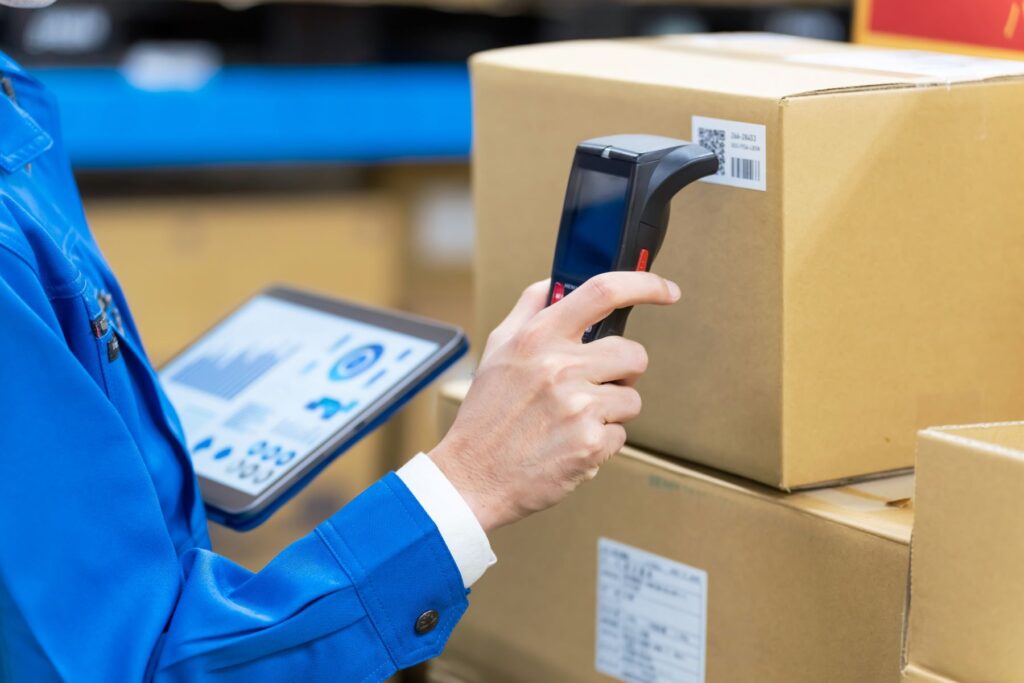
CACI’s logistics solutions now include a new generation of final mile location intelligence designed to help delivery operators navigate more accurately and efficiently during the final metres of a delivery journey. 

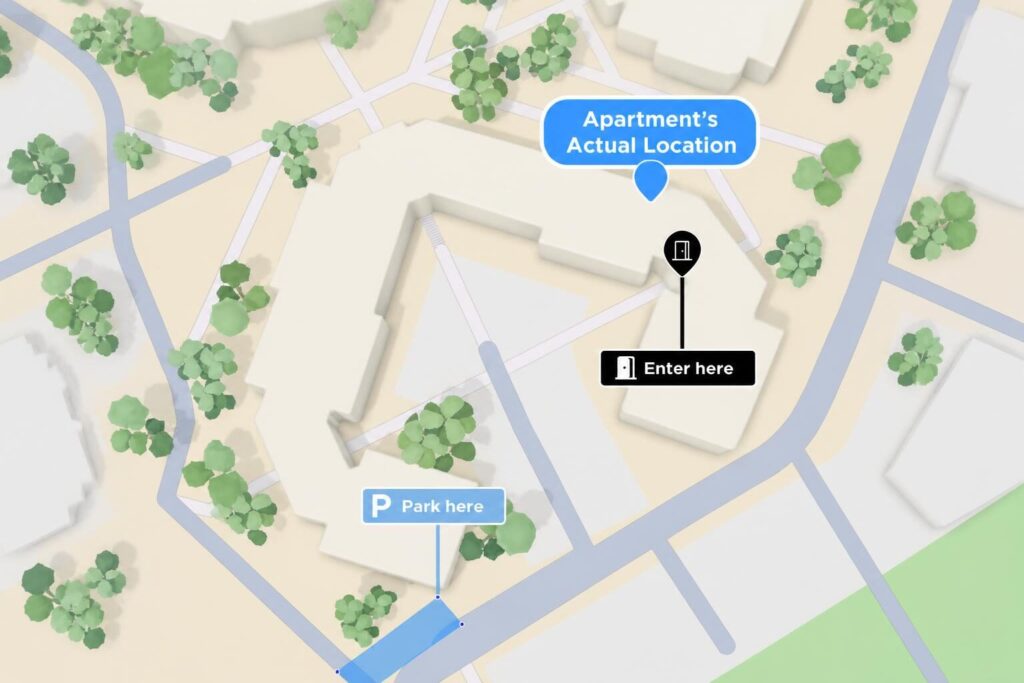
Built using patented technology and robust real-world delivery data, this innovative new product provides two critical data points for every delivery address: the precise delivery entrance and the optimal parking location. 

Together, these data points guide drivers to the right place, reducing uncertainty, improving route planning accuracy and enabling more precise dwell time calculations. For organisations operating at scale, even small improvements in final mile efficiency can deliver substantial operational and commercial benefits. 

The challenge with traditional address-based delivery

 Traditional address-based delivery is designed to locate a building, not necessarily an entry point for a delivery. As delivery networks become increasingly complex and customer expectations continue to rise, this gap creates challenges for drivers and customers alike.

This can be particularly ineffective in locations such as:    

  • Buildings with multiple entry points 
  • Large complexes 
  • Newly developed areas, where the address alone lacks the precision necessary for a smooth final delivery 
  • University campuses 
  • Hospitals 
  • Gated estates 

In these environments, drivers can spend valuable time searching for suitable parking, locating the correct entrance or navigating complex access arrangements. As a result, delivery times increase and route optimisation is compromised, affecting service levels and operational efficiency. 

What difference will this make for last mile delivery?

Exceptional location accuracy

Through rigorous testing against other major available data sources, this new solution has demonstrated an exceptional level of accuracy. By helping drivers consistently reach the correct destination faster, route performance improves and delivery schedules become more achievable. 

Two data points for every delivery location

Traditionally, only one data point per delivery address could be supplied. CACI’s new final mile location data provides two: 

  • Building entrance to help drivers identify the correct entry point for delivery 
  • Best parking location to help drivers reach the optimal parking spot prior to completing the final stage of the journey. 

In combination, these two data points help drivers complete deliveries more efficiently while enabling more accurate dwell time calculations. This creates a more realistic understanding of how long deliveries take and enhances route planning across fleets.
How is the data created?

The intelligence behind this solution is built using patented technology integrated into delivery applications used by many providers. The technology detects various elements, including the type of movement of the device and the strength of mobile signal. This enables the system to identify when a delivery vehicle stops to make a delivery, when a driver leaves their vehicle and when they reach the delivery point. These observations are gathered repeatedly across delivery locations and combined using advanced algorithms to determine the best parking spot and the most precise delivery door location. 

The result is highly accurate final mile location intelligence based on real-world delivery behaviour rather than assumptions. 

What are the operational benefits?

Lower delivery costs

Operational costs associated with excess mileage or extended time spent on locating a building or property can be reduced through more accurate location data. Organisations operating at scale can lower costs by fitting more deliveries onto each route and reducing mileage and driver time. 

More predictable customer experiences

More accurate location intelligence means delivery schedules will be more realistic and operational planning will improve. This will lead to more predictable customer experiences and fewer disruptions caused by unexpected delays. 

Improved driver experience

Clearer guidance and fewer delivery-related frustrations are among the primary benefits delivery drivers will experience. More achievable schedules and less time spent searching for parking or delivery entrances can boost productivity and contribute to driver retention. 

Better performance in complex delivery environments

Locations with multiple buildings, entries or access points inevitably challenge delivery operations. Directing drivers to both the correct delivery entrance and optimal parking spot helps remove the uncertainty that comes with complex delivery environments. 

Flexible integration for every delivery operation

Final mile location data can be integrated into your existing route planning software and logistics platforms in the best-suited capacity for your organisation. The data is available as a flat file for direct ingestion and as an API for real-time integration, making implementation straightforward across a range of logistics and route optimisation environments. 

Unlock the value of better final mile location intelligence

By combining precise delivery entrance and parking location data, you can bridge the gap between an address and its actual entry point to improve accuracy, efficiency and customer experience. 

CACI’s global Logistics Data suite includes addresses, locations, road speeds, driving restrictions and backdrop mapping, so your systems can run smoothly, your routes can be optimally planned and efficiency maximised. Combined with our intuitive, advanced Pin Routes software and partnership with a specialist geocoding provider, final mile location intelligence provides an even more precise foundation for last mile delivery. 

Contact our experts to find out how we can help improve your delivery efficiency, enhance route planning and optimise last mile deliveries. 

Case study

How Yusen Logistics models client distribution networks across Europe with Pin Supply Chain

Logo of Yusen Logistics

Summary

Yusen Logistics is a global supply chain logistics company that provides ocean and air freight forwarding, warehousing, distribution services and supply chain management. Operating services across 733 distribution centres and 47 countries and regions, it requires careful planning with a degree of flexibility to effectively and efficiently deliver successful client outcomes. Yusen needed a solution to deliver enhanced value for money and ROI, whilst boosting cross-team collaboration on projects to deliver improved outcomes for clients. Yusen turned to Pin Supply Chain to realise these goals, whilst working with a provider in CACI that offers consultancy services to support project work.

Company size

10,000+

Industry

Transportation and Logistics

Services used

Products used

Challenge

Icon - Outline of three people

Improve flexibility and accessibility across teams to enable more collaborative, scalable project delivery

Icon - Outline of a person delivering parcels via a trolley

Keep pace with increasing service demand by streamlining processes and boosting modelling output

Icon - Money symbol with arrows

Maximise return on investment from existing software by driving greater value, utilisation, and cost efficiency

Icon - Shipping containers

Find increased flexibility and efficient responses in the face of international transport, storage and capacity constraints

Icon - Rosette with star

Provide robust, evidence-based insights to strengthen bid responses, supporting new business wins and client retention

Solution

International logistics requires careful planning and a fair degree of flexibility in meeting client demands. Yusen Logistics needed to optimise its networks to deliver more transparently, with improved performance and consistency.

Pin Supply Chain from CACI is used by Yusen Logistics to gain a data-driven solution that underpins its operations.

Pin Supply Chain supports Yusen Logistics in understanding and operating its delivery routes, understanding where clients’ products are in real-time, offering innovative solutions to clients in the face of challenging demands and making best use of its network of distribution centres and transport solutions.

Having gone live with Pin Supply Chain in March 2025, Yusen Logistics has deployed it across its sites and team of over 30,000 employees to increase collaboration and oversite of its operations. The data from the system provides empirical evidence for new bids and client retention, supporting Yusen in expanding its international operations.

Air cargo logistic containers are loading to an airplane. Air transport shipment prepare for loading to modern freighter jet aircraft at the airport

Results

Pin Supply Chain has offered Yusen a cost-effective solution to meet its needs. Previously, Yusen was using a broader system with a large monthly subscription cost. Pin Supply Chain offers all the functionality it needs in a more tailored solution.

When strategic project demands outweigh the resource capacity within Yusen, they are able to tap into CACI’s consultancy services to support with workload.

Using Pin Supply Chain, Yusen’s team designs, implements and measures integrated supply chain solutions for their clients and prospects. They support them through optimising logistics networks with activities such as centre-of-gravity analysis, finding optimal cross-dock locations and network analysis.

Pin Supply Chain gives Yusen’s Solution Design function one shared modelling environment across teams, enhancing cross-team collaboration on multiple projects simultaneously.

Testimonial

Implementing Pin Supply Chain has enhanced our flexibility and accessibility, enabling all team members to work concurrently on multiple projects. The CACI team have been a pleasure to work with throughout the installation and training phases, delivering a seamless experience and equipping us with a robust platform to operate independently.

Andy Creasey

Head of Transport Solution Design, Yusen Logistics

How logistics organisations can safeguard against fuel volatility & rising prices

In this Article

Fuel volatility has become one of the most significant challenges facing logistics leaders. The industry is highly susceptible to variability, and with ongoing disruption in global energy markets, rising fuel prices are driving up operating costs and putting wider network performance under strain. 

Amidst the uncertainties, one thing is clear: logistics leaders must act now to prevent losses in their networks. So, what does this fuel volatility and rising uncertainty mean for the industry and how can leaders counter these effects? 

What fuel volatility means for logistics operations

Three themes are emerging consistently across the sector. 

Efficiency becomes non‑negotiable

Tiny inefficiencies scale fast across a fleet. What was once considered a “good enough” plan that worked at £x/litre often will not survive at £y/litre.  

As fuel costs increase, efficiency is no longer a nice-to-have. Downstream, domestic fleets are particularly impacted, as higher fuel prices amplify the cost of everyday decision-making from route choice and stop density to vehicle utilisation and realistic drive times.  

Cost forecasts must reflect real operations

Forecasting costs is more than just refreshing a spreadsheet. It is about grounding forecasts in what happens on the road, not what logistics leaders hope a plan will deliver.  

While many cost models rely on planned mileage and theoretical routes, rising fuel prices expose a gap between what was planned and what happened, which becomes expensive quickly.  

Re‑forecasting in this environment requires operational truth: understanding real mileage, real execution behaviour and where cost is genuinely being added, not assumed away. 

Route compliance becomes the lever that matters most

Optimisation only creates value when executed. If the plan is not followed, you are not just missing savings, but layering on cost through extra miles, minutes and exceptions.  

Route deviations, congestion and last‑minute re-planning add unplanned miles at much higher costs per mile. Extended upstream transit times increase pressure on domestic distribution to recover service levels, often at the expense of fuel efficiency. Fleet and light commercial vehicles have been swelling the electric vehicle (EV) market, so logistics organisations in a position to adopt electric vehicles (EV) into their fleet can further reduce their fuel dependency and cut costs.  

How can logistics leaders counter the effects?

Logistics organisations that are coping best with fuel volatility are the ones treating efficiency as an ongoing operational discipline, not a one‑off optimisation exercise. Those prioritising the optimisation of their logistics operations via the most advanced algorithms and real-world data will stay afloat amidst uncertainty.  

Planning optimal routes

When fuel prices rise, every unnecessary mile becomes a direct hit to margins. Organisations can counter this by using CACI’s advanced route optimisation to continuously minimise distance travelled, time on the road and fuel consumed – without compromising service levels.  

By dynamically calculating the most efficient routes using advanced algorithms, organisations can reduce empty miles, avoid congestion and balance workloads more effectively across fleets. 

Focusing on operationally realistic routes

Organisations that account for vehicle constraints, compliant roads and what drivers experience on the ground are creating the most operationally realistic routes and best placed to counter the effects of fuel volatility.  

Closing the loop between planning & execution

Leaders shifting from planning quality alone to execution quality can:  

  • Understand where and why deviations occur  
  • Distinguish necessary exceptions from avoidable behaviour  
  • Feed execution insight back into better planning

These help safeguard from fuel volatility and encourage efficiencies. By embedding efficiency as a discipline, grounding forecasts in operational reality and closing the gap between route planning and execution, organisations can move from reactive cost management to predictable and resilient logistics operations, even in uncertain conditions. 

How CACI can help

CACI’s Logistics experts help organisations design efficient routes, re‑forecast costs using real operational data and ensure planned routes are executed. This ensures rising fuel costs do not automatically translate into rising inefficiency. 

Pin Routes, CACI’s route optimisation software, is designed to help organisations cut costs, navigate uncertainties and increase efficiency, so that these rising costs have less of an impact. Pin Live, our delivery and collection management software, helps drivers take the correct detour and improve last-minute decision-making when changes arise on the road. Together, these tools help logistics leaders improve route compliance and maintain predictable operations despite market uncertainty. 

To learn more about how CACI can help your organisation effectively navigate fuel volatility at cost, get in touch with us. 

Case study

Using the Bedrock Agent to respond to customer queries

Summary

The CACI team has developed a method using Amazon Bedrock Agent to respond to customer queries. 

Industry

Technology

Products used

Challenge

CACI has multiple software products and most of these products have their help pages. These help pages are hosted in different environments using different formats. When customers have any questions related to the products to related to how to do things, they go to these sites/documents, browse through the pages and finally find the answer. This process is not user friendly and often wastes a lot of valuable time. Some products have help pages saved in different files, which makes finding answers more difficult.  

The challenge was to find a way to easily find answers to questions from the help manual(s). 

Solution

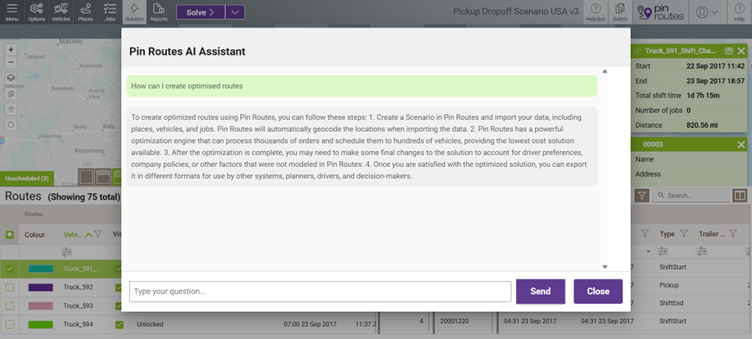
CACI resolved this challenge using Amazon bedrock agent and demonstrated this in Pin Routes. Users can click on the icon and ask questions. The agent returns satisfactory answers. If the agent cannot find answers to the questions in the manual, it returns a message saying it could not find the answer to the questions. 

Amazon bedrock agent has some advantages over other technologies that were investigated: 

  • Native AWS services. Low setup effort and maintained by AWS. 
  • Built in Guardrails, blocking harmful queries and inappropriate responses 
  • Well documented API and SDK support allowing for relatively easy integration
  • Functionality can be extended as required 

AI backend can be standardised across multiple products and services, the integration will vary. 

Results

Amazon bedrock agent has revolutionised how customers access the help or retrieve answers to their questions. 

This granular view is a game-changer for any organisation or product wanting to improve user experience and increase the usage of the products. 

Bedrock Agent - A screenshot of the implementation of the Amazon Bedrock agent in Pin Routes

Case study

How CACI’s route optimisation software helped Prides Corner Farms

Prides Corner Farms logo

Summary

Prides Corner Farms is a wholesale grower in Connecticut, serving the North East corner of the USA from Maine through Ohio to Virginia. A family-owned nursery business in operation for over five decades, Prides Corner Farms grows over 3,000 varieties of plants and flowers on 600 acres of land. The business is proud of its industry-leading logistics, providing excellent service through easier, timelier deliveries that allow customers to sell quicker with less effort. Prides Corner Farms delivers to over 2,500 individual locations in a typical year, with 70 trucks making over 200 daily drops to garden centres, wholesale yards, landscapers and retailers in peak season – and sales continue to grow.

Company size

500

Industry

Agriculture

Services used

Challenge

Prides Corner Farms knew they needed software to optimise their truck delivery routes as their business grew. With a team of six working on route planning and sales reps spending many hours a day looking at delivery schedules, the team wanted to reduce workload and automate as much as possible.

The team needed a tool that could give them full route visibility, reduce mileage, optimise vehicle numbers and create efficient, cost-effective routes. Prides Corner Farms saw CACI’s route optimisation solutions demonstrated at a trade show and saw its potential immediately.

Solution

Rolling out CACI’s software helped Prides Corner take the next step in their programme to improve efficiency and service, building on a successful lean flow shipping operation that uses carts to load trucks. CACI provided the route optimisation software, consultancy, data customisation and implementation support.

Ray DeFeo says, “We did a two-month pilot – I think we were a challenging customer for the proof of concept because our model has so many variables. CACI helped us develop an excellent algorithm based on our business rules.”

When reps take orders, they’re placed in holding batches for each territory.

This tool groups the orders and allocates them to trucks, factoring in different sizes and type of truck to suit delivery access, at the destination. The algorithm also embraces daily time limits for drivers and variable speed limits on the route, to ensure prompt and accurate delivery times.

Logistics coordinator Brittany Landry runs the CACI’s software twice daily. “We plan it to run two days before the target delivery date. Each territory rep has a quota to fulfil and they fill up the holding batches.”

“We’ve recently implemented cart retrievals,” adds IT manager Christian Joseph. “It’s a big addition to the project. We had our Lean process, harvesting crops onto carts and putting them into our staging area. We have to get the carts back and we were doing it by hand, which was incredibly time consuming. When realised that we could get the cart retrievals handled by CACI Logistics it freed up a lot of time.”

Results

CACI Logistics has helped Prides Corner Farms save a huge amount of time on manual processing, by automating both delivery routes and scheduling and cart retrievals. Instead of six logistics planners, the firm now only needs one.

Sales rep Brad Sorenson says, “Before, I was spending as much as 40% of the day planning deliveries, rubbing out and correcting to get everything fitted together. Now, I meet our logistics planner Cheryl Records at 9am: she shows everyone the plan and we spend half an hour reviewing it to tweak it – that’s it.” Despite being based in another country and time zone, support from the CACI team has been strong.

According to Christian Joseph: “CACI being in London wasn’t an issue – the support has been rock solid. Our account manager was fantastic in answering our questions before go-live. We threw a lot of curve balls and she knocked them out of the park. They have a great virtual working set-up.”

Prides Corner Farms - Digital graph and analysis on a laptop

Ray DeFeo is pleased with the impact of CACI’s route optimisation solutions on sales rep recruitment and training. “One of the biggest challenges a person would have, on top of potentially being new to the nursery business, they also had to understand the logistics pattern and how to route a truck. This is not a core sales skillset. Now, we can concentrate on recruiting and retaining people with great selling and customer service skills – logistics is separate,” he explained.

“Since 2012, our sales have doubled, but we haven’t had to increase the size of our sales teams. The Lean Flow approach and CACI’s software enable our reps to handle bigger territories because they can focus on sales. They’re happy because they have scope to make more commission with a bigger area to go at.”

Brad Sorenson adds, “Talking to drivers, they feel that their routes are now more efficient time-wise. They can start with the customer that can open earliest and keep moving without delays. The drivers really do like it.”

Prides Corner Farms estimates their mileage savings at ten per cent or more, which could mean annual savings of over $100,000USD in transport costs.

Case study

How CACI helped optimise utilisation of storage capacity across the MoD estate

Summary

The MoD is the UK’s second largest landowner, in possession of 1.1 million acres across the UK (2% of the country’s landmass). Land Usage and Management is crucial to the MoD’s operation and CELLA is paramount in carrying out these critical activities.

In 2020, the Warehousing and Distribution Optimisation (WDO) began a programme to better understand and manage the estate. The WDO needed a central repository that would supply a consolidated view of the wider MoD landscape to bolster planning and decision-making. The solution needed to offer evidence and operational data for the MoD’s ability to function, with a high standard of consistency, accuracy and analytical reporting. This was crucial to the WDO’s objective of increasing efficiency and using reliable evidence to manage efforts, storage capabilities and limitations.

Company size

10,000+

Industry

Defence, National Security, Transportation & Logistics

Services used

Products used

Challenge

The MoD struggled to easily understand the space it maintains and the attributes of its various storage locations. This restricted their planning and decision-making for military operations or civil requirements, particularly storing PPE reserves during the COVID-19 pandemic. Warehousing and other storage facilities were managed on an individual basis without a centralised database or management system, and data storage was often highly siloed.

The WDO decided upon a bespoke solution delivery approach, as there was no readily available commercial off-the-shelf tool that met their complex requirements. The system needed to prompt users (via email) to provide updates, with the frequency of updates having to be configurable based on need (e.g. data for short-term storage facilities should be updated more often than longer-term facilities.)

The data held on the solution needed to be comprehensive, including everything from basic facility type to state of repair and security factors.

Understanding the space available and its attributes

Restrictions on planning and decision-making

Solution

CACI worked with the WDO to optimise and classify their raw data and understand usage and users’ needs. Using Mood’s no-code software, CACI rapidly deployed an integrated solution that put relevant information at the fingertips of decision-makers.

A one-click/two-click navigation created an optimal user experience and encouraged the MoD’s goal of promoting self-sufficiency. Standardised terms and references enabled users to search the entire system, additional permissions-based access could be granted for those users who require it and automated email reminders prompted efficient action.

The Mood platform CACI delivered allows the input data to be filtered and combined in multiple ways to supply answers to operational and planning challenges, such as readiness for military or civilian emergency operations. Functional aspects such as the frequency of automated prompts is configurable to meet local conditions. Data can be exported for secondary reporting (e.g. using Power BI tools).

The frequency of email reminders can be configured on a site-by-site basis to ensure data is updated for sites where storage requirements change regularly while keeping effort low for sites used for long-term storage.

Results

Over 300 buildings are now listed within this tool and WDO users are working towards achieving comprehensive estate coverage. The WDO’s understanding of their operational assets and storage buildings has improved, helping them decide whether particular locations or sites are right for particular actions to optimise their estate. Since delivering the first phase of this programme, we have extended the CELLA capability by adding:  

  • Self-sufficiency: As the solution was being handed over to a central support desk, we ensured that wherever possible, users could maintain the solution themselves and not rely on CACI.  
  • User-specific information: Users’ home screens were updated to showcase information immediately, allowing them to focus on what needed to be done.  
  • Streamlined administration: Users can now access all necessary information about storage sites in one place without having to telephone individual sites and speak to multiple people. Stored items can be located and, just as importantly, storage opportunities can be identified quickly. 

The CELLA Data Management Tool (CDMT) team are now working their way around the country to load further sites and hardstandings into the tool. This will give the MoD greater insight into their estate of buildings that is expanding in the face of global instability. 

Testimonial

Since transferring to Joint Support in April of this year, the CELLA team have secured multiple storage successes, which will already see savings to the MOD of several million pounds over the next few years. As CELLA continues to mature and understanding of its potential grows, these figures will undoubtedly continue to rise.

Wing Commander Duncan Serjeant

Ministry of Defense (MoD) Joint Support

Case study

How CACI’s optimisation software gave Agrovista a 10/10 experience

Agrovista logo

Summary

When Agrovista, a leading supplier of agronomy advice, farming services and seed and crop protection products, wished to grow but faced unpredictable challenges when trying to do so, it became clear that data and technology would be crucial in supporting their growth ambitions. 

Agrovista delivers agronomic potential to their customers by helping them manage their operations more efficiently and profitably. To do this, their services are provided in two streams: one being as specialists from the business who visit farms to assess disease pressure, weeds, infestations and nutrient deficiencies to increase the yield, the other as logistics and support teams that focus on the delivery of the solutions to any problems that arise in the specialists support stage, such as the provision of pesticides or nutrients.  

Company size

500

Industry

Agriculture

Challenges

Agrovista’s operations team endeavoured to fulfil all customers’ orders and further improve service levels and interactions with customers without losing that focus on core business functions. Due to their planning team’s unfamiliarity with route optimisation software, the business was keen to avoid major changes for the team. They also needed to find a way to efficiently ship products out from their 20 depots across the country, which was particularly difficult in rural areas.

Solution

Agrovista invested in CACI’s route optimisation software. This software was used to plan routes that met Agrovista’s business constraints, including a same-day delivery requirement. The implementation took advantage of the flexible integration options offered by the software, embedding it within Agrovista’s existing systems and automating the route creation process. This meant that compliant and efficient routes were pre-created for the planning team, all within software that they were familiar with. 

Results

The newly automated process for route optimisation helped Agrovista achieve several goals. For example, the ability to plan efficient routes that adhered to all of Agrovista’s unique constraints allowed the business to deliver all orders on time, keeping their customers happy and minimising costs. The software changes that were made caused minimal disruption to staff and the wider business, instead increasing the time-efficiency of the planning and operations teams and simplifying processes, enabling them to re-focus efforts on the core business.

As one of their top trusted suppliers, CACI’s reactivity and proactivity helped the business achieve their cost-reduction and route optimisation goals and will continue to support their rapid expansion strategically, effectively and at cost. Agrovista was impressed with CACI’s people, systems and processes, scoring CACI a 10/10 for their overall partnership experience. Going forward, Agrovista is actively looking to grow their relationship by adding other products and services from CACI’s logistics portfolio.

Case study

How CACI’s GIS software accelerates business growth for Müller Milk & Ingredients

Muller logo

Summary

Müller Milk and Ingredients Distribution (MMID) is a milk business collecting over a billion litres of raw milk annually, distributing it to supermarkets, convenience stores and wholesaler customers across the UK. MMID has approximately 6,000 delivery points throughout the country and runs a mixed fleet of heavy goods vehicles, ranging from 26-tonne rigid lorries to 44-tonne artics. MMID also owns six dairies and 10 distribution depots along the west side of the country.

Company size

10,000

Industry

Transport & Logistics

Services used

Challenge

MMID is a large and complex business forming several types of delivery points of varying volumes. Due to the thousands of delivery points and farms that the business collects raw milk from, gaining a comprehensive and translatable view of customers has been a complicated task.

A lack of granularity into the visualisation of farms and depots had prevented MMID from innately analysing customer trends and ultimately supplying senior management with a digestible lay of the land that could enhance their decision-making and strategies.

Solution

MMID uses CACI’s market leading GIS platform and unique data solutions to create a map of the UK that highlights where depots, shops and supplies are located. The tool equips MMID with valuable visual insight that far exceeds the capabilities of a data spreadsheet in terms of highlighting customer patterns and trends that can be presented to senior stakeholders concisely. Key findings can be translated via a map when meeting with senior stakeholders and the map can be drawn on directly to illustrate any areas or circumstances that need to be addressed.

Anthony Helm, Central Transport Planner at MMID, explained the impact that having this detailed visual representation of these countrywide locations has had on their business operations.

“We recognise CACI as one of the major players in this sector and the tool as a leading solution. Our work with CACI has spanned over a decade and their ongoing support and consultancy along with the tool itself have made tremendous differences to our location planning processes and outcomes.”

Results

In terms of farm collection, CACI’s GIS tool has supported MMID by effectively refreshing and reviewing the boundaries between various operations. This insight enhances their planning for reducing overall costs and fuel consumption of their fleet, both of which are critical agenda points for the business to tackle when considering their carbon capture. On the delivery side, CACI’s GIS tool has aided MMID in strategically moving their customers to the appropriate delivery profile based on their geographic locations. This has bolstered the entire process of onboarding new customers.

Going forward, MMID is keen to explore additional optimisation products that would enhance their transport planning software, which is where CACI will continue to be one of the trusted providers.

With the climate agenda remaining a high priority for the business, reducing the miles travelled by their fleet and the amount of fuel used will continue to be key points that MMID will address. The business will also focus on optimising their cost savings strategy and assess where they should be heading strategically, which is what CACI’s GIS tool has proven to be particularly useful for. They also anticipate continuing to leverage CACI’s tool for ongoing support regarding the business’ directional strategy when presenting findings to the board.

Testimonial

Senior stakeholders want to see something visual that tells a story and that’s where CACI’s GIS tool really comes into its own.

Anthony Helm

Central Transport Planner, Muller Milk and Ingredients Distribution

Case study

How CACI & Ordnance Survey (OS) data helped McQueens Dairies enhance their business, routing & milk delivery

McQueen Dairies logo

Summary

McQueens Dairies is a third-generation family firm that provides doorstep milk delivery. Established in 1995, they began with a single milk round in St. Andrews, Scotland. Fast forward three decades and they deliver to thousands of households throughout the UK.

Over the last six years, CACI and Ordnance Survey (OS) data have been helping McQueens Dairies enhance their business, routing and milk delivery.

Company size

1,000

Industry

Transportation & Logistics

Challenge

House numbers are not always sequential, and in dense housing areas, you can’t always drive to the front of every house. The larger distances that must be travelled in rural areas in addition to the added number of minutes per delivery from where a driver can park to a property’s front door can become costly for the business. Moreover, while the average postcode contains 15 properties, some postcodes can contain up to 100. As a result, even having the correct address does not always eliminate ambiguity. With this in mind, McQueens Dairies contacted OS CACI partner in 2017 with the aim of optimising their routing and reducing that ambiguity to effectively reach customers on a broader scale.

Solution

To optimise their vehicle routing, McQueens Dairies have been using a bespoke solution from CACI called StreetServicer. Underpinned by OS AddressBase, StreetServicer is ideal for microlevel routing, such as meter-reading, milk deliveries or refuse collection. McQueens selected CACI’s StreetServicer as it proved to be the superior solution compared to what other providers they spoke to could offer, and they recognised the tremendous efforts made by CACI to ensure the project would operate successfully.

Microlevel routing from StreetServicer also informs delivery drivers on what side of the road to walk on and when to cross the road. This provides the most optimised journey possible, whether they’re in their milk float or they must park it to carry out the rest of the journey on foot. StreetServicer has been supporting McQueens by equipping their drivers with the most efficient delivery routing rounds down to the exact coordinate.

Results

  • Since adopting CACI and OS data, McQueens Dairies have reduced their fuel consumption by approximately 100,000 miles per year. 
  • 30 minutes per delivery shift have been saved thanks to routes being mapped out for drivers in microlevel detail. 
  • A significant reduction in the burden on administrative staff has been experienced, as it would have taken two full-time staff to manually route all rounds every day. 

Case study

How CACI helped DX to grow business and drive efficiencies

DX Logo

Summary

DX is a well-established provider of a wide range of delivery services to both business and residential addresses across the UK and Ireland. First established in 1975, DX now provides one of the widest ranges of overnight delivery services in the region, as well as logistics services. To cement its market position, DX wanted to optimise operations and enhance business development capabilities around the contract bidding process.

Company size

5000

Industry

Transportation & Logistics

Challenge

DX instigated a tender with both business development and operational objectives:

Business Development

To introduce a tool to improve the contract bidding process. The solution needed to provide:

– Flexibility to model different datasets from a diverse range of existing and potential clients;
– Data-driven information to determine the most appropriate solution;
– Reliability to provide accurate overheads and costings for the business to plan;
– Speed to produce quality results within short timeframes to aid winning more business;

Operational Use

To implement the most appropriate route planning and optimisation software to bring daily efficiencies and cost savings across multiple contracts. The operational requirements were: 
 
– Significant cost savings 
– Accurate ETAs 
– Flexibility to use on many different types of contract 
– Usability for numerous teams of planners 

Solution

CACI won the tender and implemented its market leading route optimisation solution.

Initially it was rolled out across multiple contracts, being used by different teams of planners, as well as in solution design to support and improve the business development and pricing function. DX have now been relying on CACI for over 10 years to grow their business and keep their staff and customers happy.

Results

DX uses CACI’s solution in business development to model client data for each tender, improving the process and increasing the company’s win rate.  

The route optimisation solution allowed DX to establish a better-structured and more efficient route network. It also allowed them to offer timed deliveries that better suit the needs of the recipients, providing both the recipient and their primary customer with more timely and accurate delivery information.  

These process improvements have introduced efficiency to operations, as well as bringing huge savings by reducing costs. 

Solutions

Supply chain planning

Create a robust, efficient, and agile distribution network

The world of logistics has been impacted by a decade of disruption.

Today, it’s a top priority for supply chains to run robustly and smoothly – paving the way for lower costs and minimised risks.

Effective strategic decision making is critical. How many distribution centres? Where should they be located? What size or fleet makeup is optimal? How do we account for changes in customer demand? How should we react to new trends such as EVs or PUDOs? What happens if there is another huge event, such as COVID or Brexit? Making key decisions is difficult to get right.

Effective distribution network planning involves testing a myriad of scenarios and moving parts to provide realistic, data-driven answers. Our solutions create a digital twin of your network so you can easily make the big decisions that have maximum impact.

Burdened with distribution options?

Knowing how many distribution points you need – and where – can be complex.

Overloaded with supply chain costs?

You’re not alone. It’s easy for supply chain costs to spiral out of control.

Worried your supply chain isn’t fit for purpose?

You need a robust and agile distribution network to keep products flowing to their destinations.

Did you know?

48%

of companies say they are under pressure to improve sustainability in the supply chain.

Source: PwC

54%

of supply chain operators say network disruption is their biggest challenge.

Source: The Economist Intelligence Unit

Where big decisions are easy

Faster supply chain planning with reduced complexity

Minimise risk

When obstacles arise, you need to react and keep your business running normally. Optimal supply chain planning can help manage risk and keep you efficient.

Carry out simulation before investment

Create a digital twin of your distribution network and get insight into your current supply chain and any potential changes. Assess many different scenarios with reliable data on the necessary flows, storage, vehicles, and cost, so you can make informed decisions before you invest.

Meet the green agenda

Hit ESG targets with supply chain planning that lowers carbon emissions. Because when distribution networks are optimal, unnecessary detours are avoided.

Easily adjust to distribution
needs

Product and stock demand can change – affecting supply chain management. Our software helps you plan for mergers, expansions, new product groups, product retractions and any changes in demand.

Factor in PUDO (pick up/drop off) and other trends

Our powerful tools help you factor PUDO points into your supply chain. This way, you’re always able to adapt appropriately to industry trends without compromising on effectiveness.

Meet customer demands

Are you delivering on time? Do you have the right level of products for customer demand in a particular area? Use data analysis to get customers what they need, when they need it.

Testimonial

When you take into account the improved delivery efficiency, reduction in mileage travelled and the number of vehicles, the savings to Prides Corner Farms start to look really striking. We are growing 20-30% this year, we couldn’t have handled this without CACI’s route optimisation solution.

Christian Joseph (IT Manager) and Ray DeFeo (Sales Manager)

Prides Corner Farms

Find out more about it

Revolutionise your logistics—Book a personalised demo today

Discover how data-driven solutions can optimise your supply chain, cut costs, and enhance customer satisfaction. See CACI Logistics in action—book your demo to unlock efficiency and gain a competitive edge.

We bring our expertise to you

Leading companies choose our supply chain planning solutions

Flexible and scalable

We pride ourselves on extracting valuable results from any project, of any size – we’re here to tailor our solutions to get the best results for you. We can license the software to you or manage it on your behalf. Our software is cloud based and can be accessed from any browser anywhere, anytime via user interface or API.

Take the best routes

Easily optimise daily routes – from vehicle volumes and capacity to unexpected traffic. Our software lets you cut costs and keep compliant, while using your drivers’ time in the best way.

Bespoke and powerful

Bespoke dashboards meet your exact requirements for different roles at different levels. Access a rich data mine to support the creation – and maintenance – of an effective and powerful supply chain.

Awards & accreditations

Speak to one of our supply chain planning experts

We’re tried and trusted in this industry and have been involved in supply chain planning for over 15 years. At CACI, we want to support you in transforming your business.

If you’re looking for a demo, want to book a consultation, or both – we’re ready to help you cut the complexity from route planning.

FAQs

Answers to common questions about supply chain planning.

Supply chain planning is the process of designing, optimising and managing supply chain operations to balance customer demand, inventory, capacity and distribution costs. Effective supply chain planning helps organisations improve efficiency, reduce risk and make more informed business decisions.

Supply chain planning helps organisations improve operational efficiency, reduce costs, strengthen supply chain resilience and respond more effectively to changing customer demand. It also supports better decision-making through data-driven planning and scenario analysis.

Our software is designed to be highly flexible and intuitively visual, so you can adapt quickly to demands without stress. It’s scalable and uses cloud-based technology so it can be tailored to exactly what you need.

Solutions

Fleet management software

Bring vehicle checks, defects, maintenance activity, driver records and fleet status into one live system. CACI fleet management software helps teams evidence roadworthiness, act on issues earlier, improve vehicle availability and understand the true operating cost of the fleet.

Fleet management software: turn compliance data into action

CACI’s Pin Check brings vehicle management and asset management into one connected record, combining fleet tracking with walkaround checks, defect reporting, maintenance, MOT records, licences, tachograph information and Operator Licence responsibilities.

Fleet compliance software and mobile workflows capture vehicle condition at the point of use, while automated alerts highlight unresolved defects, overdue maintenance and expiring documents. Telematics, mileage, fuel and utilisation data give fleet operations teams visibility into availability, safety, downtime and whole-life cost.

Cloud dashboards and searchable audit trails support mixed and electric fleets, while integration with Pin Live and Pin Routes connects vehicle readiness with delivery and transport operations.

Fleet management software by the numbers

2m+

annual vehicle checks completed

25%

reduction in unresolved compliance issues

24/7

cloud based access

Where problems are solved

How our fleet management software keeps vehicles road-ready

Icon - Van

Make vehicle checks consistent

Guide drivers through required checks on a mobile device and record when, where and by whom they were completed. Standardised records make omissions easier to spot and follow up.

Close the loop on defects

Capture defects as they are found, add supporting evidence, assign corrective action and maintain a clear status through resolution. Keep unsafe or unavailable vehicles visible to the people allocating work.

Icon - Arrow pointing up with percentage symbol

Plan maintenance before downtime becomes disruption

Centralise inspection and maintenance schedules, service history and reminders. Earlier action helps protect roadworthiness, vehicle uptime and asset life while reducing avoidable breakdown risk.

Icon - Clipboard with a cog

Keep driver and vehicle records current

Track relevant licences, certifications, inspections and renewal dates with alerts for upcoming expiry. Give managers a clearer evidence trail for internal governance and external scrutiny.

Icon - Cog with clock and arrows pointing up

Understand utilisation and whole-life cost

Combine availability, mileage, maintenance, fuel and licensing information to identify underused assets and recurring cost drivers. Use the evidence to support replacement, retention and fleet-sizing decisions.

Support safer, lower-impact operations

Use reliable operational data to target driver support, reduce avoidable fuel use and idling, and measure progress on emissions. Use telematics and video-safety data to identify risky driving and improve driver safety.

Understand the current landscape

Streamline your logistics with a demo of Pin Live

Book a demo today to see how Pin Live can transform your delivery management. Improve real-time visibility, enhance customer communication, and optimise fleet management with our easy-to-use platform.

A single fleet management system for vehicles, drivers and compliance

Icon - Paper with a list and ticks

Vehicle profiles

Maintain asset details, inspection history, defect records, maintenance activity, mileage, availability and supporting documents in one vehicle record.

Icon - Outline of a person with three ticks next to them

Driver profiles

Bring together driver licences, certifications, tachograph information, training records and renewal dates with clear ownership and automated reminders.

Icon - Map and magnifying glass

Live fleet status

See which vehicles are available, restricted, undergoing maintenance or awaiting defect resolution before work is allocated.

Icon - Clipboard with check boxes and a magnifying glass showing a tick

Compliance evidence

Retrieve dated checks, actions and documents without rebuilding the story from paper files and separate spreadsheets.

Icon - Illustrative charts and graphs

Management reporting

Monitor inspection completion, unresolved defects, vehicle-off-road time, maintenance cost, fuel use, utilisation, driver hours and other fleet KPIs to prioritise intervention.

Icon - Magnifying glass showing a warning symbol

Maintenance and defect control

Schedule preventive maintenance, monitor servicing and MOT dates, and track reported defects through investigation, corrective action and resolution.

We bring our expertise to you

Why choose CACI for fleet management software?

Operational control with an audit trail

CACI connects day-to-day checks and corrective actions with the records managers need for confident oversight.

Cloud and mobile access

Run checks and manage records through a browser-based environment and handheld workflows, giving drivers and managers access where work happens.

Scalable across mixed operations

Apply consistent governance across locations and vehicle groups while configuring workflows to reflect different asset types and responsibilities.

Speak to one of our fleet management software experts

CACI has worked in fleet management software for over 10 years. Our cloud and mobile technology brings driver walkaround checks, defect reporting, inspections, maintenance schedules and licence renewals into one accessible fleet record.


Book a demonstration or consultation to see how Pin Live and its driver app support day-to-day vehicle compliance, while integration with Pin Routes connects vehicle availability with wider transport planning and delivery operations.

FAQs

Answers to common questions about fleet management. 

Fleet management software is a digital system for managing commercial vehicles, drivers and related assets. It centralises checks, defects, maintenance, compliance records, availability, utilisation and cost data so fleet teams can act on current information.

Depending on configuration and integrations, it can track vehicle details, inspections, defects, maintenance, documents, licence or certification dates, availability, mileage, fuel, utilisation and cost. GPS location, telematics, tachograph and video data require the appropriate data source and integration.

It standardises checks, records evidence, highlights overdue actions and keeps a history of inspections, defects and corrective work. Software supports governance, but operators remain responsible for configuring appropriate processes and meeting their legal obligations.

It can reveal underused vehicles, recurring defects, avoidable downtime and maintenance or fuel trends. Acting on those insights can improve utilisation, extend asset life and support better replacement decisions. Savings depend on the starting position and management action.

Telematics collects data from connected vehicles, such as location, mileage, speed, idling or diagnostic events. Fleet management software organises broader vehicle and driver processes, including checks, defects, maintenance, documents, compliance and cost. The two can be integrated, but they are not the same thing.

Yes, provided the system can configure different asset types, checks, maintenance intervals, documents and responsibilities. Configuration during implementation ensures that cars, vans, HGVs, specialist assets and electric vehicles are represented accurately.

Useful measures include vehicle availability, vehicle-off-road time, inspection completion, overdue defects, mean time to repair, preventive versus reactive maintenance, maintenance cost per vehicle or mile, fuel efficiency, utilisation, incidents and emissions.

Fleet management focuses on the condition, compliance, availability and cost of vehicles and drivers. Transport management focuses on planning and controlling the movement of orders or work across routes, capacity, depots and time constraints.

Solutions

Delivery management solutions

Give operations, drivers, customer service teams and recipients one reliable view of every delivery and collection. CACI’s Pin Live delivery management solution connects driver workflows, order tracking, event-driven updates and digital proof of delivery so teams can resolve exceptions quickly, reduce avoidable enquiries and create a clear audit trail.

Delivery management solutions: every order visible, every event connected

Pin Live is a delivery management platform and last-mile delivery software solution that creates a continuous digital record from dispatch to delivery, collection or return. Orders flow from ERP, warehouse, ecommerce and order management systems through public APIs, webhooks or file transfer.

Android and iOS driver apps capture item scans, exceptions, photographs, signatures, timestamps and location data—creating immediate electronic proof of delivery and updating operations, customer service teams and recipients.

Real-time ETAs, notifications, customer tracking and exception workflows keep every stakeholder informed. Pin Routes integration adds plan-versus-actual insight from route plan to completed delivery.

Delivery management solutions by the numbers

120m +

electronic proof-of-delivery records captured

35%

reduction in “where is my order?” enquiries

15%

increase in successful first-time deliveries

Where problems are solved 

How delivery management solutions improve every handover

Know the status of every order

Track orders, routes, vehicles and drivers in real time from a single operational view. Teams can identify late, incomplete or at-risk work early and act before a missed promise becomes a customer complaint.

Give drivers one clear workflow

Use a mobile app to present the day’s work, instructions, navigation and required delivery steps. Guided workflows and item scanning reduce paperwork and help drivers capture consistent information at each stop.

Keep customers informed automatically

Send event-driven notifications and provide a self-service portal for live status and delivery information. Proactive updates reduce “where is my order?” contacts and give customer service the same facts as the recipient.

Capture defensible proof of delivery

Record time- and location-stamped evidence with signatures, photographs and item-level status. A complete digital audit trail helps resolve disputes, confirm service and reduce stock-loss uncertainty.

Manage exceptions while they are recoverable

Surface failed attempts, shortages, damages, access issues or refused items as they occur. Operations can apply the right workflow, communicate the outcome and retain the evidence needed for redelivery, collection or investigation.

Support deliveries, collections and returns

Use consistent scanning, status and proof workflows across outbound deliveries, collections and reverse-logistics activity so the chain of custody remains visible.

Understand the current landscape

Streamline your logistics with a demo of Pin Live

Book a demo today to see how Pin Live can transform your delivery management. Improve real-time visibility, enhance customer communication, and optimise fleet management with our easy-to-use platform. Take the first step towards smarter logistics, book now!

Delivery management solutions for operations, drivers and customers

Outline of person presenting connected to three others with lines

Operations teams

Monitor progress across routes, drill into individual orders and prioritise exceptions using live information.

Icon - Outline of a truck with a timer

Drivers

Follow clear instructions, navigate with fewer distractions and complete delivery evidence in the same mobile workflow.

Icon - Outline of a lady wearing a headset

Customer service

Answer queries from a shared audit trail instead of calling the depot or driver for updates.

Icon - Outline of three people

Customers and recipients

View current status, receive relevant notifications and understand what happened at the delivery point.

Icon - Outline of three people with a target symbol above them

Management teams

Use delivery performance data to identify recurring failure reasons, service risks and improvement opportunities.

Icon - Outline of a person delivering a parcel

Depot and warehouse teams

Connect dispatch, loading and item-level scanning with the delivery record, reducing information gaps between warehouse handover and driver departure.

We bring our expertise to you

Why choose CACI’s delivery management solutions?

Designed for execution, not just dots on a map

Designed for execution, not just dots on a map

Connect planning with live delivery execution

Pin Live gives teams control of live delivery execution. When route optimisation is needed, connect Pin Routes to pass optimised plans into the delivery workflow and compare plan with actual progress.

A practical audit trail

Every scan, status change, time, location, image and signature can contribute to a reliable record; supporting customer service, loss prevention and operational improvement.

Speak to one of our delivery management solution experts

CACI has worked in delivery management for over 10 years. Pin Live connects a cloud-based control platform with Android and iOS driver apps, real-time order tracking, customer notifications and electronic proof of delivery.

Our experts can demonstrate how public APIs, webhooks and file transfers connect Pin Live with your existing systems, and how integration with Pin Routes creates a joined-up process from route plan to completed delivery.

FAQs

Answers to common questions about delivery management. 

Delivery management solutions coordinate the execution of deliveries and collections from dispatch to completion. They typically provide driver workflows, live order tracking, customer notifications, exception handling, electronic proof of delivery and reporting in one system.

Orders and planned routes are sent to the platform and driver app. As drivers progress, scans, statuses, locations and proof are captured and shared with operations and authorised customers. Rules can trigger notifications or exception workflows so teams respond using current information.

Electronic proof of delivery, or ePOD, is a digital record confirming what happened at a stop. It can include the delivery time and location, recipient name, signature, photographs, item scans, quantities, notes and exception reasons.

Accurate status information, proactive notifications and self-service tracking reduce uncertainty. If something goes wrong, customer service can see the same live record as operations and explain the next step without chasing the driver.

It can help by supporting clear driver instructions, accurate status updates, recipient communications and early exception visibility. The effect depends on address quality, promised windows, recipient availability and the recovery processes configured around the software.

Delivery management software manages orders and stops: dispatch, tracking, customer updates, proof and delivery exceptions. Fleet management software manages vehicles and drivers as assets: roadworthiness, checks, defects, maintenance, compliance, utilisation and operating cost.

Yes. Pin Live is designed to manage deliveries and collections, with tracking, scanning, workflow and proof captured through the same live environment. CACI can configure specialised returns and chain-of-custody workflows around your operational requirements.

Yes. Pin Live integrates with CACI Pin Routes, allowing optimised routes to feed delivery execution while live status and actual outcomes remain visible. This creates a connected plan-to-deliver process without merging the distinct roles of the two products.

Solutions

Transport management software 

Turn orders, own fleet, 3rd parties, depots, driver availability and real-world road constraints into efficient, workable transport plans and manages the smooth execution of these plans. CACI transport management software gives planning teams the visibility and control to reduce unnecessary mileage, use capacity more effectively, improve communication with carriers and customers, tracks and reports on everything in real-time and improves customer service.

TMS Route Planning and Optimisation: turn complex constraints into workable plans

CACI’s transport management system (TMS) transforms orders, 3PL, own fleet and driver data into viable plans. Its transport planning software uses data from ERP, order management and warehouse systems to evaluate millions of route and resource combinations.

The route optimisation module, Pin Routes accounts for drive times, vehicle capacities, access restrictions, depot rules, driver shifts, time windows and paired collections and deliveries—balancing service, mileage, capacity and cost.

Pin Routes can quickly and easily automate process on 3rd party carriers: Should they be used? Which one? How will they work alongside own fleet? How much will it cost?

Delivered as cloud-based logistics optimisation software, Pin Routes supports browser planning, APIs and file uploads. Pin Live integration connects transport plans with live execution and plan-versus-actual performance.

Transport management software - Four lane controlled-access motorway

TMS Route Execution: real-time visibility and control from plan to delivery

CACI’s transport management system (TMS) provides a real-time platform for routes to be managed from the plan all the way through to the post-event reporting.

The route execution module, Pin Live provides real-time tracking of all orders, drivers and vehicles, scanning products on and off, customer messaging, proof of delivery, driver management, all the way through to planned-vs-actual analysis.

Delivered as cloud-based logistics execution software and a driver app, Pin Live supports a user and customer portal, the handheld app, integration through APIs and Webhooks, SMS and email messaging, HGV navigation and fleet management.

Transport management software by the numbers

24%

reduction in total transport operating costs

250m+

miles optimised each year

65%

less time spent planning routes and schedules

Where problems are solved 

How our transport management software supports logistics operations

Build feasible plans around real constraints

Optimise delivery, collection and service routes around time windows, vehicle capacity, driver shifts, depot rules, paired jobs, access restrictions and drive times; creating plans that work on the road.

Icon - Cupped hands with a money symbol in the middle

Reduce transport cost at source

Test resource and route choices before vehicles leave the depot. Improved use of third parties, fewer avoidable miles, better load utilisation and clearer resource requirements help control fuel, labour, subcontracting and vehicle costs.

Connect carrier and freight workflows

Connect shipment, route, mileage and cost data with carrier, ERP and finance systems to support procurement, rate evaluation, freight audit, invoice matching and reconciliation.

Icon - Speech bubbles

Improves customer communications

Proactively messages customers to let them know the status of their order, via email and / or SMS, giving them a one-tap view of their order location and when to expect it.

Icon - Illustrative workflow

Make planning faster and repeatable

Replace spreadsheets with configurable rules, reusable scenarios and browser-based planning across depots, regions and operating models.

Gives visibility and control

Tracks all orders, drivers and vehicles in real time, highlighting ETAs vs customer expectations, facilitating management by exception.

Icon - Magnifying glass with upward line

Measure the transport outcomes that matter

Track planned versus actual mileage, driver hours, vehicles used, route adherence, utilisation, on-time performance and cost-to-serve. Use the results to refine constraints and improve the next planning cycle.

Understand the current landscape 

Streamline your logistics with a demo of Pin Live

Book a demo today to see how Pin Live can transform your delivery management. Improve real-time visibility, enhance customer communication, and optimise fleet management with our easy-to-use platform. Take the first step towards smarter logistics—book now!

Transport management software for dynamic, fixed and multi-depot planning

Icon - Two location pins connecting via a line

Dynamic and fixed routing

Support day-to-day dynamic planning, established fixed routes and strategic scenarios without forcing every operation into one model.

Icon - Map and location pin

First, middle and final mile

Plan collections, trunking, replenishment, delivery and service activity across different stages of the transport network.

Icon - Bar chart with a cog

High-quality logistics data

Combine your operational inputs with detailed roads, drive times, vehicle navigation constraints and precise address locations to improve plan quality.

Icon - Bar graph with upward arrow

Cloud scale without infrastructure overhead

Access a fully hosted, browser-based platform, deploy across planning teams and stay on the current software version without maintaining local servers.

Icon - Storage unit with parcels

Multi-depot resource coordination

Allocate orders, vehicles and drivers across depots while accounting for operating territories, resource availability, depot capacity and local planning rules.

Icon - Magnifying glass with line

Strategic transport scenario modelling

Compare depot allocations, fleet configurations, delivery frequencies and service rules to understand their effect on mileage, capacity, cost and customer service.

We bring our expertise to you  

Why choose CACI’s transport management software

Evidence-led optimisation

CACI’s solutions build on more than 30 years of CACI routing experience and use advanced algorithms to find practical savings across miles, time, resources and emissions.

Comprehensive end-to-end real-time management

Always be aware of everything that’s going on, as it’s happening, so you can ensure a smooth running operation, giving control and peace of mind.

Configurable, not one-size-fits-all

Model the rules that make your operation distinctive; from soft and hard time windows to vehicle restrictions and paired collections; without turning every change into a bespoke development project.

Talk to our transport management software specialists

CACI has delivered Transport Management solutions for over 35 years. Pin Routes combines advanced optimisation algorithms with high-quality address, mapping, road-speed, drive-time and vehicle-restriction data to create practical transport plans around your operational rules.

Whether you need a demonstration or a planning consultation, our experts can show you how this cloud-based SaaS platform connects through APIs or file uploads and integrates with Pin Live for plan-versus-actual visibility.

FAQs

Answers to common questions about transport management. 

Transport management software, often called a transport management system or TMS, helps organisations plan, optimise, monitor and improve the movement of goods or service resources, whilst providing communications, visibility and control. It brings orders, locations, vehicles, drivers and operating constraints together so teams can build workable routes, use capacity efficiently and measure transport performance.

A TMS can support transport planning, route optimisation, scheduling, resource allocation, dispatch visibility, exception management, driver management, customer communications, proof of delivery, performance reporting and integration with order and/or warehouse systems. The exact scope varies: CACI uses Pin Routes for planning and optimisation and Pin Live for live execution, order tracking and proof of delivery.

It identifies more efficient combinations of stops, routes, vehicles and driver time before work is dispatched. This can reduce avoidable mileage, overtime, empty running and unnecessary vehicle use while improving utilisation. Pin Routes typically delivers savings of 5–25%, depending on the operation and starting point. Pin Live provides end to end visibility to facilitate ongoing cost improvements.

Yes. A TMS commonly exchanges data with ERP, order management, and / or warehouse management platforms. Typically the integration uses APIs, Webhooks or file transfers. Both Pin Routes and Pin Live support these methods.

Transport management software can support carrier selection, rate management, load tendering, freight audit and invoice reconciliation. Pin Routes can exchange planning, mileage and cost data with ERP, carrier management and finance systems, helping connect route optimisation with wider freight and commercial workflows.

Yes. It can model multiple depots, territories, fleets and operating rules, helping planners compare resource requirements and coordinate work at scale. Configuration should reflect local constraints while preserving consistent planning and reporting.

Timelines depend on data quality, integrations, operating complexity, user groups and the number of depots. A phased implementation usually covers discovery, data preparation, integration, configuration, scenario validation, user testing, training and performance baselining before wider rollout.

Useful measures include total miles, empty miles, driver hours, vehicles required, vehicle and load utilisation, planning time, on-time performance, cost per stop or order, failed service, and transport-related emissions. Agree the baseline before implementation so improvement can be evidenced.

Solutions

Route optimisation solutions 

Streamlined route planning, with precision 

Route planning is a complicated task.

From vehicle volumes and capacity to unexpected traffic and managing driver routes. Our solutions and products improve efficiency and offer clarity instead of complexity.  

We understand the desire to be efficient, along with the need to be compliant. So we consider all factors when we work with you – to deliver the best solution.

Overwhelmed with route options? 

Managing hundreds – even thousands – of routes is a daunting, time-consuming task. 

Falling short on your delivery windows? 

Non-optimised route planning can quickly become an obstacle to on-time delivery. 

Struggling to keep up with regulations? 

Legislation can change at the drop of a hat. It’s tricky to stay on top.

Did you know?

Route optimisation

is cited as the most effective solution to reduce fuel consumption and emissions for large fleets.

Source: Deloitte

10%

saving on annual costs for your business by going digital.

Source: Geotab

Where problems are solved 

Route optimisation solutions that are designed to be simple 

Cut costs, not corners 

Simply put, inefficiency costs money. Lower your fuel bills by 5-25%, have fewer vehicles on the road, and reduce driver hours. 

Be on time, every time  

Your customers deserve reliability. Put customer relationships first and win loyalty with consistency. 

Reduce your carbon footprint 

Hit ESG targets with fewer vehicles on the road, driving optimised distances. No more wasted time on routes that aren’t optimised.

Make sure compliance is maintained 

Minimise the risk of violations and penalties through compliant route scheduling. So you can meet local, national and cross-border legislation, easily.

Be prepared for variables 

Our powerful algorithm plans the most efficient routes, taking the type and mix of vehicles, size and specification of products, driver shift schedules, road networks, traffic conditions and many more factors into account.

Answer the big questions with small details 

How many vehicles do we need? Should we be moving to electric vehicles? When should you introduce a new depot? Use advanced data analysis to answer the big questions. 

Testimonial

When you take into account the improved delivery efficiency, reduction in mileage travelled and the number of vehicles, the savings to Prides Corner Farms start to look really striking. We are growing 20-30% this year, we couldn’t have handled this without CACI’s route optimisation solution.

Christian Joseph (IT Manager) and Ray DeFeo (Sales Manager)

Prides Corner Farms 

We bring our expertise to you  

Leading companies choose our route optimisation solutions for a reason 

Flexible and scalable 

Pin Routes is truly cloud-based and can be accessed from anywhere, anytime via user-interface or API. It’s scalable too, working to optimise 10 to 10,000 jobs at one time.

Easy integration 

Manage the routes as they’re being driven by integrating with Pin Live. An app for drivers that navigates through different jobs and products that need to be delivered – giving you a full audit trail in real time.  

Advanced features 

Soft-Time Windows give you the flexibility you need to meet time obligations whilst giving you flexibility. Virtual stops lets you know which depot is the smarter choice for a delivery. Collection and delivery pairs add to the power of your optimisation.

Find out more about it  

Transform your route planning with Pin Routes

Discover how Pin Routes can optimise your logistics operations, reduce costs, and improve efficiency. Book a personalised demo to see how our cloud-based solution can streamline your route planning and drive smarter decisions for your business.

Awards & accreditations

Speak to one of our route optimisation solutions experts

We’re tried and trusted in this industry and have been involved in route optimisation solutions for many years. At CACI, we want to support you in transforming your business.  

If you’re looking for a demo, want to book a consultation, or both – we’re ready to help you cut the complexity out of route planning.  

FAQs

Answers to common questions about our market leading route optimisation solutions.

Route optimisation determines the most efficient route – or series of routes – for a set of stops. It considers factors like distance, travel time, vehicle capacity, and specific service constraints (such as delivery time windows). It’s not just about finding the shortest path between points, but making an entire route (or routes) as efficient and cost-effective as possible. This involves sophisticated algorithms and software solutions to analyse and sequence stops in a way that meets all operational requirements while minimising time and costs. 

The benefits are vast. But you can expect reduced operational costs, increased efficiency, improved customer happiness, better compliance, and the potential to make data-driven decisions. 

Pin Routes is designed to be highly flexible and configurable, catering to a wide range of logistics and delivery operations. Whether you’re managing a small fleet with localised deliveries or a large-scale operation with complex logistics needs, Pin Routes can be tailored to meet your specific requirements.  

Pin Routes uses advanced algorithms that consider real-world time constraints and operational needs. It’s flexible and configurable and can be adapted to a wide range of use cases without the need for custom development. The interface is intuitive and it can integrate with Pin Live for a holistic approach to route optimisation solutions.  

Pin Routes is a fully cloud based software solution, accessible by your browser. Please ask if you’d like to know more details about the technology stack. 

Solutions

Logistics and supply chain solutions 

Supply chains are complex. Logistics faces massive challenges when it comes to taking all the moving parts into account, meeting your customer requirements, staying compliant, and addressing the green agenda. Let alone turning a profit.

How can you keep costs down? How do you know what shape your network should take to give you the efficiency, flexibility and robustness that you need? How can you become more optimal? When and how should you use 3PLs? How do you effectively keep track of your daily operation? How can you improve and maintain your customer service?

We understand these challenges and every day we help companies to successfully overcome them.

Did you know?

54%

of supply chain operators say network disruption is their biggest challenge.

48%

of companies say they are under pressure to improve sustainability in the supply chain.

Why CACI?

Best in class solutions 

CACI’s solutions have evolved through 35+ years, with the experience, creativity and investment to keep them ahead of the game.

We source the best logistics data, globally, and we improve it. We develop the best software and we keep making it better.

Depth of knowledge 

We employ teams of brilliant people to create, implement, support and consult with our solutions.  

You get to benefit from our expertise in software design and engineering, UX, data science, AI, project management, training, implementing.

Flexible and scalable 

All our clients are different. Our solutions are highly configurable to meet the most complex set of requirements.  
 
Likewise, they can be deployed within small, large or enterprise organisations, with robustness and performance top of our agenda.

Speak to one of our logistics and supply chain experts 

We’re tried and trusted in this industry and have been involved in logistics and supply chain planning for many years.  

If you’re looking for a demo, want to book a consultation, or both – we’re ready to help you cut the complexity out of logistics. 

Solutions

Logistics consulting 

Smart, efficient, agile: Implementing your logistics operation with maximum efficiency, agility and robustness.

Logistics is the backbone of a successful business.

Logistics is the backbone of a successful business and getting it right is crucial. However, it’s rarely straightforward. Your goals may be clear – maximise efficiency, control costs, reduce risk, delight customers – but devising a solution is challenging as there are so many moving parts.

We understand the issues you face – you’ll be in the same boat as many of our clients. We collaborate with you through tried-and-tested approaches to understand your pain points, get to the bottom of the root causes, and address them with solutions to meet your business goals.

Uniquely, we have a board range of skills and proprietary tools to call upon throughout the process, including: specialist logistics software tools, data-science, analytics, logistics and geospatial data, customer understanding, process design, integration, change management and implementation. These are all built on many years of providing logistics-specific solutions.

Need to get to the bottom of what needs fixing?

Often our clients know that something is wrong, but need help putting their finger on what it is.

Need external expertise?

Call on us if you need expertise, additional bandwidth or an independent assessment. 

Need support making decisions backed up by solid data?

Our recommendations are always data-driven, strongly supporting any business case for change. 

Did you know?

$9.4t

is the estimated worth of the global logistics industry.

Source: Global Market Insights

Logistics

is expected to grow faster than any other industry from 2023 to 2030.

Source: DHL

Where problems are solved 

Logistics consulting that leads to better outcomes 

Enhanced efficiency 

Optimise for smoother operations. Improve your workflows and speed up processes. 

Cost-cutting 

Reduce operational expenses. Identify waste and inefficiency and implement the most appropriate cost-saving measures. 

More flexibility 

Build more agility into your operation, so that you can quickly adapt to changing conditions. And of course, without compromising efficiency.

Data-driven decision-making 

Make better decisions using data and analytics. Predict demand, identify significant factors, highlight areas to optimise and quantify the benefits.

Improve processes

Gain a competitive edge that calls on greater efficiency, improved profitability, better customer services, business growth or lower risk.

Risk mitigation 

Manage risk proactively. Minimise the impact of unexpected events. Ensure business continuity and reliability.

Testimonial

Our work with CACI has spanned over a decade and their ongoing support and consultancy have made tremendous differences to our location-planning processes and outcomes.

Anthony Helm

Central Transport Planner, Muller Milk and Ingredients Distribution

We bring our expertise to you  

Why leading organisations use us for logistics consulting  

Distribution network design

Ensuring your network is set up for you to win.

Routing efficiency 

Putting the best fleet in place for your business. Using 3PLs in the right way.

Best practice 

Benefitting from best practise through your end-to-end supply chain.

Awards & accreditations

Speak to a logistics consulting expert

We can help you with every aspect of logistics consulting. We offer tried-and-trusted solutions that can be tailored to your individual needs and priorities. 

If you would like a demo, or to book a consultation, please get in touch. 

FAQs

Answers to common questions about logistics consulting. 

Logistics consulting benefits your organisation by providing expert insights and strategies to enhance your logistics operations. This includes cost reduction, improved efficiency, and better decision-making through data analytics. Consultants help you adapt to market changes, manage risks, and leverage advanced IT platforms and software for seamless integration. By optimising your logistics processes, you can achieve higher customer satisfaction, gain a competitive edge, and drive business growth.

Logistics consulting can significantly improve your supply chain by optimising processes, enhancing efficiency, and reducing costs. Consultants analyse your entire supply chain to identify bottlenecks, inefficiencies, and areas for improvement. They implement best practices and advanced technologies to streamline operations, improve coordination, and ensure timely delivery of goods. This leads to a more agile and responsive supply chain that can adapt to changing market demands and improve overall performance.

How Allwyn uses CACI’s territory & route optimisation tools to successfully expand their field sales team & stores

In this Article

Background

Allwyn officially took over as operator of the UK National Lottery at the beginning of 2024. As part of this major acquisition, Allwyn has grown its sales team to deliver key initiatives as part of the new licence. To successfully do so required a two-fold objective:

CACI had established a long-standing relationship with the previous operator of the National Lottery and had a proven track record of delivering projects for them. Allwyn therefore knew it could turn to CACI as a trusted partner who would understand the work required to help meet their objectives.

Challenge

  • As an expanded field team, Allwyn had to ensure that these routes and territories were optimal to meet deadlines and mitigate any disruption from the previous operator’s handover

Solution

Allwyn commissioned CACI to undertake a headcount analysis and territory optimisation project using CACI’s territory optimisation tool, InSite FieldForce. CACI went on to create optimal routing solutions for Allwyn, using their cloud-based route optimisation software, CallSmart Web, to ensure the following:

  • Ideal locations to recruit new Retail Sales Executives would be known
  • Territories are optimised to balance work evenly, maximising each Retail Sales Executive’s potential
  • The number of scheduled visits would be maximised and driving time minimised.

With their team of experienced field marketing optimisation experts, CACI was able to bolster the above objectives for Allwyn. Allwyn has also licenced CallSmart Web, which enables them to self-serve and optimise routes once personnel are in place. Ongoing training and support for Allwyn is provided by CACI’s experts during this transitory period as they move towards more software usage

Benefits

Following CACI’s headcount analysis and territory optimisation work, Allwyn’s Retail Sales Executives have been working with balanced workloads, ensuring they are neither overworked nor underutilised, with an average utilisation (including commute) of 86%. This helps the business understand whether there is sufficient time remaining for additional tasks such as prospecting, admin and more.

The territory optimisation work has enabled Retail Sales Executives to spend 79% of their time with customers, and less time driving. This is in addition to achieving their target number of visits per day.

The fair distribution of workload has also meant that CallSmart Web is able to produce the best possible schedules for all of Allwyn’s 155 Retail Sales Executives, leading to 100% of scheduled visits across a 10-week call cycle.

The combination of using CACI’s expertise via consultancy and software solutions has allowed Allwyn to successfully go live with its expanded field sales team of 155 Retail Sales Executives while continuing to ensure a smooth running of all visits across their store universe of over 40,000 outlets. This highlights the importance of a tailored approach, as well as the countless benefits of optimised and efficient territories as well as visit schedules. CACI continues to be on hand to provide technical expertise and support to ensure a continued success for this partnership.

Find out more

If you want to learn more or have any questions please get in touch with us.

How a digital twin enhances logistics operations

In this Article

In our previous blog,, we uncovered ways in which logistics operators can introduce customer-centric strategies, iIn our previous blog, we uncovered ways in which logistics operators can introduce customer-centric strategies, including enhancing personalisation within the check-out process. Today, we’ll explore the role of the digital twin in augmenting logistics operations. 

What is a digital twin?

A digital twin is a digital model of real-world, physical asset that serves as a counterpart for the simulation, integration, testing, monitoring or maintenance of the physical asset. In the logistics industry, it can model a distribution network to test potential changes and assess the impact on a physical asset or place, ensuring any data-driven changes can be applied to the physical asset or place.  

What does a digital twin do?

A digital twin model can help a business assess any changes to their distribution network, run ‘what if?’ scenarios, assess whether a network is fit-for-purpose if product demand or consumer behaviours change, simulate real-world operations to display outcomes depending on where you open distribution centres and much more.  

Any changes made to physical assets are reflected in the digital twin model. Despite taking on many forms and possessing various attributes, each model links a physical asset to a digital model to offer a schematic view versus a genuine view of ground assets. This feature can help logistics operators to assess whether they positively supplement the existing distribution network to allow costs and benefits to be analysed digitally before allocating any costs towards bringing them into the physical world. 

What difference can a digital twin make on logistics operations?

Digital twins instil logistics operators and retailers with confidence by enabling them to refine supply chain modelling. Through this, they can bolster the visualisation and analysis of their operations, simulate real-world interactions, enhance their decision-making and build a robust and agile distribution network. 
 
Whether it’s monitoring a fleet of vehicles or orchestrating complex supply chain networks, digital twins ensure logistics operators and retailers can test scenarios, mitigate any challenges and hypothesise strategies to drive efficiency and resilience within their organisation. Amazon is typically leading the way and is one example of a company redefining the possibilities of building customer-centric distribution networks, described by SphereWMS as comprising of “…strategically located fulfilment centres, enabling fast and efficient shipping to customers worldwide.” 

What makes a good digital twin?

In short, a good digital twin is a tool that is: 

  • Easy to use from setup to navigation, with a user-friendly interface. In the case of a distribution network, a good digital twin includes a map of the whole network 
  • Flexible to be able to model whatever is necessary and underpinned by structures that allow for this (likely to be scripting, not set variables)  
  • Able to produce outputs quickly and easily in the right format for users.

What happens next & how CACI can support

The impact of digital twins can be felt across the entire value chain. Once you’ve built a digital twin, evaluating and optimising from real-world data and feeding it back into the models you’ve got and to determine whether they were a success or not are all aspects of which CACI can support on. We have the data and technology to model that out and de-risks for companies by modelling in a system versus going by gut feelings. 

CACI possesses the industry experience and data and consumer insights to help you deliver personalised customer experiences cross-channel at all stages of the customer journey. To find out more about how we can help you reach these goals, contact us today.