
Posts How to strengthen your network security posture

How to strengthen your network security posture

In this Article

When it comes to strengthening your network security posture, doing so is no longer a nice-to-have, but a strategic necessity. The notion of strengthening your network may sound time-intensive and lengthy, however, there are some immediate changes that can lead to quick wins. In this blog, we uncover four key steps IT leaders can take to strengthen network security posture and immediate quick wins that can be achieved upon doing so.  

Four steps to strengthen your network security posture

Security is no longer optional. These four foundational actions will help you reduce risk and build resilience: 

1. Adopt zero trust principles

Zero trust means “never trust, always verify.” Every user and device inside or outside the network must be authenticated and authorised. This approach limits the impact of breaches and is now recommended by the NCSC and leading global providers.  

  • Implement strong authentication for all users and devices.  
  • Segment networks to limit lateral movement.  
  • Continuously monitor for unusual behaviour.  

2. Automate detection and response

Manual processes cannot keep pace with modern threats. Automation can reduce response times by up to 40%, demonstrating its ability to help defenders stay ahead. 

  • Use AI-driven tools for threat detection and alert triage.  
  • Automate patching, backup, and incident response workflows.
  • Regularly test and updated automated playbooks.

3. Operational load

With many IT teams stretched thin, managed network services allow organisations to focus on strategy while experts handle day-to-day operations, monitoring and compliance. 

  • Consider managed firewall, detection and response and vulnerability management services.  
  • Ensure providers offer transparent reporting and clear SLAs.

4. Secure hybrid work

With two-thirds of UK employees working remotely at least part-time, endpoint protection and secure remote access are essential.  

  • Enforce multi-factor authentication for all remote access.  
  • Protect endpoints with up-to-date security software and policies.
  • Educate staff on secure working practices. 

Quick wins: Immediate actions UK IT leaders should take 

Not every improvement requires a major investment or a long-term project. The following actions can quickly reduce risk and strengthen your security posture:  

Enable multi-factor authentication (MFA) 

Multi-factor authentication (MFA) is one of the most effective ways to prevent account compromise, blocking the majority of phishing and credential stuffing attacks.  

  • Enforce MFA for all users, not just administrators.  
  • Use app-based or hardware tokens for stronger protection. 
  • Regularly review and test MFA coverage.  

Read NCSC guidance on MFA  

Patch the basics consistently and quickly

Most breaches exploit known vulnerabilities. Even delays in patching of a few days can be costly.  

  • Maintain an up-to-date inventory of all assets, including cloud workloads and remote endpoints. 
  • Apply critical patches within 14 days, as recommended by the NCSC.  
  •  Automate patch deployment and monitor for failures.  

Back up critical data securely and test your restores

Ransomware is only effective if you cannot recover your data. Secure, tested backups are essential.  

  • Use immutable, offsite or cloud-based backups.  
  • Regularly test restores to ensure data integrity.  
  • Protect backup credentials with MFA and restrict access.

Review firewall rules and access controls

Firewall policies can become cluttered over time with unused or overly permissive rules, creating hidden vulnerabilities.  

  • Schedule regular firewall reviews to remove unused or risky rules.  
  • Align policies with current business needs.  
  • Use automated tools to analyse policies for overlaps and compliance gaps.   

Run a tabletop incident response exercise 

Plans are only effective if teams can execute them under pressure. Tabletop exercises simulate real-world incidents, allowing teams to rehearse roles and identify gaps.  

  • Involve both technical and business stakeholders.  
  • Use realistic scenarios tailored to your organisation.
  • Capture lessons learned and update your incident response plan.  

See NCSC’s guidance on incident response exercises 

How CACI can help enhance your network security

CACI has helped UK businesses protect their networks for decades. From network security to data centre solutions and IT consulting, our expertise delivers secure-by-design architectures, automation, and incident readiness for robust network security.  

Download our 2026 Network Security Survival Guide today to learn more about how your organisation can set its network environments up for success. 

The 9 biggest challenges in cloud security

In this Article

The demand for cloud-based offerings and cloud adoption has accelerated, with the importance of flexibility and agility now being realised. Without adapting, businesses risk being left behind. What are the benefits, however, and how do you know if it’s the right solution for you? 

We shared the key advantages of cloud adoption in our previous blog. This time around, we identify the biggest challenges of cloud security. 

Cloud adoption has become increasingly important in recent years, with 64% of all enterprises now regarding cloud security as a pressing security discipline. Despite its integral role, more than half of all enterprises find securing cloud environments to be more complex than securing on-premises venues. 

As cybercriminals increasingly target cloud environments, the pressure is on for IT leaders to protect their businesses. Here, we explore the most pressing threats to cloud security you should take note of. 

Limited visibility

The traditionally used tools for gaining complete network visibility are ineffective for cloud environments as cloud-based resources are located outside the corporate network and run on infrastructure the company doesn’t own. Furthermore, most organisations lack a complete view of their cloud footprint. You can’t protect what you can’t see, so having a handle on the entirety of your cloud estate is crucial. 

Lack of cloud security architecture and strategy

The rush to migrate data and systems to the cloud meant that organisations were operational before thoroughly assessing and mitigating the new threats they’d been exposed to. The result is that robust security systems and strategies are not in place to protect infrastructure. 

Unclear accountability

Pre-cloud, security was firmly in the hands of security teams. In public and hybrid cloud settings, however, responsibility for cloud security is split between cloud service providers and users, with responsibility for security tasks differing depending on the cloud service model and provider. Without a standard shared responsibility model, addressing vulnerabilities effectively is challenging as businesses struggle to grapple with their responsibilities. This not only obfuscates incident response, but increases the likelihood of risks and misconfigurations. 

Misconfigured cloud services

Misconfiguration of cloud services can cause data to be publicly exposed, manipulated or even deleted. It occurs when a user or admin fails to set up a cloud platform’s security setting properly. For example, keeping default security and access management settings for sensitive data, giving unauthorised individuals access or leaving confidential data accessible without authorisation are all common misconfigurations. Human error is always a risk, but it can be easily mitigated with the right processes. 

Data loss

Data loss is one of the most complex risks to predict, so taking steps to protect against it is vital. The most common types of data loss are: 

  • Data alteration – when data is changed and cannot be reverted to the previous state. 
  • Storage outage – access to data is lost due to issues with your cloud service provider. 
  • Loss of authorisation – when information is inaccessible due to a lack of encryption keys or other credentials. 
  • Data deletion – data is accidentally or purposefully erased, and no backups are available to restore information. 

While regular back-ups will help avoid data loss, backing up large amounts of company data can be costly and complicated. Nonetheless, ransomware attacks swelled by 126% earlier this year, reiterating the necessity for businesses to conduct regular data backups.  

Malware

Malware can take many forms, including DoS (denial of service) attacks, hyperjacking, hypervisor infections and exploiting live migration. Left undetected, malware can rapidly spread through your system and open doors to even more serious threats. That’s why multiple security layers are required to protect your environment. 

Insider threats

While images of disgruntled employees may spring to mind, malicious intent is not the most common cause of insider threat security incidents. Worryingly, the frequency of insider-led incidents is on the rise. According to a report published this year, nearly half of the organisations surveyed noticed an increase in the frequency of their insider threats. The financial repercussions of this increase have led to costs increasing by 109% between 2018 to 2024, posing serious financial risks to affected organisations. 

Compliance concerns

While some industries are more regulated, you’ll likely need to know where your data is stored, who has access to it, how it’s being processed and what you’re doing to protect it. This can become more complicated in the cloud. Furthermore, your cloud provider may be required to hold specific compliance credentials. 

Failure to follow the regulations can result in substantial legal, financial and reputational repercussions. Therefore, it’s critical to handle your regulatory requirements, ensure good governance is in place and keep your business compliant. 

API vulnerabilities

Cloud applications typically interact via APIs (application programming interfaces). However, insecure external APIs can provide a gateway, allowing threat actors to launch DoS attacks and code injections to access company data. 

In 2020, Gartner predicted API attacks would become the most frequent attack vector by 2022. With over half of all enterprises reporting an increase in direct attacks to compromise infrastructure as of 2025, this prediction has become a reality. Addressing API vulnerabilities will therefore be a chief priority for IT leaders in 2025 and beyond. 

Check out our comprehensive guide to cloud security for more insights on overcoming these challenges and safeguarding your business against evolving threats.

Cloud innovation trends: Why optimisation must come first

In this Article

Cloud innovation trends: Why optimisation must come first

In the race to modernise, many businesses make a critical mistake: innovating before optimising their cloud infrastructure. It’s an easy trap to fall into – new technologies promise speed, agility and competitive advantage. However, without a solid foundation, those promises can quickly unravel.

So, what difference will optimisation make to cloud innovation? How do complex hybrid environments affect optimisation and what are the repercussions of innovating too soon?

Why optimisation should come first

Cloud optimisation isn’t just a technical exercise – it’s a strategic imperative. Before you invest in AI-driven tools, advanced analytics or multi-cloud deployments, you need to ensure your existing environment is efficient, secure and cost-effective. Otherwise, innovation becomes a gamble rather than a growth driver.

How the complexity of hybrid environments affects optimisation

Modern IT landscapes are rarely simple. Most organisations operate in hybrid environments, combining:

  • Cloud-native workloads
  • Semi-native applications
  • Containerised services
  • Legacy systems migrated via IaaS.

This mix introduces complexity that can quietly erode ROI and performance. Without optimisation, you risk inefficiencies that undermine every future initiative.

Common pitfalls of innovating too soon

When businesses rush to innovate without first optimising, they often encounter:

Duplicated workloads

Hybrid setups frequently lead to duplication of environments or services, especially when containerised and legacy systems overlap with cloud-native tools. This consumes bandwidth and burdens IT and DevOps teams with managing multiple versions of the same workload.

Latency issues

Poor workload distribution across cloud environments increases latency, slowing response times and masking compliance or security issues. For customer-facing applications, this can directly impact user experience and brand reputation.

Security saps

Unoptimised containerised and legacy workloads are vulnerable to governance and compliance risks. Differences in data storage and flow between environments complicate tracking, while unresolved legacy issues can carry over post-migration.

Mounting costs

With up to 30% of cloud spend wasted, inefficiencies inflate monitoring and security costs, draining budgets that could fund innovation.

Why this matters now

Cloud strategies are under pressure to deliver more – faster, cheaper and greener. Without optimisation, businesses risk inefficiency, higher costs and vulnerabilities that stall progress. In an industry where every second counts, building on shaky ground isn’t just risky, it’s expensive.

How to get started

Before chasing the next big trend in cloud innovation, take time to:

  • Audit your current architecture: Maintain visibility by understand what’s running, where and why.
  • Identify duplicated workloads and inefficiencies: Determine whether any services or resources are the cause behind draining budgets.
  • Align resources with business priorities: Ensure any spending on cloud innovation drives value for the business.
  • Implement governance and security best practices: Establishing best practices early on will ensure that innovation is scaled effectively.

This foundation ensures innovation is sustainable, not just a short-term fix.

The CACI approach: Building a cloud that enables innovation

Ready to build a cloud foundation that enables innovation?

Don’t leave your cloud strategy to chance. Our specialist cloud architects and optimisation experts have helped leading organisations modernise, streamline and unlock innovation without compromise. Contact us today to start your cloud optimisation journey.

Case study

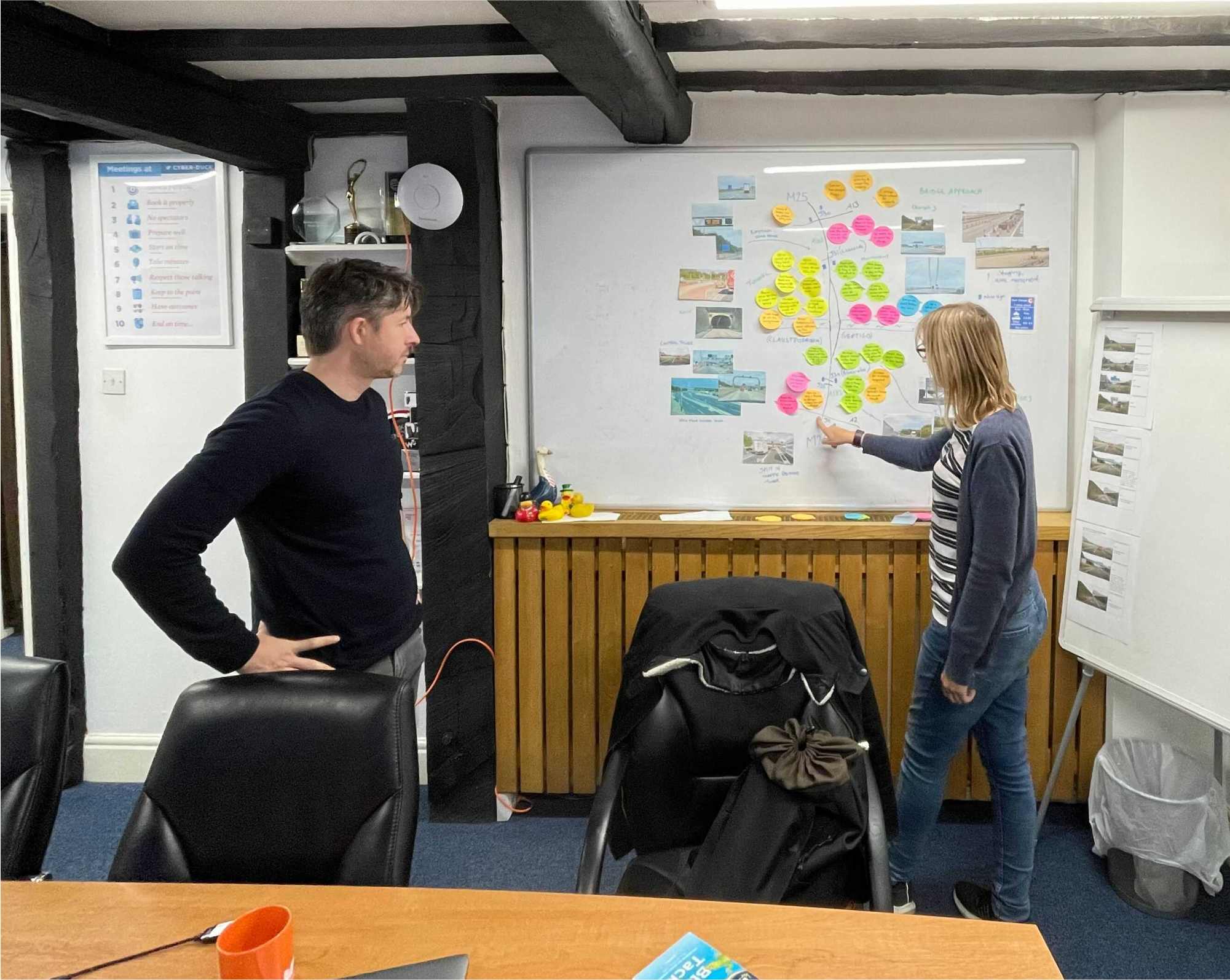
Transforming National Highway’s Dart Charge with user-centred design, service design and agile methodologies

National Highways logo

Summary

National Highways is the government organisation which builds, maintains and operates Britain’s motorways and major roads. They are responsible for the Dart Charge, a congestion charging system on the Dartford Crossing – the bridge and tunnels that crucially connect the M25 between Essex and Kent. 

As a public service, National Highways needed to update and improve the Dart Charge service to reduce penalty charge notices (PCNs) and improve user experience. As the Dart Charge service had previously failed to meet UK Government Digital Service (GDS) standards, National Highways and the programme needed assurance and support from a team with in-depth knowledge and experience of working to GDS standards, as well as Service Design and UX, which is where CACI came in. 

Company size

5,000+

Industry

Government

Challenge

Icon - Clipboard with check boxes and a magnifying glass showing a tick

The project plan and requirements stated that National Highways wanted the service to meet GOV.UK standards and pass its Alpha assessment, but there were no details on how this would be achieved by the contracted suppliers. CACI needed to help ensure a coherent, smooth, end-to-end user-centred project in this Alpha phase and guide the multi-faceted team to ensure the new digital Dart Charge met GDS standards for the first time. 

Icon - Cursor clicking

We had to understand the existing end-to-end service and legacy platform to identify where it failed to meet diverse user needs and contributed to high PCN rates. These insights were needed to highlight UX/CX gaps, skills shortages—particularly around accessibility – and support procurement of the right people and services to build a successful multi-disciplinary team. 

Icon - Lightbulb with a tick

A final objective was to embed Service Design and user-centred design principles and working practices and oversee prototypes for the new service using the GOV.UK prototyping toolkit – refined through iteration and user testing- that Dart Charge service owners could use to meet user needs and resolve the pain points we identified. 

Solution

CACI initiated a comprehensive service design strategy, beginning with in-depth user research encompassing various user personas, including neurodiverse individuals and those with limited digital access. This research informed the creation of detailed ‘as-is’ and ‘to-be’ service blueprints, highlighting areas for improvement. 

To meet the GDS Service Standard meant educating and collaborating with multiple stakeholders and suppliers was a vital part of the work. CACI engaged with multiple government technology vendors and suppliers and introduced Agile methodologies, user-centred design practices and gave guidance on governance, operations, and day-to-day activities, all fostering a new culture of iterative development and continuous feedback.

We also provided practical guidance to the team on passing the Alpha service assessment, creating a working plan to meet – and evidence – all 14 aspects of the GDS Service Standards. Drilling down further to a structured methodology with 100+ practical steps needed to meet them, suppliers then providing the CACI team with evidence of how they are taking these steps, tracking their progress against the required criteria. 

Accessibility was a core focus, with designs and prototypes tested against WCAG guidelines to ensure inclusivity. The team also addressed operational challenges, identifying skill gaps and recommending the integration of accessibility and service design experts.  

Results

Meeting GDS Service Standards can often be thought of as a tick box exercise, but we wanted to steer this towards being a brilliant service. Our hands-on, empathetic, highly user-centred approach was a key contributor to National Highways’ success in the Dart Charge moving through the Alpha service assessment successfully, the first time in 7 years it had done so.

National Highways are now using this project as an internal case study for learning how to deal with future programs involving other crossings. The National Highways team are also using this project as a learning tool on what it means to go through – a meet – a GOV.UK service assessment process.  

Various views that drivers see on the road when approaching the Dartford Crossing, with signs to remind them that the crossing is coming up.

What is Marketing Mix Modelling (MMM)?

In this Article

Benefits of marketing mix modelling (MMM)

For any marketing activities to be successful, understanding consumers’ behaviours and whether a channel is oversaturated is essential. While data and analysis play undeniably important roles in this, marketing mix modelling (MMM) plays an even greater one, representing the merging point of data and analysis with the psychology of consumer understanding.  

Marketing mix modelling (MMM) is a statistical tool that enables an understanding of how each part of an organisation’s marketing activity impacts consumers’ behaviours, sales, return on investment (ROI) and more. Through MMM, an organisation’s performance can be broken down by channel and various types of data can be incorporated to evaluate the effectiveness of marketing activities and determine which are making the most substantial differences to the organisation’s overall performance. 

  • Enables organisations to quantify and measure marketing channels effectively to assess which drive the most sales and return on investment 
  • Equips organisations with long-term insights that will bolster planning through effective forecasting and marketing campaign generation based on previous performance  
  • Helps organisations allocate budgets according to the best performing channels due to measuring growth based on investments
  • Instils confidence due to its statistical reliability and being privacy-safe, both of which are particularly important in a post-cookie world
  • Offers organisations a holistic view of the impacts that various factors will have on achieving specific KPIs, ensuring marketers can make more informed decisions based on how and when marketing activities will impact KPIs. 

How do marketing mix modelling (MMM) & commercial mix modelling (CMM) work?

Marketing mix modelling (MMM)

Marketing mix modelling (MMM) is used by organisations aiming to understand how marketing activities impact KPIs being measured. Its ability to measure the impact that certain pricing choices, promotional offers, product launches or advertising campaigns may have on sales makes it a game-changer for organisations. 

In MMM, the dependent variable used to assess the relationship between sales and marketing activities is usually:  

  • Sales volume: to assess the impact of different marketing activities on sales 
  • Revenue: to track the amount of money generated by sales 
  • Competitor analysis: to understand how your organisation’s marketing activities are affecting your position in the market. 

In contrast, the independent variables in MMM are the marketing activities or factors that might drive those results, such as: 

  • Advertising spend: the amount invested in promotion across various channels. 
  • Price: to explore the impact of price adjustments on sales 
  • Promotions: discounts, coupons, or offers that could increase sales 
  • Distribution: the potential impact of product availability across various locations on sales. 

Commercial mix modelling (CMM)

Commercial mix modelling (CMM) is an analytical approach that examines a variety of commercial factors that drive an organisation’s performance. It begins with collecting data from across the organisation on pricing, promotions, distribution channels, products and more, combining the resulting data into a cohesive dataset.

The insights presented within the dataset help organisations gauge which factors contribute most to performance and where investments result in the highest returns. It also enables organisations to test various scenarios— price changes, promotional adjustments, changes within distribution channels— to assess the potential impact on performance. Through this, organisations can optimise their overall commercial mix to grow and become more profitable.  

How does commercial mix modelling (CMM) differ from marketing mix modelling (MMM)?

While both commercial mix modelling (CMM) and marketing mix modelling (MMM) are granular approaches that help organisations analyse the impact of marketing activities, their scope, methodology and applications differ.  

Scope

CMM offers a broader approach when it comes to evaluating the marketing activities that would impact an organisation’s performance, integrating various functions to optimise revenue and profitability. It encompasses external, non-marketing data sources such as weather, seasonality, competitor pricing, interest rates, etc.  

MMM, on the other hand, is more partial, purely marketing data that offers a more detailed and expansive result. As a statistical analysis method, it quantifies the impact that marketing activities— campaigns, paid advertisements, promotions, etc.— have on specific KPIs. Focusing more on media and investments rather than a wider marketing strategy, its granularity is what marks its stark contrast to CMM.  

Despite the broad scope of CMM, it is just as granular and technical as MMM. 

Methodology

CMM blends analytics, business intelligence and strategic insights, considering both internal and external factors that can affect an organisation’s growth. The approach entails: 

  • Scoping & data auditing:
    • Understanding the KPIs and defining whether the model should target revenue, acquisitions, renewals or some combination form the scoping basis. Data auditing includes tech and journey mapping to determine the stages comprising the funnel for lead gen and closing, as well as the tools and tech used at each stage. 
  • Data collation & cleaning:
    • This includes a data request to outline the full scope of what can be used in the model, with cleansing, organising and playback taken into consideration to check for completeness and broad accuracy. During this stage, data is also combined and reaggregated for ingestion into the model. 
  • Exploratory analysis & feature configuration:
    • Plotting all the raw data to understand distribution and periodicity and exploring this raw data to identify gaps and anomalies is conducted during this stage. Correlation analysis helps find feature relationships and possible collinearity, feature types are configured for use in the model and decay is applied (AdStock) to channel features to simulate the memory effect of advertising.
    • Diminishing returns to channel features simulate channel saturation and other transformations such as smoothing or feature combination.  
  • Pre-processing & feature engineering:
    • Calendar and dummy variables can be included to represent milestones and seasonality, with each variable transforming across a range of parameters to find the most realistic behaviour. 
  • Commercial mix modelling (an iterative process with pre-processing & feature engineering):
    • Once the model for the approach is scoped (e.g. logistic vs. linear, pooled, nested, hierarchical) and fit for processed features to optimise accuracy and generalising power, it is then checked against existing commercial knowledge and external priors and returned to feature processing to refine variables and tune parameters accordingly.
    • All candidate variables are imported and tested from the pre-processing stage. Finally, the model is refined continually by adjusting variables to optimise statistical measures of accuracy. 
  • Optimisation & simulations:
    • The present channel saturation is analysed, the optimal channel mix is delegated for specific budgets and results are presented from scenario simulations to understand which channels have headroom and which are oversaturated.
    • A budget guide is provided for optimising revenue and the ability to plan for different scenarios: mitigating headwinds, capitalising on opportunity and planning contingencies. 
  • Next steps & recommendations:
    • Recommendations are given based on budget optimisations and added value. 

MMM, in comparison, focuses on econometric modelling and regression analysis to determine the contributions made by various marketing channels on an organisation’s outcomes. Econometric modelling is a statistical, mathematical approach that quantifies the relationship between marketing activities and business outcomes, built with historical data. Regression analysis is a technique used within econometric modelling to measure the impact of independent variables (marketing activities) on dependent variables (sales or revenue). 

Application

Senior executives and C-suite employees may use CMM for longer-term strategic planning and decision-making, whereas MMM would be used by marketing teams to optimise spending and budget allocation towards campaigns or advertisements.  

The broader scope of CMM enables senior executives and C-suite employees to gain a complete picture of the various commercial drivers and their impact on marketing rather than isolated results. On the other hand, the granularity of MMM ensures marketing teams strategically plan and forecast how changes in spending across channels might impact sales and plan scenarios accordingly. 

How to build a marketing mix model

The first step in building a marketing mix model will be to collate and prepare your data. This will involve collecting historical data on sales and marketing spend across different channels and should go back far enough in time to effectively capture market conditions and seasonality fluctuations. 

Next, selecting the appropriate model to facilitate this will be crucial. Selecting the model can come from its robustness or flexibility, catering to your organisation’s unique needs. 

Building the model will come after this. This will include defining the relationship between marketing spend and sales or other KPIs and considering carryover effects, saturation or external factors. 

Furthermore, fitting the model will use your historical data to estimate the parameters of the MMM. Once the model is fit, the results can be analysed to precisely determine their contributions towards each marketing channel. 

Finally, the insights gleaned from these results can help you adjust marketing strategies accordingly, increase budgets within the highest-performing channels and reduce it in those underperforming. 

Examples of marketing mix modelling (MMM)

Organisations across a variety of industries can apply marketing mix modelling (MMM) to lead to improved outcomes. A few of such examples include:  

  • Consumer Packaged Goods (CPG): Gathering data on sales, advertisements, campaigns and pricing can help CPG organisations understand which channels—digital advertising, TV campaigns, etc.— drive the most overall return on investment. 
  • Retailers: From seasonal promotions to discounts and the influence of both in-store and online presence, retailers can leverage MMM to understand peak performance periods, digital sales and foot traffic to allocate budgets accordingly or reassess promotional calendars.  
  • Financial Services: Financial institutions can use MMM to evaluate their multi-channel advertising efforts and ensure they are reaching the appropriate audiences, encouraging sign-ups.  

Why businesses should choose CACI to carry out CMM 

CACI supports businesses in their delivery of optimised marketing efficiency by: 

  • Determining the value and performance of activity through evolved multi-touch and econometric modelling 
  • Producing results to sustain and increase growth through targeted investment and improved marketing performance 
  • Delivering improved accuracy, consistency and availability of marketing performance insights 
  • Enhancing capability by evolving data, technology and process 
  • Supporting the provision of ongoing strategic and delivery resource 
  • Helping businesses dig into bespoke segments and utilise in-house data products to unlock insights 
  • Offer businesses location-based insights into the effects that marketing has at various levels, from stores to regions.  

Find out more about the impact that marketing mix modelling can have on your business by contacting us today

Click here to read our short infographic to learn how CACI’s Commercial Mix Modelling can transform your business strategy.

Sources:

Are dashboards dead? Assessing their challenges & advantages to determine their future in businesses

In this Article

Dashboards have been quite a topic of contention in certain circles with the recent recirculation of Taylor Brownlow’s essay ”Are Dashboards Dead?”.

While I’m of the opinion that no, dashboards are not dead, they have been undeniably overused and often misunderstood, with a disconnect between a dashboard’s actual function versus our perceived function of them. 

Why is there dashboard fatigue?

Many of us have experienced dashboard fatigue, and rightfully so. As businesses, how many dashboards have we commissioned that were never fully utilised, if used at all? The answer is too many.

The reason for low engagement isn’t the fault of the humble dashboard, but rather that a dashboard was never the appropriate solution for the end user, or its design wasn’t tailored enough to the business use case.  

When faced with a business problem requiring data insights, we often jump straight to dashboard creation. However, there are many other solutions that can be tailored to deliver data insights, such as concise reports and static presentations. With an increased understanding of where dashboards fail, the conversation has shifted to questioning their relevance altogether.  

So, what place do dashboards still have in businesses, and how can we better understand where they excel to drive improved outcomes? 

What potential challenges may arise with dashboards?

There are many instances where dashboards may be less effective or complicate matters for businesses, and other methods provide a better solution. Instances may include: 

  • When the user needs a concise answer to a question:
    Dashboards require interaction and exploration, which can be time-consuming. If a stakeholder needs a straightforward answer, a tailored report is more efficient.  
  • For business specific, niche questions:
    Not every level of enquiry warrants the resource-intensive creation of a dashboard. For narrow, targeted questions, simpler reporting methods suffice. 
  • One-time insights:
    Dashboards are overkill for static data projects, such as measuring the success of a single transformation. In these cases, producing a well-crafted report or presentation is more resource-efficient. 
  • If the data is exported for analysis:
    If users regularly export dashboard data to manipulate it elsewhere, it’s a sign that the dashboard doesn’t meet their needs or wasn’t necessary to begin with. 

When might dashboards be the right solution?

Company-wide reporting platforms

Dashboards provide a unified view of performance across teams, offering consistent delivery of insights to aiding faster decision making, customisable filters for views specific to each business unit, efficiency in distributing insights without the need for manual reporting and increased data accessibility through data visualisation. 

Regular cadence reporting

For tracking ongoing metrics such as daily sales, customer trends or campaign performance, and measuring progress against targets, dashboards provide updated insights without the wait. 

Exploratory analysis

Whenusers want to discover patterns, relationships or unknown trends within the data, dashboards allow for interactive interrogation. These tools are especially valuable for data-savvy end users, enabling self-service exploration without requiring an analyst’s intervention. 

Monitoring ongoing initiatives

Dashboards are excellent for tracking live projects or recurring business processes, offering real-time visibility into performance. 

The future approach for dashboards

With the above in mind, we’re moving to a more informed approach where dashboards are no longer a tiresome, default solution, but a carefully considered tool.

The future isn’t about abandoning dashboards, but about being intentional and strategic in their creation and deployment. The key is facilitating dashboard creation in a way that adds tangible value and is thoughtfully configured to provide meaningful, actionable insights that empower decision making. 

How CACI can help

At CACI, we work with you to deliver the best solutions for your analysis needs. Our extensive experience in successfully implementing dashboards across diverse industries highlights several key scenarios where dashboards have proven to be highly effective.  

Whether it’s creating a bespoke, one-off report or developing a suite of comprehensive, customisable dashboards, contact us to find out more about how our user centric approach and industry expertise can help you gain meaningful analytics that will drive strategic business outcomes. 

Refreshing Scrum with the Ball Point Game

In this Article

On a recent programme development day, Phil Ballard, one of our award-winning Scrum masters facilitated the Ball Point Game. This is an industry-known Agile game which is usually run as part of an introduction to the Agile ethos for those keen to follow the Scrum methodology. 

Despite CACI having teams that are highly experienced in Scrum, we still found this activity to be useful not only as a “going back to basics” session, but also from the several other lessons learned from our own adaptation. 

Ball Point Game: basic overview 

Teams of eight are formed, with each team collecting a bag of balls. 

Within an Iteration (of which four take place), teams pass as many balls as possible among team members, with each ball passed scoring the team a point. Teams must adhere to the acceptance criteria of each ball being touched at least once by every member, each ball returning to the same person who introduced it into the team, each ball having “airtime” as it moves between team members, lost balls being fetched and re-entering the team where it left and dropped balls not being re-introduced into the system.

During each Iteration, teams will have one minute to talk among themselves and two minutes to perform the ‘Objective’. Prior to each Iteration, an estimate for the number of balls expected to pass through the team within the next Iteration is predicted. 

Team members taking part in the Ball Point Game, as a way to learn Agile methodology in an easy manner

CACI’s spin on the Ball Point Game 

Considering teams are already experienced in delivering in scrum, we made things more lifelike by introducing additional requirements in Iterations 3 and 4: 

  • The balls are being sold in packs of ten, with at least one of them being green. 
  • All balls must continue to gain height as they are passed through the team. 

After all, what’s software delivery without a stakeholder wanting to change their mind? The idea behind these rules was to break the established process, force change and to see what behaviours the scrum-experienced professionals would exhibit. 

Team members taking part in the Ball Point Game, as a way to learn Agile methodology in an easy manner

Ball Point Game goals

The Ball Point Game’s ultimate goal was to teach participants the value of continuous process improvement through basic agile principles using the simulation of an agile production process, including: 

  • Teamwork/shared goals 
  • Retrospectives/problem-solving 
  • Planning 
  • Estimating based on experience. 

All processes have a natural velocity. To speed things up, it is often not a case of working harder or faster, but a case of changing the process. 

Key takeaways

After all Iterations were complete, we discussed the results and asked teams to contribute their experiences with the following questions:  

  • Which Iteration felt as though it was the best/worst? 
  • How important was the retrospective between Iterations? 
  • What changes did you make? 
  • How did the team make decisions – did anybody take charge? 
  • Were all ideas heard within your teams? 
  • Was there anything notable in determining your estimates? 
  • Were improvements made by working harder or faster? 
  • Did you observe/experience anything else of interest? 

With the additional requirements added: 

  • Iterative development is also based on learning from the live product and adapting to what the customer and end user needs. 
  • Without anything being live, there is nothing to learn from and no way for the product to adapt. 
  • Sprint teams must adapt to estimating with new requirements versus estimating on a known repeatable task. 

Additional findings from the teams

  • The short timings of Iteration planning, along with the input of additional requirements, seemed to force an intensity. This, in turn, forced out several negative behaviours that we have not experienced on the programme, however, recognised within this competitive environment. 
  • Low sprint commitments despite the team feeling it was a known task. 
  • Sprint teams stopping when hitting commitment as there was an assumption that the game goal of the exercise was to have a stable velocity. 
  • Argumentative behaviours exemplified (not the usual collaborative approach we usually see). 
  • A competitive nature towards the other sprint teams, prohibiting the sharing of lessons learned. While the rules never stated they were against each other, it was inherently assumed when splitting participants into teams and asking them to perform the same task. 

On a more positive note:  

  • Many questions were asked about the requirements, with a focus on what the user/customers’ needs and problems were 
  • Looking outside of the team for improvement inspiration despite its interpretation as spying. 
  • Reflection on what we do in practice versus the theory/Agile beliefs 
  • Great discussions around the overall value of sprinting and iterative delivery. 

If you wish to find out more about the Ball Point Game or run it yourself within your programme or teams, please get in touch. 

Automating competency management: effective, efficient, accurate

In this Article

Having the ability to automate your competency management process enhances your workforce scheduling, improving output and safety

When assigning staff to tasks and schedules, understanding their core competencies is essential. As a stark and wholly unfair example, in a transport organisation you wouldn’t assign an accountant to drive a train. Nor would you ask a train driver to look over your accounts. Understanding an individual’s skills, training and experience is essential. It’s essential to the smooth running of your services and the safety of your workers and end users. Competency management is central to this.

Running schedules in a live and constantly evolving environment such as transport is difficult. There’s the basic schedule to adhere to. Then there are events, often beyond your control, which can curtail even the best laid plans. Being able to respond to these unforeseen circumstances swiftly and accurately is the difference between minimising service disruption and lengthy delays or cancelations.

This goes beyond transport, too. In construction, for example, if there is an accident on site or work isn’t carried out to the required standard, it can cause delays and impact the cost of the project.

The most reliable way of minimising such incidents is by having the right people in the right place at the right time. Your competency management framework plays a vital role in this. It achieves this not only by ensuring staff are trained, skilled and experienced, but also by being made transparent and available across your organisation. The link between training, assessment and scheduling needs to be seamless. Information must be available in real-time and events responded to accordingly.

What does real-time competency management look like?

Automation is key here. Let’s take the example of a train driver being assessed. Their ongoing competence is paramount to the smooth and safe running of services. Regular assessments need to be scheduled, conducted and reported on.

Driver A is due for their assessment. The assessor needs to be notified of the need to assess them and they will then go about conducting the assessment. Once the assessment is complete, they will then need to record the outcome of it. If Driver A has passed the assessment, this information needs to be made available to the driver, their management team and the scheduling team. In this scenario, it’s a case of confirming business as usual.

But what if Driver A fails to pass their assessment? In this scenario, further training may be required as remedial action to rectify their error. If the assessor notes Driver A as having failed, there needs to be a swift chain reaction to this. Driver A must be notified, their managers too, plus the scheduling team. Driver A may need to be removed from duty until such a time that they have undertaken the requisite training. This means, therefore, that the training team must be notified, too, with a view to booking Driver A in for training asap.

The scheduling team will then need to arrange to have another driver cover any shifts that they are booked in for. This triggers its own chain of communication, impacting another driver and their ongoing shifts. Regulations around working hours must be factored in and adhered to.

Automating this process makes it more efficient. Information, rather than being siloed by department, can be shared electronically at the point of input. This means that the driver, their managers, the scheduling team and the training department can all act quickly.

How do organisations automate their competency management?

This is a process that Transport for London (TfL) operates through CACI’s Cygnum software. Assessors are assigned to a list of tube drivers who need assessing, they can see their routes and timings and meet drivers at a station that best suits them. The results are recorded instantly and follow-up activities are automatically triggered.

Assessors access a priority list of drivers on the go through Cygnum. They can see where drivers are due or coming up for assessment. This means they can prioritise accordingly. Using the Cygnum Mobile app, assessors can record results on the go, in real time.

Obviously mobile reception can be an issue on sections of the London Underground. Where this is the case, results are stored offline on the app to be uploaded as soon as possible once reception is available again.

With results recorded in or near to real time, TfL’s training and scheduling teams have accurate and up to date information available to them. For the training team, their list of drivers is demand driven, so those drivers who need to receive training most are put to the front of the queue. This minimises frontline absences.

Ongoing training can be enhanced via automation too. Regular checks, from safety briefings to eyesight checks need to be conducted and recorded. Sending reminders and auto-booking people onto courses makes for a smoother process.

Network Rail operates its training management programme through Cygnum. This enables Network Rail to automate vast swathes of its training operation. Mandatory courses are booked in advance, attendance is accurately monitored and results are recorded and shared across the organisation.

The automation of this enables Network Rail to not only keep abreast of its training courses and who needs to attend, but also to inform schedulers of their outcomes. This is essential in keeping the right people in the right place at the right time.

Conclusion

Whilst automation of competency management can be incredibly useful across any transport organisation, it is only as reliable as the data entered into your system. Bringing data together from across your organisation is essential. Where data become siloed, its usefulness is stunted. Creating a single view requires the input of every department.

Automation can make the crucial task of keeping the right people in the right place at the right time more straightforward. It can alert you and your staff of required upcoming training. Assessments can be scheduled well in advance with results logged instantly. Training can be booked when it’s needed, including in a demand-led fashion. Again, making the outcomes of sessions available to the wider business instantly facilitates accurate and timely decision making.

Ultimately, automation of competency management underpins accurate scheduling. Assigning tasks to staff safe in the knowledge that they are the right people to perform such tasks is essential in transport. In any industry with moving parts, being able to make changes in a live environment is also essential. When schedulers and administrators have to manually trawl through records to evidence the changes they wish to make, it wastes valuable time. Being able to instantly understand someone’s suitability for a task, against their core competencies, skills, experience and working patterns, saves time and keeps services moving.

Automation is undoubtedly challenging to achieve, but the results are well worth it.

Technology and its impact on risk in the rail industry

How technology is enhancing safety for rail workers at organisations like Network Rail and Transport for London (TfL)

Whilst the UK is in the enviable position of having one of the safest rail networks in the world, that’s not to say that things couldn’t be improved upon. Technology is playing a major role in advancing safety standards and enhancing safety for the rail network’s workforce and passengers. This case study looks at how Network Rail and Transport for London (TfL) are utilising CACI’s Cygnum software to support their efforts in managing the training and competency of their workforce.

Beyond the immediate safety of the workforce, enhancements in training and competency management serve to reduce overarching risk. Risk takes on many forms in the rail industry. Mistakes can lead to health and safety incidents; they can also result in service disruption and delayed projects. If staff aren’t appropriately trained, mistakes are more likely to occur. If staff aren’t assessed, there’s no knowledge and reporting on frontline delivery.

Capturing data and appropriately acting upon it is vital to a successful training and competency management framework. Being able to schedule training and assessments effectively and efficiently, whilst also being able to capture outcomes in real-time, helps organisations to maintain core competencies across their workforce and provide opportunities for career progression, an expansion in the available pool of skills and also the opportunity for re-training and mandatory ongoing training where necessary.

Training management

Training management takes many guises within an organisation such as Network Rail, which has a workforce of over 48,000 people. From mandatory ongoing training courses to more advanced, career progressing initiatives, Network Rail caters for its workforce with the provision of thousands of courses every year across 11 national training centres.

Running this process efficiently is paramount in achieving the desired training outcomes. Where manual processes are involved in inviting staff to mandatory sessions and checking that they have attended, mistakes inevitably creep in. This can result in staff attending the wrong courses, being sent to the wrong location or not attending.

Implementing a technology system can help to alleviate such issues, with automated checking of course prerequisites, auto-booking of staff to mandatory courses at defined intervals, auto-logging attendance on the day (plus any results that are required) and creating efficiency and consistency across the process. This leaves the more manual aspects to exceptions and more complex arrangements.

Furthermore, a robust training management programme enables organisations to diversify and enhance the range of skills available to them within their existing workforce. If places on courses are free, then they can be offered out to the wider workforce. This improves efficiency by helping to keep courses full. Making best use of available training resources by ensuring that courses are run to capacity and any vacant spaces are offered to interested employees who would benefit from the training opportunity, continuously enhances the core competencies and career opportunities available to your workforce.

Each training course costs money to run, from the trainer, the time taken by the employee and the room and facilities used. Finding a way of maximising the results of this expenditure is crucial. With improved visibility of class utilisation via Cygnum, Network Rail can offer out vacant course places to the wider rail industry, thereby supporting other organisations in their training needs and helping to support the wider safety standards of the rail industry.

Competency management

Closely linked to training is competency management. TfL utilises Cygnum to support the ongoing competency management of its 4,500+ Underground drivers. At a basic level, competency management is ensuring that staff are competent to perform their roles. For example that they are appropriately trained and qualified for the tasks they are undertaking. Beyond that, competency management helps organisations to understand the skills at their disposal across their workforce.

It also ties into training where mandatory ongoing training is required to maintain competence for a role. For train drivers, this includes basic aspects such as eyesight checks. It also establishes the triggering of mandatory training where mistakes have been made out in the field. Similarly to Network Rail, TfL can then schedule training at the point of a result being logged. This ensures that all drivers have access to relevant and necessary training to ensure ongoing competence.

To further have assurance on driver competency, TfL carries out ‘on the job’ staff assessments. These are scheduled by Cygnum automatically based on business rules and the driver’s duty rota. Both the assessor and driver are notified instantly. This reduces the manual effort in arranging assessments, making the process more efficient.

When an assessor assesses a driver, they can capture the outcomes on their mobile device via Cygnum’s mobile app, Cygnum Mobile. Results are uploaded to the Cygnum database and any follow up activities are automatically triggered as a result. Cygnum Mobile also includes offline data capture capability, to mitigate poor mobile reception when operating underground.

Improving workforce safety and reducing risk

By running robust training and competency management programmes, Network Rail and TfL are better positioned to monitor the skills of their workforce and ensure that appropriately trained and competent personnel are operating their services. This further helps them to monitor the safety of their networks by ensuring that all operators are compliant with industry safety standards.

Of course, no system can eradicate human error, but technology can help in prioritising workforce safety whilst at the same time encouraging career progression and the expansion of available skills within the workforce. Where the workforce is trained and regularly assessed, incidents can be kept to a minimum and when they do occur, understanding why is made easier. This is because the competencies, training, skills and experience of those involved can be quickly understood in reporting on incidents.

Having a complete picture of skills, experience and the results of regular assessments also supports administrative and scheduling staff and accurately and fairly assigning tasks to appropriate members of the workforce. Having a central view of core competencies set against bespoke business rules facilitates a degree of automation in scheduling, which reduces manual effort, improves accuracy and makes it easier to handle exceptions. Creating a central view of staff skills enhances workforce safety and reduces risk, since it reduces the likelihood of staff being assigned to tasks to which they’re not suitable for.

For more information on Cygnum, please visit: https://www.caci.co.uk/software/cygnum/m/

Environmental sustainability in business: importance and impact

In this Article

Key issues for countries and the businesses that operate within them to address in terms of climate change unfolded at the recent 28th UN Climate Change Conference (COP28). These issues urge immediate and significant action to be taken on fossil fuels and clean energy, national adaptation and climate finance, methane reduction, land use and more.

What does environmental sustainability in business mean?

Environmental sustainability in business is the operation of a business that does not compromise the environment. A business that has considered environmental sustainability prioritises the environment’s best interest, with society and its ecosystems coming before making a profit. It involves responsible decision-making that minimizes carbon footprint or waste while simultaneously improving the quality of life for humankind and the natural world alike.

Unfortunately, however, operating businesses as usual has had an increasingly detrimental impact on our planet. According to the latest State of the Global Climate report by the WMO, 2023 was the warmest year on record at about 1.4C,increasing pressure to shift their operations to more environmentally sustainable practices. This inevitably causes businesses to consider—where do we start? How do we begin making a difference?

What is the importance of environmental sustainability in business?

According to an article published by Maryville University, businesses that do not act responsibly will result in “the majority of many species not surviving past the 21st century”, reiterating how critical it is for businesses within every industry to take part in improving their environmental surroundings.

Although companies have a way to go before fully grasping the repercussions of ever-growing carbon footprints, those willing to tackle this challenge early on will get a head start on reshaping perspectives and realities.

Environmental sustainability in business practices

Businesses can rely on the three R’s– reduce, reuse and recycle– to begin reducing their environmental impact. However, there are several other examples of practices that businesses can incorporate into their operations amplify their reduction, including:

  • Life cycle assessments
  • Designing environmentally friendly products/services
  • Optimising product efficiency
  • Decreasing supply chain carbon footprint
  • Re-evaluating CSR (Corporate Social Responsibility) expenses

Benefits of environmental sustainability in business

Reduces the impact of business costs

While the cost-of-living crisis is skyrocketing, improving the energy efficiency of business operations and decreasing waste will go a long a way in bracing for the impact of unexpected business costs. Using more energy efficient lighting or reusing existing resources can be quick-fix solutions for lowering costs.

Improves a business’ reputation

Environmentally sustainable businesses are viewed as a plus, and companies are eager to highlight this fact. Companies that can go “green” show that they’re serious about making a difference in the environment and are interested in more than just profitability. Businesses that can market themselves and develop their identity around their commitment to the betterment of the planet will notice incredible results in terms of their reputation.

Group of people in front of icons representing sustainable development goals and environmental technology

Who is responsible for improving environmental sustainability in a business?

Businesses have been expected to pave the way towards environmental sustainability due to their notably significant contribution towards polluting the environment through waste, gas emissions and plastics generated. The responsibility does not necessarily begin with one individual within a business though– employees at every level of the business must work together to bring about change. A few examples include:

  • Business owners and leaders: Business owners and leaders are typically capable of leading strategic decision-making that influences the wider business. They can develop effective sustainability strategies and initiatives that have the power to change policy and induce change.
  • Business managers and supervisors: Managers and supervisors can supply valuable insights due to their more hands-on roles. They also typically have different perspectives and understandings as to how to improve business sustainability.
  • Employees: Employees can supply valuable contributions when encouraged to voice their opinions and concerns on how the business can become more sustainable.

Impact of environmental sustainability in business

The Department for Business, Energy and Industrial Strategy is striving to reach net zero carbon emissions by 2050. It’s going to take strong leadership, business-wide alignment on operations and an engaged corporate culture to successfully execute and maintain environmentally sustainable business practices. Businesses that start addressing these issues and challenge existing business processes will find themselves making a breakthrough towards becoming more environmentally sustainable while protecting the world around them.

How can CACI help you overcome these obstacles?

Our newly developed Mood Environmental Hub helps track all of your assets across multiple geographic locations and assess the environmental impact of your business.

With a single click, users can drill down from multi-site, business-level functions, to departments or even individual teams to determine asset types and locations, enabling a quick assessment of priority focus areas for improvement. It can also visualise existing data through user-friendly dashboards that show carbon impact, consumption and cost at an enterprise level.

The advanced modelling feature also outlines potential improvements, indicating ROI and carbon reduction impact. Additionally, you can easily check performance against carbon commitments such as Social Value through the initiatives tracker.

Producing carbon reduction target tracking reports or modelling for a business case is now a click away – to see how it works, you can book a demo here.


Scheduling – getting the most from workforce management in the transport industry

In this Article

Having the right people in the right place at the right time sounds easy. In largescale transport organisation, effective scheduling is crucial

At the heart of workforce management sits the simple sounding task of scheduling. Your organisation has shifts to fulfil and a pool of workers to fulfil them. Add staff to the rota and away you go. Such shift patterns can be sacrosanct across organisations of any size, providing clarity to workers, management and administrators alike. In largescale transport organisations, however, there are several moving parts to consider and shift patterns can be thrown off course by anything from weather to equipment failure and cancellations in the supply chain.

This blog aims to take a closer look at scheduling in transport organisations. It’s a topic we’ve covered in greater detail in our recent white paper, Tackling workforce management complexities in transport. If you would like to explore the topic in greater detail, you can download a free copy here.

There are myriad tasks that need completing across the transport industry. The complication introduced to the scheduling process often requires a lot of manual work by administrators and schedulers. People fall ill, take holidays and external events can throw a schedule completely off kilter.

Automation in workforce management

Automation of scheduling can greatly reduce the administrative burden. At its most prosaic, automation can simply assign workers to shifts in advance. This can be set out indefinitely, with new workers swapped in for departing/unavailable members of staff easily. Such a process can consider your bespoke business rules and any other factors such as the working time directive and fatigue management.

Where automation can lend a vital hand is in times of strain. We’ve seen examples, notably during the Covid pandemic, of vast swathes of a workforce being absent at once. Where a manual process exists, this resulted in inevitable cancellations of services. With carefully configured automation, it is possible to be more agile in the face of disruption.

Where a worker is absent, having a central system and a central view of your entire workforce enables swift consideration of replacements. This works for smaller examples, too. For example, if a train is delayed and members of crew onboard it are required to meet another service which they will now miss, how can this be handled?

An automated process enables identification of other members of staff who are nearby and can be reassigned, whilst at the same time handling all communications with staff members. The staff who have been delayed can then be reassigned to other tasks, ensuring that their shift isn’t wasted.

Variable demand and moving parts

Another factor to consider in the transport industry is variable demand and moving parts. A high level example of this is the change in train timetables during the Christmas period. Fewer customers means less demand for services, therefore, services can be reduced to ensure more efficient use of the network and staff time.

A more short-term example of this is in shipping. Where a port is expecting a shipment, staff need to be prepared to meet it to initiate the unloading and loading of it. Variation is frequent in such a scenario, since ships can be diverted at a moment’s notice to other ports due to factors such as storms. Another example would be the blockage of the Suez Canal. This can leave a port with a full roster of staff without a function to fulfil. This is a waste of time, money and staffing resources.

Mapping out the changes caused by variable demand in a central system can help to understand its implications. Factors such as cost can be calculated and your response to it can be better informed. Understanding where the risks of variable demand are most likely to occur can help mitigate its impact.

Another example is with revenue protection officers on trains. Understanding the demand for services helps to better utilise them. There’s little point, for example, scheduling ticket inspectors during rush hour to major stations, since moving through the train is all but impossible. Similarly, there are more likely to be barriers at major stations, so working out the best deployment of such staff is more likely to realise the ultimate aim of their work.

Overlaying tasks onto shifts

Establishing a schedule is one thing. Rosters can be worked out well in advance and communicated to staff. But what happens when they show up on the day? Often the set number of employees turn up and discover the specifics of their tasks at that point.

Utilising a workforce management system such as Cygnum helps organisations to understand the specifics of the tasks that need be fulfilled during a shift. This helps organisations to better prepare aspects such as equipment required, time needed to complete the task and where exactly they need to be.

This helps to drive better understanding and efficiency through shifts and tasks. Matching specific skills and experiences to not only shifts, but also tasks, better ensures that the right people are performing the right tasks.

Conclusion

Scheduling can be a complicated and nuanced process, especially across largescale organisations. With several moving parts, variable demand, unpredictable disruptions and the usual ebb and flow of workforce absences, managing the process can be extremely complicated. This can result in inefficiency and poor service delivery.

Introducing automation, clear communication and overlaying tasks onto shifts helps to better understand your workforce the tasks required of them and more accurately assign staff to tasks based on their skills, experience, training, availability and geographic location.

This is a topic that we’ve explored in greater detail in our recent white paper, which you can download freely here. Alternatively, if you would like more information on how Cygnum can help you with your workforce management requirements, please visit our website.

Reducing risk in the transport industry through workforce management

In this Article

Reducing risk entails several factors. Most pertinently, worker safety. Rules and regulations exist to protect workers, from health and safety directives to working time directives, covering working conditions to fatigue. Then there’s risk to projects and tasks. If they are done improperly, then tasks need to be redone. This impacts overarching projects, both in terms of time and cost. Of course, accidents and mistakes happen. Building in mitigation for such events is prudent. But what if you can identify patterns and head off errors before they happen? Competency management, as part of a robust workforce management process, can help.

Workforce management – training 

Training management is essential across largescale workforces. From mandatory ongoing courses, refresher courses and training staff in new skills to upskill your workforce and offer career progression, having a robust training programme in place forms the backbone of this. 

By linking training to other areas of your workforce management, such as assessments and scheduling, it makes it possible to identify skills gaps across your workforce. To reduce the risk of these gaps impacting upon project and service delivery, you can appropriately train existing members of staff to fill these gaps.  

It also makes it possible to utilise your training programme to focus on specific areas and tasks where mistakes are occurring. By pooling data from accidents and assessments, you can identify repeat errors. In doing so, you can then tailor your approach to training to better prepare staff for areas in which, statistically, they are most likely to pose a risk to themselves and overarching projects. 

Workforce management – assessments 

Knowing that staff have the appropriate qualifications, skills, training and experience is one thing. But how are they actually fulfilling the tasks to which they have been assigned? Regular, ongoing assessments of your workforce are crucial. This is both from a safety and a service delivery perspective.  

From a safety perspective, many roles within the transport industry pose a safety risk. From infrastructure workers to drivers, the risk of getting things wrong can be catastrophic. It’s prudent to check in to ensure that tasks are being conducted properly. 

From a service delivery perspective, mistakes can result in shoddy work. This means that it needs to be redone, which costs time and money, impacting upon project timelines and budgets.  

This extends to maintenance, too. We regularly see on the rail network, for example, things such as signal failures which result in delays and cancellations. Regular assessments of infrastructure are vital to repairing the roof whilst the sun is shining.  

Overarching planning to manage risk 

Proper, robust planning builds in sufficient time to complete tasks, with enough room for reasonable error. People make mistakes, external factors such as the weather can waylay you and where there are several moving parts. Things don’t always come together as you’d hope. Mitigating for this by building it into your planning is sensible. 

When it comes to specific tasks, however, granular detail is important. When scheduling your workforce, workers can be assigned to shifts on a rolling basis ad infinitum. But how can the specifics and the complexity of each shift and its tasks be considered? How can these then be communicated with staff? 

Using a central system with the ability to overlay such complexity onto shifts can drive efficiency and greater control of the overarching project and its processes. It can be established according to your bespoke business rules and configured to factor in elements such as regulations and directives. 

Understanding what will happen during a shift is important. If maintenance needs to be performed, being able to communicate exactly what equipment is required, the nature of the task and the location helps to prepare people. As the process continues, being able to intelligently alter task timelines based upon previous completion times and rates enables a more accurate scheduling of tasks. If, for example, you have set aside three hours for the completion of a task but staff are regularly completing it in two hours, then future timelines can be adjusted accordingly. 

This helps to drive a more complete understanding of your projects and how your staff are performing against timelines and tasks. This in turn helps to mitigate the risk of work running over time, since you can rely on a robust database of previous work to inform future projects.  

Conclusion 

Finally, the regulatory aspect is crucial. Things such as the working time directive exist to combat elements such as fatigue. A central database that can further call upon the geographic location of staff can help to more efficiently assign them to tasks. If someone is 20mins away from the location of a task, it makes more sense to assign them to it than someone 1hr away. Since travelling time is considered as a factor in fatigue management, it’s an extremely inefficient use of time to swallow it up on travelling times. 

Managing risk extends across the entirety of the transport industry, from workforce safety to service delivery. With so many moving parts – risks – being able to navigate them and efficiently and reliably match those moving parts to your targets is essential to achieving the ultimate goals of your organisation. A well trained, regularly assessed and robustly scheduled workforce forms the backbone of this.  

The technology exists to help largescale transport organisations to gain greater control of their workforce management. From training and assessments to scheduling, having a single view of your workforce facilitates automation, insight and, ultimately, efficiency. It’s a topic we’ve explored in more detail in our recent white paper, Tackling workforce management complexities in transport. You can download your free copy here.

Using CDP to design a successful business operating model

In this Article

In our last post, we shared some tips for a successful CDP implementation. In this post, we focus on one of the most critical factors for CDP success: designing a new business operating model. If you’d like to read all the blogs right away, you can register here to access the complete series.

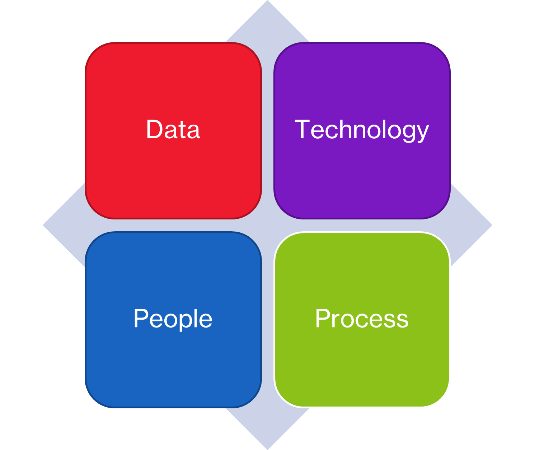
We often find that organisations try to solve their marketing challenges by only changing their data and tech capabilities. However, people and process changes alongside this are just as important.

With the introduction of a CDP, businesses gain access to different capabilities that enable greater automation and efficiencies. The challenge lies in how to best adopt the use of these new capabilities, especially when an organisation currently consists of multiple teams, each responsible for different channels, life stages, products or customer segments.

A new operating model is needed to redesign and reorganise these teams, ensuring that processes are designed with the new capabilities in mind. This ensures that the organisation fully benefits from its capabilities.

Without a well-designed operating model, businesses may fail to harness the full potential that a CDP has to offer. In this blog, we will discuss the best practices for designing a new business operating model to get success from a CDP implementation.

Step 1: Conduct a business-wide assessment of the existing operating model

A business-wide assessment covering a review of the existing operating model is a good place to start. This will help identify gaps and inefficiencies that need to be addressed before implementing a CDP. These gaps may be related to skills as well as the actual number of resources required by various functions.

Step 2: Establish design principles

Next, establish CDP operating model design principles that will guide the development of the target model. This will ensure that the CDP capabilities are utilised efficiently and effectively. When designing the target operating model, consideration needs to be given to the re-allocation of resources and the impact on individuals whose jobs will likely change. Ideally, the new operating model will enable them to work more effectively and efficiently. However, any change needs careful consideration and planning ahead of roll out.

Step 3: Get the necessary buy-in from stakeholders

A step-by-step approach will ensure success. It is important to get buy-in from leadership to ensure that everyone is aligned and invested in the project. This will help to ensure that communication, process and people collaboration are effectively managed. A steering committee is necessary and plays a vital role in the design of the operating model and the management of delivery. Within that, having CDP advocates who will champion the new operating model will help drive adoption across the organisation.

Overarching best practices to consider

When designing the target operating model, it is important to balance rigour with flexibility. A CDP implementation should account for the impacts on different parts of the business in different ways, from reducing the burden on data engineers to empowering marketers to deliver real-time use cases. This requires a collaborative effort between teams and a willingness to adapt to new ways of working.

Ultimately, designing a new business operating model is critical to the success of a CDP implementation. By taking a step-by-step approach, establishing CDP advocates and balancing rigour with flexibility, businesses can maximise the value of their CDP investment and gain a deeper understanding of their customers. The key consideration of change a CDP brings such as communication, process, people collaboration, and the need for leadership buy-in make it clear that CDP success is not just about data and marketing technology.

How can CACI help?

As subject matter experts at CACI, we can tell you that a well-implemented CDP can be a game-changer for businesses of all sizes and we have hands on experience with many brands including ASOS, Kingfisher, L&G, PlayStation, Telegraph, EasyJet and DFS.  If you’re interested in learning more about CDPs and how they can help your business, please don’t hesitate to reach out to one of our experts.

This post is the part of a blog series on all things CDP, so make sure to check out our previous blogs to get a complete picture of CDP implementation best practices. If you would like to download the whole blog series, you can simply register here to download a copy of the whitepaper.

If you’re interested in learning more about CDPs and how they can help your business, please don’t hesitate to contact us and reach out to one of our experts.

Continue reading:

Blog 1 – How a CDP can transform your customer experience architecture

Blog 2 – CDP vs. SCV: why choosing between the two is a big mistake

Blog 3 – CDP and CEP: A perfect pair for a seamless customer experience

Blog 4 – How to avoid pitfalls & drive results in CDP implementation

How the Cost of Living will further squeeze the least affluent

In this Article

In our latest Cost of Living Podcast, we examine how expectations around missing payments are doubled among the least affluent demographic category in the coming months, with concerns around paying utility bills affecting nearly one in five households within the Low-Income Living category. 

How we drew these conclusions using our Cost of Living survey

CACI’s recurrent Cost of Living survey has revealed particular concern among this group, who cite their likelihood to miss payments on rent, council tax and utility bills as impacts of the rising cost of living. Where 11% of the UK population fear missing payments on utility bills in the coming months, that figure rises to 18% among those households with the lowest incomes. Unlike other demographic groups, this figure outranks their expectations of going overdrawn or using credit cards to fund or defer payments. 

Every three months, we ask a nationally representative sample of 2,000 UK adults a series of themed questions around the Cost of Living, their challenges, plans, behaviours and expectations. CACI has been conducting this research since the height of the Covid pandemic, establishing a series of trackers that monitor feelings towards the Cost of Living, the impacts this is having and how their activities are changing. At CACI, we utilise the power of our demographic segmentation, Acorn, to inform brands about how these changes will influence the way consumers are behaving. 

Cost of Living Podcast – Part One: How consumers are reacting & adapting to living costs

of our special two-part podcast focuses on the latest changes in sentiment around living costs, the rising use of foodbanks and how Gen Z have been able to avoid cost-cutting measures on the scale as the older generations. Our hosts, Paul Langston and Hannah Smith, react to the findings, including how housing situations may develop as tenants in particular become priced out of their current rentals.

Cost of Living Podcast – Part Two: Impact of living costs on mental health, travel & brand orientation

moves on to consider the knock-on impacts of the continued strain on mental health, changes to the way that we are taking holidays and how consumers are turning to brands to lead on Net Zero goals. 

If you’d like to find out more or subscribe to our monthly podcast and receive all of our Cost of Living analysis as it’s published, you can sign-up here

How Braze’s Canvas components personalise marketing journeys

In this Article

In the last part of our ongoing blog series exploring the Braze platform, we shared our key takeaways from this year’s Braze City x City London event. Today, I’ll dive into Braze’s various Canvas components and how you can leverage them to personalise your marketing journey.

What are Braze’s Canvas components?

By using a Canvas in Braze, you can unlock new user journeys that will improve processes and increase the effectiveness of reaching your audience. Here I break down a few of the Canvas components that enable a truly personalised marketing journey.

Action path

An Action path in a Canvas helps you to sort users based on their actions. By using an Action path, you can customise user paths based on custom events and engagement events and hold users for a given duration to prioritise their next path based on their actions during the evaluation window.

Within the Action setting module, you can choose how long you want to keep users in the Action step by choosing the evaluation window. This is set to one day by default, but can be customised to seconds, minutes, hours, days and even weeks.

Audience path

help narrow down and target users by sending users down different paths based on specific criteria such as age groups, country and even user preferences. An Audience path allows you to intuitively filter and segment users with a strategic priority-based user-grouping.

Imagine a sorting funnel with ranking criteria: users are evaluated for each criterion in a priority order and sent down the path of the highest-ranking criteria they qualify for. An Audience path allows for up to eight audience groups, and for each group, you can assign specific filters or segments.

The true power of an Audience path comes from its ability to assign priority, enabling you to target users that fall into specific filters and segments while still targeting users that might not fit those specific criteria all in one single Canvas component.

Decision Split

A Decision Split is a ‘yes or no’ feature that creates two mutually exclusive paths for users based on either an action or a user’s attributes, enabling a personalised, real-time experience for users. Within a Decision Split, you must use a segment or filter to create a ‘yes or no’ query to evaluate users.

An example of a Decision Split could be whether a customer is push enabled – ‘yes’ or ‘no’. In the case of a yes, the user would go down the push message path, and in the case of a no, users would go down an email path.

Delay components

help achieve the desired delay in communications, ensuring the user receives a message at a specific time and date (e.g. three-day delay) or holds users for a designated time. When using a delay step, it’s important to consider that the delay step’s limit is 30 days, and that a delay component can only be connected to one next step.

Experiment paths

allow you to test multiple Canvas paths against each other and a control group at any step level. It enables the random assigning of users down different paths, ensuring you can test which path is most effective.

As an example, if you want to test results between different time delays before a message after a user completes an action, you can do so while also setting a condition that after a specific experiment evaluation window, the winning path will be used, and the other paths ignored.

Our partnership with Braze

As a trusted Braze partner, our multidisciplined team can help you get the most out of Braze and customise your marketing journey to resonate with your customers. If you’re looking to adopt Braze or are already a Braze user, contact us to find out how you can start enhancing your marketing journey by harnessing Braze’s Canvas components.

Continue reading:

Blog 1 – Exploring Braze: optimising your CRM by leveraging key features

Blog 2 – How to elevate your brand through the power of Braze’s Sage AI suite

Blog 3 – Leveraging Braze’s Winning Paths to augment Canvas performance

Blog 4 – CACI’s Braze City x City 2023 takeaways

CACI’s Braze City x City 2023 takeaways

In this Article

WOW! What an amazing event Braze City X City was!

This year’s London event gathered numerous companies who are avid Braze users to share their future strategies, gauge customer engagement trends and learn how to harness the power of AI.  

The morning was dedicated to thought leadership and was an amazing opportunity to chat with likeminded members of the CRM community, as well as hear from Braze’s CEO Bill Magnusson. We spent the afternoon hearing from some inspirational speakers who shared their experiences with areas like Sage AI and networking with friends and colleagues in the industry.

Key highlights of Braze City x City 2023

As Platinum sponsors, we were delighted to spend the day having brilliant conversations with multiple brands about their MarTech stack and digital maturity and run them through our Braze maturity assessment (which was a big hit!). Some of our personal highlights were seeing our colleagues Sam Obafemi, Account Director and Elena Hughes, Managing Consultant, sharing their amazing work helping MAC Cosmetics to create cut-through on Black Friday and achieve new customer experience highs, as well as hearing from Amy Clark, Head of CRM at ASOS, on the impact that this platform has had on their brand – an implementation we are proud to have supported the ASOS team with.  

Challenges & themes addressed at Braze City x City 2023

While companies consistently expressed their positive sentiments about the platform, a prominent theme of the day was around the challenges in harnessing customer data. Specifically, determining how to ensure data is integrated to Braze in an optimal way to deliver campaigns and automated use cases while maintaining efficient data point consumption. This is a fundamentally critical point, as the true potential of the Braze platform can only be unlocked when your data is configured correctly. 

Braze themselves have recognised this and have developed a number of features to help brands tap into their existing data, including: 

  1. Cloud Data Ingestion: This feature enables Braze to read data directly from Snowflake, Databricks, Google BigQuery and Amazon Redshift. 
  2. SQL Segment Extensions: Brands can create more advanced/complex segments through a new SQL Editor interface.  
  3. Data Transformations: Braze enables direct integration with other platforms that can call webhooks through building the necessary data transformations logic directly in Braze. This ensures that incoming webhook data can be directly mapped into the required data structures within Braze. 
  4. Catalogs Enhancements: With enhancements such as Shopify integration and plans for future integration with Cloud Data Ingestion, enabling brands to automatically keep data in sync with their data warehouse. [Jon Hyman, Co-founder & Chief Technology Officer of Braze, hinted at additional announcements around Catalogs features to be announced at Braze’s upcoming Forge event. We expect this will prove a significant step forward in helping clients integrate more complex data sources]

Our partnership with Braze

We’ve supported many brands on their journey with Braze, with a particular focus on ensuring optimised data integration and setup. Along with our experience in implementing the aforementioned Braze features, we’ve designed and built bespoke solutions to support clients needing additional tooling to aggregate, clean and transform data for integration with Braze. 

To find out how CACI can help you get the most out of the Braze platform or understand the changes and enhancements you can make to your existing data infrastructure to ensure its seamless integration with Braze, please reach out to us.

Continue reading:

Blog 1 – Exploring Braze: optimising your CRM by leveraging key features

Blog 2 – How to elevate your brand through the power of Braze’s Sage AI suite

Blog 3 – Leveraging Braze’s Winning Paths to augment Canvas performance

Blog 5 – How Braze’s Canvas components personalise marketing journeys

How to avoid pitfalls & drive results in CDP implementation

In this Article

In our previous post, we discussed how Customer Data Platforms (CDPs) are paired with Customer Experience Platforms (CEPs) to form a powerful duo in the modern marketing technology architecture. In this post, we will dive deeper into how to approach implementing a CDP as a core part of your marketing technology architecture. If you’d like to read all the blogs right away, you can register here to access the complete series.

Approaching CDP implementation through use cases

Adopting a use case-driven approach to CDP implementation is one of the key enablers as it helps you determine what data you require in your CDP. Most organisations have amassed huge amounts of customer data, and approaching the CDP implementation using use cases helps make sense of what data is most pertinent for marketing. It also enables you to be selective about what data you integrate into the CDP, which is important as integrating all available data can be a complex and resource-intensive process.

Prioritise use cases based on value and ease of implementation

Once you have defined the use cases based on customer problems that can be solved through improved customer experiences, prioritise them based on their value and ease of implementation. Rather than an exhaustive effort to try and integrate all data in one go, this approach allows you to start seeing value from the platform by getting your priority use cases live within a short timeframe. This enables you to define and prioritise subsequent use cases, which you can then implement in a phased manner.

Another key benefit of this approach is that it enables you to identify any challenges and refine your approach before tackling more complex use cases. This reduces the risk of overloading the platform with unnecessary data and use cases, which can lead to poor performance and complexity.

Test and optimise for effective CDP implementation

It is also important to adopt a test and optimise approach. This means testing each use case and optimising it based on the results. This will help you to continuously improve the customer experience and deliver more value to your customers.

How can CACI help?

Implementing a CDP as a core part of your marketing technology architecture requires a use case-driven approach. This approach enables you to determine what data you require in your CDP and prioritise use cases based on their value and ease of implementation. It also allows you to start seeing value from the platform within a short timeframe and refine your approach before tackling more complex use cases. By adopting a test and optimise approach, you can continuously improve the customer experience and deliver more value to your business and customers.

As subject matter experts at CACI, we can tell you that a well-implemented CDP can be a game-changer for businesses of all sizes and we have hands on experience with many brands including ASOS, Kingfisher, L&G, PlayStation, Telegraph, EasyJet and DFS.  If you’re interested in learning more about CDPs and how they can help your business, please don’t hesitate to reach out to one of our experts.

In our next post, we’ll explain how crucial a new operating model is for the success of a CDP. If you wish to download the full blog series now, click here.

If you’re interested in learning more about CDPs and how they can help your business, please don’t hesitate to contact us and reach out to one of our experts.

Continue reading:

Blog 1 – How a CDP can transform your customer experience architecture

Blog 2 – CDP vs. SCV: why choosing between the two is a big mistake

Blog 3 – CDP and CEP: A perfect pair for a seamless customer experience

Blog 5 – Using CDP to design a successful business operating model

CDP and CEP: A perfect pair for a seamless customer experience

In this Article

In our previous post, we explained the differences between a Single Customer View (SCV) and a Customer Data Platform (CDP). Now we’ll consider how the CDP integrates with another component of the modern marketing stack, the Customer Engagement Platform (CEP). If you’d like to read all the blogs right away, you can register here to access the complete series.

What makes CDP and CEP the perfect pair in a MarTech stack?

In recent years, there has been an emergence of modern CEPs that have transformed the way companies engage with their customers. Legacy campaign management technologies enabled companies to harness their rich customer data and orchestrate outbound comms to traditional channels such as Email, SMS and Direct Mail. However, these technologies tend to be driven by batch data and had limited capabilities in digital channels.

Modern CEPs, on the other hand, are inherently real-time, allow integration of digital data (either natively or via a CDP), and offer a wealth of new ways to engage with customers in mobile apps or on websites. While these capabilities are hugely valuable to marketers, their value when combined with a CDP is further enhanced. Why? Well, the CDP helps marketers make the most of their data and provides the CEP with a richer set of attributes to drive ever-more-personalised and engaging experiences.

When a CDP is combined with a Customer Experience Platform (CEP), it creates a powerful duo that can provide even greater value to businesses. A CEP enables companies to orchestrate and deliver personalised customer experiences across multiple channels, while a CDP provides the necessary data to make those experiences relevant and impactful.

Key considerations for integrating CDP & CEP technologies

It’s important to keep in mind some key considerations when integrating these two technologies. Designing and following data usage principles between the CDP and CEP will ensure optimal value is created from these two marketing technologies.

Assessing minimum data requirements

While the CEP will want to inherit all the aggregations/derivations from a CDP as well as some customer event data – sending too much data to a CEP can hinder its effectiveness. Therefore, it’s important to carefully consider the minimum data CEP needs to accept to deliver marketing use cases.

Avoiding data overload

When taking a use case-driven approach to data requests, one will ensure that the CEP will not be flooded with data; personalised experiences will be incrementally delivered and monitored to stay relevant to each customer’s needs and preferences.

How can CACI help?

The synergy between a CDP and a CEP is undeniable. By leveraging the power of personalisation and taking a strategic approach to data integration and requests, businesses can create seamless and impactful customer experiences that drive loyalty and revenue.

As subject matter experts at CACI, we can tell you that a well-implemented CDP and CEP can be a game-changer for businesses of all sizes and we have hands on experience with many brands including ASOS, Kingfisher, L&G, PlayStation, Telegraph, EasyJet and DFS.

In our next post, we’ll explain the best approach to take when implementing a CDP. Or click here to download the full blog series now.

If you’re interested in learning more about CDPs and CEPs and how they can help your business, please don’t hesitate to contact us and reach out to one of our experts.

Continue reading:

Blog 1 – How a CDP can transform your customer experience architecture

Blog 2 – CDP vs. SCV: why choosing between the two is a big mistake

Blog 4 – How to avoid pitfalls & drive results in CDP implementation

Blog 5 – Using CDP to design a successful business operating model

How to elevate your brand through the power of Braze’s Sage AI suite

In this Article

We’re excited to kick off this blog series by delving into the remarkable Sage AI suite within Braze, a game-changing toolkit that has transformed how brands engage with their audience.  

One aspect that consistently captures attention and sparks curiosity is the components that make up the Sage AI suite. The potential of generative AI, the insights available through the Predictive suite and the brilliance of the Intelligent suite have already sparked incredible innovation within the realm of Braze. Personally, I find immense joy in highlighting these remarkable features, which truly stand out in their capabilities. So, what comprises the many layers of Sage AI and how does each component work? 

In this blog, we’ll explore the intricacies that each Sage AI component has to offer as we journey through its captivating landscape and find out how Generative AI, the Predictive suite and the Intelligent suite are reshaping brand strategies to create new avenues for engagement. 

Intelligent Suite

Intelligent Selection:

As the epitome of efficiency and optimisation, this game-changing feature empowers marketers to conduct multivariate tests seamlessly. Picture this: the highest-performing variant automatically receives the remaining audience, streamlining the process and safeguarding customers from unproductive experiences.

Intelligent Timing:

In the world of marketing, timing is everything. Imagine the impact that delivering your message at the exact moment when your audience is most receptive would have on outcomes. With Intelligent Timing, Braze marketers can reach customers precisely when engagement potential is at its peak.

Intelligent Channel:

Crafting personalised interactions is an art, and the Intelligent Channel component adds a stroke of genius to it. By analysing customer behaviour and preferences, Braze enables marketers to select the best channel for communication, maximising open rates and engagement.

Predictive Suite

Predictive Churn:

Empowering brands with proactive insights, Predictive Churn enables Braze users to customise filters that detect potential churn. By training algorithms to assign churn likelihood scores to individual customers, brands can craft tailored communications aimed at mitigating churn risk. This personalised approach transforms challenges into opportunities for customer retention.

Predictive Events:

Unlocking users’ future behaviours is a holy grail for business growth. Enter Predictive Events, a remarkable machine learning model that unveils the likelihood of user actions, particularly purchases. As marketing teams decipher forthcoming behaviours, they can shape campaigns, vouchers and incentives for maximum ROI. This predictive prowess transforms marketing strategies from generic campaigns to customer-centric interactions, ensuring journeys resonate profoundly.

Generative AI

In the realm of innovative marketing, AI emerges as a dynamic partner, enhancing creativity and efficiency. Let’s explore three ground breaking AI-driven tools that are reshaping how brands can create, communicate and engage with users: 

AI Copywriting Assistant:

A transformative approach to crafting compelling messages, the AI copywriting assistant seamlessly integrates with OpenAI’s GPT-powered copy generation tool. By simply inputting a brief product name or description, this AI marvel generates human-like marketing copy that resonates. This feature comes ready-to-use in most message composers within the Braze dashboard, revolutionising your messaging strategy. 

AI Image Generator:

An OpenAI system that produces stunning images and artwork based on natural language descriptions on demand, DALL·E 2 unleashes visual creativity through AI magic Four unique variations of prompts are generated with each input request, enabling brands to generate images up to ten times daily and foster a new level of visual storytelling. 

AI Content QA:

Content QA with AI, driven by ChatGPT and OpenAI, acts as a vigilant editor that ensures your messages meet impeccable standards and that your content’s quality reaches its highest potential through AI intelligence. Content QA meticulously identifies and flags elements such as spelling errors, grammar glitches, inappropriate tone and offensive language. Accessible from the Test tab during message composition, this tool reshapes content perfection within campaigns and Canvases. 

Why your brand needs Sage AI

The Sage AI Suite within Braze unveils a realm of innovation that redefines brand engagement. Generative AI transforms messaging with human-like precision through the AI Copywriting Assistant and Image Generator. Meanwhile, the Prediction Suite empowers brands to anticipate customer behaviour, from averting churn with Predictive Churn to enhancing campaigns through Predictive Events. The Intelligent Suite elevates engagement by optimising selection, timing and channel choice.  

This suite isn’t just technology; it’s a bridge to profound connections, resonant storytelling and empowered strategies that will shape the future of engagement. By embracing the transformative potential of Sage AI, your brand can confidently step into a new era of brand-customer relationships. 

Our partnership with Braze

As a trusted Braze partner, our multidisciplined team can help you maximise your Braze experience value and help you customer engagement outcomes reach new heights. If you’re looking to adopt Braze or are already a Braze user, get in touch with us to find out how you can harness Sage AI’s new components to bolster your engagement strategy.

If you’re interested in learning more about Braze or you’re a Braze user looking to maximise value, be sure to get in touch with us to speak to one of our team.

Continue reading:

Blog 1 – Exploring Braze: optimising your CRM by leveraging key features

Blog 3 – Leveraging Braze’s Winning Paths to augment Canvas performance

Blog 4 – CACI’s Braze City x City 2023 takeaways

Blog 5 – How Braze’s Canvas components personalise marketing journeys

Exploring Braze: optimising your CRM by leveraging key features

In this Article

Braze is one of the fastest growing CRM tools on the market. It enables brands to be truly app-first and deliver enhanced and personalised real-time customer experiences without complex and bulky ETL or batch processes which often involve painful and delayed overnight data loads.  

Leveraging effective marketing technology is now critical for a business’ long-term success. It allows businesses to stay ahead of the competition by understanding and adapting to everchanging consumer behaviours and tailoring experiences that best reflect their needs. 

Braze is a leading platform in the CRM space, having recently been scored as ‘leader’ within The Forrester Wave™: Cross-Channel Marketing Hubs in Q1 of 2023. Its innovative approach to connecting with customers has been a gamechanger. With a particular focus on digital messaging, it has established itself as an accessible, customisable and specialised tool on a global scale.  

In this blog series, my multidisciplined team will lift the lid on Braze and uncover the key features we see within the platform that are certain to deliver growth and take your use of Braze to new heights.

Our partnership with Braze

As a trusted Braze partner, we help brands get the most from the platform by supporting in all areas, from platform integration and audit to campaign management and optimisation. Our Campaign Operations team is well versed in the platform, with each member who interacts with Braze being certified in the platform. We invest in our partnership with Braze by further upskilling our team to a high standard, with multiple team members holding more than three different certifications ranging from the marketer exam to the digital strategist, enabling us to support brands in getting the most out of this amazing platform.

Our experiences and certifications have enabled our development of a set of Braze Accelerators specifically designed for CRM teams striving to achieve better results in a shorter timeframe. They have also contributed to our team being awarded Agency Partner of the Year in 2022 for our work with Domino’s in assessing their campaigns, enhancing their understanding of their customers’ behaviours and identifying personalisation opportunities that bolstered their testing capabilities and paved the way for more effective outcomes.

If you’re interested in learning more about Braze, and how CACI can help you in driving the most value from your Braze investment, be sure to get in touch with us.

Continue reading:

Blog 2 – How to elevate your brand through the power of Braze’s Sage AI suite

Blog 3 – Leveraging Braze’s Winning Paths to augment Canvas performance

Blog 4 – CACI’s Braze City x City 2023 takeaways

Blog 5 – How Braze’s Canvas components personalise marketing journeys

CDP vs. SCV: why choosing between the two is a big mistake

In this Article

In our previous post, we explained the role of the Customer Data Platform (CDP) in modern marketing architecture. Now, we turn our attention to another critical component of the marketing stack – the Single Customer View (SCV). If you’d like to read all the blogs right away, you can register here to access the complete series.

What is the difference between a CDP and a SCV?

While the CDP and SCV are often confused with each other, they serve different purposes and have distinct characteristics. In this post, we will explore the benefits of having an SCV in the foundation layer and how it differs from the CDP.

Having a Single Customer View (SCV) in the foundation layer provides several benefits for businesses. Firstly, it enables businesses to build a comprehensive understanding of their customers by providing a unified and persistent view of customer data across all touchpoints. Secondly, it allows businesses to implement governance for enterprise-wide data management, ensuring data quality and consistency. Thirdly, it supplies a reliable source of customer data for analytics, reporting and decision-making. Finally, it lays the foundation for personalised experiences by providing a complete picture of the customer that can be used by marketers to deliver targeted and relevant experiences.

The SCV is where your customer data is mastered and where your business logic and definitions are applied. The output is a clean set of validated data that is presented in a useful way for your business and is ready for use in your engagement and activation layers. The SCV is where your business can address some common and critical issues with data, such as:

  • Validating and cleansing your data
  • Standardising of output and definitions
  • Consistent application of common business definitions and logic
  • Curation and presentation of data based on business application, making the data easy to use

On the other hand, the CDP is a more marketer-centric tool that empowers marketers with the ability to activate omni-channel personalised customer experiences. It is designed to make it easier for marketers to access and use customer data without relying on data engineers or IT teams. The CDP enables companies to use customer data to deliver targeted and personalised experiences across all channels.

While both the SCV and CDP are valuable tools, they are not interchangeable but instead play complementary roles.

Failing to have both an SCV and a CDP can lead to significant risks and negative impacts. For example, without an SCV, companies may struggle to make sense of their customer data, leading to missed opportunities for personalisation and engagement. Without a CDP, companies may struggle to activate that data and deliver personalised experiences, leading to lower customer satisfaction and loyalty.

Ultimately, businesses that want to improve their customer experience should have both an SCV and a CDP. While the SCV provides a foundation layer of customer data, the CDP empowers marketers to activate that data and create personalised experiences.

How can CACI help?

As subject matter experts at CACI, we can tell you that a well-implemented CDP can be a game-changer for businesses of all sizes and we have hands on experience with many brands including ASOS, Kingfisher, L&G, PlayStation, Telegraph, EasyJet and DFS.  If you’re interested in learning more about CDPs and how they can help your business, please don’t hesitate to reach out to one of our experts.

In the next post, we’ll consider how the CDP pairs with another key component of the modern marketing stack, the Customer Engagement Platform (CEP). Or if you’d like to download the full blog series in advance, click here to download.

Want to speak more about CDP and it can help you elevate your customer and marketing strategy? You can contact us here to speak to one of our experts.

Continue reading:

Blog 1 – How a CDP can transform your customer experience architecture

Blog 3 – CDP+CEP: A perfect pair for a seamless customer experience

Blog 4 – How to avoid pitfalls & drive results in CDP implementation

Blog 5 – Using CDP to design a successful business operating model

How a CDP can transform your customer experience architecture

In this Article

This is the first post from our new series on Customer Data Platforms (CDPs). From debunking common misconceptions to exploring the power of combining CDPs with other cutting-edge technologies, we’ll be diving deep into all things CDP – and showing you how to make the most of this game-changing technology. If you’d like to read all the blogs right away, you can register here to access the complete series.

What is a customer experience architecture?

If you’re in the world of marketing, you’ve probably heard of CDPs. But what exactly are they, and how do they fit into a modern marketing architecture?

Marketers can find CDP vendor websites confusing due to their use of language that may make CDPs sound like other components in your architecture. For example, they may claim that CDPs bring together all your customer data in one place (like an SCV) or can deliver highly personalised customer experiences (similar to other marketing platforms). However, despite this confusion, CDPs play a critical role in modern technology stacks. In this blog post, we will provide a fresh perspective on the topic to help explain the role of the CDP and its place in modern marketing architecture.

Where do CDPs fit into modern marketing architecture?

At CACI, we view modern marketing architecture as a framework with five layers:

For many vendors, CDPs typically belong in the activation layer of this framework. It takes data from the foundation layer and then feeds marketing technology in the engagement layer with data in the format that marketers need to deliver highly personalised experiences.

Some CDPs may, however, offer more foundational layer capabilities whilst others can be more engagement focused. For simplicity, our framework defines the primary purpose of the CDP is to activate marketing data, which is why we put it at the heart of the activation layer.

How can a CDP enhance your customer experience architecture?

It’s important to note that a CDP should be thought of as marketing technology, rather than data technology. Its role is to empower marketers with data, removing their reliance on data engineering and allowing them to focus on strategy and campaign execution. A CDP brings a lot to the party, providing marketers with the tools they need to create effective campaigns and drive business results, such as:

  • A CDP can natively capture digital data, making it easier for marketers to activate audiences across a variety of MarTech and AdTech channels in real-time.
  • By enabling the delivery of highly personalised experiences across channels, a well-implemented CDP can help businesses improve customer engagement and increase conversions.

How can CACI help?

As subject matter experts at CACI, we can tell you that a well-implemented CDP can be a game-changer for businesses of all sizes and we have hands on experience with many brands including ASOS, Kingfisher, L&G, PlayStation, Telegraph, EasyJet and DFS. If you’re interested in learning more about CDPs and how they can help your business, please don’t hesitate to reach out to one of our experts.

In our next post, we’ll explain why businesses should not choose between a CDP and a Single Customer View (SCV). If you can’t wait until then, you can register here to download the whitepaper which contains the full blog series.

Interested in learning more about how CDP an support your customer strategy? Contact us to speak to one of our experts today.

Continue reading:

Blog 2 – CDP vs. SCV: why choosing between the two is a big mistake

Blog 3 – CDP+CEP: A perfect pair for a seamless customer experience

Blog 4 – How to avoid pitfalls & drive results in CDP implementation

Blog 5 – Using CDP to design a successful business operating model

How learning and development can improve recruitment in transport and construction

In this Article

Learning from previous projects, mapping skills to future tasks and identifying gaps in the workforce – learning and development can inform your recruitment needs

Recruitment is a vital component of the transport and construction industries. Being able to deploy the right number of appropriately skilled personnel to any given task is essential in delivering services and projects efficiently and on time. A robust learning and development programme can help large organisations in maintaining this balance. From upskilling existing employees to demand forecasting mapped against current and future work, having oversight of core skills and competencies across your workforce is fundamental to your ability to deliver work and services. With a holistic view of your workforce you can understand where any gaps may be emerging or may exist against future work, then remedy them with accurate recruitment.

Knowing when to recruit

Mapping the existing skills and competencies of your workforce against the demand for their skills and competencies against current and future work offers insights as to what you need. If your existing workforce doesn’t cover this, then recruitment is inevitable. If there are only a few gaps, training existing employees so that they are competent for the tasks required can help to plug gaps, but where a simple case of lack of numbers is identified, bringing people in is the only solution.

So how does learning and development help? As part of your wider competency management and training efforts, the overarching learning and development umbrella is essential in gaining a complete picture of your workforce, its competencies, skills and experiences. Maintaining this central database provides insight as to the profile of employee you need to add in order to fulfil projects and tasks.

This covers every aspect of your learning and development programme. From people on the ground to fulfil the tasks required of your services, to the people who conduct assessments of your workforce and run your training programmes. During periods of growth, it will be necessary to conduct more training and more assessments in order to keep your learning and development programme on track.

Ongoing assessment work is crucial to ensure work is being conducted properly. This covers safety and the appropriate fulfilment of tasks. Having the necessary number of assessors is important to achieving this. For more information on how Transport for London (TfL) assesses its London Underground drivers, please click here.

Similarly, getting new recruits up and running is a staple of any learning and development programme. Proper inductions and any training and briefings must be conducted before they start. You can read more about how Network Rail trains its 43,000 employees here.

Maintaining a future workforce pipeline

As projects start and finish, maintaining a core workforce is essential for ongoing work. One way in which transport and construction operators can maintain a healthy pipeline of future recruits is via apprenticeships.

According to the Constructions Skills Network, an extra 225,000 construction workers will be required in the UK by 2027. Filling these roles – and in a relatively short space of time – will be essential to the efficient and timely running of construction projects, many of which will cover the UK’s transport infrastructure, too.

Working with schools and colleges is a useful way of interacting with young people who might be interested in a career in construction. Offering them hands on experience alongside their studies provides practical experience which strengthens their skills and experience in the industry.

What happens once they start their career? Career development, once people have been recruited, helps to broaden the pool of skills and competencies available to you. Offering ongoing training courses and opportunities helps your existing workforce to be upwardly mobile, helping to address skills gaps internally without the need to recruit.

Conclusion

Joined up thinking is paramount in implementing a successful recruitment policy, feeding off the competency management and training aspects of your learning and development programme. Understanding your workforce is central to this. Where are there gaps? Who can be upskilled? This feeds into your wider project management; what current and upcoming work will require what skills and competencies?

A scattergun approach to recruitment is inefficient and expensive. Utilising the knowledge that you can create about your workforce helps you to pinpoint the skills and experience you need for current and future work, whilst creating efficiencies in your processes and accurate responses to your roadmap of work.

We have recently explored the topic of learning and development, including recruitment, in our white paper Learning and development in construction and transport: how can organisations enhance their workforce efficiently, in a data led way? You can download your free copy here.

Competency management: the heartbeat of learning and development in transport and construction

Every employer conducts basic checks of their employees. Do they have the requisite qualifications, skills and experiences for the role for which they are being hired? Certificates, references and background research usually satisfy this. Then, to ensure that the person is actually appropriate for the job once they’ve started, a period of probation follows, supported by ongoing assessments at set intervals to keep tabs on their ongoing competence. In the transport and construction industries, however, competency management takes on far greater significance.

Forming part of a robust learning and development programme, competency management is essential to the smooth running of services and projects in these industries. Holding a qualification or a certain amount of experience is one thing, ongoing competence is quite another.

Take train drivers as an example. There are several assessments, exams and accompanied drives that must be completed before a driver is left to complete the task solo. That’s not the end of the process. In such a safety critical environment, with service users onboard as well, it is vital that ongoing competency management is in place. Taking Transport for London (TfL) as an example, they conduct regular assessments of their 4,500 London Underground drivers to ensure that they are fulfilling their role appropriately.

To manage this process, TfL utilises CACI’s Cygnum software. The system is used to schedule assessments, log their results and arrange any follow up activities. This helps TfL to maintain a holistic view of its London Underground drivers and their competencies, maintain service user safety and address any issues that arise.

A robust competency management framework, as part of your learning and development programme, is required to monitor, assess and train employees for their tasks. Having the technology in place to link everything together is essential, which is where systems such as Cygnum come in.

Where a large workforce is present with a vast array of skills, experiences and core competencies, staying on top of monitoring this, understanding it and carrying out regular assessments requires careful coordination.

From having an overview of your workforce, to linking projects to demand management and forecasting present and future projects, technology is assisting large organisations in keeping projects on track, creating efficiencies and managing the workforce. Competency management is a central component of this.

Aside from ensuring that people are fit for purpose, competency management can also help to unlock areas upon which to target workforce training. Regular assessments will reveal patterns; perhaps there is a common area in which assessments are failed, or raise red flags? This enables large organisations to data map their workforce and focus on areas for improvement. If certain tasks are regularly underperformed in, then this can feed into you training programme, helping to get ahead of the issue by highlighting it with the workforce and providing the necessary training to help alleviate the issue.

Competency management further feeds into recruitment. If you have a holistic view of your workforce, its skills, experience and competencies, then you can identify where there are gaps that need filling. This helps to refine the recruitment process by enabling you to focus on specific competencies required for projects and tasks. In larger infrastructure and construction projects, this can be linked to demand management and forecasting, helping you to have full oversight of the resources required in order to complete present and future projects.

Competency management is the backbone of learning and development. It feeds into every area of an organisation’s operations; assigning tasks to the right people, ensuring that the workforce is appropriately skilled for the tasks at hand, informing training programmes and guiding recruitment needs. Where workforce and service user safety and convenience are major considerations, failing to run a robust competency management framework as part of your larger learning and development programme isn’t an option.

Competency management further helps to realise efficiency gains by ensuring that the right people are in the right place at the right time; enabling schedulers and administrators to be able to pinpoint staff to specific tasks quickly and easily makes overarching project management easier and more transparent. A full depth of understanding of your workforce’s competencies is also useful in reassigning staff during times of strain, safe in the knowledge that they are appropriately competent for the tasks being asked of them to keep projects and services running.

We have explored this topic in our recently published white paper which focuses on learning and development, How can organisations enhance their workforce efficiently, in a data led way? It is available to download for free here.