

















Case study

Enabling Legal and General to become data led, technology enabled & customer experience-focused

Summary

Legal & General is the UK’s largest provider of individual life assurance products and a top 20 global asset manager. Founded nearly 200 years ago, the company currently aims to improve customers’ lives, build a better society longer term and create value for shareholders through inclusive capitalism. As one of Europe’s largest insurance providers and a major global investor with over £1.3 trillion in assets under management, Legal & General has long-standing expertise in safeguarding people’s financial futures.

Company size

10,000

Industry

Financial Services

Products used

Challenge

James O’Keefe, Commercial Director and Transformation Lead, explains: “Legal & General had set out a clear strategy to drive growth in our direct sales business by being a data led, technology enabled and customer experience-focused digital business. It sounds a simple approach, but we had unique challenges to tackle in our disparate legacy systems and data. The post-GDPR landscape is a critical context too: like all responsible organisations, we’re committed to being compliant, but we’re also looking ahead to the future of global digital privacy.”

“We needed a data and technology partner that could help us think our data strategy through and work with us to define the practices, processes and technology solutions to make it happen. The end game was better use of first party data for effective segmentation, in order to deliver more impactful and relevant customer experiences to customers and prospects.”

Solution

James and his team worked with CACI’s consultants to develop a data and technology roadmap to drive commercial and customer growth. “We needed a foundation of lawful and accessible first-party data that we could enrich with third party data to provide meaningful customer insight at a sub-segment and attribute level,” James explains. “This would inform and enable customer and prospect engagement.” CACI provided overall consultancy, practical advice and skills to accelerate development plus on-demand technical support.

Legal & General had already selected Adobe Campaign Standard for marketing campaign execution. James asked CACI to deploy this as a first step on the journey to delivering a fully evolved, data-led customer experience strategy. “In any transformation programme, it’s worth looking for quick ways to deliver value early on, to prove the ROI and demonstrate results,” James says. “We had a gap in our tech stack that Adobe Campaign filled. CACI worked with us to join data sources, create clean and enriched datasets and to launch the platform. It was an important proof point that delivered good campaign results, gaining buy in and further commitment from stakeholders as well as investment from sponsors.”

With the CACI Demographic Data API, Legal & General is getting even more value from their Acorn and Ocean datasets and CACI-built custom segmentation. Using this real-time connection, CACI provides Legal & General with Ocean characteristics in real time, such as wealth, age and attitudes, to match with prospects and customers in a privacy safe and compliant manner. This means they can be assigned a best-fit persona and served the most relevant and useful customer journey immediately. It also informs and refreshes Legal & General’s models. It’s an innovative way to put together powerful technology and data to create personalised customer experiences from the very first moment.

Results

Legal & General now has proven technology and data to enable business growth through better customer experience. It’s designed for continuous evolution and development, as Legal & General gathers more insight from every campaign.

“Our approach is access, analysis and activation,” says James. “Access means lawful and structured data that’s accessible for segmentation. Analysis means being able to derive insight and create models from the data that tell us where and how to engage most effectively. Activation is executing the campaigns efficiently and feeding results back in to continuously improve customer experience.

“When people want protection and life assurance products, it’s often as a result of a key life event that can be hard to predict. For example, getting into a serious relationship, buying a property together, a job change, having a child or experiencing a bereavement. Understanding our existing customers gives us modelling data to focus on effective contacts with prospective customers, giving them information they want and need at the right time, through their preferred channels.”

CACI’s Ocean consumer data enriches Legal & General’s first-party data, giving a clearer picture of preferences, behaviours and motivations. The team can prioritise marketing spending and campaigns to make the biggest business impact. Legal & General customers and prospects now receive marketing communications that feel relevant to their life stage and priorities.

Learn more about Acorn and Ocean.

Case study

Fair4All Finance helping make financial services fairer for everyone

Fair4Finance logo

Summary

Fair4All Finance is a not-for-profit organisation driving change in financial services to help millions of people in vulnerable circumstances. It works with organisations to increase access to fair and affordable financial products and services across the UK. With the cost-of-living crisis having negatively impacted the financial landscape for so many people, Fair4All wanted insights into the needs and behaviours of financially vulnerable people to better support them in their work.   

Company size

50

Industry

Financial Services

Products used

Challenge

Depending on the definition across the industry, up to 21 million people in the UK are thought to be in vulnerable financial circumstances. To fulfil their remit, Fair4All Finance aims to better understand this broad group of people and their different needs.

Most off-the-shelf segmentations pull apart the population based on age and affluence. By segmenting this group along more behavioural lines, Fair4All Finance aims to develop strategies and work with the industry to make financial services more applicable and accessible to the financially vulnerable population.

Understand customers in vulnerable financial circumstances

Develop strategies to make financial services more accessible

Solution

Fair4All Finance partnered with CACI and Trajectory, a research agency, to develop a segmentation solution tailored specifically to Fair4All Finance’s objectives, through consolidating and blending data from multiple sources. The solution made use of Fresco and Ocean to build a segmentation at a UK-wide level.

In order to identify key segments within the financially vulnerable population, a number of statistical methods, including correlation and principal component analyses, were applied to identify core features of importance. These driving variables showed discrimination and relevance across the financially vulnerable population.

Couple planning finances

Results

Six new segments of financial vulnerability were created using the data and then sized across the UK population to understand the spread of segments across geographies. The iterative process taken to develop the segments, ensured the final solution could be constantly adapted to make sure it was meeting Fair4All Finance’s end goals and aligning with its objectives. 

A knowledge sheet was also created, which profiled each segment across more than 900 demographic, lifestyle and attitudinal variables from CACI data and specific behavioural characteristics from the research data, giving detailed insights into the key characteristics of each segment compared to the financially vulnerable population as a whole. 

The findings will enable Fair4All Finance to share insights in three different ways, with credit unions and community finance providers, mainstreams banks and internally. 

Case study

Delivering data & insights to provide Bright Horizons with a new approach to childcare

Summary

Trusted by families to look after their children for over 30 years, Bright Horizons is an award-winning nursery provider. The company operates over 300 community and workplace nurseries throughout the UK — each is individually designed to serve the needs of its community. Bright Horizons provides tailored childcare for corporate clients and for families, at home, at work and in local settings.

Company size

10,000+

Industry

Education

Products used

Challenge

Bright Horizons initially approached CACI for data to support their new site opening and acquisition insight programme.

Reliable data that was quick and easy to interpret for new site and location decision making was needed

Access to demographic data to support proposition development

Gain a better understanding of existing potential catchments

Solution

CACI provided Acorn demographics, profiling and mapping, giving insight into specific postcodes and communities. High-level demographic maps are instantly visible in InSite’s Locator tool.

Marketing Manager Eddie Thorogood explains: “The blend of data creates reliable and up-to-date information about the demand for our services, to support decision-making about how and where we can expand our operations so we can deliver high quality childcare where it’s needed. It also helps us improve our business model, so we can manage our portfolio and flex and balance our sites to meet changing needs.”

Results

Bright Horizons’ three pillars are ‘people, quality, growth’. Eddie explains, “We’re not about just growing for the sake of it. We always want to be where we are needed – where parents can find us and our services will be useful. With this data insight at local level, we can provide a clear picture of community and workplace need to our senior leadership team, so they can sign off new facilities.”

Learn more about Acorn and InSite.

Are dashboards dead? Assessing their challenges & advantages to determine their future in businesses

In this Article

Dashboards have been quite a topic of contention in certain circles with the recent recirculation of Taylor Brownlow’s essay ”Are Dashboards Dead?”.

While I’m of the opinion that no, dashboards are not dead, they have been undeniably overused and often misunderstood, with a disconnect between a dashboard’s actual function versus our perceived function of them. 

Why is there dashboard fatigue?

Many of us have experienced dashboard fatigue, and rightfully so. As businesses, how many dashboards have we commissioned that were never fully utilised, if used at all? The answer is too many.

The reason for low engagement isn’t the fault of the humble dashboard, but rather that a dashboard was never the appropriate solution for the end user, or its design wasn’t tailored enough to the business use case.  

When faced with a business problem requiring data insights, we often jump straight to dashboard creation. However, there are many other solutions that can be tailored to deliver data insights, such as concise reports and static presentations. With an increased understanding of where dashboards fail, the conversation has shifted to questioning their relevance altogether.  

So, what place do dashboards still have in businesses, and how can we better understand where they excel to drive improved outcomes? 

What potential challenges may arise with dashboards?

There are many instances where dashboards may be less effective or complicate matters for businesses, and other methods provide a better solution. Instances may include: 

  • When the user needs a concise answer to a question:
    Dashboards require interaction and exploration, which can be time-consuming. If a stakeholder needs a straightforward answer, a tailored report is more efficient.  
  • For business specific, niche questions:
    Not every level of enquiry warrants the resource-intensive creation of a dashboard. For narrow, targeted questions, simpler reporting methods suffice. 
  • One-time insights:
    Dashboards are overkill for static data projects, such as measuring the success of a single transformation. In these cases, producing a well-crafted report or presentation is more resource-efficient. 
  • If the data is exported for analysis:
    If users regularly export dashboard data to manipulate it elsewhere, it’s a sign that the dashboard doesn’t meet their needs or wasn’t necessary to begin with. 

When might dashboards be the right solution?

Company-wide reporting platforms

Dashboards provide a unified view of performance across teams, offering consistent delivery of insights to aiding faster decision making, customisable filters for views specific to each business unit, efficiency in distributing insights without the need for manual reporting and increased data accessibility through data visualisation. 

Regular cadence reporting

For tracking ongoing metrics such as daily sales, customer trends or campaign performance, and measuring progress against targets, dashboards provide updated insights without the wait. 

Exploratory analysis

Whenusers want to discover patterns, relationships or unknown trends within the data, dashboards allow for interactive interrogation. These tools are especially valuable for data-savvy end users, enabling self-service exploration without requiring an analyst’s intervention. 

Monitoring ongoing initiatives

Dashboards are excellent for tracking live projects or recurring business processes, offering real-time visibility into performance. 

The future approach for dashboards

With the above in mind, we’re moving to a more informed approach where dashboards are no longer a tiresome, default solution, but a carefully considered tool.

The future isn’t about abandoning dashboards, but about being intentional and strategic in their creation and deployment. The key is facilitating dashboard creation in a way that adds tangible value and is thoughtfully configured to provide meaningful, actionable insights that empower decision making. 

How CACI can help

At CACI, we work with you to deliver the best solutions for your analysis needs. Our extensive experience in successfully implementing dashboards across diverse industries highlights several key scenarios where dashboards have proven to be highly effective.  

Whether it’s creating a bespoke, one-off report or developing a suite of comprehensive, customisable dashboards, contact us to find out more about how our user centric approach and industry expertise can help you gain meaningful analytics that will drive strategic business outcomes. 

Get ahead with CACI: Unlock the power of AI and ML in your CRM

In this Article

Setting the stage for AI and CRMs

The field of Machine learning and AI has evolved rapidly in the last few years, especially in fields where large quantities of data and quick response times to queries are crucial.

But given lots of these techniques and methods have been around for a much longer period, why has it taken so long for other industries outside of small start-ups and ambitious tech giants to leverage these methods in similar ways? 

CRM is an essential component of any company’s strategy. The ability to communicate with and understand customers is more important than ever due to the low barriers to entry in highly competitive global markets. Companies have only brief moments to convince customers that they are the right choice for shopping, spending time, or engaging. Optimising these initial and subsequent contacts is paramount to success. 

Beyond just expanding your customer base and attracting new clients, CRM is vital for any company’s retention strategy. The most advanced cutting-edge models in the world are utterly useless if we don’t know how to activate and capitalize on the value they represent. 

ML foundation for CRMs

In the CRM space our main goals are increasing consumer retention or spend, and we do this via figuring out the most effective ways to communicate with people. This can be broken down into when to speak to them, how to speak to them and why to speak to them.  

Recommendation engines lie at the core of many of these architectures, models that are designed to figure out what you want before you even know you want it. Broadly they work by looking at the kind of customer you are, then at customers like you, then finding things that they’ve bought recently that you haven’t.  

You can even simplify this down into just looking for customers who have an identical purchase history to you. Maybe a laptop you can buy on Amazon doesn’t come with a charger, so commonly when people buy this laptop their next purchase is a charger (You can often see this simple logic in the “People also bought” section of Amazon). But even these simple implementations are incredibly powerful in some ways, an educated guess is always going to be better than a random one. 

So how do these methods relate to CRM? Well, the general structure can be pulled away and applied to any subject.

When we think about how to engage with a customer, we’re going to look for ways we engaged with similar customers and how these performed. The customer who likes Sabrina Carpenter will probably need to be spoken to in a different way to the Motorhead fan. 

This is simple stuff, right? Well exactly, but it’s a method to show that the underlying AI processes in these platforms aren’t really all that complicated – there’s a lot of room for improvement especially when implementing bespoke solutions with larger data sets.  

The next (generative) step  

So, we already have ML methods that can tell us when and why to talk to people, great! But what’s the next step? 

All that’s left of our final stage is how to talk to them and what to say, stages which can and are currently being revolutionised by the advent of enterprise grade Generative AI. 

A current pipeline for devising CRM processes may involve creating template communications that are then populated with more specific information, for example customers in a certain segment defined by age and tenure are assigned one template and differing segments are shown another. 

This approach can be time consuming if it needs to be completed for each campaign, and may miss a level of personalisation that people will respond to, feeling as though each message is tailored to them rather than being an email blast they just happen to be caught up in. 

Skilled AI engineers armed with LLM’s can create a unique voice for each consumer, ensuring that quite literally all communication they will ever receive are exactly personalised to them and their engagement habits with your brand. 

Imagine attempting this even a few years ago, assigning a team of people to trawl through millions if not billions of rows of data to ensure that each customer got the perfect messaging for them would have been completely impossible. 

In practice this level of granularity in communications is probably unnecessary but it speaks to the potential these models have in this space – the sky truly is the limit. 

Even starting off small with these steps, giving a small part of a communication a generative component, allowing for large scale A/B testing and continuous model training, the effectiveness of these comms will improve over time. 

Freeing this time up from your CRM team will give them more time to tackle more involved problems that can’t be automated. 

If you need help on this journey for a better CRM, contact us here.

Environmental sustainability in business: importance and impact

In this Article

Key issues for countries and the businesses that operate within them to address in terms of climate change unfolded at the recent 28th UN Climate Change Conference (COP28). These issues urge immediate and significant action to be taken on fossil fuels and clean energy, national adaptation and climate finance, methane reduction, land use and more.

What does environmental sustainability in business mean?

Environmental sustainability in business is the operation of a business that does not compromise the environment. A business that has considered environmental sustainability prioritises the environment’s best interest, with society and its ecosystems coming before making a profit. It involves responsible decision-making that minimizes carbon footprint or waste while simultaneously improving the quality of life for humankind and the natural world alike.

Unfortunately, however, operating businesses as usual has had an increasingly detrimental impact on our planet. According to the latest State of the Global Climate report by the WMO, 2023 was the warmest year on record at about 1.4C,increasing pressure to shift their operations to more environmentally sustainable practices. This inevitably causes businesses to consider—where do we start? How do we begin making a difference?

What is the importance of environmental sustainability in business?

According to an article published by Maryville University, businesses that do not act responsibly will result in “the majority of many species not surviving past the 21st century”, reiterating how critical it is for businesses within every industry to take part in improving their environmental surroundings.

Although companies have a way to go before fully grasping the repercussions of ever-growing carbon footprints, those willing to tackle this challenge early on will get a head start on reshaping perspectives and realities.

Environmental sustainability in business practices

Businesses can rely on the three R’s– reduce, reuse and recycle– to begin reducing their environmental impact. However, there are several other examples of practices that businesses can incorporate into their operations amplify their reduction, including:

  • Life cycle assessments
  • Designing environmentally friendly products/services
  • Optimising product efficiency
  • Decreasing supply chain carbon footprint
  • Re-evaluating CSR (Corporate Social Responsibility) expenses

Benefits of environmental sustainability in business

Reduces the impact of business costs

While the cost-of-living crisis is skyrocketing, improving the energy efficiency of business operations and decreasing waste will go a long a way in bracing for the impact of unexpected business costs. Using more energy efficient lighting or reusing existing resources can be quick-fix solutions for lowering costs.

Improves a business’ reputation

Environmentally sustainable businesses are viewed as a plus, and companies are eager to highlight this fact. Companies that can go “green” show that they’re serious about making a difference in the environment and are interested in more than just profitability. Businesses that can market themselves and develop their identity around their commitment to the betterment of the planet will notice incredible results in terms of their reputation.

Group of people in front of icons representing sustainable development goals and environmental technology

Who is responsible for improving environmental sustainability in a business?

Businesses have been expected to pave the way towards environmental sustainability due to their notably significant contribution towards polluting the environment through waste, gas emissions and plastics generated. The responsibility does not necessarily begin with one individual within a business though– employees at every level of the business must work together to bring about change. A few examples include:

  • Business owners and leaders: Business owners and leaders are typically capable of leading strategic decision-making that influences the wider business. They can develop effective sustainability strategies and initiatives that have the power to change policy and induce change.
  • Business managers and supervisors: Managers and supervisors can supply valuable insights due to their more hands-on roles. They also typically have different perspectives and understandings as to how to improve business sustainability.
  • Employees: Employees can supply valuable contributions when encouraged to voice their opinions and concerns on how the business can become more sustainable.

Impact of environmental sustainability in business

The Department for Business, Energy and Industrial Strategy is striving to reach net zero carbon emissions by 2050. It’s going to take strong leadership, business-wide alignment on operations and an engaged corporate culture to successfully execute and maintain environmentally sustainable business practices. Businesses that start addressing these issues and challenge existing business processes will find themselves making a breakthrough towards becoming more environmentally sustainable while protecting the world around them.

How can CACI help you overcome these obstacles?

Our newly developed Mood Environmental Hub helps track all of your assets across multiple geographic locations and assess the environmental impact of your business.

With a single click, users can drill down from multi-site, business-level functions, to departments or even individual teams to determine asset types and locations, enabling a quick assessment of priority focus areas for improvement. It can also visualise existing data through user-friendly dashboards that show carbon impact, consumption and cost at an enterprise level.

The advanced modelling feature also outlines potential improvements, indicating ROI and carbon reduction impact. Additionally, you can easily check performance against carbon commitments such as Social Value through the initiatives tracker.

Producing carbon reduction target tracking reports or modelling for a business case is now a click away – to see how it works, you can book a demo here.


How do DORA and NIS2 impact UK financial companies

In this Article

In our increasingly digital world, safeguarding the digital infrastructure and information systems that uphold financial companies is now critical. Two key regulatory frameworks, DORA and NIS2, have emerged as essential regulations designed to enhance the protection of financial companies’ operations and systems.

In the first of our series of blogs, we introduced the topic of DORA and NIS2 and explained the new financial regulations. Here I will be exploring how these regulations will impact UK financial companies.

DORA applies to a range of financial institutions including banks, investment companies, payment service providers and critical third-party service providers that operate within the EU. UK-based operators that service the EU market must therefore comply with DORA and NIS2.  

Companies that fall under this scope will be impacted in the following ways: 

Broader compliance requirements 

UK-based financial companies that service the EU must comply with the new requirements set out by DORA and NIS2 that intend to improve operational resilience and cybersecurity. These requirements include third-party security management, supply chain risk, vulnerability disclosure practices, risk management measures, incident reporting and more.

The stiffened regulatory oversight and supervision as a result of this causes UK companies to have to reassess their operational processes and reporting mechanisms and develop a risk management framework.  

Harmonising cybersecurity measures

NIS2 aims to harmonise cybersecurity measures across the EU, including UK operators that service the EU market, to maintain a consistent level of cybersecurity and resilience. This harmonisation will align UK companies with the cybersecurity standards and practices of other EU member states. UK financial companies may need to create incident response plans or revisit their existing reporting mechanisms to adhere to this.  

Standardising and strengthening operational resilience DORA prioritises the maturity of cyber, operational and technology resiliency in financial companies. It consolidates regulatory initiatives and aligns with the Bank of England, Prudential Regulation Authority (PRA) and Financial Conduct Authority (FCA) requirements, strengthening operational resilience in the financial services sector.

UK financial companies will need to create extensive testing programmes to guarantee the resilience of their systems and perform gap analyses to align with DORA’s latest requirements.  

Varying impact on distinct types of firms 

DORA’s impact will vary based on the size and maturity of financial companies. For example, established multinational banks with existing operational resilience strategies may face minor impact.

On the other hand, smaller banks, fintech companies, insurance firms, fund management firms and wealth management firms may require substantial strategy changes and a redistribution of resources to meet DORA’s requirements.  

Promote information sharing 

DORA encourages a collaborative culture among financial companies by promoting the exchange of cyber-threat information and intelligence. This proactive approach strengthens the overall resilience of the financial sector.  

Impact on ICT third-party service providers

DORA not only applies to regulated financial companies, but also has implications for the ICT third-party service providers that support them. Providers of cloud computing services, software, data analytics and data centres must comply with DORA, ensuring a level playing field for all. UK financial companies must align with each ICT service partner to assess and document any potential associated risk and ensure their contracts include all key elements.  

Incident reporting & response management

DORA mandates UK financial companies to report any major ICT-related incidents to local authorities. It also stipulates the reporting of any cyber threats on a voluntary basis, and to inform customers of incidents.

With this in mind, UK financial companies will need to revisit their supplier contracts to ensure they meet all incident response requirements including identifying and recording all incidents, reporting to regulators within designated timeframes and pursuing remediation action.  

Impact of NIS2 on US financial companies 

While NIS2 is a regulation specific to EU member states, its impact can still be felt in financial companies across the US. Compliance with regulations in the US is overseen by agencies including the Securities and Exchange Commission (SEC), the Consumer Financial Protection Bureau (CFPB) and more.

NIS2’s implementation means that certain US companies operating within the EU or that conduct business with EU member states will need to align their cybersecurity and information security practices to ensure NIS2 compliance is maintained.

Compliance is not only mandatory, but is strongly encouraged for financial companies that wish to retain their customers’ and investors’ trust. 

How can CACI help?

With over 20 years’ experience in helping deliver effective IT and security strategies to financial companies, CACI can help you navigate the changes and challenges brought on by DORA. Our experienced security and compliance experts can bolster your understanding of your network assets, help you conduct maturity assessments, address compliance gaps regarding the fulfilment of DORA implementation requirements, and much more.  

For further insight into the impact of DORA and NIS2 on financial companies in the UK, key considerations for senior management and best practices for achieving compliance, please read our whitepaper “Compliance with DORA and NIS2: Essential steps for UK financial companies”. You can also get in touch with the team here.

How to identify, attract & retain high net worth individuals

In this Article

The distinction between attracting and retaining high-net-worth individuals (HNWI) within the existing investment landscape can feel like a blurred line for many wealth and asset management firms.

With new rules released by the Financial Conduct Authority (FCA) in 2022, which demanded increased consumer protection for financial services consumers, it is now more important than ever for firms to leverage data to improve customer experiences and outcomes.

As a result, firms may now be experiencing the impact of lacking the necessary customer-centric data to effectively and compliantly deliver positive experiences and outcomes. Understanding the steps that must be taken to ensure that wealth management firms are digitally safeguarded, while adopting customer-first practices and identifying the HNWI they would like to attract, will be critical.

How do wealth & asset management businesses know who to attract?

It is through enhancing customer data that is backed by demographic, lifestage, lifestyle and attitudinal insight that will enable wealth & asset management firms to better understand, reach, and serve customers. Without having the right data available, they will risk lacking an integral understanding of who to attract.

Wealth products were historically sold by independent advisors who knew the local area and could identify the ultra-wealthy with ease, including where they were likely to be, often by word-of-mouth. This is no longer the business model for many wealth management firms looking to identify potential business at scale and deliver direct sales to new investors who expect a different type of engagement.

What major challenges do wealth & asset management businesses face in attracting & retaining high net worth individuals?

Competition for investment

The everchanging investment landscape has caused wealth and asset management firms to re-evaluate existing investor experience approaches. To keep up with the changes in client demands, firms that lack integrated insight and digital engagement capabilities will find themselves at a disadvantage against competitors, and unable to provide the tailored experiences investors now expect.

Cost of living

With no definitive end in sight for the cost of living crisis, there is increased interest in targeting affluent individuals from across sectors, many of which are mature in their data and digital capabilities. Wealth Management firms will experience increased competition and pressure for those available assets. Firms are tasked with reassessing their customers’ journey end-to-end to determine how to effectively safeguard against these unpredictable times.

What techniques should wealth & asset management businesses use to retain investors?

Effectively identifying and catering for the right customers

No two customers are the same, and firms that may have opted for a traditional approach that meets the needs of all customers will quickly realise that personalised and customised experiences for each unique customer is the best way forward. It is integral for firms to understand what their clients want and where they are seeking out financial products that meet their unique needs, to help them access the right products. This approach will allow customers to gain the most use of their tailored solution and will encourage them to remain with the firm for future support in their financial endeavours.

Utilising consolidated data to retain customers

Firms that effectively utilise consolidated data will notice long-term growth and can leverage this to outcompete their competition. Firms have client data, but without an understanding of how to enrich it, decipher it and make use of it to improve their customers’ experiences, they will not determine how to retain customers effectively. Customising solutions for clients that are built on demographic, attitudinal and behavioural insight will be paramount for this.

Acting upon customers’ short and long-term needs

Firms need to better understand the current and future needs of investors to appeal to a wider investor audience. Those that acknowledge the need for enhanced client understanding can introduce insight into their business that will drive improved customer-first experiences and outcomes.

How can CACI help?

Consumer Duty is an authoritative intention that will guarantee trust between financial institutions and consumers. Firms must innately understand their customers to adapt their products and drive messaging that effectively engages them and improves results, whilst also ensuring compliance with the directive.

CACI is uniquely positioned to support businesses through agency, consultancy, data provider and system integration capabilities, all of which work in conjunction to drive value for your business. Our services and data products work in conjunction with our strategies and values to continue to connect firms with their customers.

Throughout this blog series for the wealth management industry, we break down the opportunities for businesses to attract and retain high-net-worth individuals. Continue reading at the links below:

Blog 1 – Four barriers wealth managers face when attracting & retaining customers

Blog 3 – Three reasons why wealth & asset managers need young investors

Blog 4 – How CACI supports the wealth management customer journey

Whitepaper – Acquiring new high net worth clients – What wealth managers need to know

To find out more about how CACI can support you, contact our team of data experts today.

Three ways to stand out in a crowded insurance market

In this Article

With new guidance in the FCA’s Consumer Duty directive, the financial services industry is being asked to get to know their customer better and meet their diverse needs. In a recent report produced by Braze & CACI, providing insight for financial services brands, it was found that 42% of EMEA consumers only use one financial services brand – so how can you retain their loyalty, trust and keep them engaged? 

Technology innovation

The general insurance market has always been challenged with engagement, as the frequency of communication with its policy holders is low and concentrated at the point of policy inception, claim or renewal.  

However, building trust is still crucial in this market. 

Every insurer is now looking for new ways to harness technology for growth and competitive advantage. The use of AI and innovative tools is becoming more prevalent in the underwriting, claims and CRM process.  

Harnessing your customer data through modern decisioning tools, and leveraging third-party demographic data to build a more holistic understanding of who your customer is, enables you to interject hyper personalised communications throughout the life of the policy, via the most appropriate channels, and actively give policy holders transparency over potential changes in premium. 

Building trust  

Whilst insurance may be seen as a “necessary purchase”, the payments aren’t usually greeted with good sentiment or the feeling of value for money. 

However, the data and insights that much of this new technology generates creates the opportunity to engage policy holders more during the life of their policy.  

For example, in car insurance, the use of telematics data could be used to talk to customers regularly about how they can improve their driving whilst reducing the cost at their next renewal. It’s well understood that people feel a sense of dread when a renewal comes around, fearing a policy price increase without a clear reason. As an insurer, why not reduce this surprise and help your customers maintain or reduce their premium? 

If the data used to run the underwriting model changes, meaning that the car insurance policy may go up at renewal, it is better to let the customer know this early and explain why this has happened. This would increase trust and loyalty, reducing the likelihood that they might go to an aggregator when the renewal is due.  

Even better, utilise predictive analytics to warn customers early of changes, enabling them to make changes in behaviour to help keep premiums down. 

Understand your competition 

The insurance market is made up of large general insurers through to niche specialists. Whilst brand reputation has a role to play, the heavy use of aggregators to seek out favourable deals is commonplace.  

The opportunity is there for the more established brands to innovate and use their capability to invest in and truly leverage marketing technology and data to create a more trustworthy experience. For niche players, they can utilise their positioning to clearly communicate the benefits of their USP to customers. 

With restrictions on the use of incentives for new consumers, all insurers need to consider other important elements of their offering and communicate this throughout the experience. 

Throughout this blog series for the financial service industry, we break down the opportunities for marketers to build trust, loyalty and a superior customer experience with data and technology.

Continue reading at the links below: 

Blog 1 – How the banking and financial services sector can lean into a changing market

Blog 2 – Creating human banking experiences through data-led marketing

Report – Banking on the Customer Journey: 2022 Financial Services Insights

The five hallmarks of a great Life Cycle Management (LCM) strategy in Financial Services

In this Article

As more organisations take advantage of AI, machine learning, and the internet of things (IoT) technology, ensuring network devices and infrastructure are supported, maintained, secured and up to date will be critical. Not least in financial services, where in 2019, US regulators fined Capital One $80 million for a breach of its data.

A well-structured and achievable life cycle management strategy is essential for all organisations so choosing the right LCM partner can make a huge difference to your operations and free your IT teams to focus on more impactful and innovative activities.

Based on our experience of running multiple large scale LCM programmes within enterprise clients, we have put together 5 core competencies which you should look for when choosing your LCM partner.

Hallmark #1 – They’re quick to react and can deliver at scale

Large infrastructure refresh projects are, by their very nature, time consuming. But while it’s important to do a good job, this shouldn’t come at the expense of project schedules or budgets.

That’s why it’s important to look for an LCM partner that doesn’t just have the right skills, but can also effectively communicate at any level and demonstrate sound planning with outcome-based objectives. In addition, they should also show a proven track record of successful project delivery – at scale, and in a way that adapts to changing requirements.

With the right resources and management, it’s possible to deliver both speed and scale.

Hallmark #2 – They take complete process ownership

Fast-paced, dynamic environments need strong leadership and experienced people to take control. Without them, projects can quickly run over time and budget, and even create more problems than they set out to address.

Your supplier should have the confidence to liaise with not just you, but other suppliers along the chain. They should always be looking at things from a holistic perspective and looking towards creative, collaborative, progressive solutions rather than playing the blame game if there are delays.

An LCM vendor that’s willing to take complete control of your process is usually easy to spot, as they’ll have a track record of going above and beyond their basic requirements. It’s something any trustworthy vendor will be keen to demonstrate from the off.

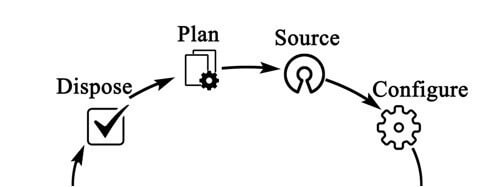
Diagram showing the Life Cycle Management Process, with 'Dispose', 'Plan', 'Source' and 'Configure' stages of the process shown as relevant icons and arrows showing the correct direction of each stage.

Hallmark #3 – They work in partnership to achieve a shared goal

Rather than a transactional customer-supplier relationship, the best LCM vendors take a collaborative approach that considers the entire project lifecycle. This way, your vendor can better spot time and cost-saving opportunities, and identify and mitigate risks before they impact your operations.

By treating an environment as an end-to-end ecosystem – including working effectively with all your relevant suppliers – your LCM vendor can decide on the best way to replace your infrastructure, while causing the least disruption.

It’s an approach that’s paid dividends for one of our Investment Banking clients. By providing a bridge between the bank’s IT engineers and its physical infrastructure suppliers, we were able to save them £100,000 just by swapping out a single component type.

Hallmark #4 – They focus on communication (but know when to take the initiative)

The biggest roadblock to effective project management is poor vendor communication with you and your suppliers, which can lead to longer project cycles and wasted resources.

It’s a simple concept, but one that far too many LCM vendors get wrong – especially in the Enterprise arena.

By choosing an LCM partner that focuses on multi-stakeholder communication, you can be safe in the knowledge that critical project decisions are being made based on accurate data and facts – supported by previous experience – and communicated to you in a way that keeps you in complete control.

On the flip side, your time is precious, and you don’t always want to be consulted at every stage. So, it’s also important that you trust that your partner has the skills, experience and confidence to make decisions on your behalf where appropriate, and only come to you when necessary.

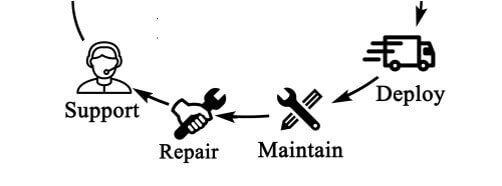
Diagram showing the stages of the Lifecycle Management Process, with the 'Deploy', 'Maintain', 'Repair' and 'Support' stages shown as relevant icons and arrows indicating the direction of each stage in the lifecycle process

Hallmark #5 – They have significant, demonstrable experience

The key attributes of a great LCM partner are nothing without the right experience. An experienced vendor will be familiar with your goals and able to see your project from a different perspective – offering valuable advice based on their past client successes.

Simply, experience is the driver that can save you time and money, and even help give your devices and infrastructure the longevity to stay reliable and secure well into the future.

LCM should be a partnership, not just a vendor relationship

Technical failure in financial services organisations is simply out of the question. So for many, it can be all too tempting to throw money and resources at a solution.

But the truth is, LCM requires a more nuanced approach, supported by open communication, end-to-end project management, and skilled IT engineers capable of making the right decisions – no matter the size or scope of the project.

At CACI, we pride ourselves on having the agility to help our clients react quickly, supported by the scale to reliably complete projects on time and within budget.

What’s more, our skilled project managers and engineers have decades of experience delivering LCM for some of the world’s biggest financial institutions, so you can be safe in the knowledge your needs are being taken care of.

To find out more about our collaborative approach to life cycle management, take a look at our network services capabilities.