


Reimagine data and AI Business intelligence

Solutions

Business intelligence 

Transform data into actionable strategies 

We leverage industry expertise, data analytics and technology to empower businesses with customer-driven intelligence, for better decision-making and profitability. 

Business intelligence - Four people in an office lounge discussing around a glass table with laptops and papers.

Why CACI? 

See value quickly

We use best-in-class data solutions and analytics to give businesses real-time insights for better decisions. 

Our goal is to help clients grow by combining technology, data, and industry expertise to make decision-making faster and smarter. 

Deep industry knowledge 

At CACI, we take pride in being deeply involved in the sectors we serve. 
 
Along with our expertise in data, technology and modelling, we are industry specialists who truly care about the why behind your project. 

Seamless implementation 

We help businesses smoothly transition to data-driven strategies. 
 
We expertly guide you at every stage – from identifying opportunities and developing a plan to executing solutions and continuously monitoring progress.  

Key stats

20-30%

Businesses using data-driven decision-making see a 20-30% increase in operational efficiency.

Source: McKinsey

97%

Organisations leave about 97% of gathered data unused, wasting the opportunity for actionable insights. 

Source: Amazon Web Services

Speak to one of our business intelligence experts

We’re tried and trusted in this industry and have been involved in business intelligence for decades. 
 
If you’re looking for a demo, want to book a consultation, or both – we’re ready to help you cut the complexity out of business intelligence. 

Are dashboards dead? Assessing their challenges & advantages to determine their future in businesses

In this Article

Dashboards have been quite a topic of contention in certain circles with the recent recirculation of Taylor Brownlow’s essay ”Are Dashboards Dead?”.

While I’m of the opinion that no, dashboards are not dead, they have been undeniably overused and often misunderstood, with a disconnect between a dashboard’s actual function versus our perceived function of them. 

Why is there dashboard fatigue?

Many of us have experienced dashboard fatigue, and rightfully so. As businesses, how many dashboards have we commissioned that were never fully utilised, if used at all? The answer is too many.

The reason for low engagement isn’t the fault of the humble dashboard, but rather that a dashboard was never the appropriate solution for the end user, or its design wasn’t tailored enough to the business use case.  

When faced with a business problem requiring data insights, we often jump straight to dashboard creation. However, there are many other solutions that can be tailored to deliver data insights, such as concise reports and static presentations. With an increased understanding of where dashboards fail, the conversation has shifted to questioning their relevance altogether.  

So, what place do dashboards still have in businesses, and how can we better understand where they excel to drive improved outcomes? 

What potential challenges may arise with dashboards?

There are many instances where dashboards may be less effective or complicate matters for businesses, and other methods provide a better solution. Instances may include: 

  • When the user needs a concise answer to a question:
    Dashboards require interaction and exploration, which can be time-consuming. If a stakeholder needs a straightforward answer, a tailored report is more efficient.  
  • For business specific, niche questions:
    Not every level of enquiry warrants the resource-intensive creation of a dashboard. For narrow, targeted questions, simpler reporting methods suffice. 
  • One-time insights:
    Dashboards are overkill for static data projects, such as measuring the success of a single transformation. In these cases, producing a well-crafted report or presentation is more resource-efficient. 
  • If the data is exported for analysis:
    If users regularly export dashboard data to manipulate it elsewhere, it’s a sign that the dashboard doesn’t meet their needs or wasn’t necessary to begin with. 

When might dashboards be the right solution?

Company-wide reporting platforms

Dashboards provide a unified view of performance across teams, offering consistent delivery of insights to aiding faster decision making, customisable filters for views specific to each business unit, efficiency in distributing insights without the need for manual reporting and increased data accessibility through data visualisation. 

Regular cadence reporting

For tracking ongoing metrics such as daily sales, customer trends or campaign performance, and measuring progress against targets, dashboards provide updated insights without the wait. 

Exploratory analysis

Whenusers want to discover patterns, relationships or unknown trends within the data, dashboards allow for interactive interrogation. These tools are especially valuable for data-savvy end users, enabling self-service exploration without requiring an analyst’s intervention. 

Monitoring ongoing initiatives

Dashboards are excellent for tracking live projects or recurring business processes, offering real-time visibility into performance. 

The future approach for dashboards

With the above in mind, we’re moving to a more informed approach where dashboards are no longer a tiresome, default solution, but a carefully considered tool.

The future isn’t about abandoning dashboards, but about being intentional and strategic in their creation and deployment. The key is facilitating dashboard creation in a way that adds tangible value and is thoughtfully configured to provide meaningful, actionable insights that empower decision making. 

How CACI can help

At CACI, we work with you to deliver the best solutions for your analysis needs. Our extensive experience in successfully implementing dashboards across diverse industries highlights several key scenarios where dashboards have proven to be highly effective.  

Whether it’s creating a bespoke, one-off report or developing a suite of comprehensive, customisable dashboards, contact us to find out more about how our user centric approach and industry expertise can help you gain meaningful analytics that will drive strategic business outcomes. 

Why France would best suit a Gymshark European market expansion

In this Article

A new sportswear retailer emerges on the international stage.

Gymshark, a fast-growing activewear brand, has been rapidly expanding its global reach and brand presence as it ventures into the world of brick and mortar. Having recently opened new stores in the UK (Stratford City), the Middle East (Dubai) and a pop-up concept in New York City, this brand with a prominent social media and predominately online presence is now rapidly infiltrating physical retail.

Despite not yet launching across wider Europe, it’s only a matter of time before these markets will be ventured into via physical pop-ups and stores. Selecting the right locations out of countless options may be a daunting task that comes with the territory, however. So, once the time comes for Gymshark to decide which locations to expand into that will maximise their increasing growing brand recognition and ROI, how should they effectively go about it?

In this two-part blog series, we’ll walk you through a hypothetical European market expansion for Gymshark in France, sharing how the brand can use data to accelerate and enhance their international store network strategies.

Three French cities that demonstrate viable market expansion potential based on insights taken from CACI datasets and segmentation tools will be focused on, as well as key takeaways that Gymshark (or brands in a similar position) could consider when it comes to international market expansion.

How France was identified as an optimal location for a Gymshark European expansion

CACI possesses a complete universe of defined retail areas to consider, a detailed understanding of different types of consumers and where they shop. This enables us to guide a brand like Gymshark to maximise success and value from go-to-market strategy and launch through to expanding into broader brand recognition and market share capture.

With this in mind, and with Gymshark expanding into physical and new regions, we investigated European markets that might fit their need should they decide to expand into Europe.

With Gymshark already a brand on CACI’s Brand Dimensions, a dataset tracking hundreds of the UK’s most popular and emerging brands to reveal spend, sales and average transaction value insights, key groups in French Acorn could also be identified.

Key Acorn groups were identified by using Brand Dimensions data followed by selecting key Acorn groups within French Acorn data, which correlated accordingly. In France alone there are over 10,000 retail areas, each with differing levels of existing premium clothing shops and competitors, types of customers, footfall, population and spend.

By comparing this to the expected view from Retail Footprint Europe, we could identify locations that were currently failing to engage Gymshark’s key shoppers but had the opportunity to.

From these collective findings, we were able to conclude the following three French locations that could benefit from the opening of Gymshark: Paris, Marseille and Besancon.

Why Paris would perform well in a Gymshark France expansion

According to our findings, Paris presents the highest performance potential and should be a primary focus for Gymshark. Aside from being the biggest city in France -an obvious bonus for any brand – Paris presents the best shopper demographic, a strong array of existing premium retailers and the ability to attract the relevant demographic groups that would align to Gymshark’s brand identity of being a premium retailer with similar retailers already in the centre.

Retail Footprint Europe enables the use of transactional data across brands to develop an understanding of the typical Gymshark shopper, brand positioning and establishing criteria for the most suitable locations for Gymshark to consider regarding new store openings.

Considering these criteria, Paris ranked incredibly high on Clothing and Footwear, with the Haussmann-Opera retail area Klepierre centre ranking among the top three across France.

Why Marseille would perform well in a Gymshark France expansion

Marseille presents itself as another viable option as our findings show it to be the middle ground between high affluence profiles and younger, ‘student life’ populations found in other larger, prominent French cities. The city’s strong clothing and footwear and high proportion of premium retailers also contributes to its performance potential. However, its lower ‘young and affluent’ target demographic runs a potential risk.

Why Besancon would perform well in a Gymshark France expansion

Despite Besancon presenting itself as more of a curveball, the granularity of our Retail Footprint findings demonstrate that in spite of its smaller size and lesser known location, the city is home to a strong clothing and retail offering including premium retailers, a high percentage of young and affluent shoppers and is overall more likely to attract the right shoppers.

Key takeaways that Gymshark can consider for a French market expansion

These aforementioned insights would enable Gymshark to better understand their long-term audience capture of sites through physical retail and experiment with different formats and experiential offerings.

Combining Retail Footprint data across Europe with demographic, transactional, brand alignment and footfall data can ultimately be used to shape an evolving store network strategy, and the national view further solidifies an understanding of the entire retail landscape of France.

Through these insights, Gymshark would be able to accelerate store openings with greater confidence and success if or when they decide to expand into Europe.

Ready to Find Your Next Market?

With insights from Retail Footprint Europe, pinpoint the best locations for your brand’s growth across Europe.

Stay tuned for next blog in this two-part series, where we’ll assess which Klepierre centres in these high-performing potential French cities could perform well in a Gymshark French market expansion.

North Bristol Trust Partners with CACI for Swift and Future-Proof Power BI Migration

CACI is pleased to share the success story of the readiness package prepared for North Bristol Trust’s (NBT) Power BI tool migration.

North Bristol Trust (NBT) was tasked with migrating their existing reporting tool to Power BI within a specific timeframe while simultaneously futureproofing their service and optimising their data. To achieve this, they turned to their trusted partner, CACI, for support. NBT was confident in CACI’s ability to help them develop a comprehensive migration readiness package and conduct a reappraisal of their warehouse and reporting solutions, where commissioned audits could be presented back to their board.

David Hale, Assistant Director of Informatics at NBT, explained how the readiness package bolstered NBT’s creation of a compelling business case, noting it to be “one of the fastest approved capital cases I’ve ever experienced” with a turnaround time of around 10 days.

“By approaching this in the way that we have, we’ve enabled the navigation of one of the often-held assumptions within the public sector and the NHS that it’s hard to get things done, when actually, with a clear vision and exceptionally good outputs, we’ve been able to move at a pace, which is not normally expected to be the case in an NHS setting,” he explained.

NHS data effectiveness planning in the real world

In this Article

Let’s talk about what really happens when an NHS Trust initiates a data transformation project, including key factors that determine success

How can NHS Trusts and ICS access the much-discussed potential of their data within the real-world environment of a complex, large-scale, over-stretched, pressurised, life-saving organisation?

Enthusiasm about the power of data is widespread and many leaders and managers have glimpsed a vision of how their organisation and function could transform its planning and service delivery with leading-edge insight. They know the possibility is real, because in their Trust, there are certain highly evolved functions, datasets and systems that form an aspirational benchmark. But in reality, rolling out this best practice consistently, to create an ultimately system-wide transformation, is daunting.

We don’t have easy answers or a silver bullet approach. Every NHS organisation is sophisticated and complicated – optimising data effectiveness demands rigorous focus and a commitment of resources. But we do have best practice examples of successful readiness projects we’ve worked on with NHS Trusts, helping them take the most efficient and cost-effective route to data transformation.

We reached a point where we knew we had to make changes in our technology for future scaling. We had to look not only at the commercials with our existing technology, but at our all-encompassing technology. (NHS Trust Informatics Leader)

One NHS Trust recently asked CACI to help them develop a comprehensive readiness package for a major data migration. The Trust’s situation was typical, with constantly evolving technology and a wide range of users with different levels of capability and understanding. There were acknowledged weaknesses in understanding fast-changing tools and technologies – the Informatics team had identified the value of engaging a trusted partner to help bridge any knowledge gaps.

Adopting a user-centred approach was key. The Informatics lead was determined to do the right thing for the organisation and knew the value of a focused piece of user engagement that would allow everyone to be heard and have confidence that their concerns were understood and included in the output.

Trust and openness are key to an effective readiness project. Whether you conduct it internally or using an expert third party partner, it’s important that everyone feels comfortable discussing how existing products and services are working in practice. External specialists can bring objectivity to the process, defusing possible defensiveness or concerns about confidentiality by using and explaining a transparent and proven methodology designed to achieve the end goal of better data insight for everyone.

It’s one thing to catalogue data queries and requirements as users express them, but to deliver an effective new solution, Trusts must understand the underlying rationale and how data is supporting critical processes and decisions. Our experts were able to explore and question effectively, so different users’ experiences were fully understood in an organisational context.

A third party like CACI has unique capability to discern what the underlying requirements might be for a successful transition and elevation in technology. Our relationship feels grounded in practicality and addressing real problems. (NHS Trust Informatics Leader)

For this project, CACI’s Healthcare Insight consultants first analysed the Trust’s existing reporting outputs and infrastructure, to gain a comprehensive view of its architecture. They engaged with internal and external data analytics stakeholders to understand their needs and preferences and to assess the board’s strategic data and reporting priorities.

The output was a detailed report of all quantitative and qualitative findings. From this, the Trust gained new understanding of their existing functions and capabilities and the changes required to succeed in the future.

The next step was to align with the Trust’s data strategy and produce a blueprint for the future, outlining new data architecture, data governance, licensing requirements and enablement. This evidence-based blueprint, compiled by trusted and experienced experts, made it possible for the Trust to create a compelling business case for change. It was a major accomplishment for the Trust’s informatics team that the capital case was approved faster than ever before, taking just ten days.

By approaching this in the way that we have, we’ve overturned a common assumption in the public sector and NHS – that it’s hard to get things done. Actually, with a clear vision and exceptionally good outputs, we’ve been able to move at a pace that’s not normally expected in an NHS setting. (NHS Trust Informatics Leader)

As external CACI healthcare consultants, we have a privileged viewpoint, because we work with a range of NHS Trusts and can identify common challenges, barriers and imperatives. By applying this insight, we help NHS leaders access a system-wide perspective that can make a big difference in achieving their data effectiveness goals.

Get the full picture with our Data Effectiveness white paper

In this blog, we’ve shared an example of our user-centred NHS data effectiveness approach in practice. If you’d like to know more about the rationale and how it’s evolved, as well as how it’s designed to tackle key issues in the complex NHS environment, we’d love you to read our white paper. Download it free now.

If you’re ready to start a conversation about how our data effectiveness experience could help your organisation please get in touch with Susan Brooks in CACI’s NHS team.

Ready, set, go! Making change happen in the NHS data ecosystem

In this Article

Discover a proven and efficient approach to preparation and planning that paves the way to meaningful data transformation for NHS Trusts

It’s widely recognised in the NHS that harnessing data effectively holds the key to understanding and improving performance. When Trusts and ICS can gather and analyse a full and accurate range of patient and service data, they can better understand and anticipate patient needs and can shape service provision and manage capacity to enhance outcomes for patients.

The will is there to make this happen, amongst managers and clinicians. But the scale and complexity of NHS organisations and their data universe makes it difficult to make meaningful progress. Somehow, NHS leaders need to find a way to understand the dauntingly dense web of data, processes, requirements and systems in their Trust and form a workable plan of action that moves the entire organisation forward.

In your NHS organisation, some functions, datasets and systems may be highly evolved. You may regard them as an aspirational benchmark for the whole organisation. But in reality, rolling out this best practice consistently, within a fully connected data ecosystem, is daunting.

Working hands-on with NHS Trusts, the CACI Health Insights team has evolved an approach that empowers leaders to crystallise their current data reality and desired future state, so that pragmatic action planning is possible. We call this approach Ready, Set, Go. Structured preparation and discovery form a foundation for realistic planning and delivery of priority data effectiveness projects, ensuring synergy between projects and constant progression towards a single, system-wide goal.

The three stages of data transformation

1. Ready…

Readiness is the foundational phase of the approach. This means understanding and documenting current reality, then focusing on stakeholder engagement. Once stakeholders are on-side, you can work with them to define their requirements. Clearly setting out the planned benefits of change and (making sure that there are no unintended side-effects for other stakeholders) brings everyone to a clear vision of the desired future state. During the readiness phase, you’ll also establish standards and processes for quality assurance and governance.

2. Set…

Now that you understand the whole context and have determined the key projects to address, you can lay the foundations for data success by initiating transformation activities. It’s important to set timeframes and allocate resources across the entire transformation programme, so your delivery projects are realistically achievable in harmony rather than competing with each other. You may need to iterate the phasing so that the entire plan of discrete, connected projects is robust. Progressing at pace is key, so stakeholders can see and experience improvements at tangible milestones, but the schedule must be realistic, taking account of available internal and external staff with the right skills, and making sure that vital NHS activities are not hindered or disrupted.

3. Go…

As data transformation projects are completed, you move into a development phase. This means optimising data effectiveness by building the structures and outputs you need to extract ever-increasing benefit and insight for improved outcomes. Targeted learning and development sessions in all functions will enable data users to build their expertise in critical business practices. For ongoing management, you’ll need to use internal or external data experts in a cost-effective way, to maintain, optimise and continually enhance your data, so you can keep pace with new demands and opportunities to improve patient outcomes.


Stepping into the future of effective NHS data

The aspiration for every Trust is a single, complete data platform and analytics solution, providing accurate and consistently formatted data. Following the Ready, Set, Go approach, you can map a path towards seamless provision of historic, real-time and projected data. This will include strong and effective governance for sharing data securely, plus well controlled and monitored access to data for different users.

In the Readiness phase, mapping user requirements reveals the priorities with the greatest potential to transform efficiency and outcomes. In our experience, one of these is provision of self-service analytics and reporting tools that are both powerful and easy to use. By planning your data transformation project to deliver this, you can empower different people, teams and functions to create and tailor queries and reports, regularly and on demand. This cuts down reporting bottlenecks and reduces the pressure on under-resourced analyst teams.

When actionable reports can easily be tailored to the recipient and audience need and level of understanding, with meaningful visualisations and comparisons, you will be able to unlock the full, democratic power and impact of your data to inform strategic and clinical decision-making that improves your most vital NHS performance measures. Adopting the Ready, Set, Go approach can put this transformative outcome within your grasp.

Get the full picture with our Data Effectiveness white paper

For more context about the challenge of unlocking data effectiveness in NHS organisations, our white paper has further detail and examples of how our user-centred approach to defining data transformation priorities can work in practice. Download it free now.

If you’re ready to start a conversation about how our data effectiveness experience could help your organisation,  please get in touch with Susan Brooks in CACI’s NHS team.

A practical approach to solving the NHS data conundrum

In this Article

To understand why your NHS organisation is data-rich but insight-poor, you need a system-wide perspective as a basis for structured change

The potential of NHS data is exciting. It’s also accessible – there are proven examples of effective and constructive data use that provide valuable reporting and insight for clinical service development. But that’s just the tip of the iceberg.

NHS leaders know that NHS data within and outside their organisation is infinite, complex and continually collected. It’s very powerful when it’s analysed effectively, so the insight can be channelled to the right person in a way that they can understand and use. However, for the most part, this doesn’t happen enough.

Managers and analysts work hard every day to try and generate the insight that’s so desperately needed. They’re typically thwarted by scarce resources, time, understanding, technology and specialist skill. There’s often a lack of consistency, momentum and sponsorship across the system and organisation.

This holds back ICS, Trusts, teams and individuals from delivering the best service to patients and optimising their strategy, resources and operational plans.

NHS leaders know that they need to crack the data conundrum, but it’s a tall order without taking focus away from daily priorities

In such a complex and busy environment, it’s hard for any individual to grasp the system-wide position. There’s rarely time or opportunity to step back to survey the scene across an organisation or connected entities.

As external CACI healthcare consultants, we have a privileged viewpoint, because we work with a range of NHS Trusts and can identify common challenges, barriers and imperatives. By applying this insight, we help NHS leaders access a system-wide perspective that can make a big difference in achieving their data effectiveness goals.

Current challenges for NHS data

  • There’s a massive volume of complex, constantly changing data
  • It’s held in many data sources and repositories
  • There are many users with diverse requirements
  • These users have widely different levels of data literacy and expertise
  • Trusts rely on a mix of modern and legacy systems and tools
  • Some departments have enjoyed greater investment than others
  • There are crucial governance issues, including patient privacy and data security

Identifying these top-line issues and how they are affecting service planning and delivery in your unique organisation is a key first step. There’s a clear need to approach the problem holistically. But squeezed budgets, limited resources and a lack of time stand in the way of major, system-wide projects. Everyone in the tightly stretched NHS is busy dealing with current workload already. There’s no appetite for launching an amorphous, resource-hungry transformation programme. Trusts need a structured, thorough and efficient approach to identify issues in a finite timeframe.

A practical approach to inclusive, system-wide data effectiveness

Traditionally, data transformation tends to mean adopting new products or technologies. The problem is that they only offer a tactical solution to one small part of the overarching data problem. Worse, they can sometimes aggravate issues in other parts of the system.

We observe that data architecture is at the core of system inadequacies for many NHS Trusts. Data feeds and flows are poorly constructed and insufficiently flexible to meet the diverse needs of those who work with data and need the insights generated from it.

Addressing the data challenge from a user perspective

Delivering effective data solutions and tools relies on a clear understanding of what users really need from the data. We have identified three communities with distinct requirements:

Executives and leaders who demand trusted insight and high-level views of data. They work with KPI scorecards and look for drill-down access to data from individual divisions, programmes and patients, so they can explore strengths, opportunities, weaknesses and anomalies in performance by understanding the data behind them. They need current, historic and comparative data views.

Clinical leaders who need real-time and trend insight to help them predict demand for services. They need detailed waiting list information and data tracking that can drill down to programmes, wards and treatment functions so they can understand and assess demand and response. They use this to optimise day-to-day activities as well as in planning future service developments.

Analysts responsible for tailored and specific report generation across different periods. They want the capability to select data for specific organisations and to deliver data in different formats and channels to meet the different requirements of their users. Their productivity and output depend on detailed, centralised data that’s accurate and easy to work with.

To unlock the potential of your data you need to engage with all senior stakeholders, including clinicians, to understand their priorities and how they are currently using data in practice. Finding the resources and capability needed to take an objective look can be challenging. Some Trusts have engaged us to deliver a short, consultative engagement to provide a clear overview, without committing to excessive spend or investment in products.

Get the full picture with our Data Effectiveness white paper

We’ve pulled together the key points of our approach in this blog, but if you have time for a longer read, our white paper has more detail and examples of how the user-centred approach to defining data transformation priorities can work in practice. Download it free now.

If you’re ready to start a conversation about how our data effectiveness experience could help your organisation please get in touch with Susan Brooks in CACI’s NHS team.

How local authorities can use route optimisation for Home to School Transport (HTST)

In this Article

At a time when budgets are under so much pressure, facilitating Home to School Transport (HTST) efficiently has never been more important. Millions of pounds are being unnecessarily spent on passenger transportation, with limited efficiencies or cost-cutting initiatives in place through a lack of supporting technology or tools.

With spiralling costs, tightened budgets and limited capacity, local authorities are struggling to delivery their statutory obligations. So, what can be done to save costs while optimising HTST capabilities?

Most substantial challenges local authorities face with Home to School Transport (HTST)

  • SEND costs are set to triple to £1.125 billion over the course of a decade, according to the Isos Partnership for the County Council’s Network 
  • Havering Council is spending £6.5m per annum on transporting 420 pupils, resulting in £2,500 per pupil 
  • Birmingham City Council is currently spending £19.4 million on transporting vulnerable children to school  
  • Norfolk County Council is spending £40m to arrange buses/taxis for 4,100 children with extra requirements, or more than £9,700 per child. 

Local governments must find ways to:  

  • Efficiently plan routes buses to minimise contracts and private taxis
  • Deliver safe and reliable service to pupils
  • Ensure safeguards are in place to protect vulnerable pupils
  • Establish communication with parents, schools and councils
  • Offset increasing council deficits through efficiency savings.

What CACI technology solutions can help local authorities overcome these challenges?

Pin Routes: Route planning & optimisation

As a next-generation route planning and optimisation software, Pin Routes helps local authorities plan and optimise routes for school transport. It is cloud-based, scalable software that features advanced algorithms and a state-of-the-art user interface, with functions including strategic analysis and static (periodic) and dynamic (daily) planning.

Pin Routes considers the individual needs of each child, special school requirements, vehicle capabilities, provider capacities and driver skillsets to help achieve lower costs and carbon emissions.

Pin Live: Live route management

This live route management software ensures all parties stay informed in real-time, giving parents and schools peace of mind with up-to-date information, keeping local authorities in control and simplifying the process for drivers and service providers.

Acorn: Consumer segmentation

CACI’s consumer segmentation tool, Acorn provides demographic, lifestyle and behavioural insights of pupils. Acorn unlocks detailed insights about families’ financial backgrounds which can be used to determine those pupil households who could contribute towards transportation costs.

Access to this data equips local authorities with additional capabilities to better assess pupils’ eligibility for school transport while at the same helping the Council to meet with its statutory obligations.

Longer-term benefits local authorities will enjoy with CACI’s data and technology solutions

Saving operational costs:

  • Councils will have more time to effectively plan at a strategic level
  • Vehicles can complete more tasks
  • Pin Routes will ensure councils can undertake ‘what if’ analyses for future scenarios to uncover and implement strategic efficiencies
  • Inputs can be scaled up and higher volumes of transport can be supported each year.

Improve efficiencies: 

  • Planners and schedulers can prioritise journeys quickly, effectively and on a regular basis
  • Transport providers can take the most effective routes between homes and schools to save on fuel, mileage and drivers’ hours
  • New tasks can be imported as they are booked and teams can pick these up as part of their existing plans, ensuring the right tasks will be prioritised.

Improve ESG and resident-centric operations: 

  • Councils can be confident in delivering a consistent service to residents
  • Journeys will be made efficiently, reducing the spend on fuel and vehicle maintenance. Monthly cuts in CO2 emissions will also be recognised.
  • Enhanced scheduling and routing will increase driver and resident satisfaction as journeys are prioritised and optimised.

CACI is already a trusted data partner to the public sector and has a proven track record of delivering cost-effective, sustainable logistics solutions to organisations within the private sector.

Whether through our innovative software and communication technology like Pin Routes, Pin Live and Acorn, our expert consulting services or our innate public sector knowledge and experience, we are committed to supporting your organisation in achieving its goals.

For further information on how CACI can help transform your route optimisation operations, please register here.

Can AI make me run faster?

In this Article

AI is becoming omnipresent. As a data scientist, it is at the forefront of my mind most of the time. I’m also a seriously committed runner, so I inevitably ended up asking myself if my favourite sport and past time were impacted too. I was sceptical.

Surely, records were broken due to good old fashioned strenuous training; piling the miles week after week, following a schedule designed by experts based on years of experience. It’s how I started. I went through a Couch to 5k programme found in a magazine 15 years ago. After some online investigations, however, it strikes me. I’ve long ago stopped manually recording my sessions and delegated to… my watch.

It has been so embedded into my routine that I no longer notice I’m using my watch. Strapped on my wrist sits a marvel of technology, recording my biometrics every second of the day. Inside those gadgets are dozens of sensors fitted within an inch wide circle of plastic.

First, of course, it’s a timekeeper with very precise chronometer, recording activities to the hundredth, sometimes thousandth, of a second. With GPS capability, gyroscope and accelerometer, it tracks how far I’ve run, the meters climbed/descended and when I accelerated or slowed down. Optical sensors monitor my heart rate and blood oxygen saturation. Insights on the intensity and quality of the training sessions, alongside derived metrics like my level of fitness and energy level throughout the day, the level of stress I am experiencing, or the quality of my sleep. All of these data points are fed to a cloud-based service, providing an impressive level of information about my health and fitness.

The difference between setting goals & gaining actionable insights

Thanks to companion apps, you can generate a training plan tailored to your ambitions. Set the distance, desired time target and a full training schedule is automatically added to your calendar. Put you trainers on and follow the workout’s instructions that have been synchronised to your watch. During the session, you’re informed of your progress, how far you’ve gone, if you’re hitting the desired speed or keeping your heart rate in the optimal range. After the exercise, you can now enjoy your runner’s high and all the benefits of a good workout. You can also review your activity in all its details.

Your tracking tool offers a plethora of performance indicators. Soon, you’re diving into a series of charts, trying to find what you did well and where you can improve. Strides length. Cadence. Heart rate zone. Running economy. Physiological load. Training monotony and strain. VO2max. Velocity of lactate threshold. You have an awful lot of facts to learn, not only about running, but about yourself, from physiology to lifestyle and a deluge of terminology, metrics, exercise types, muscle groups and medical conditions you didn’t even suspect existed.

The analytics platform can compute evaluations, identify patterns and give you warnings if you miss too many sessions or struggle to hit the pace/targets. However, in my experience, rarely have I been provided with actionable insights.

How was your training, by the way? Did you find it hard or easy? Did you feel tired today? How is your mood? Your virtual coach likes to know. Inputs – that’s the key. AI is always asking for more data. It needs calibration. Add height. Add weight. Enter more data. Review the charts. Did you run with a stroller or a dog? Was it a park run or a race? Evaluate yourself. Validate the insights. If your goal was in the realm of what the algorithm has been designed to deal with, you should be able to reach your goal.

But what happens when you want to get over that? When you really want to push yourself and go faster than the tools allow?

Harnessing the power of data to achieve your goals

The problem is that most mainstream AI running solutions use historical data and proven methods, trying to match your requirements to a best-fit existing programme. If Roger Bannister had relied on AI in the 1950s, he would probably still be chasing the four-minute mile, and women would still not be allowed to run the marathon!

Only humans have the ability to dream big, challenge the deemed impossible, break the conventions and change the paradigm. If you want to achieve this with AI, you need to be able to challenge it. You must become an expert in the field of running and potentially have good notions of physiology too. You need to be able to identify which metrics matter to personalise the system and fit your reality. You’d also need some notions of machine learning to implement it. Or find someone that can.

That’s exactly what I do for my clients here at CACI, although not for running, yet. As a consultant, I embrace their goal, but first get to know who they are, where they are now on their journey, their values, strengths and challenges. I use my experience of the field and gather expertise of the industry to find the best fitting solution. As a data scientist, I can then select the appropriate technology, AI or techniques and do the data crunching, providing them with clear and actionable insights – what needs to be actioned and why – to set them on the path of success. I can keep in touch with them along the way to review and adjust their ambitions when needed as our market evolves around us.

AI can ultimately teach you how to run and improve your pace… to a point. But if you really want to get fast, you’ll also need a lot of personal experience and human expertise. Exactly as it is for data science.

Why changing your costing solution is essential for improvement

In this Article

Every NHS organisation has a costing system. However, not all costing systems can keep up with the changing demands and increased digitalisation required from organisations to continue delivering exceptional patient level costing outcomes.  

In our previous blog on the future of costing, we explored how ICBs can effectively prepare for upcoming costing changes and how they can cut costs no matter their level of digital maturity or data comprehension. Today, we’ll uncover why now is the time to change your costing solution with the help of CACI and the benefits of doing so. 

So, is it time to share your PLICS data? Does your costing system give you the opportunity to share patient level costing information and data analytics that will help you make the best decisions both now and in the future? 

Why our costing solution, Synergy, is different

Synergy, CACI’s patient level information costing solution (PLICS), is uniquely designed for the NHS and transforms costing teams’ capabilities by: 

  • Freeing up valuable time to analyse crucial results. Synergy ensures the NHS costing process is streamlined by enabling cost allocation, review and visualisation at patient level easily.  
  • Keeping you in control of improving patient outcomes. With Synergy, your organisation will gain more control over your data and costing model and augment your understanding of the patient pathway and costs in your organisation.  
  • Increasing self-sufficiency. Synergy comes with a user-friendly system that is easy for all levels within your costing team to use, promoting self-sufficiency.  
  • Empowering stakeholder & ICS member collaboration through enhanced data sharing and revolutionised decision-making. Your organisation will gain access to class leading analytics that are produced by our in-house experts to promote benchmarking and streamline data sharing to ensure your costing team meets deadlines on time and on budget. 
  • Redefining data reporting and sharing capabilities through distinct architecture. Synergy is a one-of-a-kind costing solution with its composition including a Data Mart layer, setting itself apart from traditional costing solutions by supplying users with total access to all of the data within their costing system and boundless data sharing both within the organisation and to external partners. 

Why it’s time to change your costing solution to Synergy

Transitioning from your costing solution to Synergy is simple. No IT skills are needed for set-up, and it can be easily and securely deployed in an HSCN connected data centre within a matter of weeks. You will be part of a highly engaged user community that meet regularly to share best practices and insights on product development.

How CACI can help you migrate costing solutions

CACI works with costing teams across the UK to help them gain a deeper understanding of their patient pathways and costs and make decisions that improve patient outcomes. If you’d like to find out more about changing your costing solution to Synergy, please contact one of our experts, Susan Brooks.  

Read the first blog in our future of costing series here.  

Tangible actions organisations can take to combat climate change

In this Article

Benchmarking against a new global stocktake 

At the 28th UN Climate Change Conference (COP28) towards the end of 2023, the first ever global stocktake concluded as a benchmarking process for countries and stakeholders to measure against. With a rapidly closing window of opportunity to make environmentally conscious change, this stocktake encourages a reassessment of where countries and stakeholders stand in terms of climate action and support, identify any gaps and strategise on solutions to accelerate action. This stocktake will also hold countries and stakeholders accountable for their policies and commitments towards genuine climate change.

In support of this stocktake, High Level Champions and the Marrakech Partnership created the 2030 Climate Solutions: an Implementation Roadmap, a comprehensive framework which businesses can reference to set and achieve their climate change goals by 2030.

Climate change is the issue of our time, and we all know that we must do our bit. But nailing down what bit we are supposed to be doing can be harder than expected. If you’re manufacturing goods, it’s a bit easier – but the vast majority of organisations are run online with little physical input or output. As businesses especially are expected, and indeed want, to reduce their carbon footprint, they may find themselves wondering… where do we start?

How to identify tangible actions for business-wide change

To meaningfully reduce carbon emissions and create sustainable business models, businesses must be able to identify specific tangible actions that are realistic for initiating change. The granular details can add up to a substantial difference, and what makes sense to one organisation may not to another. Nonetheless, what remains clear is the necessity of change.

Access to comprehensive carbon emissions data

The time has long passed where organisations can afford to stumble around in the dark when it comes to their environmental impact. In fact, by 2030, greenhouse gas emissions must be reduced by 43% and global heating limited to 1.5°C.

What businesses really need is comprehensive, transparent and insight-led data on their carbon emissions. This data is critical in decision-making, anticipating future demand and analysing the marketing campaigns’ success. So, why wouldn’t we expect it of our impact on the environment? Leveraging technology to take control of their data to make it understandable and actionable is a crucial and essential step forward.

How CACI’s Environmental Hub can help create sustainable businesses

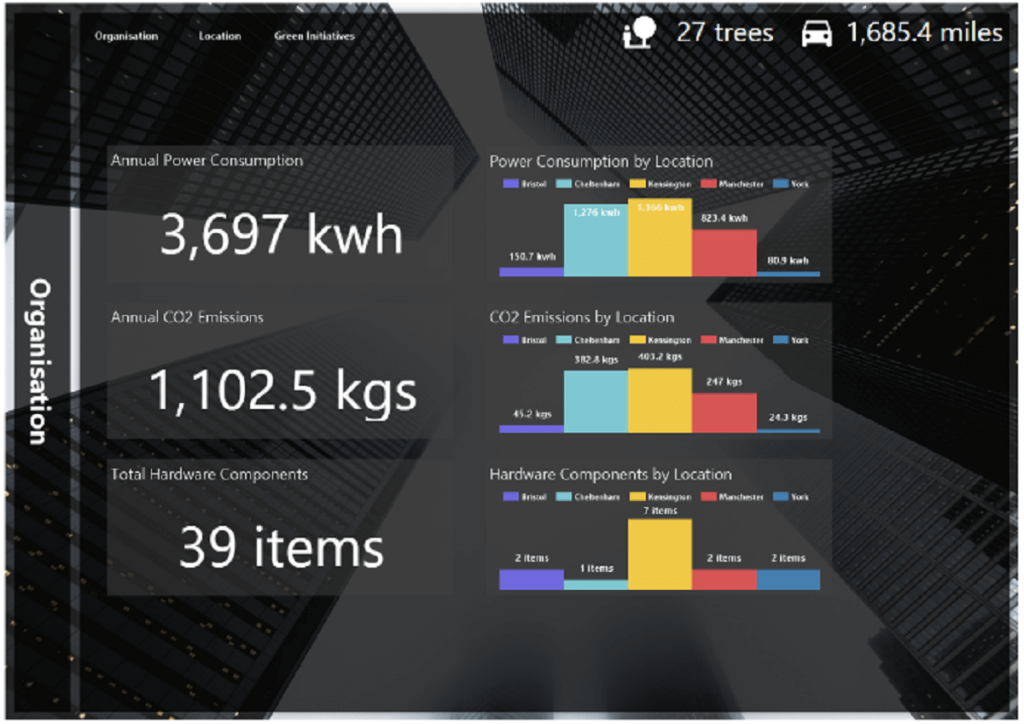
Using CACI’s highly reputable Mood data visualisation platform to distill each component of your business and connecting disparate data, the Environmental Hub generates informative and actionable insights that drive effective decision making.

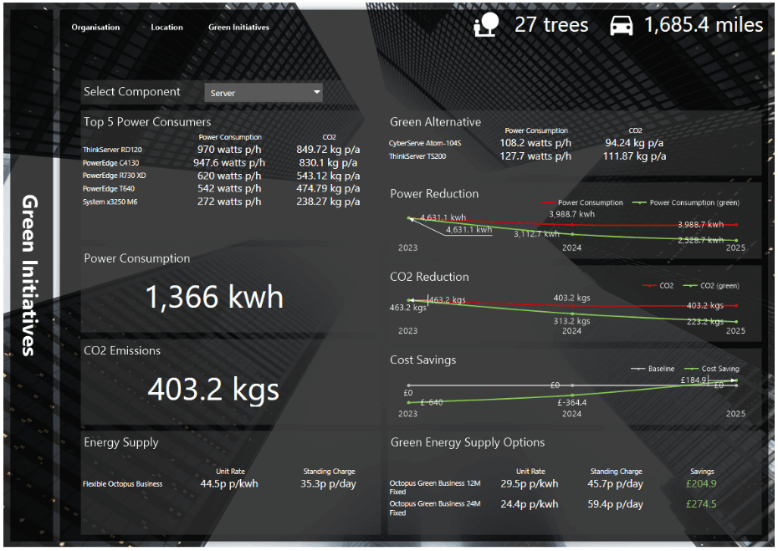
But understanding your current position isn’t necessarily very helpful without data on how to make improvements. From the top 5 power consumers, you can view a selection of Green Alternatives – i.e., more low-energy efficient alternatives to your current components. Selecting one allows modelling of what difference that choice would make. There’s also info on energy suppliers, including cost savings and whether they are providing green energy.

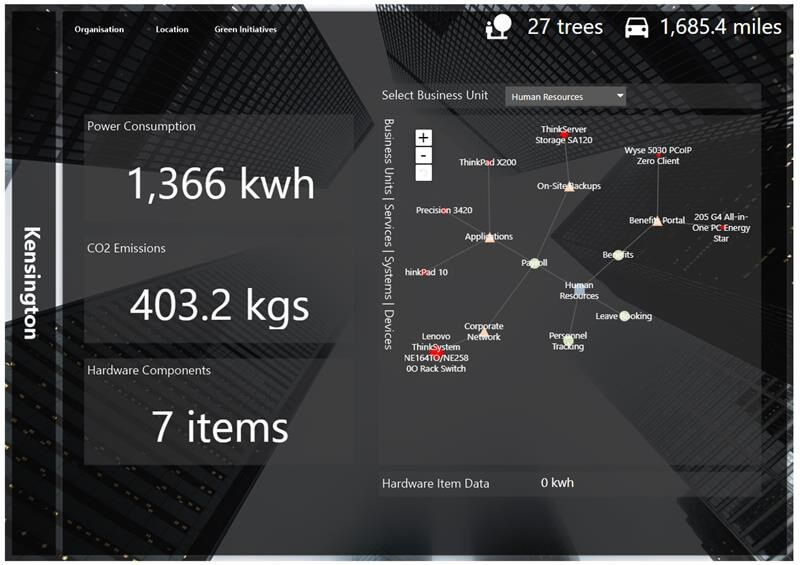
This begins with a top-down view showing power use across an organisation split by location, which is then benchmarked against equivalent miles driven and trees needed to offset. From there, users can browse locations, investigate connected infrastructure from hardware linking into applications and determine which applications support services in each department.

At this stage, any item’s power usage can be viewed in just one click, alongside a comparison of other items. It’s here that you can see where your carbon footprint is really coming from – and start to make changes.

From the top five power consumers, you can view a selection of Green Alternatives (i.e. more low-energy efficient alternatives to your current components). Selecting one allows modelling of what difference that choice would make. There’s also information on energy suppliers including cost savings and whether they supply green energy.

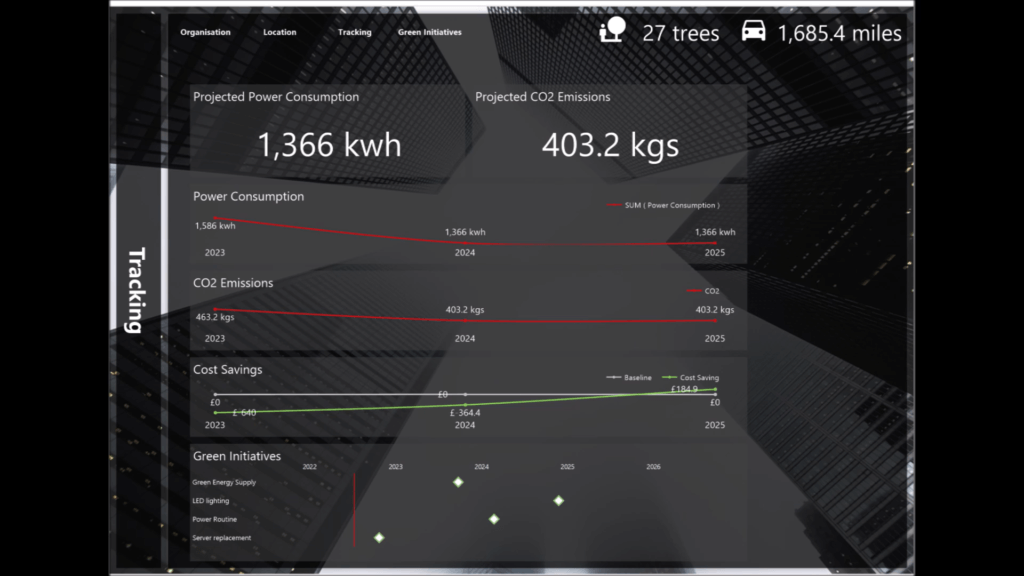
Once you’ve begun to make changes, however, you must be able to see what kind of progress you’re achieving. The Tracking view shows detailed data over time and is logged against Green Initiatives to highlight the where and when impacts were made. Over time, organisations can build a truly holistic and well-informed picture of their carbon emissions.

Book a demo for CACI’s Environmental Hub here and find out how it could help your organisation reduce its carbon footprint.

How do ICBs successfully prepare for future changes in costing?

In this Article

Integrated care boards (ICBs) were born to bring the NHS together locally to improve population health and establish and achieve shared strategic priorities. Although ICBs are vital to the future delivery and improvement of healthcare systems, their introduction has not been without hurdles.  

Earlier this year, NHS England challenged ICBs to reduce their running costs by at least 20% in 2024/25 and 30% by 2025/26. This comes with heightened challenges of digital and data not being prioritised at board level in most areas, with only 38% of ICBs having an Executive Director focused on digital, data or intelligence.  

With fast-approaching deadlines to meet, what can ICBs do to cut costs no matter the comprehension level of digital or data?  

Where can ICBs make savings?

Reallocating & distributing funding

To supply optimal patient level care, ICBs must be equipped with an optimal patient level costing solution. Now more than ever, it is critical for ICBs to work with NHS providers to create a single view of population and personal health and collect and utilise high-quality data to drive cost efficiencies. ICS leaders remain concerned about funding available for patient treatments and recognise that this is essential to uphold the sector’s productivity. NHS funding has always been focused on treating single acute illnesses and single chronic conditions or injuries rather than preventing them. It is now more focused on treating the whole patient and considering the prevention agenda.  

To direct patient treatment funding to the most effective setting, ICBs must innately understand the cost of each patient pathway across all settings in the system.

Organising critical data for optimal use 

When it comes to organising critical data, it is integral that ICBs have a strong working relationship with local governments, providers and the VCFSE sector to faciliate this. A framework of data sharing standards should also be developed to achieve enhanced interoperability and data sharing across organisational barriers to further encourage cost efficiencies.

 
Third-party support to meet priorities and achieve strategic objectives

ICBs unite stakeholders across the healthcare sector to address immediate and long-term priorities and challenges to improve health outcomes. Effectively addressing this requires ICBs to enhance their self-sufficiency and self-improving systems by working with the NHS and third-party partners to develop robust shareable models and fine-tune skills locally. Considering this, ICB leaders are continuously seeking out new opportunities ways to leverage system providers’ skillsets and contributions, and remain positive about system providers’ commitment and contribution. Increased self-sufficiency and self-improvement will also free up NHS funding for ICBs to better address priorities and challenges. 

Data sharing

While ICSs exist because of collaboration and partnerships between their providers, sharing usable data between the providers isn’t straightforward. If ICBs could safely and securely share data, connect data and run true system data analysis from required data sources, they would be able to accelerate their work in various activities from improving patient and staff care and outcomes to optimising the productivity of the wider health and care system at cost.

 
Delivering training & knowledge sharing opportunities

ICBs have been strongly encouraged to enhance their existing peer review processes to allow for inter-ICS benchmarking, best practice sharing and accountability strengthening to drive cost efficiencies. NHS Trust leaders have felt incredibly positive about ICBs’ role in fostering a sense of shared responsibility and collective endeavour among system partners, their collective problem-solving abilities and their sharing of practices on patient care and outcomes are key to future system and healthcare improvements.  

Making the future of costings successful with CACI

Although the journey towards cost efficiencies for ICBs undoubtedly comes with hurdles to jump, CACI’s expert team are equipped with the necessary industry knowledge and experience in data transformation to support and enable a revolutionary journey to a successful SMART result.  

To find out how we can help prepare your ICB for a successful journey, please contact us. 

What is InView? 

In this Article

InView is CACI’s data platform that is specifically designed for the NHS. It is modular by design with over 30 modules out of the box, and makes data sharing for ICS simple and efficient through its standardisation and safety in data management. The flexibility, maintenance and content provided by a standard data platform built in-house can only go so far. Considering the many pressures faced by NHS Trusts daily, they need a data platform that supports—rather than hinders– them.  

InView empowers NHS Trusts nationwide to enhance their reporting and unlock the potential of their data by ensuring that all data reporting is correct, consistent and complete within a singular integrated solution that will transform patient care outcomes. 

But how exactly does InView work? And what makes it so beneficial for the NHS? This blog will dive into everything you need to know about InView so you can make informed decisions about your own data platform. 

How does InView work? 

To meet the high volume of mandated statutory changes and local reporting requirements, your Trust should be equipped with a solid data platform that is easy to use and fully maintained. InView is risk-free*, robust and easily maintained, ensuring that you and your Trust can meet these requirements by providing all key statutory outputs and fully maintaining them in line with NHS change notifications as part of core product releases.  

Designed and built in a way that promotes rapid implementation of a solution within a Trust, InView secures you with plenty of pre-built content from all disparate data sources in one unified, trustworthy solution. Each of InView’s 30 modules is built from a sophisticated, layered design that will keep future maintenance costs down and future proofing up. Its layers include: 

  • Acquisition Layer: This layer accepts the data from incoming data sources and is designed to accept data in a raw format prior to any data checking.  
  • Integration Layer: As the middle ground between the Acquisition layer and the upcoming Translation layer, this layer moves data from one source to the other and performs matching between data sources. Trust-specific business rules are implemented and dictate how incoming data affects the information stored in the data warehouse.  
  • Translation Area: Data quality and integrity checking are carried out during this layer. This part of the processing also restructures data into a “star schema” model.  
  • Data Model: The aforementioned “star-schema” model is created at this layer, which is optimised for ad-hoc querying and historical data storage. It supports the historical storage of fact data, manages changes to dimensional data and hierarchical structures and ensures historical reporting is conducted effectively.
  • Serving Layer: This layer interacts with the InView user graphical user interface (GUI) to simplify configuration. Database views can be created at this layer to support reporting with minimal effort required from the end user. Real time data can also be presented at this layer, and non-InView data can also be combined to supplement any data you need to report on. 
  • Compliance Layer: This layer is where all statutory outputs are maintained and released to the Trust. 

Where can InView be deployed? 

InView can be deployed either on premise, in the Cloud, or hosted in CACI’s HSCN environment. Once deployed, our highly skilled technical experts forming the Managed Services team will work alongside you to ensure that you and your Trust are constantly supported after InView goes live. We will support you throughout the entire project implementation through fully transferring the necessary skills that will help you and your Trust feel more self-sufficient when using InView. 

Benefits of using InView 

NHS Trusts need accurate, reliable and readily available data for critical reporting and decision making. While this is crucial, it can be one of the biggest challenges for data professionals across the NHS to overcome. InView’s range of benefits can help you and your Trust overcome these challenges through its: 

  • Consistency: As a proven in-house solution that promotes a single version of the truth 
  • Availability: As a maintained product that can supply end-to-end reporting and can be implemented with all local rules correctly applied to incoming data
  • Efficiency: As a partner that is committed to continuously enhancing its solution
  • Flexibility: As an easy-to-use, extendable solution that is tailored to your Trust’s requirements and ensures your Trust will adapt to changes quickly 
  • Reliability: As a modern, interactive solution that allows for sharing not only within your organisation, but with ICS partners and NHSE too.  
  • Volume: As a solution that reduces the onus of statutory changes on the Trust 
  • Low cost of ownership: As a low total cost of ownership solution with maintained product content and changes that a Trust can action themselves. 

InView use cases 

InView produces a single, governed version of the truth that will drive consistent numbers that will enhance decision making, financial measurement, forecasting and information sharing across your Trust. By leveraging InView, you can present data for all purposes from one cohesive source to your Trust’s existing BI Toolset, which will simplify the reporting process and minimise the training needed for your Trust’s analysts.  

To get a sense of just how streamlined these processes within your Trust can be, take a look at some our of client case studies: 

CACI as your InView provider 

CACI has been providing Trusts with a solution that evolves and meets the demands of NHS reporting for over 20 years. Our very own data platform, InView, integrates all disparate source systems to optimise reporting across your Trust. By removing the statutory maintenance burden and time-consuming running of mandated reporting datasets, you and your Trust can focus on achieving priorities while meeting requirements and responding to any ad-hoc or urgent changes as they arise. To top it off, you will gain access to a user community for collaborative content and idea generation and learn how you can further enhance your own InView experience through other users’ takeaways. 

To learn more about InView and how our data warehouse solution could help your organisation, visit our InView page.  

*Risk-free for mandated statutory requirements 

How Transactional Spend Data transforms business operations

In this Article

Transactional spending in UK supermarkets

When one of the UK’s largest supermarket chains needed to understand consumer shopping behaviours at a local level to enhance their relevance within existing and new stores, they quickly realised the impact that leveraging customer-centric data could have on achieving these goals.

CACI was selected as their partner to supply them with the consultancy and consumer behaviour data that they felt had been missing from their current data sources. The potential to gain a granular and cohesive perspective of customers with actionable insights to drive change was what encouraged the business to trust CACI to help reach their strategic objectives and better understand and cater to customers.

Challenges CACI was brought on to solve

  • The external data about customer behaviour outside their organisation which they could access was generally based on small sample surveys and was not robust enough to support their enhanced customer understanding initiatives.
  • Other data sources were overly aggregated, challenging the business’ ability to determine what the result of a major market change in a market might be, such as a store closing or a new store opening, or a major local marketing campaign. This also made understanding how consumer behaviours changed as a result more difficult.

Using CACI’s datasets to solve problems

CACI’s data was game-changing for this business as it was based on actual spend data, and what consumers were actually doing versus what they were saying they were doing. The huge and granular sample size in comparison was also tremendously beneficial for the business, as it was available at brand level, ultimately unlocking major potential for them.

Impact of CACI on the business

CACI’s consultancy and data was able to significantly enhance the current capabilities of the team and allow them to add a significant new dimension to a number of different projects and use cases.

Potential partner analysis

The ‘race for space’ in the early to mid 2000s, combined with the emergence of multi-channel trading and stronger discounter competition, meant that many supermarket operators have been left with stores that are too big for their catchments and, therefore, were not as efficient or profitable as they once were.

As a result, many supermarkets had to find ways to fill parts of their stores or car parks with partner retailers that would generate rental income, fill ‘baggy’ space, create a more comprehensive customer offers and help generate sales for the business by bringing in a different type of customer.

Understanding competitor performance

Through CACI’s data, they could begin to understand and benchmark performance between their brand and others in a granular way for the first time, rather than using data based on a small sample survey (Kantar) or that aggregated to market rather than retailer (IGD).

For example, before a new store opening, the performance of competing brands and what types of customers were shopping with them could be analysed in a way that has never been previously available.

They could also understand what happened once the new store opened – which brands won and lost in the market and which types of customers changed their behaviour. This understanding was key to influencing future new store opening decisions that the team could into future forecasting estimates and set expectations accordingly through data-backed evidence.

Defining missed sales opportunities

CACI’s data helped this business understand where customers were cross-shopping with their competitors on the same day as shopping with them.

One example was by analysing customers driving out of the business’ store and past their petrol station but filling up their car at an alternative fuel station on the same day. The business lost trade because the customer drove past the front of the petrol station and chose to buy petrol elsewhere.

While it did not necessarily answer ‘why’ a customer did not shop with the business, it did help generate questions and what to look out for in customers’ preferred shopping experiences so they could assess a particular store, determine which competitors were in the vicinity and what the business could do to compete– adjust the price, revisit the convenience of the store’s location and so on to drive improvements backed by data.

Another example was assessing the performance of one store in close proximity to a direct competitor’s smaller store. The business knew that they had been losing trade to this competitor for years, but they did not have the data to prove this loss.

This insight helped the business formulate strategies for marketing campaigns that would encourage shoppers to return to their store versus to their neighbouring competitor.

Format development

The business assessed quirks in catchments and emerging trends among competitors to conclude whether certain initiatives, such as creating a café space within a store, would be a success with their customers.

Ultimately, it provided the business with a different approach to the café format and its offers for customers.

Customer profiles

For this business, customer loyalty cards were paramount to building customer profiles of their own customers. However, understanding the profile of competitors’ customers and how they were behaving was out of reach. This data helped the business understand the profiles of other brands’ customers and how similar or dissimilar they were to their own customers. Most importantly, they gained insight into what their spending patterns and behaviours were and how they changed over time.

To learn more about how CACI can help you leverage data to enhance your business operations, contact us today.

Making the most of Synergy through our User Group

In this Article

What is the Synergy User Group?Of the many benefits that Synergy, our PLICS system offers NHS costing teams, did you know that unrestricted access to a user-led group community was one of them?

What is the Synergy User Group?

The Synergy User Group unites NHS organisations from the UK, Ireland and Scotland in an online forum that is entirely driven by Synergy users themselves. This brings a genuine and beneficial collaboration opportunity to Synergy users across the UK. We facilitate monthly User Group virtual sessions (and more frequent clinics closer to the mandated submission time) that are for you, by you and to your benefit. Participants can ask each other questions, learn from shared experiences and gain tips on best practices.

How does the Synergy User Group work?

Step 1: CACI invites users to the Synergy User Group

We invite all Synergy users to join the Synergy User Group with new users always welcome to join the cohort of experienced long term Synergy users. Organisations themselves can determine which of their employees should participate in the group. If you’re a new user from an existing customer of ours, or a brand-new customer all together, we will oversee the invitation process and make sure you have access as soon as possible.

Step 2: Chair of the User Group & CACI align on the agenda

Ahead of each monthly meeting, users will set the agenda collectively with the chair of the meeting. CACI and the User Group chair will then meet to discuss what will be included in the agenda, covering off what participants need or want to get out of the meeting. This helps our experts understand what can be improved – whether that’s new functionality, setting up “how-to’s” for users, scheduling more demos, etc.

Step 3: Monthly User Group meetings take place

During the monthly meetings, CACI’s Synergy lead will help guide the session using their wealth of costing and Synergy knowledge. Anything from how the solution works to how it can support priorities being met can be discussed. While CACI help lead the meeting, the meeting ultimately belongs to the User Group attendees and is their time to share, collaborate and discuss. You can also tell us what you’d like to see or discuss in future meetings, from upcoming requirements to outstanding questions you have about the solution.

In addition to the monthly User Group meetings during the busy critical mandated submission period, CACI offer weekly open-drop-in clinics online for all Synergy users. These clinics are held by the highly experienced CACI team. These sessions are scheduled as soon as the submission guidance and software are released and take place well in advance of submission time.

Why should you join the Synergy User Group?

Providing outstanding customer service and support is at the heart of what we do. CACI want to ensure that our Synergy Costing and Finance teams feel supported individually and collectively – with the ease of use and flexibility of Synergy being the driving force to great outcomes. Your self-sufficiency will flourish by joining the User Group and being given the freedom to control the conversation; getting the answers you need to enhance your Synergy experience and carry out your tasks in the most efficient way for you.

The User Group:

  • Promotes self-sufficiency by allowing our users to work together and use the roadmap as their own.
  • Brings more to the table than just a costing solution. The User Group is there for you to utilise as you see fit. You can have as much or as little support or involvement from us during your usage as you want.
  • Allows you to get the most out of Synergy whatever your technical background. Synergy is built with every employee in mind, freeing up your team’s time to dedicate effort and resources to improving your business functions.

What are Synergy User Group participants saying about the group?

Michelle Barnes, Assistant Director of Finance at Cambridgeshire and Peterborough NHS Foundation Trust (CPFT), told us why the Synergy User Group has had such a profound impact on her team’s success.

“The User Group forum feels like it belongs to the Trusts – it’s not a sales update for CACI. It’s a chance to ask each other questions, as well as the CACI consultants. For example, peers might demo what they’re doing with reports – it’s a really good forum because it shows how people use the system in practice. It’s truly collaborative and interactive. Spin-off groups have emerged for different aspects, like the dashboards, and it’s so useful to be able to talk directly to other mental health and community trusts, because our needs can be different from acute trusts,” she explained.

“It’s a strong relationship – we’ve had great support and interaction with everyone from the account manager to the trainers and helpdesk. We had a few IT issues related to our firewall and making connections through it. CACI’s consultants were really responsive and came back to us very quickly to get this sorted. They were always progressing what they needed to and checking that things were satisfactorily resolved. The Synergy User Group is great – it helps us continue to explore and make the most of the solution, to deliver more decision insight and value for our Trust.”

If you’d like to find out more about getting involved in the Synergy User Group, please contact our expert, Susan Brooks, or take a look at Synergy, our PLICS system and what our customers have to say about it.

What is PLICS?

In this Article

Patient-Level Information and Costing Systems (PLICS) are data collection and cost information tools used to collect and analyse patient data that will help measure and manage costs. They help NHS organisations make sense of the costs of delivering specific services to patients and find out where costs can be reduced or efficiencies can be maximised.

But how exactly do they work? And what makes them so beneficial for the NHS? We’ll be exploring this in this blog to help you make informed decisions about your own PLICS solution.

How do PLICS work?

PLICS collate data from a range of records and sources to give you intricate details into a patient’s diagnosis, treatment, length of stay at a hospital and more. Collecting patient data from diagnosis to treatment creates a granular and accurate picture of the associated costs that come with patient care– much more valuable than via traditional methods like top-down allocation costs.

PLICS can also calculate the cost of each patient’s care and treatment, allowing you to view patient variations in much greater detail. If you can leverage PLICS, you’ll find it incredibly powerful thanks to its ability to link cost data at patient level to guarantee optimal patient care outcomes. You can use this information to make informed decisions about treatments and resources for patients or even to negotiate insurance rate payments.

Benefits of using PLICS

PLICS can offer plenty of useful and accurate data on a case-by-case basis that exceeds the capabilities of traditional costing methods. Its range of benefits include:
• Gives managers and clinicians a detailed picture of costs to help them judge the legitimacy of costs across all patients.
• Shows any discrepancies that may be resulting in higher or lower costs across the organisation or pinpoint inefficiencies between teams to help determine what to do about them.
• Enhances the accuracy of budget projections and provides the necessary insights to model changes for patient groups.
• Highlights patient demographics and treatment pathways to optimise decision-making in resource allocation, process improvement and quality of care for patients.

PLICS use cases

PLICS data can be impactful in many instances, especially when validating cost variations. A successfully integrated PLICS will allow users to share their learnings on how to detect, diagnose and address cost variations across the wider organisation to change or improve costing processes.

To get a sense of just how much more than the NCC submission can be accomplished through a PLICS system, take a look at some of our client case studies:

CACI as your PLICS provider

Making sure you have the tools to effectively engage with stakeholders across your organisation is at the heart of what we do. We help equip you with the necessary skills to get the most out of your patient costing solution, meet your requirements and improve patient outcomes.

CACI’s very own PLICS, Synergy, is a state-of-the-art patient level costing solution complete with fast calculation times, exception analysis with full audit trails and patient activity mapping. It also comes with prepopulated standards (datasets, cost allocations and methodologies), which will enable you to produce costs easily and efficiently at patient level.

It’s an easy-to-use, simple to set up solution that is highly secure (HSCN connected facility), with Healthcare Costing Standards configured.

To learn more about PLICS and how our costing system could help your organisation, visit our Synergy page.

The importance of an exceptional patient level costing solution

In this Article

Costing teams within NHS healthcare organisations can play a vital role in identifying inefficiencies and cost improvements that will enhance services. This means they deserve an exceptional Patient Level Costing Solution (PLICS) that will not just handle the NCC submission, but will also give them the tools to flourish in several other capacities from making meaningful decisions to developing internal reports that will consistently validate these decisions and benefit both healthcare professionals and patients daily.

But what makes an exceptional costing system? And why exactly is it so important? That’s what we’ll discuss in this blog so you can make an informed choice on what you should be getting out of your PLICS solution.

What capabilities should you look for in an exceptional patient level costing solution?

If you want your PLICS system to be considered exceptional, these are the capabilities that you should be looking for:

Accessibility & ease of use that encourages self-sufficiency…

Ease of use is key to assessing how good a costing system is – your costing system should help your team be more efficient not hold them back. Your costing team should be able to run calculations quickly so that they can maximise their time analysing the data rather than exhausting their efforts trying get the data in a comprehensible form.

…no matter what level of technical skill you have in the team

Another sure sign that you have an outstanding costing system is that it is an end-to-end solution that can be easily accessed by any team member with any technical skill level. This helps the process of migration and implementation through to data dissemination be as seamless as possible. A solution that’s customised and flexible in its design will encourage all team members to use it regularly to continuously meet NHS needs and challenges as they arise.

Simple & successful National Cost Collection (NCC) submissions

As well as being compliant to meet your annual costing return and meeting the National Cost Collections and PLICS submission requirements, an optimal costing system will also include the tools and supplier support to make the often-onerous submission process as simple as possible. The value of an experienced supplier supporting you through the process cannot be overstated, as this means you can be confident in your team submitting on time and without errors no matter its size.

Insights & analytics that are accurate & reliable

Another feature of an exceptional costing system is that it is capable of easy integration with your organisation’s wider analytics platform or strategy. Your costing system should act as a reputable source for sharing data widely, both across your organisation and, most importantly, with ICS Partners. The more secure and trustworthy the analytics you can integrate, the easier it will be for your costing team to collaborate with members of the ICS on treatment cost analysis and the impact of recovery plans.

Low cost, high return on investment for your organisation

Do you find your team spending excessively on a solution that causes frustrations or complications? An outstanding costing solution will be of reasonable cost to your organisation and simplify your experience, resulting in a high return on investment and low total cost of ownership (TCO).

Why the quality of your costing system matters

An exceptional costing system creates a reduction in unwarranted variations and will help your team orchestrate strategic service transformation through insightful analysis of the costing data. It will also encourage an information-driven culture and increased data literacy not just within the costing team, but across the organisation. This will help NHS organisations secure healthy financial positions and deliver optimal outcomes.

Adopting and implementing a state-of-the-art costing solution like Synergy is not as challenging as you may think. The long-term benefits of doing so far outweigh the short-term feelings of uncertainty so is something you should consider when thinking about a potential upgrade to your existing system.

If you’d like to find out more about how a new and improved costing system could help your organisation, please contact our expert, Susan Brooks. or take a look at Synergy, our PLICS System and what our customers have to say about it.

The Hillingdon Hospitals NHS Foundation Trust uses synergy as its main costing engine

“The Trust now produces regular quarterly SLR/PLICS information. CACI’s synergy has given the Trust a powerful platform to produce and share this information at patient level, incorporating both income received and cost incurred in the delivery of the care at patient level. The Trust also uses this information to produce further productivity measures to show how each service lines are performing pre/post COVID. As we continue to improve the internal data quality of the underlying information there is an immense appetite within the Trust to use the Trust SLR Pack supported by the CACI’s very powerful Dashboards for the day today performance management of the service lines. CACI’s synergy platform and a very expert support team has provided an ideal platform to develop the usage of PLICS/SLR information within the Trust. The Trust continues to be very excited with its partnership with CACI.”

Attiq Ahmad, Service Line Reporting Lead The Hillingdon Hospitals NHS Foundation Trust

Why NHS costing systems can’t stand still

In this Article

The NHS landscape is constantly evolving – it’s the responsibility of trusted solution partners to keep pace with NHS organisations and contribute expert data knowledge to help them on their journey 

Everyone’s talking about finance collaboration in the new Integrated Care System (ICS) structure, but it’s not easy for anyone to make headway in this unfamiliar landscape. It’s not as if the decks have been cleared to make time and space to understand and address the opportunity: NHS leaders and finance teams are still grappling with everyday pressures and priorities within their own Trust. ICS is another challenge to add, albeit one that offers excellent opportunities to improve patient care and experiences. 

Up to now, costing data has been used by NHS Trusts for national cost collection (NCC) and internal service line reporting. Solutions like CACI’s Synergy 4 help Trusts to make this happen in the most efficient and integrated way possible and to gain greater value from their data for service design and improvement. But now, there’s a new challenge level. How can Trusts also share and embrace costing data from other Trusts within their ICS?  

The rewards of understanding and analysing patient pathways across organisations 

In principle, it’s clear that a holistic approach to analysing patient pathways – spanning acute, mental health, ambulance and social care organisations and community settings – has the power to greatly improve patient outcomes and experiences as well as delivering better value and efficiency to ease the burden on NHS care teams. But the practical processes and channels for sharing data and insight are far from clear. 

CACI’s NHS engagement team has been working closely with our NHS clients to understand the complex considerations around sharing data between Trusts in a secure way that produces reliable and meaningful information that can help develop patient-centric services and make the most of NHS resources.  

Trusts are engaging with a range of new data challenges for ICS  

Information Governance (IG) for shared data is a key concern for NHS finance teams. Data must be anonymised, in order to protect patient confidentiality, but Trusts must be able to match patient identifiers to understand the end-to-end pathway through multiple touchpoints and organisations. 

Finance teams are also keen to understand more about the quality of data that could be shared by other Trusts. Data formats may be an issue: there are multiple systems and data sources in use, even within individual Trusts, which can make it hard to match data and adopt a holistic approach. With clinical decisions and budget allocation potentially riding on the analysis, it’s critically important that pooled data is accurate, de-duplicated and in comparable formats, to avoid inaccuracies. Reporting on insight from shared data can produce unfamiliar results in the broader ICS context: for NHS leaders to trust the integrity of the data and analysis, these results need to be clearly presented and explained. 

These are uncharted waters for NHS Trusts, for the new ICS organisations and for data solution partners like CACI. It’s not surprising that most efforts to launch costing data-sharing projects have so far been tentative. We’ve talked to finance managers who have shared data to explore the opportunity – generally they’ve done this in manual and fragmented ways, such as emailing manually created data files. This is clearly not a scalable approach for time-poor NHS finance teams, even if the attendant data protection and security issues could be resolved. 

 Operational finance teams can see the potential, but many are worried about IG, concerned about undermining their own Trust’s financial priorities within the ICS and don’t have the time or the mandate to focus on unpacking the issues. It’s already creating frustration. Some NHS leaders have a management accountancy background: they don’t yet have the data literacy training or experience to champion or direct a completely new costing data-sharing approach with confidence. This is a challenge we’ve also recognised: CACI’s Healthcare Insight Success Cycle (HISC) includes data literacy training modules which can help increase knowledge and confidence. 

Collaboration with solution partners can enable ICS collaboration 

How can NHS Trusts and ICS organisations break down these barriers and access the resources they need to unlock the potential of data-sharing? Partners like CACI can help to shoulder some of the load by ensuring that technology and data solutions are continually evolved and adapted to handle the emerging opportunities and challenges. Driven by the feedback and hands-on experience we gain from our NHS colleagues, we’re working on our Synergy proposition to develop the data-sharing, analytics and IG capabilities that will support the emerging ICS data-sharing requirement. 

We know that ICS organisations are at different stages of their thinking about Trusts. They also have diverse levels of capability, resources and experience in producing Trust-level service insight from costing data. Everyone has a different starting point for their new ICS data-sharing journey.  

How does your Trust’s approach and experience to date match up with our current understanding of the ICS landscape? At CACI, we’re highly aware that priorities, issues and opportunities are constantly evolving within the NHS. We’re rising to the challenge of delivering a costing proposition that’s built for the complex demands of today and tomorrow, supporting better outcomes for patients, better decision information for clinicians and better use of resources for the NHS. We want to support Trust finance and analytics teams by sharing our NHS data knowledge to help build data literacy among NHS leaders, so they can champion ICS from a position of understanding.   

That’s why we are working alongside our NHS colleagues, engaging with their current challenges and offering data strategy, process and capability insight to help them move forward on the journey, as we evolve our Synergy proposition.

Please join the conversation through our user groups and round tables or get in touch directly to share your priorities and issues and pose any questions that we could help you answer through our NHS data experience and expertise. Contact consultant Susan Brooks in CACI’s NHS team.

Integrated care systems – is your Trust maximising opportunities?

In this Article

Since 2018, the NHS has seen Trusts building closer relationships with local councils and other important strategic partners such as the voluntary, community and social enterprise sector.

The 2021 NHS Long Term Plan cemented an integrated care system (ICS) that would build on lessons learned and invest in keeping people healthy, while setting future social care priorities.

The introduction of ICS throughout the NHS, along with the government’s new Health and Care Bill, brings health care under one umbrella, and highlights the importance of data sharing to enable joined up support across the NHS, local councils, and other partners.

ICS is helping change attitudes to data sharing and how data can be used to improve service provision. This presents a huge opportunity for NHS organisations to improve services and accelerate elective care activity. It enables better use of data by consolidating, managing and sharing it more efficiently and easily, resulting in better care through more easily pinpointing where problems or hurdles exist.

While Trusts will have a wealth of organisation and patient data, bringing it together to produce meaningful insight that can drive decision making and improvements, and access additional funding, is crucial.

Joining up health services

The Health and Care Bill changes how the NHS is structured and puts ICS on a statutory footing, enabling partnerships that better join up health and care service, improve the community’s health, and reduce health inequalities. Benchmarking across Trusts becomes possible, enabling more effective and consistent patient outcomes.

Each ICS is led by an Integrated Care Board (ICB), which will have responsibility for NHS functions and budgets across the ICS. The system sees 42 new ICBs replace Clinical Commissioning Groups (CCGs), with a change from 106 CCG geographic areas to 42 ICBs.

Currently, much of the work with data in the NHS focusses on delivering upon statutory requirements. But moving forward, data will also become a tool for planning and measuring, informing decision making for improvements to clinical practise and leveraging data to improve the cost of care and the patient experience.

Sharing information across Trusts enables benchmarking of services, while patient pathways remain the priority at all touchpoints. Technology can be used to leverage knowledge of the environment and constraints and provide a proactive view of activity. This will allow Trusts to have a much clearer view of the entire patient journey, and will be the start of the changing future of healthcare.

It will help ICS to look ahead at long-term population heath needs based on demographic data, and better understand future problems – enabling a next level of planning that may not previously have been considered.

The current state of integrated care systems

The NHS Confederation, which supports and speaks for the healthcare system in England, Wales and Northern Ireland, has carried out a review of ICS progress in 2021/22.

In the first of what will be annual reports into the evolution of ICS, it highlights what is working well and where it feels improvements are needed. These include:

  1.  ICS leaders may not have sufficient time and space to deliver the radical changes needed.
  2.  ICSs should make decisions at the most local level possible and be empowered to define what metrics they will be assessed on based on local priorities.
  3.  One of the biggest strengths of ICS so far has been improving joint working between partner organisations. Around 90% of system leaders believe they have been able to effectively improve joint working.
  4.  System leaders are committed to the principle of subsidiarity and 90% say this principle already applies to their system.
  5.  Another strength of ICS has been local workforces. ICS leaders feel they are making significant contributions to mitigate workforce pressures and improve working culture, with nearly 80% confident to deliver a ‘one workforce’ approach by July 2022.
  6.  More support is needed to help systems contribute to local social and economic development.
  7.  There is uncertainty about how the experiences and insights of leading primary care services at neighbourhood level inform system-level planning and strategy.
  8.  The biggest obstacle to further progress is national workforce shortages. The NHS Confederation is seeking amendments to the health and care bill to strengthen the duties of the Secretary of State for workforce planning, and has asked the government to develop and publish a health and care workforce strategy as a priority.

Taking the next steps forward

Data insight is crucial to help Trusts improve patient outcomes and drive cost savings. But finding the best approach to accessing the right funding and realising your digital strategy presents its own challenges.

CACI’s NHS services portfolio demonstrates our ability to support data projects at any stage of the data lifecycle, helping Trusts determine local priorities, accelerate timelines, maximise staff resources, improve joint working, and plan strategically for the future. And we combine all this with our wide experience of healthcare customers.

Data can become the building blocks of your solutions, showing you where services are at capacity, how to redesign them to avoid bottlenecks, and how to meet challenges and maximise opportunities.

Plan a call with one of our NHS experts today and take the first step towards optimising your organisation’s data provision. 

Read our latest blog ‘Challenges facing NHS Trusts – and how to tackle them’.

And for more expert insight, download our essential whitepaper – Elective Care, how NHS changes are bringing opportunities for Trusts and patient care.

Challenges facing NHS Trusts – and how to tackle them

In this Article

Delivering better patient outcomes and value, while meeting targets and anticipating future needs, can be a challenge for NHS teams. There is constant pressure to do more with less, and with a high demand for service, quality is under intense scrutiny.

Even before the pandemic, waiting lists for elective treatment were growing. But by the end of 2021, 6.07 million patients were on waiting lists – the largest number since records began. As of September 2021, there were between 7.6 million and 9.1 million missing referrals of patients for elective care, and between 240,000 and 740,000 missing urgent referrals for suspected cancer.

“People will face serious health consequences as a result of delays in treatment, with some dying earlier than they otherwise would, and many living with pain or discomfort for longer than they otherwise would,” stated a March 2022 House of Commons report.

Tackling elective care challenges

The government expects the NHS to deliver around 30% more elective activity by 2024/25 than it was before the pandemic and has allocated £13.9bn in additional funding  to tackle the elective backlog.

NHS Trusts are now exploring how they can access support to meet their targets, improve the patient experience and bring down waiting times. Digitisation is being seen by many as the silver bullet that will help solve their problems.

Over the past 20 years, elective care performance has been measured primarily through wait time targets, but changes to how the NHS monitors performance has seen the advent of new activity-based targets. The pandemic enabled a level of digital transformation that might otherwise have taken several years, and Trusts are looking to capitalise on this to deliver on these activity-based outcomes.

The Elective Care Recovery Fund is a £1bn pot of government money helping the NHS get back up to speed, and to aid different healthcare systems in working closer and more collaboratively.

Funding is awarded based on performance (i.e. increases in activity such as appointments or procedures). In order to utilise the funding, Trusts need to understand where there are opportunities to increase activity, make changes to create these increases, and be able to evidence them.

Data analytics can enable them to do this through forecasting, hypothesis testing and real-time analysis of wait times and patient journeys. Any activity above 95% of 2019/20 levels is reimbursed at 120% of tariff.

Digitisation of NHS services

Remote appointments are one key element of the patient journey where savings can be made. NHS England aims for up to a third of face-to-face outpatient appointments to be avoided by 2024 – saving £1.1bn and 30 million hospital visits.

In Norwich, a virtual ward launched in 2021 has saved nearly 2,000 bed days. The ‘ward’ enables patients to receive remote care from their own homes, with up to 20 patients a day being treated. Vitals such as temperature, blood pressure and oxygen are monitored via a strap around their arm and staff carry out virtual rounds through daily phone or video calls.

More than 80% of integrated care systems (ICS) now have a digitally-supported virtual ward, and these innovative forms of patient care are demonstrating how digital technology and data systems can enable Trusts to release capacity and deliver more efficient services.

Helping Trusts invest and utilise funding

Finding a different way through the pathways and exploring where the bottlenecks are and where there is capacity in the systems, is another crucial step forward, as is access to funding.

In April 2022, a new NHS payments system was introduced that enables an agreed local plan to be put in place between ICS members, targeting volume and case mix. A provider can earn a higher tariff for activity that exceeds the levels in the plan and for scoring highly on their CQUIN indicators.

Data insight is crucial to help NHS organisations plan, operate and continually optimise resources, services, and staffing – ensuring better theatre utilisation, staff rostering, waiting list reduction, capacity planning and operational management.

Advanced data analytics also enables NHS organisations to access the right available funding to help with a holistic recovery. Optimising data enables Trusts to explore opportunities, evidence these, and show changes being made – helping Trusts plug gaps and improve the patient outcome.

Next steps for Trusts

To meet the challenges currently facing the NHS, Trusts should be considering how to augment and optimise their data capabilities. A key step is to access and consolidate data from a variety of sources to inform deep and actionable insight about patients, services, and demand.

NHS Trusts will all be at different stages of their digital journey, but any additional funding they can optimise will be crucial. To do so they will need to understand where there are opportunities to increase activity, how to make changes to create these increases, and be able to evidence them.

CACI’s solution can help Trusts get the best outcome from the new NHS payment system and additional funding, and deliver the outcomes you need. We’re proud of our long-standing relationships with many NHS organisations across all care settings. We have hands-on experience of the pressures and opportunities facing your NHS organisation and the need for trustworthy information to support transformation and sustainability. Plan a call with one of our NHS experts today and take the first step towards optimising your organisation’s data provision. Visit our website. 

And for more expert insight, download our most recent whitepaper – Elective Care, how NHS changes are bringing opportunities for Trusts and patient care

The difference between reporting and insight

In this Article

Data is no use to NHS organisations without the expertise and tools to make it actionable

Data has become more and more significant in all industries and settings. The NHS is no exception. With a huge amount of patient, service and performance data at its disposal, there should be a wealth of insight available to help shape patient care and develop the best services in every community.

But there’s a very important caveat. Everyone knows that raw data doesn’t provide actionable information. That’s why it’s generally issued in the form of reports. But what do the reports tell you?

Reporting on data is not the same as generating meaningful and transformative insight from it.

It’s common for NHS organisations to produce reports that list statistics and objects without the context or perspective that could give them meaning as a basis for decisions. These reports can tell us what has happened and provide headline figures for costs, volumes and timeframes, but they don’t reveal insight.

Drawing insight from data means looking at it through a new lens. It could mean evaluating how past performance could influence future behaviours and decisions. It could mean modelling multiple hypothetical scenarios to decide the best approach from several options.

Data reporting is a valid exercise when you’re monitoring performance against fixed objectives. But it’s generally a historical, static activity. The data insight that NHS organisations need is about planning for the future and adjusting programmes in-flight to reflect the latest information and evolving patient needs. It’s about scenario modelling. It’s about bringing together different datasets, to gain more and more detailed and specific understanding of the causes of outcomes and what influences them. This kind of data insight is truly transformative because it allows NHS organisations to continually scrutinise, optimise and innovate in their services and care.

The impact of true insight on NHS services

Sarah Culkin, Interim Head of the Analytics Unit at NHSX, and Sukhmeet Panesar, Deputy Director within NHS England and NHS Improvement’s Data, Analysis and Intelligence Service describe the impact of data insight: “Knowledge is power. In healthcare, it is often life-saving. The NHS generates a huge amount of data which can be analysed and used to drive improvements in care and how services are run. Ultimately, data analysis results in improved patient outcomes and experience, as well as optimal use of NHS resources.”

Trusts and NHS service providers know that data is valuable. Many have already invested in data solutions and tools designed to store and analyse information. But not all are generating powerful and potentially life-saving insight. Digital insight for healthcare is a constantly evolving field, with new tools and technologies emerging to extract more relevant information. It can be hard to keep pace with the range of data resources on offer and to know how to prioritise system development and investment.

Acquiring and acting on insight demands data literacy in teams

Sarah Culkin and Sukhmeet Panesar highlight another key issue that affects many NHS organisations in their quest to use data to improve services: “In general, the NHS is failing to make the most of its data because there are not enough people with the right analytical skills to make sense of the information being collected.”

Data insight and analytics is a fast-evolving field. Without training, mentoring and support from specialists who understand the NHS environment as well as the potential of data, NHS managers and analysts cannot make informed decisions and harness the data they have to best effect. Education and skills are key – both for general data literacy in NHS clinical, management, operations and finance teams, and for analytics and technology in the data science teams who support them.

With all the data you collect, are you making the most of it to support crucial trust or service decisions and to deliver responsive, patient-centric care that meets real-time needs?

If you’d like to find out more about CACI’s Data Maturity Assessment service, or our data and analytics training, please get in touch. It’s all part of our HISC (Healthcare Insight Success Cycle) data optimisation approach for NHS organisations.

Is knowledge and skills a barriers to transformative insight for your NHS organisation? Working with a specialist NHS data transformation partner could help you achieve best value from your data and budgets.

Find out how CACI’s healthcare team can provide advice on developing and maintaining your technology and offer staff training for data literacy and skills, so you can sustain your data journey from within. For further information, visit or website or get in touch with our NHS client team.

Managing patient data to guide you in the new ICS landscape

How NHS organisations can prepare to access and contribute to a powerful pool of insight that will help them meet local needs better than ever before

When the new ICS framework rolls out, predicted for summer 2022, it should enable healthcare providers and bodies across the NHS to collaborate better than ever before, with a shared goal of providing improved patient care across the board. By moving away from fragmentation and competition, NHS services should be able to consider patient needs and pathways holistically and offer the best locally targeted overall care from a range of specialisms and organisations in a more coordinated and efficient way.

NHS leaders and healthcare teams are excited about the opportunity to smash silos and break through frustrating organisational barriers to work more effectively together in this new, collaborative culture. But they’ll need the right information and tools for shared decision-making. That means bringing together data that was formerly held separately and unleashing its full potential as part of a comprehensive system of healthcare insight.

What should NHS organisations do to make sure they’re playing their part and will have access to the data and analytics they need to deliver excellent outcomes as part of their ICS?

Trusts and healthcare bodies will need to be certain they can share data securely and effectively. They’ll need systems that can bring together disparate data in actionable formats, so it can be compared and analysed at patient and pathway level. They’ll need reporting tools and dashboards that reveal insight to underpin operational and investment decisions, as well as to track the success of initiatives. They’ll need to continuously augment data, so planning and collaboration keep pace with real-time community and service needs.

Every ICS will have its own priorities, reflecting what the local community needs in terms of NHS care across the board. Different data and analysis will be needed to plan the best collaborative service provision in every area.

TheThe overall vision is exciting, but to achieve it, organisations must identify practical steps to move from where they are today with their own data to the collaborative ICS data ecosystem. There’s an opportunity to exploit new and proven technology that manages and harnesses data to produce advanced, relevant and detailed insight.

We recommend a systematic approach to assessing where your organisation currently stands and how you can evolve your data strategy to achieve the best outcomes in an ICS. In CACI’s digital healthcare knowledge model HISC (Healthcare Insight Success Cycle), we’ve developed Discovery tools and processes that help NHS organisations do exactly that:

  •  Describe and assess your current data strategy, systems and approach
  •  Define your future data direction and destination as part of an ICS
  •  Review your data security, storage and infrastructure
  •  Build a strategy and roadmap for data insight that will improve clinical and operational delivery and performance in the ICS framework
  •  Build a business case to connect investment in insight with tangible outcomes

CEO of NHS Confederation Matthew Taylor said in March 2022 that the use of high quality, real-time population health data will help “to shift from a system that responds to demand to a system that genuinely responds to need”, and that the NHS’ implementation of Integrated Care Systems (ICS) has the potential to “help create that enabling environment” needed to leverage data effectively.

Ruth Holland, deputy chief information officer at Imperial College Healthcare NHS Trust, went even further: “ICS’ will stand and fall on their data capability in ten years’ time. I would sternly encourage digital and data leaders to look at the costings you are putting into plans [for staff and skills] that will support the ambition.”

CACI’s specialist healthcare technology team has the experience and knowledge to support your organisation with planning and delivering an ICS data transformation programme, including training and skills transfer for your staff.

If you’d like to find out more about how data helps you deliver tangible improvements in key areas of your NHS organisation’s patient care, download our brochure Spearheading your data journey to improve patient outcomes. It describes in more detail how you can take action to activate data insight to reshape health and social care. It explains how CACI’s Health Insight Success Cycle is specifically designed to drive maximum value from data for NHS organisations.

To find out more visit our website or speak to an NHS data consultant about the results we’ve helped other organisations achieve, please get in touch with our NHS client team.

Reshaping health and social care with data insight

In this Article

How data can help you improve patient outcomes in 7 priority areas

There’s constant pressure on NHS organisations to deliver better patient outcomes and value from public funding. Demand is high and service quality is under intense scrutiny.

NHS organisations have access to a wealth of organisational and patient data. But bringing it together to produce meaningful and trusted insight is a challenge. Decision-makers and clinicians must have access to analytics and reporting in clear formats. Data insight needs to be current and available in a timely manner. Data storage and usage must also be secure and compliant, to meet NHS and national standards for patient and citizen confidentiality.

Everyone’s talking about the fact that data insight is crucial to help your NHS organisation plan, operate and continually optimise resources, services, staffing and patient experiences. But what does that mean in practice? How do you unlock the insight to make a difference today? Amongst all the competing priorities for NHS managers, how specifically can data insight change the way your organisation operates, improve patient outcomes and tackle challenges like waiting lists and staff shortages?

Working with NHS Trusts and social care organisations, we’ve seen at first hand the difference that well managed data can make to efficiency and patient care. Actionable insight to influence real-time and future service design and planning is the holy grail for driving real value from your data to help improve the performance of your NHS organisation.

But to make it happen, where do you start? How can you achieve rapid and meaningful impact from an investment of time and budget in a data project?

We’ve identified seven high value activities that our NHS customers and partners have successfully optimised using data insight. By quantifying the benefits of one or more of these outcomes for your organisation, the case for prioritising your data project becomes clearer and easier to communicate with colleagues and stakeholders.

7 priority activities that NHS organisations can drive with data

1. Model and predict demand for services

Complete and accurate data and effective analytics tools give you the power to model and predict demand for services based on specific evidence relating to your patients and community. Produce relevant reports that decision-makers can scrutinise and understand with ease, so they can support your recommendations readily.

2. Put the right staff in the right place at the right time

Effective and accurate data about demand for services and availability of staff can help you roster more effectively – reducing wait times and giving patients better experiences in your clinical organisation. This has particular value when dealing with increased absence relating to Covid.

3. Review and respond immediately to current patient needs

If you have the capability to analyse patient data in real time, you can give clinicians the information they need to make fully informed decisions in the moment about care and treatment, to achieve the best patient outcomes.

4. Plan services effectively for better patient outcomes in critical areas

With a specialist NHS data platform like CACI’s InView, you can apply powerful analytics to dive deep into data and answer the most important questions for your organisation. Drive improved patient outcomes by tackling priority KPIs for your organisation – from waiting list monitoring, patient level costing and clinic usage to theatre utilisation and clinician availability.

5. Focus on frequent flyers

With a clear picture of frequent flyer characteristics and visit patterns from comprehensive and up-to-date reporting, you can proactively identify patients who need more support or information and help them to access the most appropriate services and treatments for their needs.

6. Integrate data to build a complete picture of demand for services

When you bring together local government and hospital data in a single, integrated data platform, you can access even richer insight into patients, services and demand. With one source of analytics and reporting, you can maximise the value of the information your organisation holds, including collaborating with other Trusts through data sharing within an ICS ecosystem.

7. Understand your patients more thoroughly and personally

Compliant data records and effective reporting gives your NHS organisation a clear picture of the demographic backgrounds of your patients. By understanding their backgrounds and lifestyles, you can shape your services and communications for better access and improved outcomes.

Every NHS organisation is different, with priorities and challenges that are unique to its community and resources. No matter where you are on your data journey or how you most urgently need to uncover and apply insight to your decision-making and planning, a tailored data transformation strategy can help you move forward. The most practical and effective approach is to outline a series of steps on that journey, making sure that you drive value from your data project as early as possible by accessing insight that supports your most pressing tactical requirements.

If you’d like to find out more about how data helps you deliver tangible improvements in key areas of your NHS organisation’s patient care, download our brochure Spearheading your data journey to improve patient outcomes. It describes in more detail how you can take action to activate data insight to reshape health and social care. It explains how CACI’s Health Insight Success Cycle is specifically designed to drive maximum value from data for NHS organisations.

To find out more visit our website or speak to an NHS data consultant about the results we’ve helped other organisations achieve, please get in touch with our NHS client team.

Data is key for successful businesses to take decisive action on sustainability

In this Article

Consumer demographics insight helps brands to thrive by understanding how embedding sustainability in their policies, practices and products will influence consumer attitudes and behaviours.

In a world with an awakening environmental conscience, consumers want to know more about provenance. Company reputations will increasingly rest on ethical practices – from sourcing raw materials, reducing carbon footprint and embracing climate change agendas to employment rights and diversity and inclusion (D&I) practices. This is about the end-to-end story of how products and services are produced and brought to market. It goes beyond what goods are made of or packaged in, or how far they’ve travelled.

Sustainability is a revenue issue

Customers vote with their feet when they see organisations acting callously or making too little effort in sustainability. In most markets, they have other options if they don’t like one brand or retailer’s approach. That makes sustainability an issue for competitiveness and commercial performance as well as a matter of corporate conscience.

  • 82% of UK consumers feel strongly about buying products that are ethically and sustainably sourced – it has started to matter to 24% only in the last year
  • 53% of UK consumers would never buy from a brand again if it was accused of working with unethical suppliers
  • 41% of UK consumers make a conscious effort to buy locally sourced or produced items online

Opentext consumer survey, 2021

We often pin the sustainability ‘trend’ on the younger generation of consumers, spearheaded by Greta Thunberg and other prominent activists and celebs. But Gen Z is just one group in a cross-generational population that’s increasingly mindful of sustainability. It’s a mainstream issue on global political agendas and in traditional and online media, both reflecting and increasing levels of concern throughout society.

Consumer action on sustainability matters in B2B just as much as in consumer purchasing, because the present and upcoming decisionmakers and stakeholders in corporates are people too. They bring their own ethics and value judgements to work with them, reflecting the concerns of their peer groups and of a wider world.

Many local and independent businesses have lately experienced an upswing, despite the constraints of the Covid pandemic. Our consumer data provides clear evidence that the many UK consumers constrained to an existence closer to home are now choosing local suppliers for goods that they might once have purchased in cities or during their work commute. There’s a feel-good factor in shopping local, on top of the sustainability benefit from both goods and customers travelling fewer miles and the positive impact of helping local employers thrive and provide fairly-paid employment in their communities.

Will consumers put their money where their mouth is?

Of course, there’s a financial tipping point in sustainable choices for many people. Customers say they want to purchase greener products and services – but how much are they prepared to pay? More sustainable sourcing, production and employment are often more expensive. And commercial organisations need to remain viable and profitable if they’re to thrive, grow and embed sustainable approaches to lead the market.

To make decisions about meaningful changes in policy and practice, businesses need more granular information about what consumers want and at what cost. It’s the only way they can be sure that doing the right thing is affordable and viable in the longer term.

Local micro-business owners tend to interact with their customers directly. It’s easy for loyal shoppers to give community businesses feedback face-to-face about what they’re doing well or badly, and how important sustainability is to them. For larger organisations with many customers and many channels of engagement, including branches or outlets and online stores, it can be harder to gauge what’s driving success… or driving customers away. Most consumers simply take their custom elsewhere if they’re unsatisfied with a brand’s approach or prices – very few raise their concerns first.

  • 34% of consumers actively choose brands that have environmentally sustainable practices/values
  • 28% of consumers have stopped purchasing certain brands because they had ethical or sustainability related concerns about them
  • 7% of consumers have contacted a brand to raise an issue on their sustainability or ethical practices and values

Deloitte survey into consumer attitudes to environmental and sustainability issues, 2021

Consumer data is vital to help organisations understand changing patterns of consumption and to plan outlets and distribution accordingly. It can help them understand how to prioritise and communicate their sustainability policies and actions with impact and integrity. It can inform product development and marketing campaigns, helping to reduce waste in both production and budgets. Crucially, it provides evidence to support investment in sustainability-driven initiatives, helping to predict potential revenues in evolving markets.

Organisations need to review this consumer data and trends regularly, particularly within their existing catchments and among target customer segments. Carrying out customer surveys and providing easy routes to give feedback can provide valuable information about existing customer priorities. But what about prevalent and emerging attitudes among prospective customers or in potential new segments and markets? Is there a difference? Are competitor approaches finding greater favour?

Customers, employees and investors are scrutinising your sustainability

There’s no question that businesses of every size need to take heed of customers’ growing attention to sustainability, in the UK and beyond. It’s already becoming a key success factor in customer recruitment and retention, for brand reputation, in attracting investment and for employee recruitment and retention.

The gold standard is granular data that connects attitudes to sustainability with the behaviour and choices of real consumers across channels and geographic areas.

To support this agenda CACI have developed an ESG score to drill into each aspect of how important environmental, social and governance issues are to individuals, enabling companies to assess both their current and potential customer base and act accordingly.

This takes the form of a series of individual level propensity models based on market research questions about consumers attitudes towards the following:

  • Social matters around community and social concerns and human capital
  • Governance issues around workplace practices such as executive pay and ethics

The product contains three propensities, one for each of the individual aspects of ESG and one unified score to summarise an individual’s affiliation to all the values encompassed by ESG. These probabilities relate to how important each of these aspects are and can be provided at individual level coded or aggregated up to postcode level.

Based on this data, leading businesses can produce consistent and reliable customer insight, using the latest analytics and modelling, to help them prioritise and accelerate their sustainability programmes.

If you’d like access to market-leading insight and evidence about consumer attitudes and responses to sustainability issues, talk to the consumer data experts at CACI.

Want to read more from our ESG blog series?