
Case study
Transforming EBRD’s digital presence through website redesign
Summary
The European Bank for Reconstruction and Development (EBRD), established in 1991, is a multilateral developmental bank that promotes private and entrepreneurial initiatives in Central and Eastern Europe, the Baltic States and the Commonwealth of Independent States. With 67 members, including 65 countries, the European Union and the European Investment Bank, the EBRD sought to modernise its main corporate website, ebrd.com, as part of a broader strategy to enhance external communications and improve content management capabilities.
Company size
4,000 – 5,000
Industry
Financial services
Services used
Challenge
EBRD’s website redesign project aimed to replace an outdated content management system (CMS) with Adobe Experience Manager, introduce a new design system and enhance business capabilities. The legacy site, nearly a decade old, lacked modern functionality and aesthetics. The overhaul was intended to bring the site up to current standards, improve user engagement and strengthen EBRD’s digital brand.
Solution
The website redesign project focused on three objectives:

Replacing an end-of-life CMS
Implementing Adobe Experience Manager to align with EBRD’s authoring experience desires and transition needs.

Modernising the site’s look
Delivering a design system that enhances user engagement and aligns with modern standards.

Enhancing business capabilities
Improving content management, simplifying corporate communications publishing and introducing modern analytics toolsets.
User experience strategy
The project prioritised user-centric design, focusing on creating a coherent and straightforward user experience across different departments through:
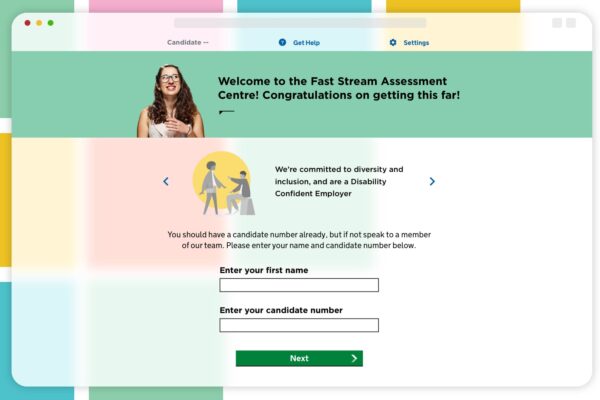
- Improving accessibility and usability: Making the website more accessible to users unfamiliar with the organisation by simplifying language, tone of voice, wayfinding, information architecture and functionality.
- information architecture and functionality.
- Research and validation: Conducting ongoing user research to understand specific user groups’ needs and validating new designs and functionalities incrementally with user feedback.
Research and data-driven insights
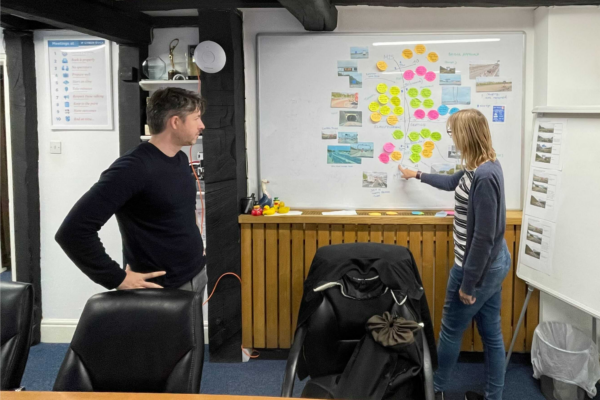
The project involved gathering insights from various user profiles, including journalists, researchers, academics, small business owners, job seekers, procurement bidders and internal stakeholders. This was achieved through:
- User interviews and feedback: Understanding unique usage patterns, needs, frustrations and pain points.
- Quantitative and qualitative measures: Using analytics data to hypothesise user needs and behaviours and conducting regular, moderated qualitative research to delve deeper into user interactions and preferences.
- Competitive analysis: Analysing websites of similar organisations to identify best practices and areas for improvement.
Solution
A thorough content audit was conducted to assess the current state of ebrd.com and create guidelines for future content creation. This involved developing a comprehensive content strategy and content design project to ensure consistency and quality in content creation.

Content strategy
A thorough content audit was conducted to assess the current state of ebrd.com and create guidelines for future content creation. This involved developing a comprehensive content strategy and content design project to ensure consistency and quality in content creation.
UX, UI and design system solution
The project delivered a comprehensive framework of components following atomic principles across UI, UX and content. This framework provided a standardised approach to design within EBRD, ensuring consistency, efficiency and scalability in product development. Key deliverables included:
- Component library: A set of reusable UI components delivered as a Figma Matrix Mother File for consistency and ease of integration.
- Style guide: Detailed documentation outlining visual and functional elements such as colour palettes, typography, spacing and iconography.
- Design tokens: A Figma file of all atomic elements, ensuring consistency and enabling quick updates across the entire system.
- Pattern library: A repository of design patterns addressing common user interface design problems.
- Guidelines and best practices: Documentation and Figma annotations providing instructions on using components and patterns effectively, along with principles and standards for accessibility, responsiveness and user flows.
Outcomes
The collaboration between EBRD and CACI resulted in a modern, user-centric website that not only meets current standards but also enhances the EBRD’s digital presence. The new design system and improved content management capabilities empower EBRD to effectively communicate with its diverse audience and support its mission of fostering open market-oriented economies.