

Solutions
Cydonia – face biometric platform
Verify and identify people at speed and scale. Cydonia combines independently benchmarked face recognition with a secure, resilient cloud platform, helping organisations establish trusted identity without compromising accuracy, security or accountability.
A complete platform for trusted identity
Most face-matching solutions provide an algorithm. Cydonia provides a complete biometric identity platform, bringing together advanced biometric technology, secure cloud architecture and operational tooling.
Built on Jezero, CACI’s secure AWS cloud platform, Cydonia combines cloud guardrails and network controls with a resilient Kubernetes foundation. Its underlying technology is independently benchmarked through recognised NIST and DHS evaluations.
Deploy Cydonia as a fully managed SaaS service or within your own AWS account. Its vendor-agnostic architecture can also support additional biometric algorithms as your requirements and the technology evolve.

Why Cydonia
Perform under real-world pressure
Cydonia combines speed, scale and operational resilience so biometric identity services can keep working when volumes rise, imagery is imperfect and every decision matters.

Scale without compromise
Support virtually unlimited concurrency and galleries containing hundreds of millions of records without sacrificing matching accuracy.

Make decisions faster
Deliver more than one million matches per second per core, reducing processing time and user waiting.

Perform beyond the laboratory
Maintain accuracy across varied lighting, angles, face coverings, low-quality imagery and profile views.

Respond to demand
Scale compute programmatically in real time, maintaining performance during peaks and reducing cost during quieter periods.

Manage complex galleries
Use distributed biometric and vector data, sub-galleries and attribute-based filtering to narrow searches efficiently.

Evolve without lock-in
Adopt a vendor-agnostic platform designed to integrate further biometric algorithms when they meet CACI’s testing requirements.
Full identity AI capability
Protect identity across physical and digital interactions
Cydonia brings together the complementary checks needed to establish whether a person is who they claim to be, detect manipulation and apply the right level of assurance to each interaction.

Face recognition
Support fast 1:1 verification and large-scale 1:N identification, with face detection, landmarks, image-quality analysis and dynamic gallery search.

Passive liveness detection
Confirm that a real person is present from a standard selfie or webcam image, without extra hardware or user actions.

Deepfake detection
Identify identity-swap, expression-swap and fully synthetic faces from a single image or video frame.

Privacy-preserving age estimation
Estimate age from one face image to support age-appropriate access without requiring full identity verification.

Face attribute analysis
Add context through automated analysis of attributes such as headwear, eyewear, face coverings and image conditions.

Streaming video integration
Apply face, person and vehicle detection and tracking to existing RTSP video feeds and camera infrastructure.
Powered by proven Paravision technology
t reviews and live trials with AWS, CACI selected Paravision Search for its accuracy, scalability and cloud-native performance.
Paravision’s facial recognition technology has been independently evaluated by NIST for more than five years, consistently ranking among the leading global performers.
It also supports Cydonia’s liveness and deepfake detection capabilities, helping protect against physical and digital identity fraud.
Built for demanding use cases
One platform, multiple identity journeys

Government and national security
Support identity cards, immigration, watch-listing and passport services where accuracy, resilience and compliance are critical.

Travel and borders
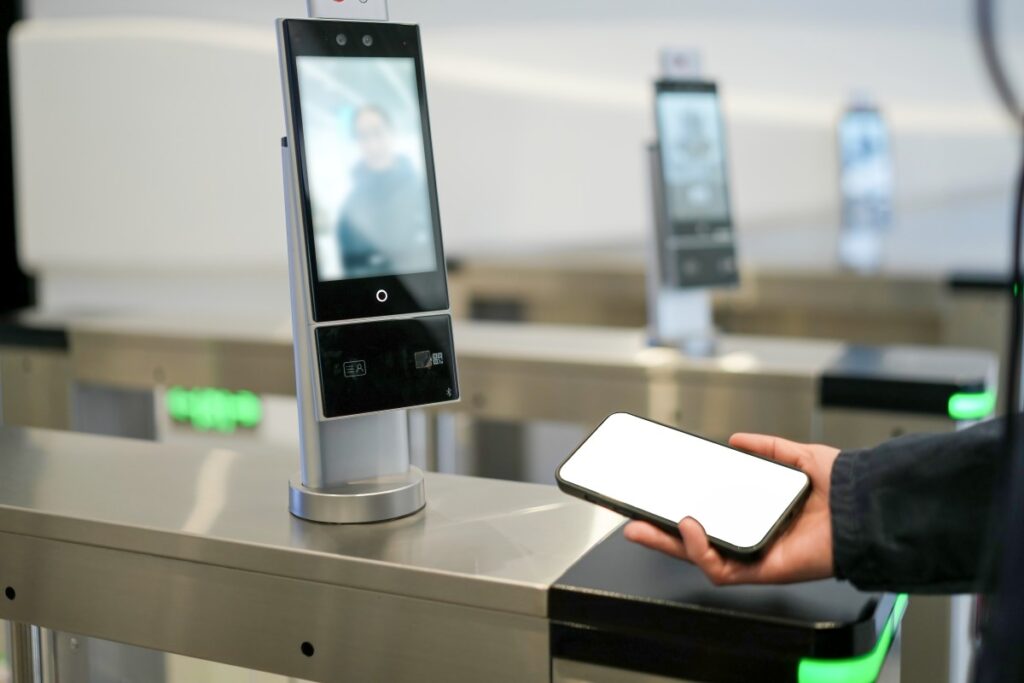
Enable contactless identity journeys across eGates, airport checkpoints and border programmes.

Digital identity
Verify people quickly for banking, retail and payments while balancing fraud prevention with user experience.

Payments and retail
Authenticate in-person and online transactions across mobile payments, loyalty programmes and ecommerce.

Physical security
Deliver touchless access control, visitor management, time and attendance, and video-security integrations.

Live events
Strengthen access validation, ticketing and entry at conferences, concerts and sporting venues.
Responsible by design
Biometric capability with clear safeguards
Powerful biometric technology must be deployed responsibly. Before Cydonia is licensed and provisioned, the intended use must be clearly defined and pass a stringent approval process against CACI’s use-case standards and Paravision’s published AI Principles.

Ethically trained
Use diverse, properly consented training data and independent benchmarking to identify and address performance gaps.

Conscientiously deployed
Vet customers, partners, countries and proposed use cases before access to the platform is approved.

Human accountability
Require human review before consequential decisions and prohibit use in lethal autonomous weapons systems.
FAQs
Answers to common questions about Cydonia.
Cydonia is CACI’s advanced biometric identity platform. It combines face recognition and wider identity AI capabilities with the security, resilience and scalability of Jezero, CACI’s secure AWS cloud platform. Rather than supplying only a matching algorithm, Cydonia provides an integrated environment for biometric enrolment, verification, identification, liveness detection, deepfake detection, age estimation and operational management.
Cydonia can be delivered as a fully hosted, managed SaaS service or deployed directly into an organisation’s own AWS account. The underlying platform runs natively on Kubernetes and supports auto-scaling, resilience and self-healing. Its flexible architecture can be tailored to specific service levels and use cases while retaining secure cloud guardrails and operational controls.
In 1:1 verification, Cydonia compares a person’s biometric image with one claimed identity to confirm whether they match. In 1:N identification, it searches a gallery of many enrolled identities to find potential matches. Cydonia supports both models, from straightforward digital identity checks to large-scale searches across galleries containing hundreds of millions of records.
Passive liveness detection helps identify physical presentation attacks such as printed photographs, screens and masks from a single selfie or webcam image. Deepfake detection addresses digital manipulation, including identity swaps, expression swaps and fully synthetic faces. Together, these capabilities help protect identity journeys across both physical and digital channels without requiring specialist capture hardware.
Cydonia is designed to maintain performance beyond controlled laboratory conditions. Its capabilities include face detection, landmark identification and image-quality analysis, with matching designed to handle differences in angle and lighting, profile views, face coverings and lower-quality images. Live image-quality feedback can also help users correct sharpness, position, illumination or frontality before submitting an image.
Cydonia is designed for high-volume programmes and supports virtually unlimited concurrency, galleries containing hundreds of millions of records and programmatic auto-scaling. Published performance figures include enrolment of 50 million identities in under 3.5 hours and 1.4 million matches per second per core on specified Intel Xeon hardware. Actual performance will depend on the deployment architecture, workload and service requirements.
CACI requires the intended use of Cydonia to be defined and approved before the platform is licensed and provisioned. The review considers CACI’s use-case standards and Paravision’s AI Principles, including consented and diverse training data, independent benchmarking, customer and partner vetting, restrictions on countries and use cases, human review for consequential decisions and a prohibition on lethal autonomous weapons applications.