
























Case study

A data-driven approach to successful franchise and equity growth for a quick service restaurant business

Summary

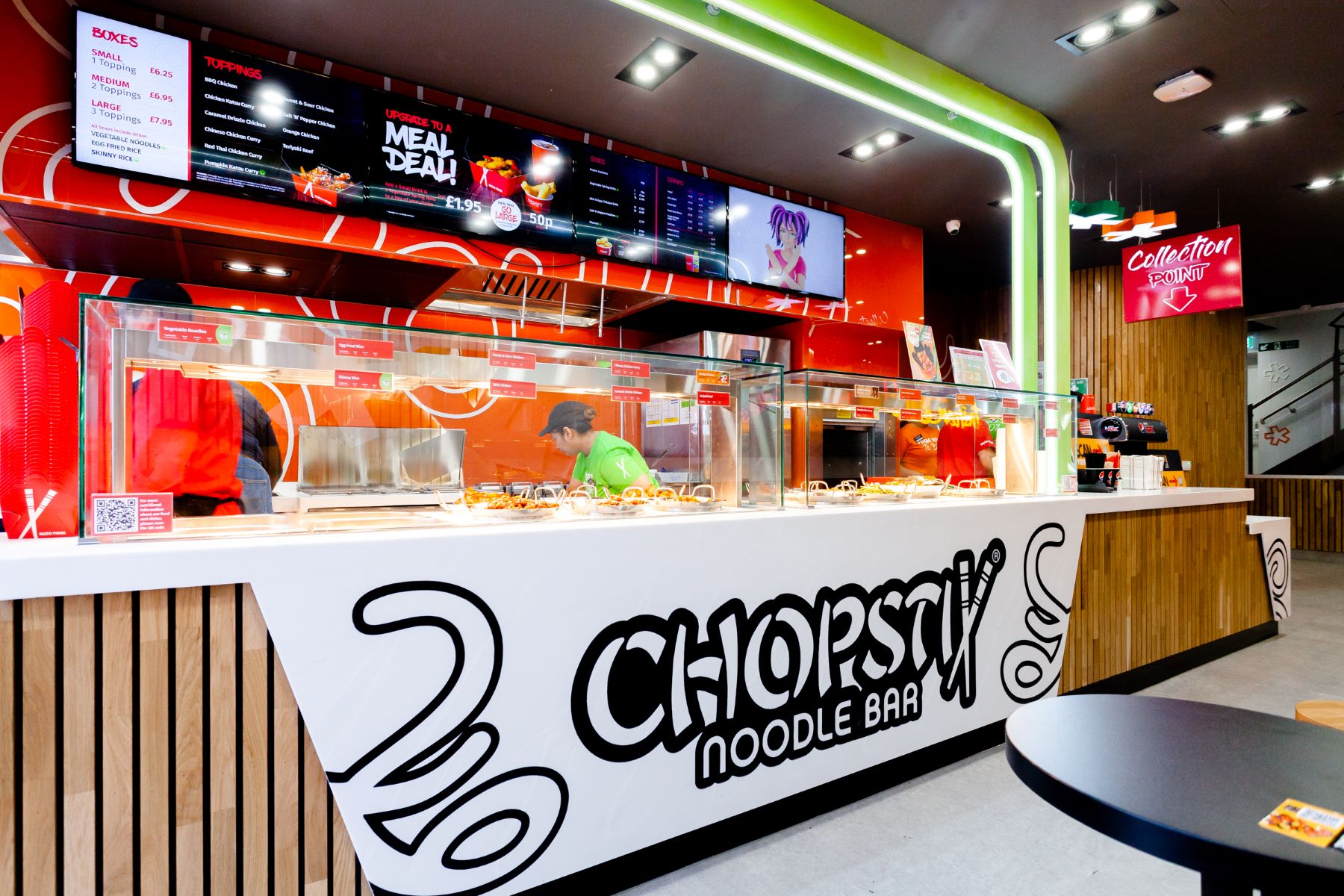
Founded with a single stall in Camden Market in 2001, Chopstix has been boxing noodles on high streets, in shopping centres and in motorway service stations for over 20 years. The brand’s mission is to excite customers with great service, great stores and most importantly, great food. With nearly 100 outlets, Chopstix aims to be the UK’s No. 1 Asian-inspired quick service noodle bar and had big plans for growth it wanted to fulfil, driven by ambitious franchisees.

Company Size

5000+

Industry

Leisure

Products Used

Challenge

Chopstix has an ambitious plan to grow through equity store development and franchising.

These plans meant they needed to understand where the best opportunities lay in the UK to successfully attract and engage potential franchisees.

A critical aspect of this needed to be the ability to objectively and dependably define and prioritise national, regional and local location opportunities for new outlets. Not just to understand where growth potential existed, but so they could provide franchisees with real clarity they would have distinct territories to operate in.

Solution

To understand Chopstix’ growth opportunities, CACI built a bespoke dashboard model using a wide range of variables to explain outlets’ relative performance and sales potential — and help them easily explain these with potential franchisees.

The model incorporates variables from CACI geodemographic data, including Acorn, Leisure Footprint, Local Footprint, and competitor location datasets, plus Chopstix’s internal financial data. The collaborative process also engaged with prospective franchisees to focus modelling on the evidence they’d want for revenue targets they’d be committing to.

The resulting PowerBI dashboard shows opportunities at national, regional, and trade zone levels on maps. All are ranked by expected turnover and growth, helping franchisees prioritise launches and achieve desired ROI. The dashboard provides detailed insights into any location, including competitors, other Chopstix outlets, visitor type mix and timings, traffic generators, and other food service brands.

In addition, the demographic information can reveal and rank delivery opportunities, identifying groups that index well for food delivery and profiles of communities where the Chopstix brand is appealing and aspirational.

Results

Sustainable growth through investment and franchising 

Aaron Moore-Saxton, Franchise Director explains: “Our growth model dashboard is a differentiator in our franchising market. It gives us a common understanding with franchisees of the available opportunity. Trust and transparency are key. We don’t have to spend time arguing about targets — instead, we work together using reliable catchment and market information to make plans with lower risk and higher rewards for everyone. Franchisees can push forward with growth, with confidence, and we increase our UK market share more quickly.”

Find out more about Acorn and Location dynamics.

Case study

Delivering data & insights to provide Bright Horizons with a new approach to childcare

Summary

Trusted by families to look after their children for over 30 years, Bright Horizons is an award-winning nursery provider. The company operates over 300 community and workplace nurseries throughout the UK — each is individually designed to serve the needs of its community. Bright Horizons provides tailored childcare for corporate clients and for families, at home, at work and in local settings.

Company size

10,000+

Industry

Education

Products used

Challenge

Bright Horizons initially approached CACI for data to support their new site opening and acquisition insight programme.

Reliable data that was quick and easy to interpret for new site and location decision making was needed

Access to demographic data to support proposition development

Gain a better understanding of existing potential catchments

Solution

CACI provided Acorn demographics, profiling and mapping, giving insight into specific postcodes and communities. High-level demographic maps are instantly visible in InSite’s Locator tool.

Marketing Manager Eddie Thorogood explains: “The blend of data creates reliable and up-to-date information about the demand for our services, to support decision-making about how and where we can expand our operations so we can deliver high quality childcare where it’s needed. It also helps us improve our business model, so we can manage our portfolio and flex and balance our sites to meet changing needs.”

Results

Bright Horizons’ three pillars are ‘people, quality, growth’. Eddie explains, “We’re not about just growing for the sake of it. We always want to be where we are needed – where parents can find us and our services will be useful. With this data insight at local level, we can provide a clear picture of community and workplace need to our senior leadership team, so they can sign off new facilities.”

Learn more about Acorn and InSite.

Case study

How Away Resorts refreshed their customer strategies through bespoke segmentation

Away Resorts logo

Summary

Away Resorts is a holiday park operator specialising in holiday homes, luxury lodges, caravans, and home lettings and ownership across the UK. Having grown recently from six parks to 27 after a substantial acquisition, the business hypothesised that there may be new customer groups across their wider portfolio of sites. This presented the team with an opportunity to decipher these customers’ demographics and continue to grow the business through engaging and relevant communications.

Company size

1,000 – 5,000

Industry

Leisure, Arts & Entertainment 

Products used

Challenge

Laura Miller, Head of Marketing at Away Resorts, highlighted three major challenges that Away Resorts needed to overcome to find out what their customers wanted to get out of their holidays and where the optimal locations for the acquisition of future parks would be: 

Reassess how to enhance the efficiency and effectiveness of their marketing spend.

Develop a future capital programme that would be backed by a genuine understanding of what customers want from their bookings, their desires when looking for a holiday park, and which amenities to prioritise investing in.

Attract the right customer demographic by refreshing existing marketing communications and channels.

Result

These insights helped Away Resorts gauge where marketing spend should be focused to target specific segments, how best to distribute campaign spending and how to switch strategic gears to deliver more effectively executed campaigns, including the introduction of new media channels. Plus, it has been particularly beneficial during executive board meetings, where tangible, easily comprehensible customer insights can now be shared with the wider business to bolster decision-making. 

This deep dive into customers has enabled Away Resorts to adapt their customer feedback survey on holiday motivations and needs to be met by including questions on customers’ specific interests. The business has confidently leaned into an ‘exploration’ narrative based on the findings, which suggested that their target segment wants to explore beyond the park — partaking in walks, bike rides and other activities. 

Are dashboards dead? Assessing their challenges & advantages to determine their future in businesses

In this Article

Dashboards have been quite a topic of contention in certain circles with the recent recirculation of Taylor Brownlow’s essay ”Are Dashboards Dead?”.

While I’m of the opinion that no, dashboards are not dead, they have been undeniably overused and often misunderstood, with a disconnect between a dashboard’s actual function versus our perceived function of them. 

Why is there dashboard fatigue?

Many of us have experienced dashboard fatigue, and rightfully so. As businesses, how many dashboards have we commissioned that were never fully utilised, if used at all? The answer is too many.

The reason for low engagement isn’t the fault of the humble dashboard, but rather that a dashboard was never the appropriate solution for the end user, or its design wasn’t tailored enough to the business use case.  

When faced with a business problem requiring data insights, we often jump straight to dashboard creation. However, there are many other solutions that can be tailored to deliver data insights, such as concise reports and static presentations. With an increased understanding of where dashboards fail, the conversation has shifted to questioning their relevance altogether.  

So, what place do dashboards still have in businesses, and how can we better understand where they excel to drive improved outcomes? 

What potential challenges may arise with dashboards?

There are many instances where dashboards may be less effective or complicate matters for businesses, and other methods provide a better solution. Instances may include: 

  • When the user needs a concise answer to a question:
    Dashboards require interaction and exploration, which can be time-consuming. If a stakeholder needs a straightforward answer, a tailored report is more efficient.  
  • For business specific, niche questions:
    Not every level of enquiry warrants the resource-intensive creation of a dashboard. For narrow, targeted questions, simpler reporting methods suffice. 
  • One-time insights:
    Dashboards are overkill for static data projects, such as measuring the success of a single transformation. In these cases, producing a well-crafted report or presentation is more resource-efficient. 
  • If the data is exported for analysis:
    If users regularly export dashboard data to manipulate it elsewhere, it’s a sign that the dashboard doesn’t meet their needs or wasn’t necessary to begin with. 

When might dashboards be the right solution?

Company-wide reporting platforms

Dashboards provide a unified view of performance across teams, offering consistent delivery of insights to aiding faster decision making, customisable filters for views specific to each business unit, efficiency in distributing insights without the need for manual reporting and increased data accessibility through data visualisation. 

Regular cadence reporting

For tracking ongoing metrics such as daily sales, customer trends or campaign performance, and measuring progress against targets, dashboards provide updated insights without the wait. 

Exploratory analysis

Whenusers want to discover patterns, relationships or unknown trends within the data, dashboards allow for interactive interrogation. These tools are especially valuable for data-savvy end users, enabling self-service exploration without requiring an analyst’s intervention. 

Monitoring ongoing initiatives

Dashboards are excellent for tracking live projects or recurring business processes, offering real-time visibility into performance. 

The future approach for dashboards

With the above in mind, we’re moving to a more informed approach where dashboards are no longer a tiresome, default solution, but a carefully considered tool.

The future isn’t about abandoning dashboards, but about being intentional and strategic in their creation and deployment. The key is facilitating dashboard creation in a way that adds tangible value and is thoughtfully configured to provide meaningful, actionable insights that empower decision making. 

How CACI can help

At CACI, we work with you to deliver the best solutions for your analysis needs. Our extensive experience in successfully implementing dashboards across diverse industries highlights several key scenarios where dashboards have proven to be highly effective.  

Whether it’s creating a bespoke, one-off report or developing a suite of comprehensive, customisable dashboards, contact us to find out more about how our user centric approach and industry expertise can help you gain meaningful analytics that will drive strategic business outcomes. 
Refreshing Scrum with the Ball Point Game

In this Article

On a recent programme development day, Phil Ballard, one of our award-winning Scrum masters facilitated the Ball Point Game. This is an industry-known Agile game which is usually run as part of an introduction to the Agile ethos for those keen to follow the Scrum methodology. 

Despite CACI having teams that are highly experienced in Scrum, we still found this activity to be useful not only as a “going back to basics” session, but also from the several other lessons learned from our own adaptation. 

Ball Point Game: basic overview 

Teams of eight are formed, with each team collecting a bag of balls. 

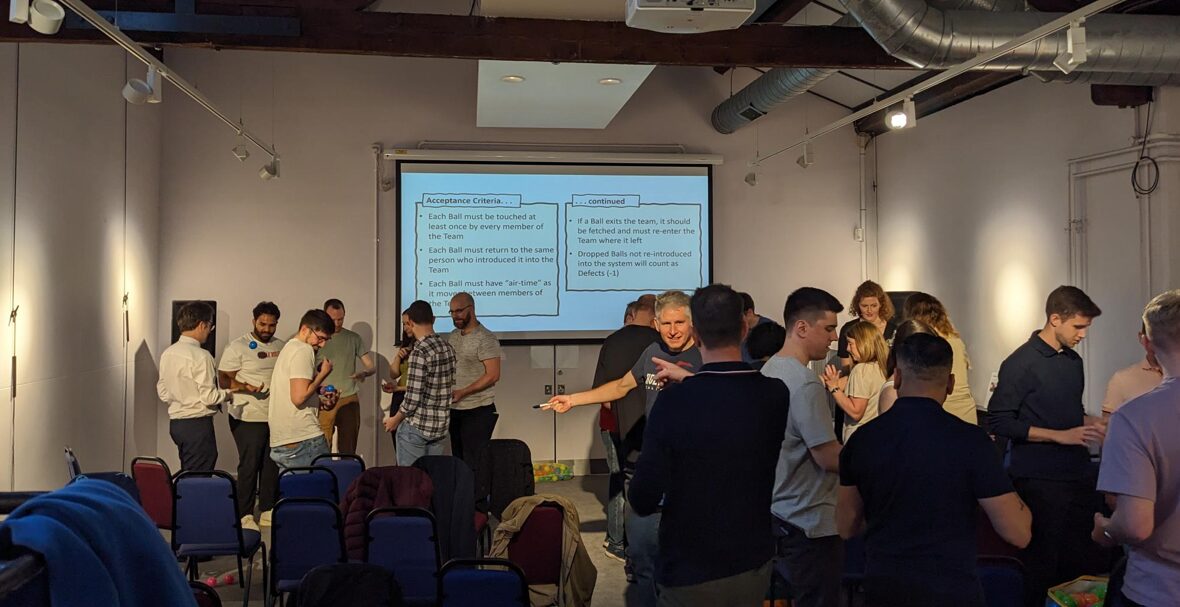
Within an Iteration (of which four take place), teams pass as many balls as possible among team members, with each ball passed scoring the team a point. Teams must adhere to the acceptance criteria of each ball being touched at least once by every member, each ball returning to the same person who introduced it into the team, each ball having “airtime” as it moves between team members, lost balls being fetched and re-entering the team where it left and dropped balls not being re-introduced into the system.

During each Iteration, teams will have one minute to talk among themselves and two minutes to perform the ‘Objective’. Prior to each Iteration, an estimate for the number of balls expected to pass through the team within the next Iteration is predicted. 

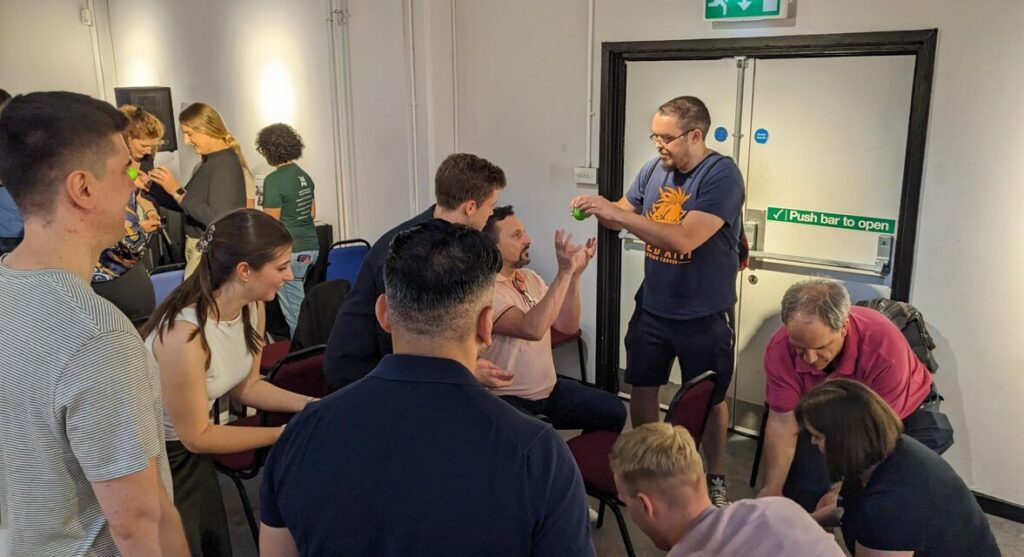
Team members taking part in the Ball Point Game, as a way to learn Agile methodology in an easy manner

CACI’s spin on the Ball Point Game 

Considering teams are already experienced in delivering in scrum, we made things more lifelike by introducing additional requirements in Iterations 3 and 4: 

  • The balls are being sold in packs of ten, with at least one of them being green. 
  • All balls must continue to gain height as they are passed through the team. 

After all, what’s software delivery without a stakeholder wanting to change their mind? The idea behind these rules was to break the established process, force change and to see what behaviours the scrum-experienced professionals would exhibit. 

Team members taking part in the Ball Point Game, as a way to learn Agile methodology in an easy manner

Ball Point Game goals

The Ball Point Game’s ultimate goal was to teach participants the value of continuous process improvement through basic agile principles using the simulation of an agile production process, including: 

  • Teamwork/shared goals 
  • Retrospectives/problem-solving 
  • Planning 
  • Estimating based on experience. 

All processes have a natural velocity. To speed things up, it is often not a case of working harder or faster, but a case of changing the process. 

Key takeaways

After all Iterations were complete, we discussed the results and asked teams to contribute their experiences with the following questions:  

  • Which Iteration felt as though it was the best/worst? 
  • How important was the retrospective between Iterations? 
  • What changes did you make? 
  • How did the team make decisions – did anybody take charge? 
  • Were all ideas heard within your teams? 
  • Was there anything notable in determining your estimates? 
  • Were improvements made by working harder or faster? 
  • Did you observe/experience anything else of interest? 

With the additional requirements added: 

  • Iterative development is also based on learning from the live product and adapting to what the customer and end user needs. 
  • Without anything being live, there is nothing to learn from and no way for the product to adapt. 
  • Sprint teams must adapt to estimating with new requirements versus estimating on a known repeatable task. 

Additional findings from the teams

  • The short timings of Iteration planning, along with the input of additional requirements, seemed to force an intensity. This, in turn, forced out several negative behaviours that we have not experienced on the programme, however, recognised within this competitive environment. 
  • Low sprint commitments despite the team feeling it was a known task. 
  • Sprint teams stopping when hitting commitment as there was an assumption that the game goal of the exercise was to have a stable velocity. 
  • Argumentative behaviours exemplified (not the usual collaborative approach we usually see). 
  • A competitive nature towards the other sprint teams, prohibiting the sharing of lessons learned. While the rules never stated they were against each other, it was inherently assumed when splitting participants into teams and asking them to perform the same task. 

On a more positive note:  

  • Many questions were asked about the requirements, with a focus on what the user/customers’ needs and problems were 
  • Looking outside of the team for improvement inspiration despite its interpretation as spying. 
  • Reflection on what we do in practice versus the theory/Agile beliefs 
  • Great discussions around the overall value of sprinting and iterative delivery. 

If you wish to find out more about the Ball Point Game or run it yourself within your programme or teams, please get in touch. 

Get ahead with CACI: Unlock the power of AI and ML in your CRM

In this Article

Setting the stage for AI and CRMs

The field of Machine learning and AI has evolved rapidly in the last few years, especially in fields where large quantities of data and quick response times to queries are crucial.

But given lots of these techniques and methods have been around for a much longer period, why has it taken so long for other industries outside of small start-ups and ambitious tech giants to leverage these methods in similar ways? 

CRM is an essential component of any company’s strategy. The ability to communicate with and understand customers is more important than ever due to the low barriers to entry in highly competitive global markets. Companies have only brief moments to convince customers that they are the right choice for shopping, spending time, or engaging. Optimising these initial and subsequent contacts is paramount to success. 

Beyond just expanding your customer base and attracting new clients, CRM is vital for any company’s retention strategy. The most advanced cutting-edge models in the world are utterly useless if we don’t know how to activate and capitalize on the value they represent. 

ML foundation for CRMs

In the CRM space our main goals are increasing consumer retention or spend, and we do this via figuring out the most effective ways to communicate with people. This can be broken down into when to speak to them, how to speak to them and why to speak to them.  

Recommendation engines lie at the core of many of these architectures, models that are designed to figure out what you want before you even know you want it. Broadly they work by looking at the kind of customer you are, then at customers like you, then finding things that they’ve bought recently that you haven’t.  

You can even simplify this down into just looking for customers who have an identical purchase history to you. Maybe a laptop you can buy on Amazon doesn’t come with a charger, so commonly when people buy this laptop their next purchase is a charger (You can often see this simple logic in the “People also bought” section of Amazon). But even these simple implementations are incredibly powerful in some ways, an educated guess is always going to be better than a random one. 

So how do these methods relate to CRM? Well, the general structure can be pulled away and applied to any subject.

When we think about how to engage with a customer, we’re going to look for ways we engaged with similar customers and how these performed. The customer who likes Sabrina Carpenter will probably need to be spoken to in a different way to the Motorhead fan. 

This is simple stuff, right? Well exactly, but it’s a method to show that the underlying AI processes in these platforms aren’t really all that complicated – there’s a lot of room for improvement especially when implementing bespoke solutions with larger data sets.  

The next (generative) step  

So, we already have ML methods that can tell us when and why to talk to people, great! But what’s the next step? 

All that’s left of our final stage is how to talk to them and what to say, stages which can and are currently being revolutionised by the advent of enterprise grade Generative AI. 

A current pipeline for devising CRM processes may involve creating template communications that are then populated with more specific information, for example customers in a certain segment defined by age and tenure are assigned one template and differing segments are shown another. 

This approach can be time consuming if it needs to be completed for each campaign, and may miss a level of personalisation that people will respond to, feeling as though each message is tailored to them rather than being an email blast they just happen to be caught up in. 

Skilled AI engineers armed with LLM’s can create a unique voice for each consumer, ensuring that quite literally all communication they will ever receive are exactly personalised to them and their engagement habits with your brand. 

Imagine attempting this even a few years ago, assigning a team of people to trawl through millions if not billions of rows of data to ensure that each customer got the perfect messaging for them would have been completely impossible. 

In practice this level of granularity in communications is probably unnecessary but it speaks to the potential these models have in this space – the sky truly is the limit. 

Even starting off small with these steps, giving a small part of a communication a generative component, allowing for large scale A/B testing and continuous model training, the effectiveness of these comms will improve over time. 

Freeing this time up from your CRM team will give them more time to tackle more involved problems that can’t be automated. 

If you need help on this journey for a better CRM, contact us here.

Most impactful holiday and air travel trends for 2024

In this Article

If the last few years of pandemic uncertainty and budget constraints amidst the ongoing cost of living crisis have shown us anything, it’s that travellers have become increasingly conscious of the cost of travel. As a result, they’ve placed increased value on having an optimal travel experience to justify its cost.  

We examined the current driving factors behind optimised travel experiences in our Voice of the Nation Q1 2024 survey, where we asked 2,000 respondents how they felt about an array of travel changes and how the cost of living, airline loyalty and more have impacted their travel choices into 2024. 

So, what shared values and needs do travellers of all ages and affluence levels seem to have in common this year? How have these forthcoming trends been affecting the wider travel industry?

Travel spend will increase in 2024 despite decreases in most other sectors

When asked whether their anticipated spending will decrease, increase or stay the same this year compared to last, holidays actually rank third among areas people expect to increase spend in 2024– with groceries and commuting costs coming in first and second– despite an overall expected decrease in spend in other areas this year.  

Plans to holiday abroad skew significantly on affluence lines 

From Boomers to Gen Z, more than half of respondents from every age group plan to holiday in some capacity– both in the UK or abroad– in 2024.  

When it comes to taking holidays abroad, 38% of respondents are making plans and budget room to do so this year. Of these respondents, as much as 50% come from the higher affluence Acorn categories of Established Affluence and Thriving Neighbourhoods. Approximately one in three of the lower affluence categories of Steadfast Communities, Stretched Society and Low Income Living share the same sentiment.  

A quarter of all respondents have no intention of travelling this year, and 22% plan to visit another part of the UK, which would appear to be in an effort to save on travel spending. In reality, no matter where you go for your next holiday, the same proportion of respondents agree that cost will be the biggest determinant behind their destination. 36% of those staying in the UK say that they will go on holiday within the UK because they prefer it to going abroad, showing that while cutting travel costs is a major driver, it is not necessarily the only one.  

Half of respondents claim no loyalty to an airline

When asked what the contributing factors towards airline loyalty are, half responded that they have no loyalty to any airlines.  

Roughly one-third (31%) of those who are loyal towards an airline felt that their loyalty is driven by more than one factor, such as convenience, discounts and luggage/check-in benefits. In comparison, 18% felt there was only a singular driving factor behind their airline loyalty, showing that where loyalty is in play, it is usually multi-factorial. 

Convenience is the most significant driver behind airline choices

Apart from price, respondents’ most significant contributing factors towards airline choices when booking trips came down to flight times and route, both of which are also the only factors heavily skewed by affluence. Nearly 60% of the Established Affluence and Thriving Neighbourhoods category respondents reported this to be significant, compared to just 35% among Low Income Living.

Gen Z, however, scored this even lower, with just 32% finding this to be significant and instead placing more emphasis on the ease of booking at 37%. 

Families are much more affected by cost this year

In terms of holiday planning this year, one-third of respondents said that they wanted to keep their holiday costs as low as possible to maximise value for money and felt that costs would be the greatest determinant of where they holiday in 2024.

Among those with children, 40% said that cost is the biggest determinant of where they go on holiday. 

Sustainable transport options appeal much more to Gen Z

Of all demographics, Gen Z appear to be the most motivated by sustainability when planning their holidays, both in terms of those taking immediate action but also those who would like to travel but feel unable to presently.

In fact, 18% of Gen Z respondents said that they will be cutting down on air travel in 2024 due to their growing environmental concerns, compared to just 8% among the rest of the population. 

How CACI can help?  

As the travel industry evolves with travellers’ changing sentiments, holiday and air travel operators must be equipped with the necessary understanding of who their customers are, what their motivations for travel are, what they seek from their travel experiences and how to deliver optimal experiences that will drive loyalty. Data is integral to this, which is where CACI excels in providing support.  

To find out how we can keep you and your team amidst turbulent times, get in touch with us today.

Environmental sustainability in business: importance and impact

In this Article

Key issues for countries and the businesses that operate within them to address in terms of climate change unfolded at the recent 28th UN Climate Change Conference (COP28). These issues urge immediate and significant action to be taken on fossil fuels and clean energy, national adaptation and climate finance, methane reduction, land use and more.

What does environmental sustainability in business mean?

Environmental sustainability in business is the operation of a business that does not compromise the environment. A business that has considered environmental sustainability prioritises the environment’s best interest, with society and its ecosystems coming before making a profit. It involves responsible decision-making that minimizes carbon footprint or waste while simultaneously improving the quality of life for humankind and the natural world alike.

Unfortunately, however, operating businesses as usual has had an increasingly detrimental impact on our planet. According to the latest State of the Global Climate report by the WMO, 2023 was the warmest year on record at about 1.4C,increasing pressure to shift their operations to more environmentally sustainable practices. This inevitably causes businesses to consider—where do we start? How do we begin making a difference?

What is the importance of environmental sustainability in business?

According to an article published by Maryville University, businesses that do not act responsibly will result in “the majority of many species not surviving past the 21st century”, reiterating how critical it is for businesses within every industry to take part in improving their environmental surroundings.

Although companies have a way to go before fully grasping the repercussions of ever-growing carbon footprints, those willing to tackle this challenge early on will get a head start on reshaping perspectives and realities.

Environmental sustainability in business practices

Businesses can rely on the three R’s– reduce, reuse and recycle– to begin reducing their environmental impact. However, there are several other examples of practices that businesses can incorporate into their operations amplify their reduction, including:

  • Life cycle assessments
  • Designing environmentally friendly products/services
  • Optimising product efficiency
  • Decreasing supply chain carbon footprint
  • Re-evaluating CSR (Corporate Social Responsibility) expenses

Benefits of environmental sustainability in business

Reduces the impact of business costs

While the cost-of-living crisis is skyrocketing, improving the energy efficiency of business operations and decreasing waste will go a long a way in bracing for the impact of unexpected business costs. Using more energy efficient lighting or reusing existing resources can be quick-fix solutions for lowering costs.

Improves a business’ reputation

Environmentally sustainable businesses are viewed as a plus, and companies are eager to highlight this fact. Companies that can go “green” show that they’re serious about making a difference in the environment and are interested in more than just profitability. Businesses that can market themselves and develop their identity around their commitment to the betterment of the planet will notice incredible results in terms of their reputation.

Group of people in front of icons representing sustainable development goals and environmental technology

Who is responsible for improving environmental sustainability in a business?

Businesses have been expected to pave the way towards environmental sustainability due to their notably significant contribution towards polluting the environment through waste, gas emissions and plastics generated. The responsibility does not necessarily begin with one individual within a business though– employees at every level of the business must work together to bring about change. A few examples include:

  • Business owners and leaders: Business owners and leaders are typically capable of leading strategic decision-making that influences the wider business. They can develop effective sustainability strategies and initiatives that have the power to change policy and induce change.
  • Business managers and supervisors: Managers and supervisors can supply valuable insights due to their more hands-on roles. They also typically have different perspectives and understandings as to how to improve business sustainability.
  • Employees: Employees can supply valuable contributions when encouraged to voice their opinions and concerns on how the business can become more sustainable.

Impact of environmental sustainability in business

The Department for Business, Energy and Industrial Strategy is striving to reach net zero carbon emissions by 2050. It’s going to take strong leadership, business-wide alignment on operations and an engaged corporate culture to successfully execute and maintain environmentally sustainable business practices. Businesses that start addressing these issues and challenge existing business processes will find themselves making a breakthrough towards becoming more environmentally sustainable while protecting the world around them.

How can CACI help you overcome these obstacles?

Our newly developed Mood Environmental Hub helps track all of your assets across multiple geographic locations and assess the environmental impact of your business.

With a single click, users can drill down from multi-site, business-level functions, to departments or even individual teams to determine asset types and locations, enabling a quick assessment of priority focus areas for improvement. It can also visualise existing data through user-friendly dashboards that show carbon impact, consumption and cost at an enterprise level.

The advanced modelling feature also outlines potential improvements, indicating ROI and carbon reduction impact. Additionally, you can easily check performance against carbon commitments such as Social Value through the initiatives tracker.

Producing carbon reduction target tracking reports or modelling for a business case is now a click away – to see how it works, you can book a demo here.


How Estée Lauder harness the “beauty of data” to transform their customer experience

In this Article

At our annual Innovate & Accelerate conference, Daniel Lindsay, CRM, Data, Insights and Analytics Director at Estée Lauder, shared the business’ optimal pairing of data and magic behind beauty to enable their enterprise data transformation, taking the retailer from insight to instinct in order to personalise consumer experiences. This winning combination has contributed to the success of their brand value proposition, narrative and positioning through campaigns that struck a chord with consumers.

But how did Estée Lauder decide when the right time for data transformation was? What tools and strategies did they lean on to achieve this, and what were the results?

Why it was time for a big data transformation

Three years ago, Estée Lauder faced various evolutionary periods of marketing, from digital to connected media in terms of consumer interaction followed by the tailored messaging capabilities that came with leaning into data-led media and marketing , particularly first-party consumer data. The business was keen to ensure all their consumers were involved in their journey of change.

According to Daniel: “Our job as a leading beauty company in the UK is to evoke trust from the customer.” Consumers purchase from brands that they trust with their most personal spaces, so ensuring customers are at the root of the brand and understood as granularly as data personalisation allows for is vital. Estée Lauder quickly realised that connecting data to the personalised user experience would give them the competitive edge that they needed to remain an industry leader.

Happy woman doing routine skin care at home with beauty products. Woman sitting on bed at home and applying face cream.

Challenges experienced when working on data transformation & how they were mitigated

Three years down the line of their data transformation, Estée Lauder has faced its fair share of challenges:

  • Heavily investing in consumer data. The business quickly realised their initial consumer data investments were conducted on outdated infrastructure, which complicated their ability to locate their target customer and get a unified view of them.
  • Effectively delivering analytics or insights that would drive fast action and improve accessibility. They had also outgrown their campaign management system, sparking a new consideration of ensuring whatever was brought into the business would connect consumers across the channels.
  • Upskilling and bolstering their in-house capability. This would enable enhanced futureproofing and strategic planning while also upkeeping resources.

Implementing CDP & campaign management tools

Working with CACI enhanced the business’ understanding of how their consumers shop across their portfolio of brands. The resulting data was released into Braze, and has more recently been added into Google, Meta and TikTok to take their understanding of consumer data to a new level.

The business’ value realisation through Braze was being able to engage with consumers and make their CRM channels the fastest growing traffic channel across all their direct to consumer (D2C) channels so far. They were also able to increase their key loyalty metrics by 16% in repeat and retention rates across all brands. This was demonstrated through one brand, Aveda, that despite a complex route to market journey, proved that having the right infrastructure in place enabled the business to successfully understand and track consumer points through email or SMS, which has been transformational for the business.

Data transformation in real-time: MAC Cosmetics case studies

Creating Black Friday success for MAC Cosmetics

Elena Hughes, Customer Strategist at CACI, elaborated on CACI’s support with the design and implementation of Braze in Estée Lauder, and its impact on the business’ strategic communications plan ahead of their peak period, Black Friday. This was a commercially critical time in the business’ calendar with a predicted high revenue generation, meaning that the business’ strategy had to be airtight.

To execute this, Estée Lauder assessed the data with CACI to understand how customers behave during peak promotional periods. This resulted in the emergence of four key customer groups:

  • Gifters
  • Price-driven audience
  • Loyal
  • Lapsed (one-off)

The strategy needed to take a segmented approach to tailor the messaging to these specific audiences, which enabled newfound opportunities for creative enhancements as well. As a result, the business noticed a 23% increase in trading performance post-implementation of the strategy, proving the campaign’s effectiveness despite an obvious time crunch and key information presented for access in the most suitable way of actionable insight.

Activating a triggered lifecycle programme at MAC Cosmetics

Replenishment, automated trigger and cross-sale messaging were critical components of the business’ triggered lifecycle programme. Their Black Friday campaign success came from distilling a multitude of strategy-shaping data points.

Learning lessons towards achieving data transformation

Despite maintaining relatively stable sales around Black Friday, CACI’s Cost of Living and purchasing data proved to be crucial to Estée Lauder’s success. While the business noticed that some of the more luxury products like serums declined in sales, the resulting data showed that the “lipstick effect” prevailed and that customers still want to feel good about themselves no matter the economic circumstances, demonstrated in the purchasing of what consumers consider to be essential products.

The business is now equipped with the necessary data to enter peak shopping periods and continue developing efficiencies and creative assets that resonate with customers.

How CACI can help

If you or your business are looking to accelerate customer data or technology changes by connecting and activating your insight, please get in touch to discuss what strategies and solutions that our team of experts can help you deliver.

Contactless Pubs: 4 Things We Learned Building Mitchells & Butlers’ Order-At-Table App

In this Article

Even before social distancing changed the hospitality industry, some businesses like Mitchells & Butlers were already responding to customer demands for quicker and easier ordering.

For example, an order-at-table app – enabling customers to choose and pay for their food and beverages without leaving their table – is an essential part of the new, contactless pub experience. Done well, it’s also convenient for the customer who no longer has to wait for service or queue at a bar. It’s great for the pub too – helping to improve efficiency and boost revenue.

Since 2017, we’ve been working with Mitchells & Butlers to develop, integrate, and refine an order-at-table app which is now available in five of their leading brands – O’Neill’s, All Bar One, Ember Inns, High Street, and Sizzling Pubs, making up around 25% of the company’s near 1,700 venues.

In that time, we’ve learnt important lessons about what makes a great at-table app that keeps customers coming back for more. So if you’re in the process of adapting your own hospitality experience to make it more contactless, here are four key elements to bear in mind.

Real-time stock control integration is essential

Picture this: you’ve ordered food at a bar, only to be told a few minutes later that your choice isn’t available today. And then, under pressure, you choose something else which isn’t quite what you wanted. It’s frustrating to say the least. And while the bar tender could have told you your meal was out of stock at the time, they just didn’t have access to that information in the moment.

The same goes for an at-table ordering app. Without real time stock information, you risk frustrating and disappointing your customers, and creating unnecessary workload.

That’s why Mitchells & Butlers prioritised integrating its order-at-table app with the latest point of sale and stock control data to maintain an accurate menu that self-edits based on real-time product availability.

It also pays to keep out-of-stock items on the app menu – either crossed or blocked out – so your customers can still see what’s normally available to give them inspiration for next time.

Put the customer in control

Customers are leading increasingly busy lives, so offering the same choice and flexibility that they’d expect from face-to-face bar staff can be a significant competitive differentiator.

By giving customers more options at each stage of the ordering process, you can give them greater flexibility.

For example, a customer may have had their starter and main course, but now wants to take their dessert home. By offering the option to change part of their order at any stage, you’re giving them more options.

This helps to ensure the customer goes away happy, having had the experience they really want. And because you’ve made ordering that much easier, it can even increase your average transaction value.

Group of people paying their order at a table in a restaurant setting

Simplicity is the key to a great user experience

When thinking about your app’s customer journey – including how it looks and feels – the process should be no less convenient than choosing from a physical menu and relaying their order to a server.

So, while it’s important to give your customers a wide range of options at each stage, your user journey should be concise, with the ability to select products and pay for an order in as few steps as possible – without the risk of payment errors or double charges.

Also, bear in mind that journey starts before they even download your app. It needs to be easy to find and recognise in their app store, and enable them to get started quickly.

It’s this kind of thinking that refined each of the Mitchells & Butlers brand app s, leading to significantly higher user uptake.

The right technology partner can make all the difference

Delivering a great digital experience that works for both you and your customers relies on having the right technology, and choosing a partner that’s got experience creating customer-centric apps.

It’s important to look for a partner that understands your ethos and exactly what you’re trying to achieve – and one with a team that can work with your own IT staff to help ensure seamless back-end integrations and a clear project roadmap.

Putting the customer first benefits everyone

Bringing technology like order-at-table apps into a pub environment shouldn’t just be seen as a solution to recent social distancing changes. Rather, it’s an opportunity to take a more customer-centric approach to digital transformation; start from the experience your customer wants, and build from there.

That includes listening and learning to what your customers are saying after you’ve launched. It’s important to test and learn from the results – making continual iterations as you go to refine and improve the experience.

If you’d like to find out more about our work with Mitchells & Butlers – or if you’d like to talk more about getting the most from an at-table ordering app – get in touch with our team of experts today.