

Case study
How Zero Gravity use Acorn to support underrepresented students

Summary
Zero Gravity is a digital platform connecting low-income students in years 12 and 13 with undergraduate mentors for app-based mentoring into highly selective universities. Zero Gravity has previously worked with CACI to enrich their understanding of the backgrounds of thousands of applicants through CACI’s Acorn. This is a geodemographic segmentation of the wider UK population used to assess students’ socio-economic backgrounds based on their postcodes.
Company size
50
Industry
Education
Products used
Challenge

Matching social and economic needs with educational and career opportunities is one of the major challenges that Zero Gravity has sought to address.
Every year, around 50,000 students from socially mobile backgrounds achieve top GCSEs. However, only a third of these students make it to highly selective universities, and even fewer progress into top graduate careers. This discrepancy underscores a prevalent issue: while talent is evenly distributed across socio-economic backgrounds, opportunity is not.
The underrepresentation of socially mobile talent at elite universities and in prestigious careers is not due to a lack of ability. Instead, factors such as the “Network Advantage” (the intangible advantage of having access to a broad professional network identified in Zero Gravity’s Gap Zero report), resource shortages and imposter syndrome often hold these students back. The challenge for Zero Gravity is to bridge this gap, ensuring that talent from low-opportunity backgrounds can access the education and careers they deserve.
Solution
To address this challenge, Zero Gravity developed a sophisticated ‘potential identification system’ to identify and support socially mobile talent. A key component of this algorithm is the integration of contextual student profiling from Acorn. Insights drawn from Acorn provide a granular understanding of the socio-economic environment faced by students at home, enabling Zero Gravity to accurately evaluate their academic potential and their challenges.
By combining this information with Zero Gravity’s own academic performance data, the algorithm indexes top-performing students within the bottom groups of social advantage. This allows Zero Gravity to connect with socially mobile talent at the earliest stages of their educational journey.
By providing rich socio-economic insights, Acorn enhances the precision of Zero Gravity’s talent identification process, ensuring that support is directed towards students who are not only high achieving, but also from disadvantaged backgrounds.
Results
In the most recent academic cycle, Zero Gravity has achieved remarkable success by helping over 8,000 students from low-opportunity backgrounds secure places at top-tier universities – all free of charge – due to the social value the organisation drives. Notably, 800 of these students gained admission to Oxford and Cambridge, both of which rank among the top 10 higher education institutions globally. Additionally, Zero Gravity has launched the Zero Gravity Fund, directing nearly £1.5 million towards scholarships for its latest cohort of students.
The success of the current model has enabled Zero Gravity to focus on other opportunities to support disadvantaged students. The university mentoring platform has been such a success that they’ve now developed an innovative new service to help students into the workplace following graduation. Zero Gravity now pairs these young people with industry mentors and provides them with tailored support to access leading universities and, ultimately, successful careers. This enhanced approach not only equips students with the tools and guidance needed to reach their full potential but also contributes to a more diverse and inclusive talent pipeline for employers.





Case study
How the Duchy of Cornwall is using data-driven insights to support their forward strategy in Nansledan

Summary
Nansledan is a new community being built on the eastern edge of the coastal town of Newquay in Cornwall, England. Over the last decade, the Duchy of Cornwall has acted as master developer and landowner of the development, creating an already vibrant community which will eventually include 4,000 homes, job opportunities and diversification of the local economy to sustainably meet Newquay’s current and future needs.
To bring the vision of a successful and thriving new community to life, the masterplan for Nansledan includes a new town centre, known to the Duchy of Cornwall as “Market Street”. To facilitate the progress an introduction was therefore made to CACI, to demonstrate the breadth of data and consultancy expertise that could be offered to support the forward strategy of Market Street.
Company size
50
Industry
Property
Products used
Challenge

To answer questions around the scale and mix of spaces within the Market Street plans, it was clear that data-driven insights would also be helpful in shaping the forward strategy.

The Duchy of Cornwall also wanted to understand what role Nansledan might play within the wider Cornish market and how complementary offers could be provided so as not to compete with Truro, Newquay and Padstow.
Solution
CACI’s initial report has now been completed and was presented to the Duchy of Cornwall in February 2023. It has already been helpful in shaping the forward strategy for the first phase of Market Street and will continue to inform the scale and the mix of space that comes forward across Market Street and Nansledan over the coming years.
The Duchy of Cornwall now has a much clearer understanding of Nansledan’s catchment area from both a resident and tourist perspective around demographics, spending habits and spending potential. In turn, this is expected to help in the positioning of Market Street within its local and regional market and will hopefully assist with ensuring its long-term commercial success.
Results
While Market Street is yet to be developed, the work undertaken by CACI so far has helped to shape the Duchy of Cornwall’s forward strategy and will continue to feed into the design of the remaining phases of Market Street, as well as other commercial centres that were planned across Nansledan.
Further advice is expected as the development progresses and wider market influences take shape in order for the Duchy of Cornwall to continue to position Market Street appropriately for Nansledan’s growing population, as well as that of other local towns and villages. Using data-led insights on an ongoing basis is seen as increasingly important given the wider context of struggling retail centres around the country and in trying to ensure a vibrant and thriving centre at Nansledan.





Case study
Fair4All Finance helping make financial services fairer for everyone

Summary
Fair4All Finance is a not-for-profit organisation driving change in financial services to help millions of people in vulnerable circumstances. It works with organisations to increase access to fair and affordable financial products and services across the UK. With the cost-of-living crisis having negatively impacted the financial landscape for so many people, Fair4All wanted insights into the needs and behaviours of financially vulnerable people to better support them in their work.
Company size
50
Industry
Financial Services
Products used
Challenge
Depending on the definition across the industry, up to 21 million people in the UK are thought to be in vulnerable financial circumstances. To fulfil their remit, Fair4All Finance aims to better understand this broad group of people and their different needs.
Most off-the-shelf segmentations pull apart the population based on age and affluence. By segmenting this group along more behavioural lines, Fair4All Finance aims to develop strategies and work with the industry to make financial services more applicable and accessible to the financially vulnerable population.

Understand customers in vulnerable financial circumstances

Develop strategies to make financial services more accessible
Solution
Fair4All Finance partnered with CACI and Trajectory, a research agency, to develop a segmentation solution tailored specifically to Fair4All Finance’s objectives, through consolidating and blending data from multiple sources. The solution made use of Fresco and Ocean to build a segmentation at a UK-wide level.
In order to identify key segments within the financially vulnerable population, a number of statistical methods, including correlation and principal component analyses, were applied to identify core features of importance. These driving variables showed discrimination and relevance across the financially vulnerable population.

Results
Six new segments of financial vulnerability were created using the data and then sized across the UK population to understand the spread of segments across geographies. The iterative process taken to develop the segments, ensured the final solution could be constantly adapted to make sure it was meeting Fair4All Finance’s end goals and aligning with its objectives.
A knowledge sheet was also created, which profiled each segment across more than 900 demographic, lifestyle and attitudinal variables from CACI data and specific behavioural characteristics from the research data, giving detailed insights into the key characteristics of each segment compared to the financially vulnerable population as a whole.
The findings will enable Fair4All Finance to share insights in three different ways, with credit unions and community finance providers, mainstreams banks and internally.



Case study
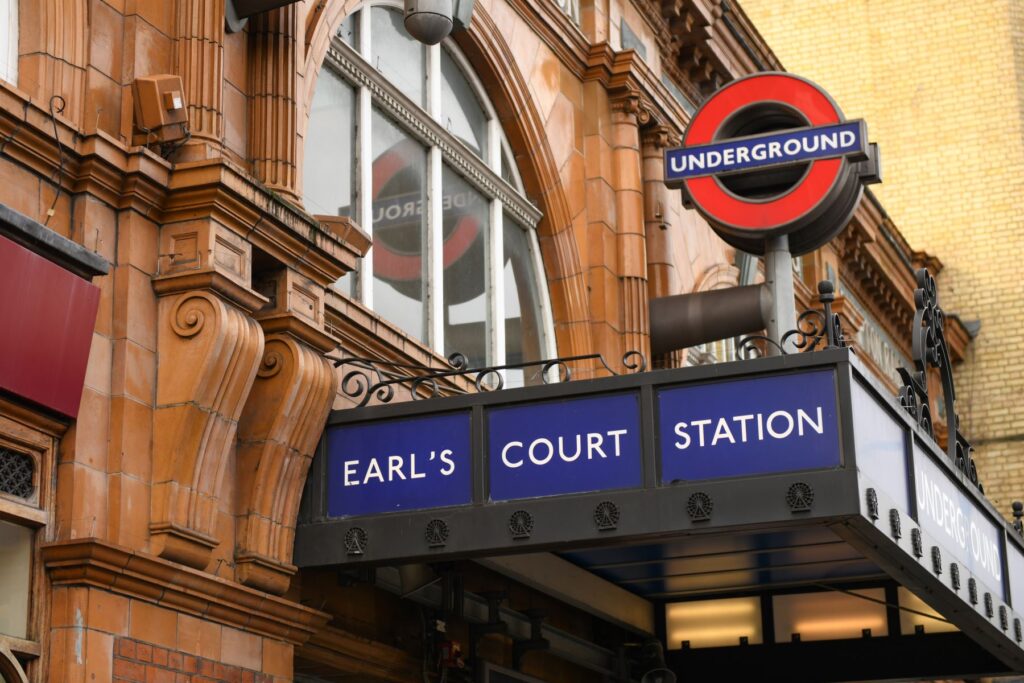
How Earls Court Development Company use data to help inform a new neighbourhood

Summary
The Earls Court Development Company (ECDC) has a vision to bring the wonder back to Earls Court. Their latest proposals demonstrate how Earls Court will be put back on the map, re-emerging as a destination to discover wonder, an ecosystem for creative talent and a showcase for one of the fastest growing industries in the world – clean and climate tech. The masterplan includes 4,000 new homes, 12,000 jobs, culture, community, retail, dining and leisure. 60% of the land is unbuilt, maximising open spaces and opportunities for nature to thrive.
The site will have a series of cultural venues, alongside a commercial campus creating a global destination for clean and climate tech research and skills. Sustainability will be the green thread, with one of the largest zero-carbon energy loops in the UK powering the site. A hybrid planning application will be submitted this summer and the first phase will commence in 2026.
Company size
50
Industry
Property
Products used
Challenge

Understanding how current plans would impact the local market, what retail opportunities should be created and how to create a robust masterplan that would address these factors, despite London’s complex market and a high amount of local competition.

Gauging customers and audience — who is already here, what they do, what they need and where they go — in relation to other large-scale central London developments and regeneration master plans in King’s Cross and Battersea.

Prior to partnering with CACI, the company solely relied on qualitative data to understand peoples’ perceptions and inform their decision making, such as speaking to people within the community and stakeholders.
Solution
ECDC was keen to ensure that an optimised neighbourhood would be created for residents both within and outside of the development along with workers and users of the space. To achieve this, CACI interpreted and analysed raw data and numbers for the company, bringing them to life and narrating the results through comparable’s and benchmarks.
Results
Newfound understanding of the ‘size of the prize’ of wider London and tourist demographics and audiences. ECDC historically relied on gut instinct when it came to decision making, but working with CACI ensured they were backed with concrete evidence. For example, CACI’s data showed that one-third of the total potential spend in the development area could come from out of catchment.
Enhanced decision-making through evidence-based data on the community. With the development situated across both the London Borough of Hammersmith and Fulham and the Royal Borough of Kensington and Chelsea, their perceptions of the surrounding community to inform decision-making — while strong — are now rooted in evidential data. This has served to alter their perceptions to ensure that a comprehensive understanding of residents and borough dwellers can be met and their audience narrative can be shaped accordingly.
In the coming years, CACI will continue to support ECDC in the data-backed planning and construction of residential units, retail landscape and office space development.



Case study
How Business Isle of Man developed a trusted demographic model and profile with CACI’s data

Summary
Business Isle of Man is an Executive Agency of the Isle of Man Government’s Department for Enterprise, acting as a key decision making and advisory body supporting the Government’s ambition for long-term economic prosperity. Its purpose is to help create an environment for key sectors to achieve sustainable growth while establishing the Island as an internationally well-regarded home for export business.
The Department has a key role to play in the achievement of the Programme for Government’s stated intention to be an Island of Enterprise and Opportunity. Supporting economic development is of strategic importance for the Island’s future growth and prosperity.
Company size
50
Industry
Non-Profit
Products used
Challenge

Business Isle of Man was approached by a property developer keen to attract larger UK multiples. These businesses were asking for a demographic report, so they could assess the commercial viability case for their brands. None of them understood the Isle of Man’s demographic.
Solution
Jonathan Platten, Economist for the Department for Enterprise:
“We commissioned CACI to develop a trusted demographic database and map that showed detailed profiles of our population across the Island. CACI impressed us with their expertise and reputation in the field of socio-demographics.”
The Isle of Man can be considered alongside the UK as part of CACI’s trusted dataset and modelling, with the same granular, visual demographic detail. For the first time, investors, retailers and businesses can build reliable modelling into their business cases at postcode level.
Results
Business Development Manager, Rachel Hopkinson expresses the benefits clearly:
“We have never before seen such a detailed analysis of our population across the island, including Douglas (the Island capital). Although our Island population is under 100,000, there is a big opportunity for retail and leisure businesses. Isle of Man retailers perform exceptionally well compared to the UK because we have a wealthy population and a captive audience. Now, we have the demographic data to show why this is the case.”
As well as commissioning CACI to produce the dataset and report, Business Isle of Man has entered into a collaborative ongoing relationship with CACI to help provide further, specific analysis for Island businesses and investors.





Case study
How Agilysis use Acorn to improve road safety interventions & outcomes

Summary
Agilysis is a transport safety consultancy specialising in road safety. They have a wealth of experience working with road safety, and a company-wide mission of using data to inform road safety interventions and prevention strategies for casualty reduction and overall road awareness. One of their key requirements is the ability to supply insights to road safety stakeholders about individuals involved in or exposed to different types of road risk in various local communities.
Company size
50
Industry
Non-Profit
Products used
Challenge
Agilysis had been using another socio-demographic profiling tool to convey the necessary demographic profiling insights for over a decade. However, as time progressed, two critical issues arose:

The tool’s provider wouldn’t allow Agilysis to view their socio-demographic profiling model at a low enough geographic level to make it as useful as needed.

Agilysis was unable to expose all the available variables to their stakeholders due to license holder restrictions. This particularly affected their road safety stakeholders who generally work for local authorities and police forces.
Solution
Agilysis began using CACI’s geodemographic segmentation, Acorn, to enhance the calibre of their road safety intervention design and deliver precise, robust results to stakeholders.
The business dissected the available list of all the metrics, identifying those which felt most useful, easiest and relevant to understand and apply to the individual forces policing strategy. By leveraging these insights, Agilysis can better understand the likely propensity of an individual Acorn type to partake in various acts of travel, walking and cycling, a key priority of many road safety stakeholders nowadays.
Results
Acorn’s wide range of variables and its ability to let Agilysis transparently share sociodemographic metrics and results with stakeholders has helped the business make the information as useful as possible to augment the design of road safety interventions, and provide police forces, highway authorities and other stakeholders with valuable data. This intelligence leads to improved strategic and decision-making.
Additional CACI datasets are likely for Agilysis’ future, with the business having already assessed datasets that can further enhance transport safety projects. These should provide new insights into key metrics such as collision-involved drivers from outside Britain and road danger for deprived and minority communities.